Quizology.Online

“There is much pleasure to be gained from useless knowledge.”

— Bertrand Russell

Tag: geography

  • Sausages — Answers

    Here are the answers to today’s questions.
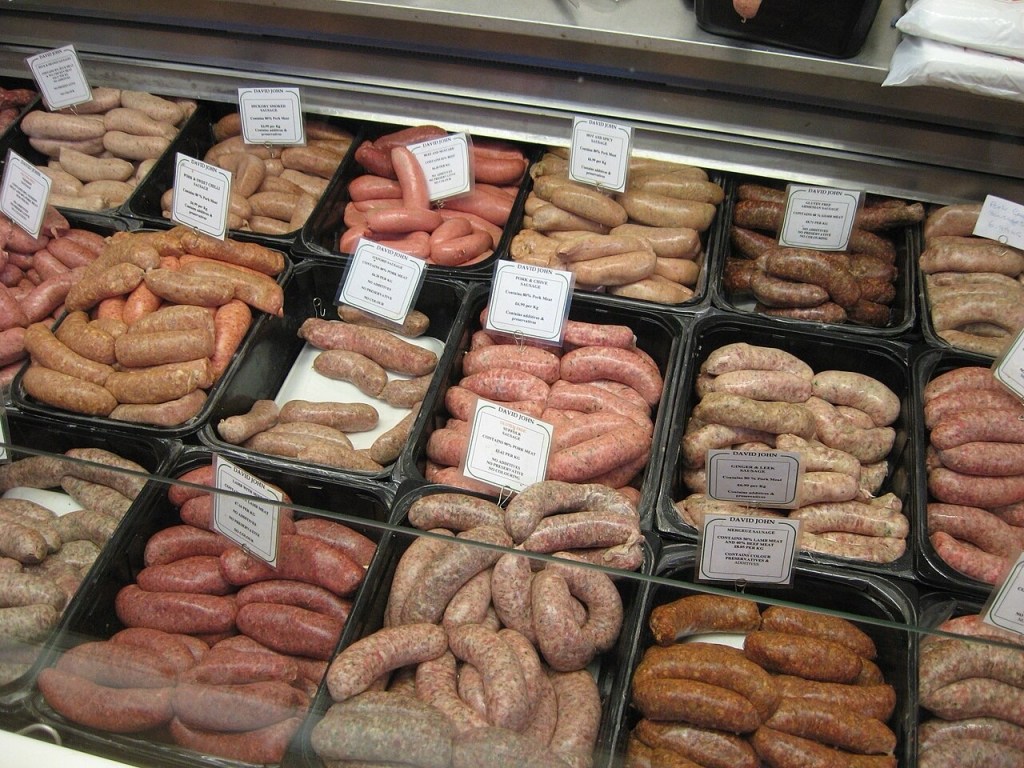
    Sausages, The Covered Market, Oxford, U.K.
    Image Wikimedia Commons

    There is a simple theme running through today’s questions, which I’m sure you will work out very quickly.


    One

    What five-letter word means sausages and an area of, for example, St. Andrew’s, Scotland?

    Answer: Links.

    Sausages in a chain are links, as is a seaside golf course on ‘linksland’. The Oxford English Dictionary definition of the golf variety is shown below.

    links /lɪŋks /
    ▸ plural noun [treated as singular or plural] (also golf links) a golf course, especially one on grass-covered sandy ground near the sea: a couple of days’ golf on a sunny Spanish links. ▪ another term for linksland

    – ORIGIN Old English  hlinc ‘rising ground’, perhaps related to lean1.

    — Oxford English Dictionary


    Two

    What eight-letter word relates to all of these: Joe Gilmore, a barman at the Savoy Hotel, London in 1969; Apollo 11, 1969; Mr Bean, 1969; Michael Jackson, 1983?

    Answer: Moonwalk.

    Joe Gilmore created the Moonwalk cocktail to celebrate Neil Armstrong and Buzz Aldrin’s landing on the Moon in Apollo 11 and their moonwalks. Mr. Bean was Apollo 12’s Alan Bean who, along with his colleague Pete Conrad, also walked on the Moon a few months later. Michael Jackson’s famous Moonwalk was first publicly performed in 1983.


    Three

    What connects Fort Providence to the Beaufort Sea?

    Answer: Mackenzie River.

    The Mackenzie River, in Canada’s Northwest Territories, is, with the Slave, Peace and Finlay Rivers, the longest river system in Canada, with the second-largest drainage basin of any North American river after the Mississippi. The Mackenzie’s main stem flows 1,738 km (1,079 miles) from Great Slave Lake at Fort Providence to the Arctic Ocean at the Beaufort Sea, in the Inuvik Region. Historically significant, it supports limited economic development, including oil, minerals, and agriculture.


    Four

    Dr. John Watson; Bilbo Baggins; Lester Nygaard; Chris Carson. Who is the connection?

    Answer: Martin Freeman.

    English actor Martin Freeman has won two Emmy Awards, a BAFTA Award, and a Screen Actors Guild Award. He portrayed Dr. John Watson in Sherlock (2010–2017); a young Bilbo Baggins in the The Hobbit film trilogy (2012–2014); Lester Nygaard in Fargo (2014), and Chris Carson in The Responder (from 2022).


    Five

    What one title is shared by these: a 1956 film about Vincent van Gogh; an Iggy Pop album from 1977; a 2017 Lana Del Rey album?

    Answer: Lust for Life.

    Lust for Life is a 1956 biographical film about Vincent van Gogh, directed by Vincente Minnelli and starring Kirk Douglas. Lust for Life was also the title of Iggy Pop’s second solo album, released in 1977. Finally, Lust for Life is Lana Del Rey’s fifth studio album, released in 2017.


    Sausages

    As explained in the first answer sausages in a chain are links and today’s questions are all about links.
  • Sausages

    Sausages, The Covered Market, Oxford, U.K.
    Image Wikimedia Commons

    There is a simple theme running through today’s questions, which I’m sure you will work out very quickly.


    One

    What five-letter word means sausages and an area of, for example, St. Andrew’s, Scotland?


    Two

    What eight-letter word relates to all of these: Joe Gilmore, a barman at the Savoy Hotel, London in 1969; Apollo 11, 1969; Mr Bean, 1969; Michael Jackson, 1983?


    Three

    What connects Fort Providence to the Beaufort Sea?


    Four

    Dr. John Watson; Bilbo Baggins; Lester Nygaard; Chris Carson. Who is the connection?


    Five

    What one title is shared by these: a 1956 film about Vincent van Gogh; an Iggy Pop album from 1977; a 2017 Lana Del Rey album?


    Good luck! I’ll post the answers later.


  • Flag Up — Answers

    Here are the answers to today’s questions.

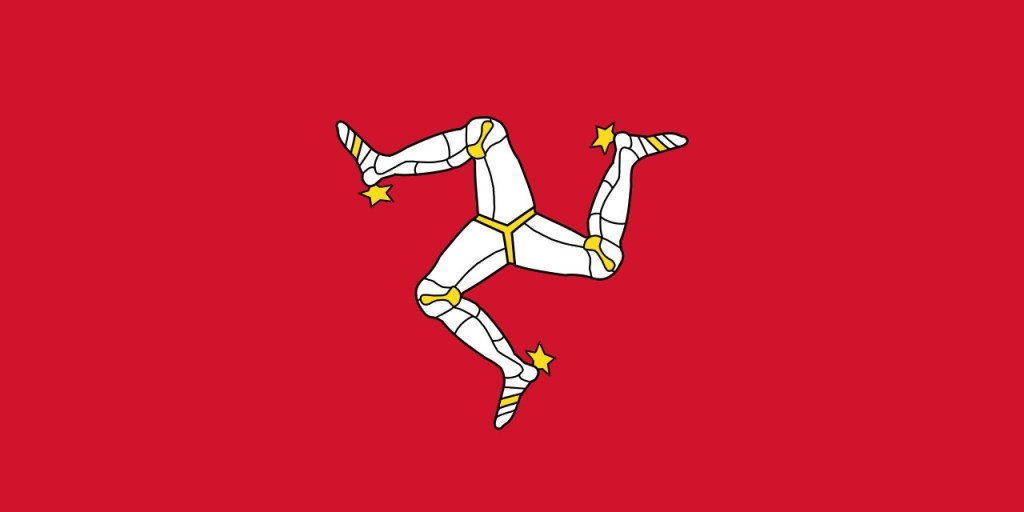
    See question two. Flag of Isle of Man.
    Image Wikimedia Commons

    The first question relates to today’s date, 14 June. The remainder follow a theme created by the first. 


    One

    On 14 June …, the Continental Congress approved the Flag Resolution, establishing the Stars and Stripes as the first official flag of the United States. In what decade did this take place?

    Answer: 1770s (1777).

    On 14 June 1777, the Continental Congress passed the Flag Resolution, declaring that the flag of the United States should have thirteen red-and-white stripes and thirteen white stars on a blue field representing a new constellation. The resolution did not specify how the stars should be arranged, so early versions varied. The design is often attributed to Francis Hopkinson, and 14 June is now observed as Flag Day.


    Two

    What ten-letter word describes the badge in the centre of the flag shown at the top of this post, and what self-governing British Crown Dependency does it represent?

    Answer: Triskelion; Isle of Man.

    The Isle of Man, a self-governing British Crown Dependency, has a flag which shows a triskelion of three armoured legs on a red background. The official flag since 1932, its origins are uncertain, with possible connections to the Crovan dynasty, Sicily, or the Germanic Holy Roman Emperor Frederick II. The triskelion was retained after English domination in 1346 and officially adopted between 1928 and 1932.


    Three

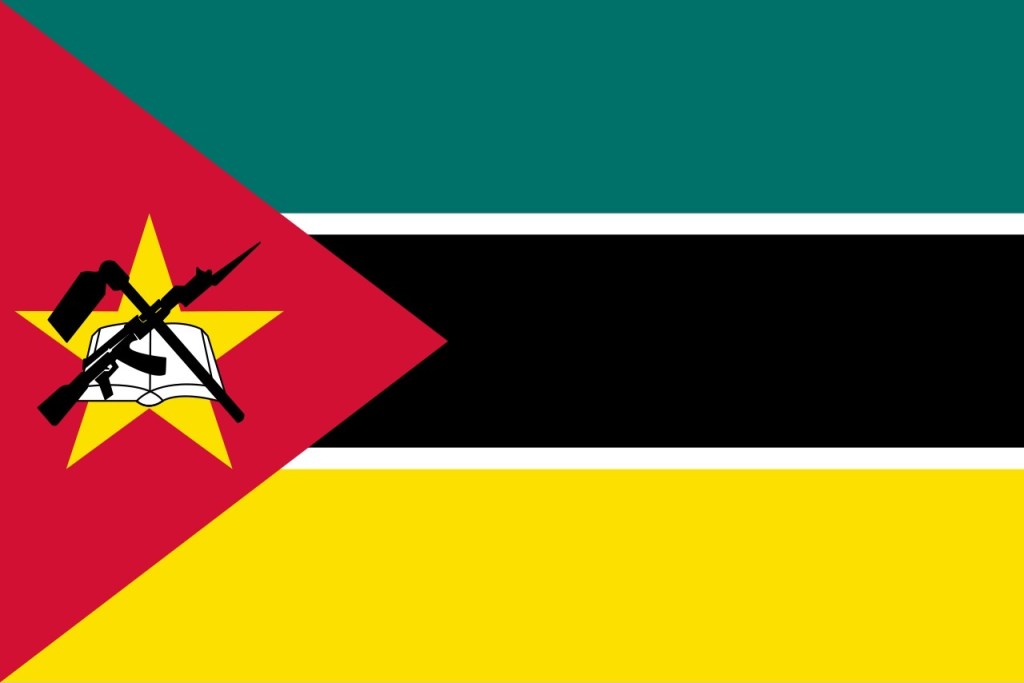
    What national flag depicts an assault rifle, agricultural implement and a book described by Wikipedia as ‘a bayonet-equipped AK-47 crossed by a hoe, superimposed on an open book’?

    Answer: Flag of Mozambique.

    The Mozambican flag, adopted in 1983, features a red triangle with a star, AK-47, hoe, and book. The design, based on FRELIMO’s flag, has faced calls for change since democratisation in 1990.


    Four

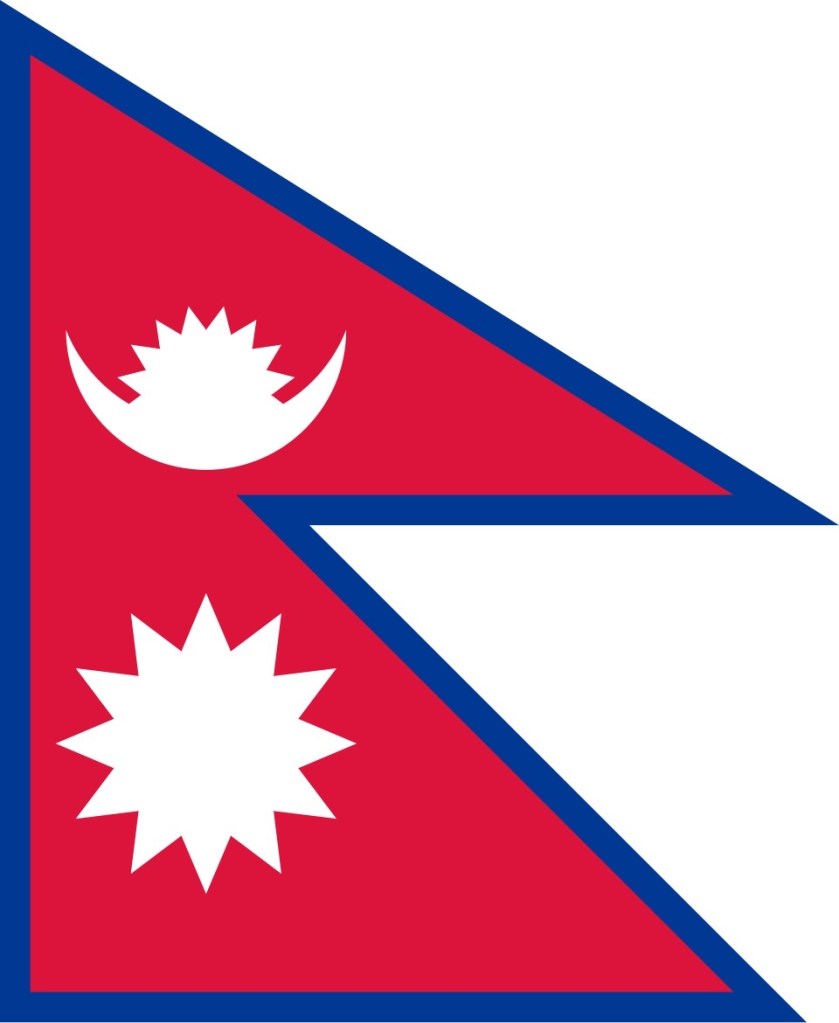
    What national flag is described by Wikipedia as follows:

    The flag of … is a concave pentagonal flag of red, white, and blue colour. It is used as both the state and civil flag of …. It is the only non-rectangular national flag in the world and the only one that is taller than it is wide. The flag’s unique shape is a combination of two single pennants, and is known as a double-pennon. The red colour of the field represents bravery and …’s national flower, the rhododendron, while the blue colour of the border represents peace.

    Answer: Nepal.

    The flag of Nepal is a unique concave pentagonal flag of red, white, and blue, used as both the state and civil flag. It is the only non-rectangular national flag in the world and the only one taller than it is wide, known as a double-pennon, formed by combining two single pennants. Adopted in 1962 with the Nepalese constitution, the flag’s shape emerged from the flags of competing branches of the Rana dynasty. The red field symbolises bravery and Nepal’s national flower, the rhododendron, while the blue border represents peace. The upper triangle, featuring a white silhouette of the moon, symbolises the royal family and its power, and the lower triangle, with the sun symbol, stands for the Rana family and political power. Together, these symbols represent the hope for Nepalese independence to last as long as the sun and moon. The flag’s serrated shape also evokes the peaks of the Himalayas, and the red background indicates energy.


    Five

    Apart from the flag mentioned in question four above, all flags are rectangular, and that includes the two which are square. What two sovereign states have flags which are square?

    Answer: Switzerland; Vatican City.

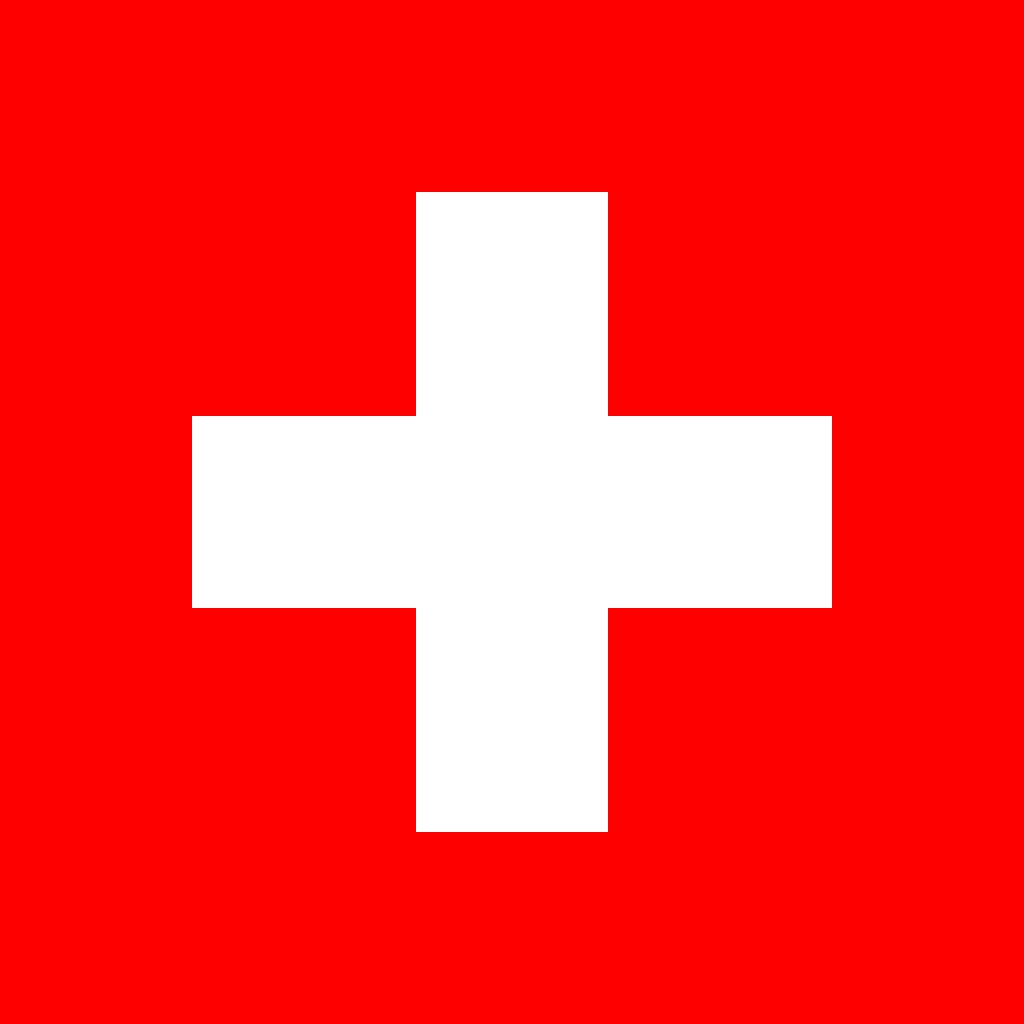
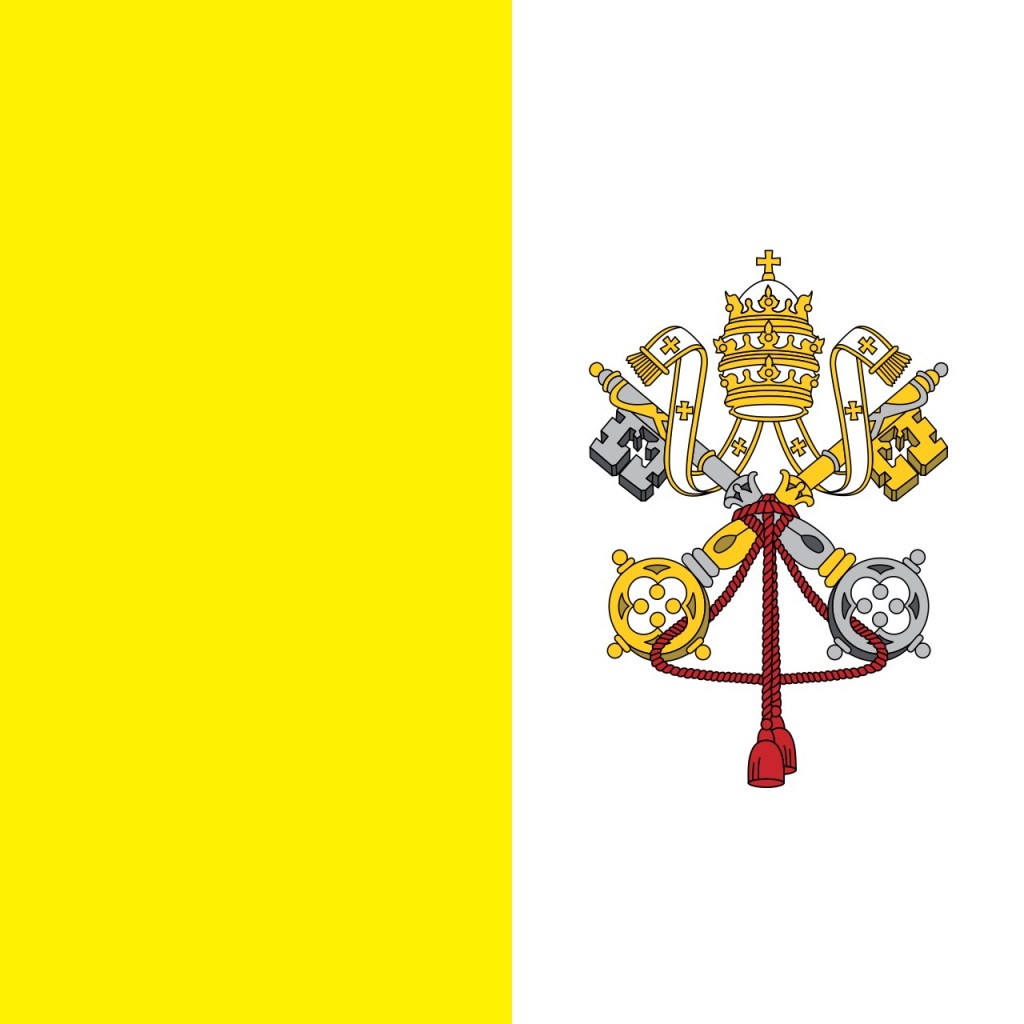
    The Swiss flag, featuring a white cross on a red background, dates back to the Middle Ages, symbolising Christianity and independence. The red represents Christian martyrs’ blood, while the cross signifies Christianity. Switzerland’s political neutrality is also reflected in the flag. The Vatican flag, with dark yellow and white stripes, includes the papal mitre and keys of St. Peter, symbolising the Pope’s authority. Adopted in 1929, it represents the Roman Catholic Church’s significance.


  • Flag Up

    See question two. Flag of ?
    Image Wikimedia Commons

    The first question relates to today’s date, 14 June. The remainder follow a theme created by the first. 


    One

    On 14 June …, the Continental Congress approved the Flag Resolution, establishing the Stars and Stripes as the first official flag of the United States. In what decade did this take place?


    Two

    What ten-letter word describes the badge in the centre of the flag shown at the top of this post, and what self-governing British Crown Dependency does it represent?


    Three

    What national flag depicts an assault rifle, agricultural implement and a book described by Wikipedia as ‘a bayonet-equipped AK-47 crossed by a hoe, superimposed on an open book’?


    Four

    What national flag is described by Wikipedia as follows?

    The flag of … is a concave pentagonal flag of red, white, and blue colour. It is used as both the state and civil flag of …. It is the only non-rectangular national flag in the world and the only one that is taller than it is wide. The flag’s unique shape is a combination of two single pennants, and is known as a double-pennon. The red colour of the field represents bravery and …’s national flower, the rhododendron, while the blue colour of the border represents peace.


    Five

    Apart from the flag mentioned in question four above, all flags are rectangular, and that includes the two which are square. What two sovereign states have flags which are square?


    Good luck! I’ll post the answers later.


  • Voyage of Discovery — Answers

    Here are the answers to today’s questions.

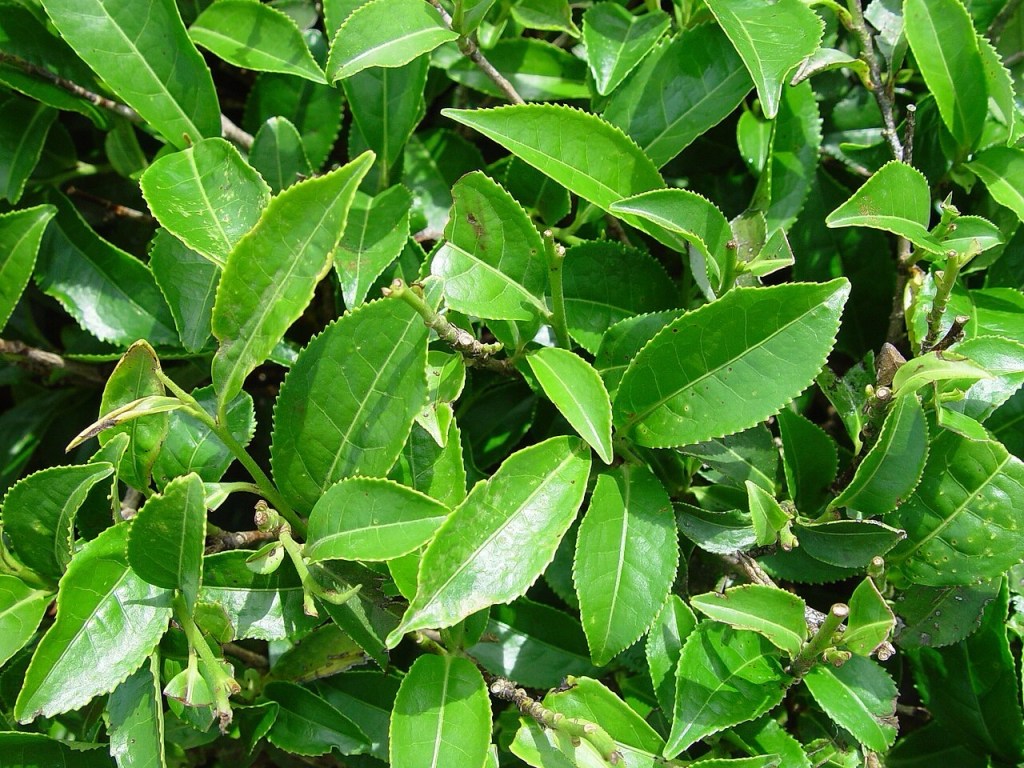
    See question five. Camellia sinensis.
    Image Wikimedia Commons

    Today’s questions are not date related but follow a sequence which may become obvious as you venture through it.


    One

    What Canadian Province has borders with the US states of Maine, New Hampshire, New York and Vermont?

    Answer: Quebec.

    Quebec, Canada’s largest province by area, is the only Francophone-majority province. It has a rich history, having been a French colony, then a British colony, before becoming part of Canada in 1867. Quebec’s economy is diverse, with key industries including aeronautics, hydroelectricity, and mining, and it is renowned for its distinct culture and contributions to Canadian society.


    Two

    In the film Some Like It Hot (1959) the band’s singer Sugar Kane also played what stringed instrument?

    Answer: Ukulele.

    Some Like It Hot is a 1959 American crime comedy film directed by Billy Wilder, starring Marilyn Monroe, Tony Curtis and Jack Lemmon. The film, set in the Prohibition era, follows two musicians (Curtis and Lemmon) who disguise themselves as women to escape mobsters.


    Three

    What was the title of the 1983 Paul McCartney/Stevie Wonder duet?

    Answer: Ebony and Ivory.

    Ebony and Ivory is a 1982 duet by Paul McCartney and Stevie Wonder, promoting racial harmony. The song topped charts in the UK and US, but was banned in South Africa during apartheid after wonder dedicated his Academy Award to Nelson Mandela.


    Four

    What letter of the Greek alphabet is used to indicate a mathematical function for ‘the sum of’?

    Answer: Sigma.

    Sigma is the eighteenth letter of the Greek alphabet, with a value of 200 in Greek numerals. It is used as a summation operator in mathematics and is the origin of the Latin letter S.


    Five

    Camellia sinensis is the plant used to make what?

    Answer: Tea.

    Camellia sinensis, an evergreen shrub or small tree, is used to produce various types of tea. The name sinensis means ‘from China’ in Botanical Latin, and the genus name Camellia honours Rev. Georg Kamel.


    Voyage of Discovery

    The post title was a voyage of discovery, or a quest, and if you look at the answers, the initial letters spell out Q U E S T.


  • Voyage of Discovery

    See question five. Camellia sinensis.
    Image Wikimedia Commons

    Today’s questions are not date related but follow a sequence which may become obvious as you venture through it.


    One

    What Canadian Province has borders with the US states of Maine, New Hampshire, New York and Vermont?


    Two

    In the film Some Like It Hot (1959) the band’s singer Sugar Kane also played what stringed instrument?


    Three

    What was the title of the 1983 Paul McCartney/Stevie Wonder duet?


    Four

    What letter of the Greek alphabet is used to indicate a mathematical function for ‘the sum of’?


    Five

    Camellia sinensis is the plant used to make what?


    Good luck! I’ll post the answers later.


  • Number Games — Answers

    Here are the answers to today’s questions.

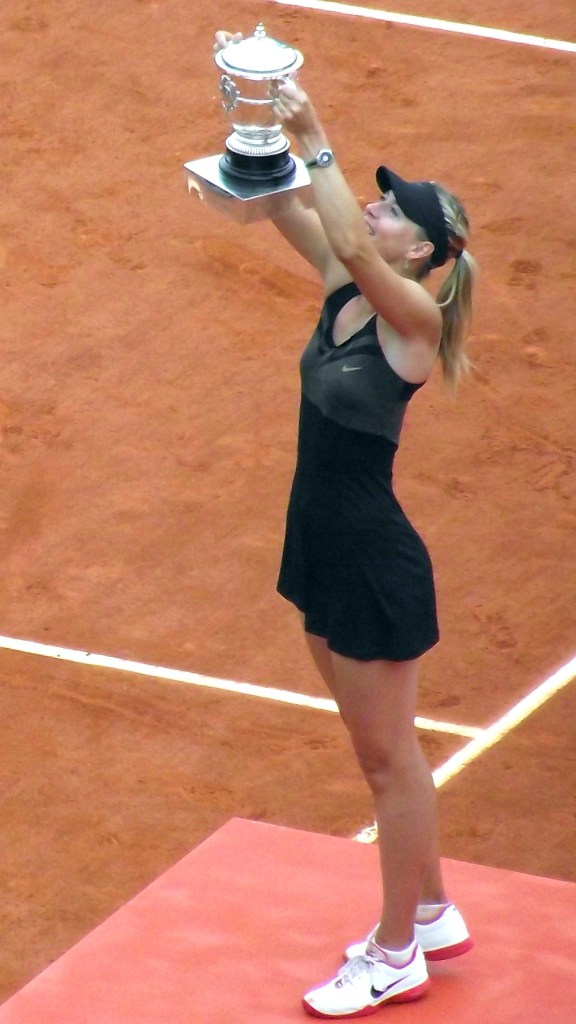
    Maria Sharapova completed the Career Grand Slam after winning the 2012 French Open.
    Image Wikimedia Commons

    Today’s answers are all single numbers — even the one that is a large number can be written as a single digit if you read the question carefully — and form part of a sequence.


    One

    How many of the eight planets in the solar system have one, and only one, natural satellite, and what are the names of this/these planet(s)?

    Answer: 1. Earth.

    Listing the eight planets in order from the nearest to the Sun: Mercury and Venus have no known moons. Earth has one known moon and is the only such planet. Mars has two; Jupiter, 115; Saturn, 292; Uranus, 29; and Neptune has 16. 


    Two

    Maria Sharapova retired from tennis in 2020. Of the five Grand Slam Singles Championships she won, how many were at the French Open, and who, if any, was/were her defeated finalist(s)?

    Answer: 2. Sara Errani; Simona Halep.

    Maria Sharapova won the French Open in 2012, beating Sara Errani in the final, 6–3, 6–2; and in 2014, she defeated Simona Halep in the final, 6–4, 6–7(5–7), 6–4. Sharapova, a former Russian professional tennis player, achieved the career Grand Slam in singles and was ranked world No. 1 for 21 weeks. She won 36 WTA Tour-level singles titles, including five major titles, and was inducted into the International Tennis Hall of Fame in 2025. Sharapova retired from tennis in 2020.


    Three

    How many siblings does King Charles III of Great Britain have, and what are they known as?

    Answer: 3. Anne, Princess Royal; Andrew Mountbatten-Windsor and Prince Edward, Duke of Edinburgh.

    King Charles III has three siblings: Anne, Princess Royal, who was born in 1950; Andrew Mountbatten-Windsor, born in 1960; and Prince Edward, Duke of Edinburgh, born in 1964. Mountbatten-Windsor was previously known as Prince Andrew, Duke of York, but was stripped of his titles, royal styles and honours as a result of his association with convicted paedophile Jeffrey Epstein. 


    Four

    The World Health Organisation estimates that approximately how many million people worldwide are bitten by snakes each year?

    Answer: 5. (i.e. 5 million).

    World Health Organisation estimates that annually, 5.4 million people are bitten by snakes, with 1.8 to 2.7 million envenomings. Snake bites result in 81,410 to 137,880 deaths and three times more amputations. Venomous bites cause paralysis, bleeding disorders, kidney failure, and tissue damage. Agricultural workers and children, especially, are severely affected.


    Five

    How many countries share a land border with Turkey (officially the Republic of Türkiye), and list them in alphabetical order?

    Answer: 8. Armenia, Azerbaijan, Bulgaria, Georgia, Greece, Iran, Iraq and Syria.

    If we make a start at the Black Sea to the north and go in a clockwise direction, they are Georgia, Armenia, Azerbaijan, Iran, Iraq, Syria (Mediterranean Sea and then Aegean Sea), Greece, and Bulgaria.


    Numbers Game

    Today’s title referred to the answers all being a number, but these are five numbers from near the start of the Fibonacci sequence: 0, 1, 1, 2, 3, 5, 8, 13, 21.


  • Number Games

    Maria Sharapova.
    Image Wikimedia Commons

    Today’s answers are all single numbers — even the one that is a large number can be written as a single digit if you read the question carefully — and form part of a sequence.


    One

    How many of the eight planets in the solar system have one, and only one, natural satellite, and what are the names of this/these planet(s)?


    Two

    Maria Sharapova retired from tennis in 2020. Of the five Grand Slam Singles Championships she won, how many were at the French Open, and who, if any, was/were her defeated finalist(s)?


    Three

    How many siblings does King Charles III of Great Britain have, and what are they known as?


    Four

    The World Health Organisation estimates that approximately how many millions of people worldwide are bitten by snakes each year?


    Five

    How many countries share a land border with Turkey (officially the Republic of Türkiye), and list them in alphabetical order?

    Good luck! I’ll post the answers later.


  • Islands Surrounded by Water — Answers

    Here are the answers to today’s questions.

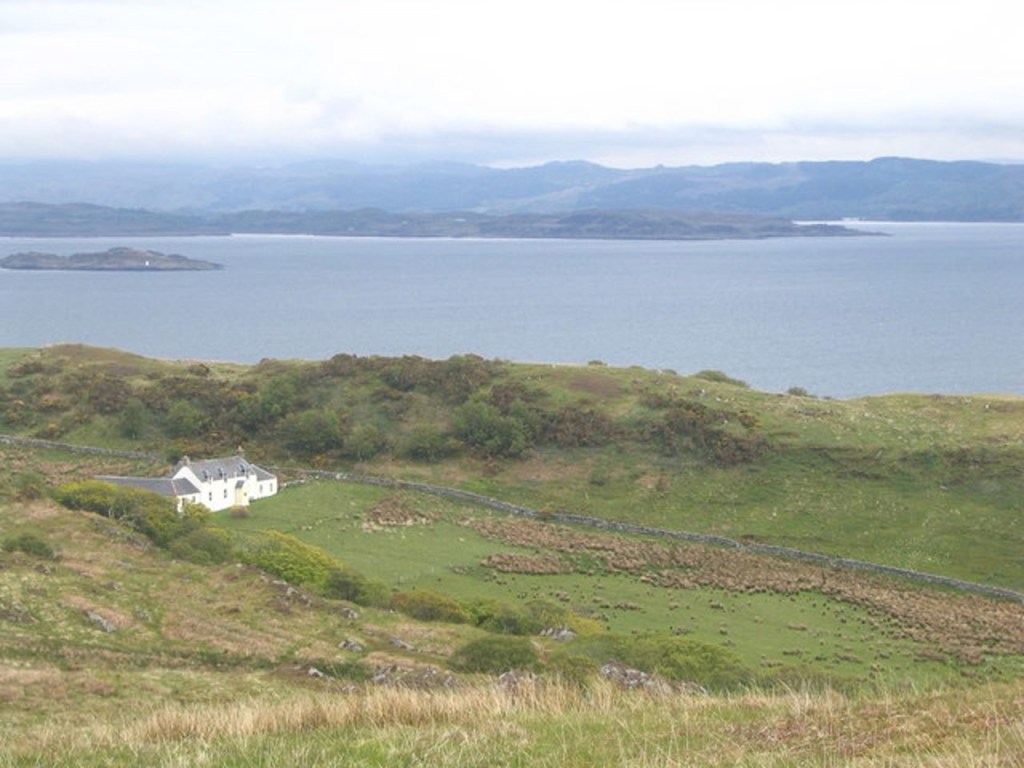
    Barnhill, Isle of Jura.
    Image Wild About Argyll

    The post title might sound a bit obvious but it is simply a follow-on to yesterday’s, Islands Surrounded by Land.
    The first question relates to today’s date, 8 June, and also to an island. The other questions are not date related but all are about islands.


    One

    In 1946, George Orwell left London and moved to Scotland, where he stayed at a remote house called Barnhill on a Hebridean island to finish his novel, Nineteen Eighty-Four. What island was Barnhill on, and what chronic illness was Orwell suffering as he wrote the novel? 

    Answer: Isle of Jura; Tuberculosis.

    In May 1946, Orwell retreated to Jura to draft Nineteen Eighty-Four at Barnhill. Despite slow progress and health issues, including lung inflammation and tuberculosis, he completed the first draft on 7 November 1947. Miranda Christen typed a clean version, and Orwell sought medical treatment at Hairmyres Hospital, East Kilbride. Orwell was discharged in summer 1948, returned to Jura, and completed a second draft of Nineteen Eighty-Four by November. Unable to find a typist, he retyped it himself despite illness. He left Barnhill in January 1949, and recovered in a sanatorium in the Cotswolds. On June 8, 1949, Nineteen Eighty-four was published.


    Two

    In what ocean is the Chagos Archipelago located?

    Answer: Indian Ocean.

    The Chagos Archipelago, over 60 islands in the Indian Ocean, was under French and then British control. In 1965, the UK expelled its Chagossian population for a US military base. Mauritius claimed the islands, with the ICJ and ITLOS ruling in 2019 and 2021 that the UK must return them. A 2025 treaty transferring sovereignty to Mauritius is on hold due to US, UK, and public opposition, citing UNCLOS Article 298 (b).


    Three

    What island extending from approximately 76° N to 83° N is world’s largest island entirely within the Arctic Circle?

    Answer: Ellesmere Island.

    Ellesmere Island, Canada’s northernmost and third largest island, spans 196,236 square kilometres, slightly smaller than Great Britain. Part of the Queen Elizabeth Islands, it features Cape Columbia, Canada’s northernmost point, and the north geomagnetic pole. The Arctic Cordillera dominates its landscape, with over one-fifth designated as Quttinirpaaq National Park. In 2021, its population was 144, residing in Alert, Eureka, and Grise Fiord, within Nunavut’s Qikiqtaaluk Region. Canada’s other northern islands, which are larger than Ellesmere, such as Baffin Island, extend south of the Arctic Circle and therefore do not answer the question.


    Four

    After the British Imperial Trans-Antarctic Expedition ship was trapped by pack ice, a small group in an open boat, the James Caird, attempted an 810-mile winter crossing of the South Atlantic Ocean to organise a rescue. What two islands were the starting and ending points of this epic journey?

    Answer: Elephant Island and South Georgia Island.

    In August 1914, Shackleton led the British Imperial Trans-Antarctic Expedition. The Endurance was trapped in pack ice, drifting for ten months before being crushed. The crew survived on ice floes for five months, reaching Elephant Island. Shackleton and five others sailed 810 miles (700 nautical miles; 1,300 km) to South Georgia in 17 days aboard the open boat, James Caird. The journey saw Atlantic winter storms, including ‘one of the worst hurricanes any of us had ever experienced‘. After four months and four relief expeditions, Shackleton rescued his crew, with none perishing, showcasing his exceptional leadership and resilience. The James Caird is on display at Dulwich College, London, UK, which is Shackleton’s alms mater.


    Five

    What is the largest island in the geographic entity of Europe?

    Answer: Great Britain.

    The designation ‘Great Britain‘ ultimately reflects classical Greek geographic terminology. In the 2nd century CE, Ptolemy referred to the larger island in the British Isles as Megálē Brettanía (‘Great Britain‘), using a descriptive term meaning ‘great‘ or ‘large’. The modern English name developed later from this classical tradition of distinguishing the larger island within the archipelago.


    Islands Surrounded by Water

    The post title might sound a bit obvious but it is simply a follow-on to yesterday’s, Islands Surrounded by Land.
    The first question relates to today’s date, 8 June, and also to an island. The other questions are not date related but all are about islands.


  • Islands Surrounded by Water

    Barnhill, Isle (?).
    Image Wild About Argyll

    The post title might sound a bit obvious but it is simply a follow-on to yesterday’s, Islands Surrounded by Land.
    The first question relates to today’s date, 8 June, and also to an island. The other questions are not date related but all are about islands.


    One

    In 1946, George Orwell left London and moved to Scotland, where he stayed at a remote house called Barnhill on a Hebridean island to finish his novel, Nineteen Eighty-Four. What island was Barnhill on, and what chronic illness was Orwell suffering as he wrote the novel? 


    Two

    In what ocean is the Chagos Archipelago located?


    Three

    What island extending from approximately 76° N to 83° N is world’s largest island entirely within the Arctic Circle?


    Four

    After the British Imperial Trans-Antarctic Expedition ship was trapped by pack ice, a small group in an open boat, the James Caird, attempted an 810-mile winter crossing of the South Atlantic Ocean to organise a rescue. What two islands were the starting and ending points of this epic journey?


    Five

    What is the largest island in the geographic entity of Europe?


    Good luck! I’ll post the answers later.