Today the first question relates to today’s date, May 23rd. The following questions follow a theme which is explained here.
Theme
The gist of today’s quiz is that the first question results in you having three five-letter words in the answer.
One of those words supplies the initial letters for the remaining questions.
Firstly, discount the initial letter as it has already been used. The remaining four letters supply the initial letters to the answers to the remaining questions but they will not necessarily be in the correct order.
Once you have answered all the questions you should be able to take the initial letters of the five answers, rearrange and have one of the words from the answer to question one.
Image Encyclopædia Britannica
One
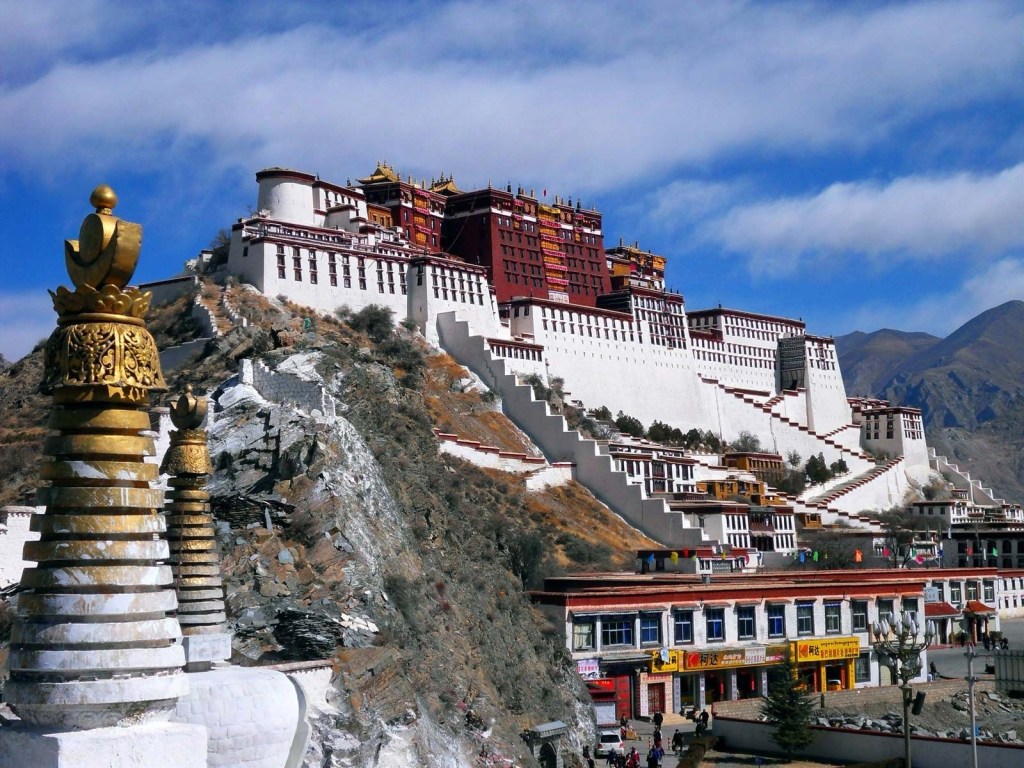
The country that is home to the building in the image above was annexed by a neighbour on this day in 1951. In what city is the building, and what two neighbouring countries are referred to?
Two
In what film from the 1990s is El Toro air base destroyed?
Three
What explorer, in c.986 CE, was the founder of the first European settlement on Greenland?
Four
Who in The Lord of the Rings is described by Gandalf as ‘the oldest living thing that still walks beneath the Sun upon this Middle-earth’?
Five
The … …, the Straits of Magellan to the north, and the open-ocean Drake Passage to the south are the three navigable passages around South America between the Pacific and Atlantic Oceans. — Wikipedia
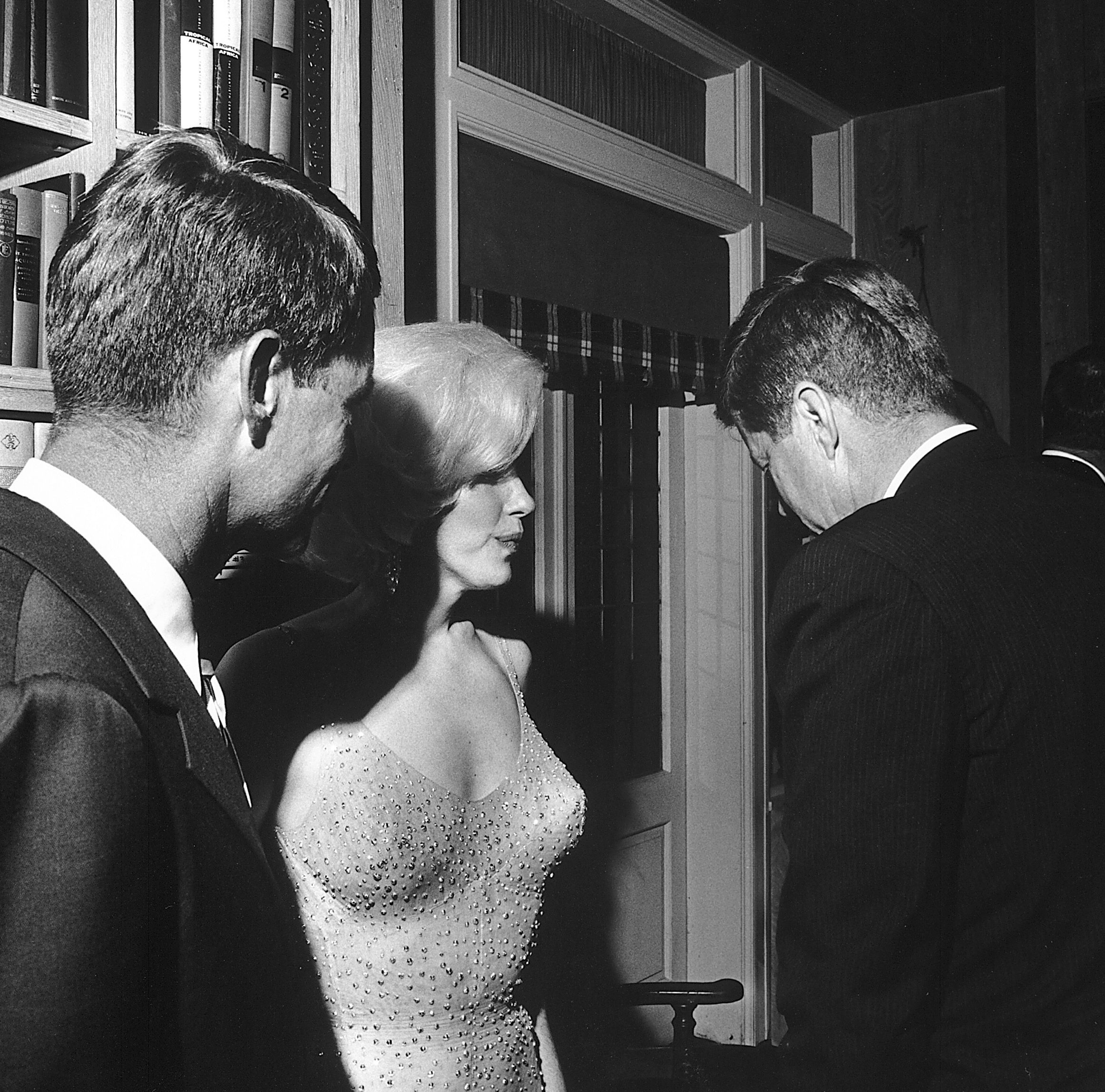
Happy Birthday, Mr. President. Robert F. Kennedy, Marilyn Monroe and John F. Kennedy. Image Wikimedia Commons (cropped)
Five questions which in some way are connected to today, May 19th.
One
The world’s first national park service was established in 1911 in which country?
Answer: Canada.
In 1911, Canada established the first national parks service in the world. What began as a cluster of parks in the Rocky Mountains gradually became a national system, fostering tourism and economic growth while upholding conservation ideals. In 1914, the definition of a “Dominion Park” was expanded to include significant historic places, laying the groundwork for a modern system of iconic national parks and national historic sites, which welcome millions of visitors annually, and initiating a tradition of national and international leadership in the management of protected places that continues to this day. — Parks Canada
Two
Colin Chapman, an English engineer born in 1928, founded which sports car company, and Formula One team?
Answer: Lotus Cars; Team Lotus.
Anthony Colin Bruce Chapman, founder of Lotus Cars, was an English design engineer known for his lightweight, high-handling sports cars. Under his direction, Team Lotus achieved significant success in Formula One and the Indianapolis 500.
Three
In 1959, the North Vietnamese Army’s Group 559 was established to determine how to maintain supply lines to South Vietnam. The supply route to fulfil this brief became known as what? And what countries, other than North and South Vietnam, did the route traverse?
Answer: Ho Chi Minh trail; Laos and Cambodia.
The Ho Chi Minh Trail, a logistical network of roads and trails, ran from North to South Vietnam through Laos and Cambodia, supporting the Viet Cong and People’s Army of Vietnam during the Vietnam War. Despite being heavily targeted by air interdiction, the trail effectively supplied troops in the south.
Four
Charlotte, the future queen consort of George III, was born in 1744 in the small duchy of Mecklenburg-Strelitz. This duchy was part of what empire?
Answer: Holy Roman Empire.
Charlotte of Mecklenburg-Strelitz, Queen of Great Britain and Ireland from 1761 to 1818, was the longest-serving queen consort. She was a patron of the arts, introduced the Christmas tree to Britain, and was deeply affected by her husband’s illness and the French Revolution.
Five
On this day Marilyn Monroe famously sang Happy Birthday, Mr. President at a gala to mark John F. Kennedy’s birthday. The gala, a Democratic Party fundraiser, was held ten days before the president’s birthday. What age would the president become on that birthday, and where was the gala held?
Answers: 45 years of age; Madison Square Gardens, NYC.
Marilyn Monroe sang Happy Birthday to President John F. Kennedy at a 1962 gala, inserting ‘Mr. President‘ for his name and adding a snippet of Thanks for the Memory with new lyrics.
Happy Birthday, Mr. President
[Chorus] Happy birthday to you Happy birthday to you Happy birthday, Mr President Happy birthday to you
[Verse] Thanks, Mr President, for all the things you’ve done The battles that you’ve won The way you deal with U.S. Steel and our problems by the ton We thank you so much
[Outro] Everybody, happy birthday
[Chorus] Happy birthday to you Happy birthday to you Happy birthday, Mr President Happy birthday to you
[Verse] Thanks, Mr President, for all the things you’ve done The battles that you’ve won The way you deal with U.S. Steel and our problems by the ton We thank you so much
[Outro] Everybody, happy birthday — Lyrics from Genius.com
Happy Birthday, Mr. President. Robert F. Kennedy, Marilyn Monroe and John F. Kennedy. Image Wikimedia Commons (cropped)
Five questions which in some way are connected to today, May 19th.
One
The world’s first national park service was established in 1911 in which country?
Two
Colin Chapman, an English engineer born in 1928, founded which sports car company, and Formula One team?
Three
In 1959, the North Vietnamese Army’s Group 559 was established to determine how to maintain supply lines to South Vietnam. The supply route to fulfil this brief became known as what? And what countries, other than North and South Vietnam, did the route traverse?
Four
Charlotte, the future queen consort of George III, was born in 1744 in the small duchy of Mecklenburg-Strelitz. This duchy was part of what empire?
Five
On this day Marilyn Monroe famously sang Happy Birthday, Mr. President at a gala to mark John F. Kennedy’s birthday. The gala, a Democratic Party fundraiser, was held ten days before the president’s birthday. What age would the president become on that birthday, and where was the gala held?
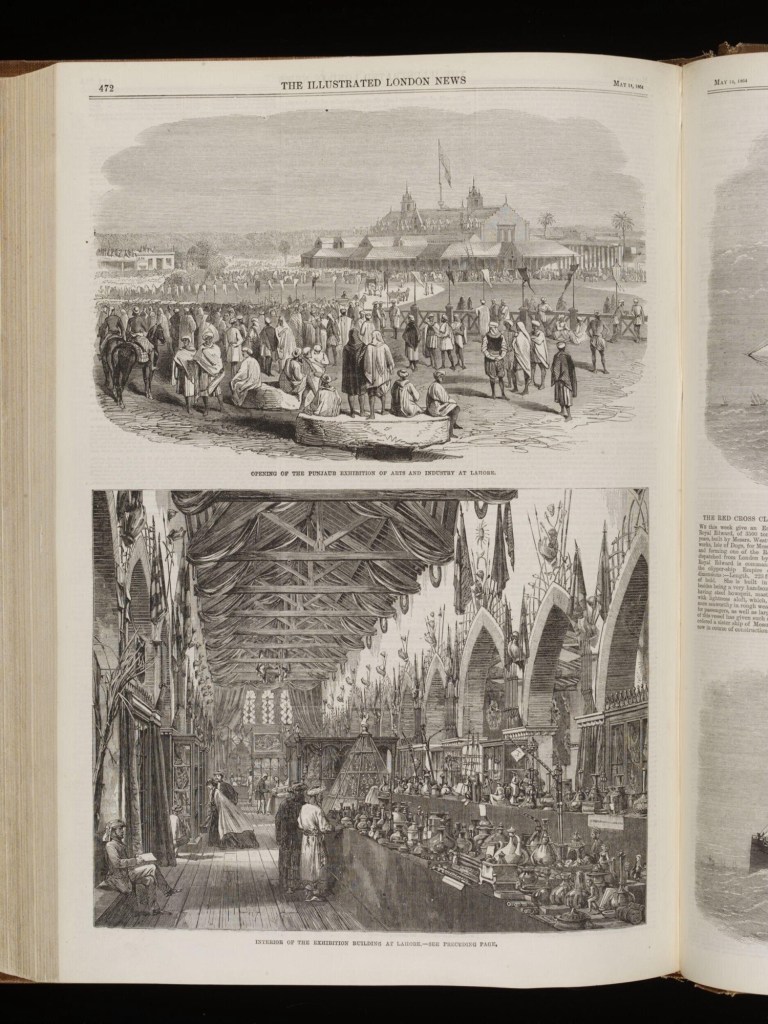
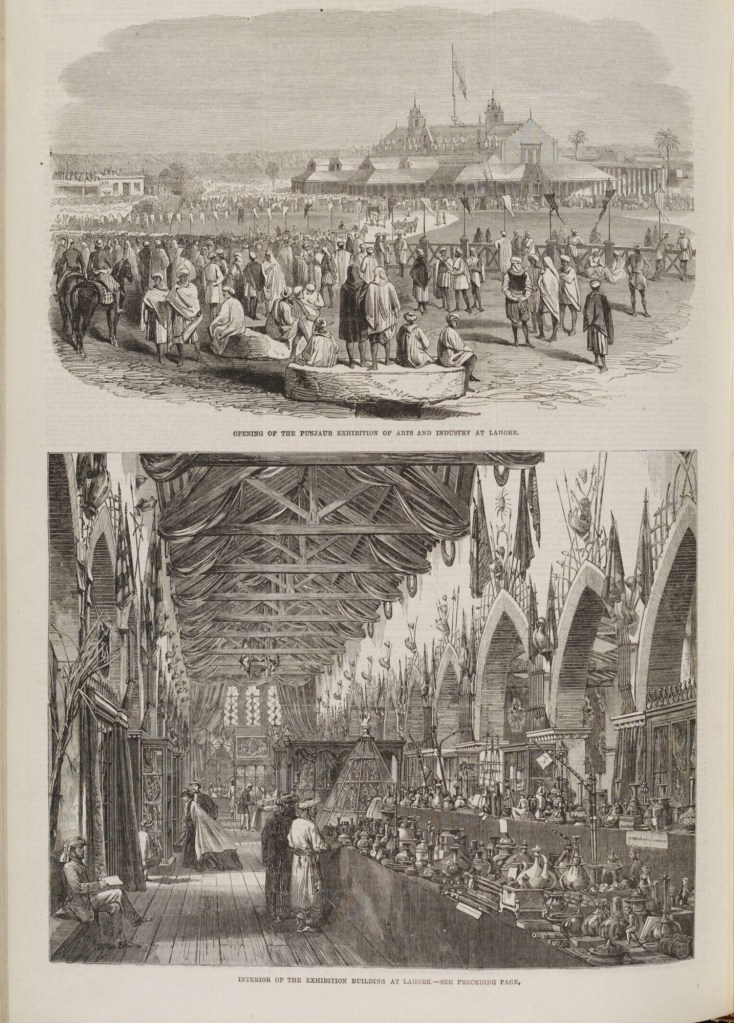
Images from an Exhibition at Lahore. The Illustrated London News, 1864. Image Victoria & Albert Museum.
These are all connected to today’s date, May 14th.
One
1842 saw the first publication of an illustrated weekly news magazine, named The Illustrated … News. The image is from a later edition. What city completed the name of this periodical?
Answer: London. The Illustrated London News
Founded by Herbert Ingram, The Illustrated London News debuted on 14 May 1842 as the first illustrated weekly news magazine. It published weekly until 1971, then less frequently, ceasing in 2003. The company, now Illustrated London News Ltd, remains a publishing and digital agency in London, preserving its archives.
Two
The United States’ first space station was launched on this date. In what year was this, and what was it called?
Answers: 1973; Skylab.
Skylab, the US’s first space station, was occupied for 24 weeks in 1973-1974. It was constructed from a repurposed Saturn V third stage and included an orbital workshop, solar observatory, and Earth observation capabilities. Skylab’s orbit eventually decayed and it disintegrated in the atmosphere on July 11, 1979 scattering debris across the Indian Ocean and Western Australia.
Three
In 2004, the then Crown Prince Frederik of Denmark married Mary Donaldson at Copenhagen Cathedral. The couple are now the king and queen of Denmark. On what island was the bride born?
Answer: Tasmania.
Mary, born Mary Elizabeth Donaldson in 1972 at Hobart, Tasmania, Australia, is the Queen of Denmark and wife of King Frederik X. They met at the 2000 Olympics and married in 2004, having four children together. Mary is a patron of over 30 charities and founded the Mary Foundation in 2007.
Four
The practice of holding a two-minute silence to remember the dead from the First World War began on 14 May 1918. In what port city of the then British Empire did it begin?
Answer: Cape Town, South Africa.
The Remembrance Day two-minute silence began in Cape Town in 1918, when Mayor Sir Harry Hands introduced a daily pause after the death of his son in the First World War. Organised with councillor Robert Rutherford Brydone, the ceremony halted traffic while buglers played the ‘Last Post’ and ‘Reveille’. The practice spread across the British Empire after Sir Percy FitzPatrick promoted it to King George V, who officially adopted the two-minute Armistice Day silence in 1919.
Five
Born Catherine Élise today in 1969 in Victoria. This actress won an award for her role as Katharine Hepburn and later played KGB agent Irina Spalko. Who is she?
Answer: Cate Blanchett.
Cate Blanchett, an Australian actress born Catherine Élise Blanchett on 14 May 1969 in Melbourne, Victoria, Australia, is 56 years old. Known for her multidimensional characters and wide range of roles, her breakthrough came playing a young Queen Elizabeth I in Elizabeth (1998). She later appeared in The Lord of the Rings series, The Aviator (2004), and Blue Jasmine (2013). Blanchett won an Academy Award for Best Supporting Actress for her role as Katharine Hepburn in The Aviator and another for her performance in Blue Jasmine. She also portrayed Irina Spalko, the main antagonist in the 2008 film Indiana Jones and the Crystal Skull.
Images from an Exhibition at Lahore (cropped). The Illustrated … News, 1864. Image Victoria & Albert Museum.
These are all connected to today’s date, May 14th.
One
1842 saw the first publication of an illustrated weekly news magazine, named The Illustrated … News. The image above is from a later edition. What city completed the name of this periodical?
Two
The United States’ first space station was launched on this date. In what year was this, and what was it called?
Three
In 2004, Crown Prince Frederik of Denmark married Mary Donaldson at Copenhagen Cathedral. The couple are now the king and queen of Denmark. On what island was the bride born?
Four
The practice of holding a two-minute silence to remember the dead from the First World War began on 14 May 1918. In what port city of the then British Empire did it begin?
Five
Born Catherine Élise today in 1969 in Victoria. This actress won an award for her role as Katharine Hepburn and later played KGB agent Irina Spalko. Who is she?
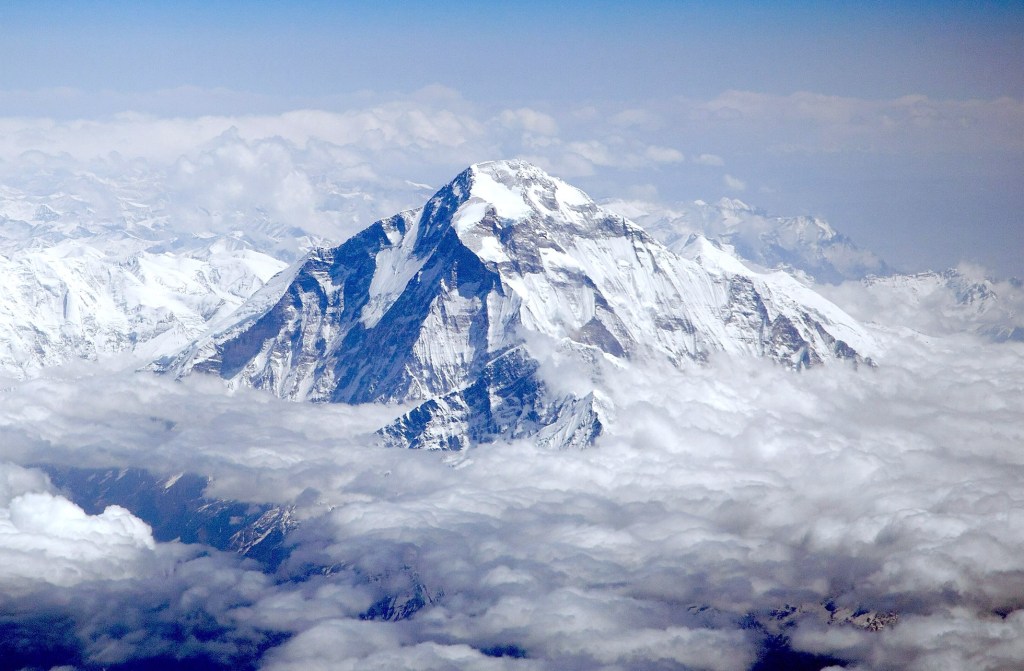
See question five. Dhaulagiri, at 8167 m, the world’s seventh-highest mountain above sea level. Image Wikimedia Commons
Today’s date-related questions are all connected to May 13th.
One
In 1637, according to tradition France’s Cardinal Richelieu invented the table knife by having the tips of knives rounded. He did this to prevent what?
Answer: To stop his companions picking their teeth with the knife-points.
The distinguishing feature of a table knife is a blunt or rounded end. The origin of this, and thus of the table knife itself, is attributed by tradition to Cardinal Richelieu around 1637, reputedly to cure dinner guests of the habit of picking their teeth with their knife-points. — Wikipedia
Two
On this day in 1940, some eight months into World War II, Winston Churchill faced the United Kingdom’s House of Commons for the first time as prime minister and informed them that “I have nothing to offer but …, …, … and ….” What four words have been removed from this quotation?
Answer: Blood, toil, tears [and] sweat.
I would say to the House, as I said to those who have joined this government: “I have nothing to offer but blood, toil, tears and sweat.” — International Churchill Society
Three
97-year-old Doris von Kappelhoff died on this day in 2019. Who was she better known as?
Answer: Doris Day.
Doris Day, born Doris Von Kappelhoff, was an American singer and actress who rose to fame in the 1950s and 1960s. She starred in numerous musicals and sex comedies, becoming a leading Hollywood star and embodying the ideal American woman of the era. Later in life, she dedicated herself to animal welfare, founding several organisations to advocate for animal rights.
Four
In 1981, the pope survived an assassination attempt. What pope and where did this happen?
Answers: Pope John Paul II; St. Peter’s Square, Vatican City.
On 13 May 1981, Pope John Paul II was shot and critically wounded by Mehmet Ali Ağca in St. Peter’s Square. The Pope credited the Blessed Virgin Mary with saving his life and later visited Ağca in prison, forgiving him. Numerous theories emerged about the assassination attempt, including a controversial claim that the Soviet Union was responsible, though the Pope publicly denied this.
Five
The world’s seventh-highest mountain above sea level has several peaks exceeding 25,000 feet (7,620 m) and one at 26,795 feet (8,167 m). It has a name meaning ‘white mountain’; what is that name?
Answer: Dhaulagiri.
Dhaulagiri, a Himalayan massif in Nepal, features peaks over 25,000 feet, including Dhaulagiri I at 26,795 feet. Known as ‘white mountain’ in Sanskrit, its steep south wall and cold climate delayed its ascent until May 13, 1960, when a Swiss team led by Max Eiselin reached the summit.
See question five. The world’s seventh-highest mountain 8167 m above sea level. Image Wikimedia Commons
Today’s date-related questions are all connected to May 13th.
One
In 1637, according to tradition France’s Cardinal Richelieu invented the table knife by having the tips of knives rounded. He did this to prevent what?
Two
On this day in 1940, some eight months into World War II, Winston Churchill faced the United Kingdom’s House of Commons for the first time as prime minister and informed them that “I have nothing to offer but …, …, … and ….” What four words have been removed from this quotation?
Three
97-year-old Doris von Kappelhoff died on this day in 2019. Who was she better known as?
Four
In 1981, the pope survived an assassination attempt. What pope and where did this happen?
Five
The world’s seventh-highest mountain above sea level has several peaks exceeding 25,000 feet (7,620 m) and one at 26,795 feet (8,167 m). It has a name meaning ‘white mountain’; what is that name?
Here are five sets of initials for you to flesh out.
One
In computing what does WYSIWYG stand for?
Answer: What You See Is What You Get.
WYSIWYG software allows content editing in a form resembling its final appearance, such as a printed document or web page.
Two
UNICEF was formed in 1946 what, at that time, did the letters in UNICEF stand for?
Answer: United Nations International Children’s Emergency Fund.
UNICEF, a United Nations agency, provides humanitarian and developmental aid to children worldwide. Operating in 192 countries, its activities include immunisations, disease prevention, nutrition, sanitation, education, and emergency relief. UNICEF relies on voluntary contributions and is governed by a 36-member executive board. Since 1953, UNICEF has officially been the United Nations Children’s Fund.
Three
In the US military MASH was an abbreviation meaning what?
Answer: Mobile Army Surgical Hospital.
Mobile Army Surgical Hospitals (MASH) were U.S. Army field hospitals operational from the Korean War to the Gulf War. They provided crucial medical support to large army units, with a low mortality rate due to their proximity to the front lines. A media franchise (books, film and television) which depicts fictional characters at a fictional Korean War field hospital, focussing on medical practice and the staff’s humorous antics.
Four
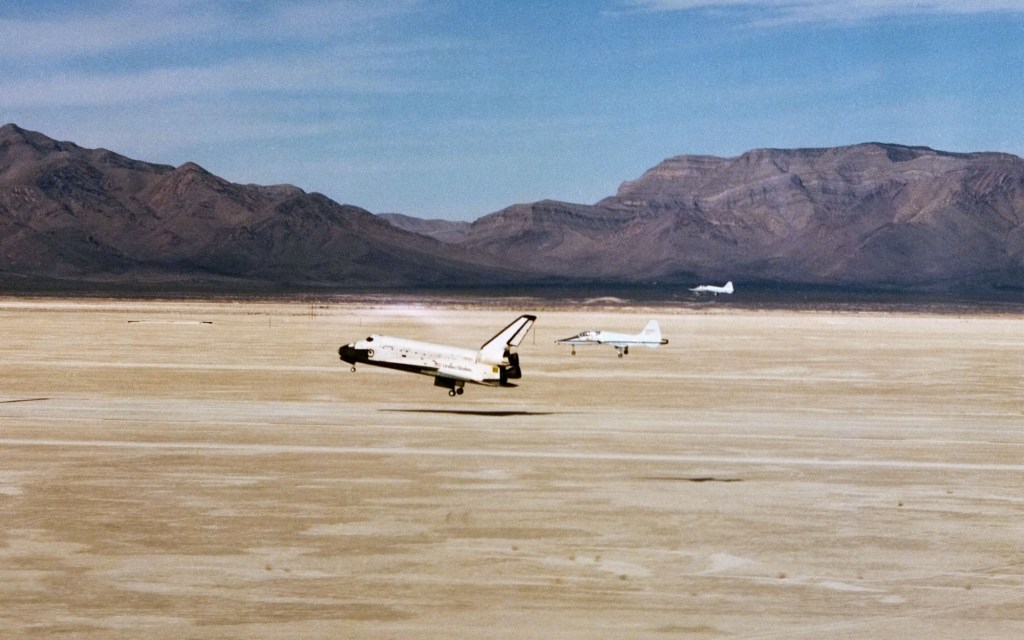
During the NASA Space Shuttle program each mission was referred to by an STS number. What words were represented by the letters STS?
Answers: Space Transportation System.
The Space Shuttle programme, operational from 1981 to 2011, was NASA’s fourth human spaceflight programme. It involved reusable orbiters launched with solid rocket boosters and an external fuel tank, carrying astronauts and payloads to low Earth orbit. The Shuttle was the first reusable crewed space vehicle to achieve orbit and landing.
Five
In Australian geography what is A.C.T.?
Answer: Australian Capital Territory.
The Australian Capital Territory (ACT), established in 1911, houses the nation’s capital, Canberra. While the ACT has its own government, the Federal Parliament can overrule its legislation.
Here are some more multiple-choice which don’t have any specific theme.
One
Where in South Australia is a major opal producer?
Andamooka
OhWell
Utapau
Answer: 1. Andamooka.
Andamooka, a remote opal-mining town in South Australia, is known for its historic opal mining, semi-dugout housing, and astronomy tourism. The town is administered by the Outback Communities Authority and lies within the state electoral district of Giles and the federal Division of Grey.
Two
What was a popular, long-running British film series?
Carry Off
Carry On
Carry Out
Answer: 2. Carry On.
Carry On is a British comedy franchise with 31 films, the most of any British film franchise. The films, directed by Gerald Thomas and produced by Peter Rogers, were made between 1958 (Carry On Sergeant) and 1992 (Carry On Columbus), with a 14-year gap between the 30th and 31st entries. The series employed a regular ensemble cast and was known for its humour in the British comic tradition.
Three
The city now known as … developed to become one of the most significant cities in history. … was founded on the Sarayburnu promontory by Greek colonists, potentially in the seventh century BC. — Wikipedia
What cities are missing from the description from Wikipedia. The first is a modern city and the second is that cities original name?
Ararat and Davalou
Bosanska Kostajnica and Kostajnica
Istanbul and Byzantium
Answers: 3. Istanbul and Byzantium.
Byzantium, an ancient Greek city founded in the 7th century BCE, later became Constantinople and is now Istanbul. It was a Greek-speaking city until its conquest by the Ottoman Empire in 1453 CE.
Four
In 1978, Herman Wouk wrote which classic?
War And Remembrance
The Brothers Karamazov
The Mists of Avalon
Answer: 1. War and Remembrance.
War and Remembrance (1978), a sequel to The Winds of War (1971), follows the Henry and Jastrow families from December 1941 to August 1945.
Five
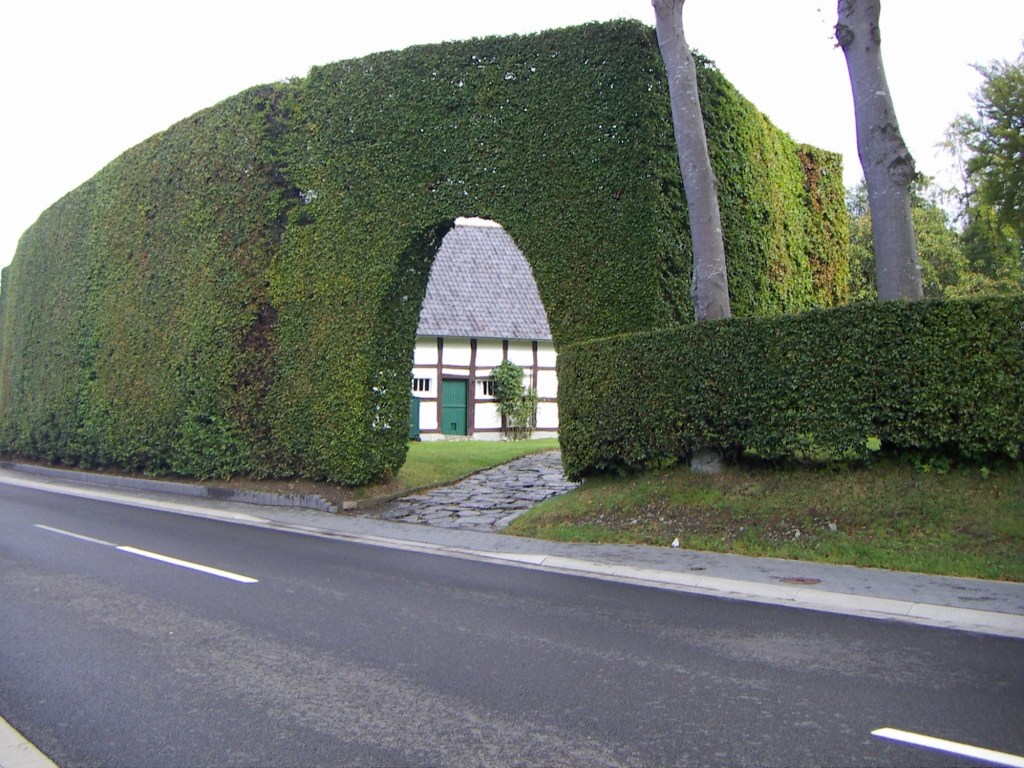
The seat of government of a European country is in a city named from a term meaning ‘hedge’? What country?
Belgium
Denmark
Netherlands
Answer: 3. Netherlands.
The Hague, the third-largest city in the Netherlands, is the country’s administrative centre and seat of government. The name Den Haag, meaning ‘hedge’ or ‘enclosure’, first appeared in 1242. The fuller form, ’s-Gravenhage, meaning ‘the count’s enclosure’, appeared in 1347.