Tag: science

  • The Wind in the Wires Made a Tattle-tale Sound—Answers

    Five random questions for you to ponder today. 
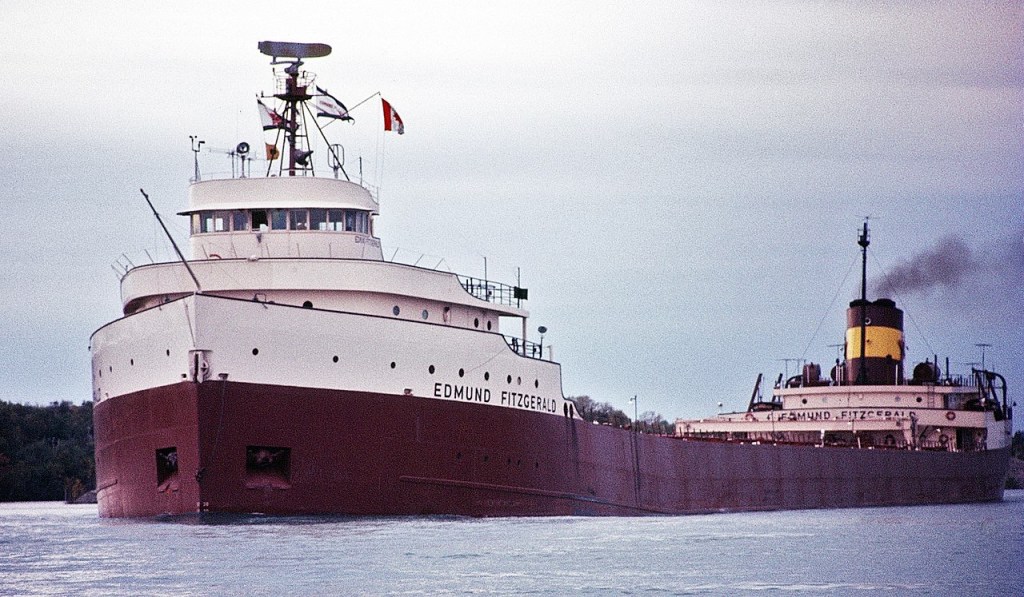
    Edmund Fitzgerald.
    Image Wikimedia Commons

    One

    On which of the Great Lakes did the SS Edmund Fitzgerald sink with the loss of her entire crew in 1975?

    1. Lake Michigan
    2. Lake Ontario
    3. Lake Superior

    Answer: 3. Lake Superior.

    The SS Edmund Fitzgerald, the largest ship on the Great Lakes, sank during a storm on November 10, 1975, with all 29 crew members lost. The cause of the sinking remains unknown, though it is believed to have been due to a combination of factors such as structural failure and high waves. The disaster led to changes in Great Lakes shipping regulations and practices. The Edmund Fitzgerald disaster, immortalised in Gordon Lightfoot’s ballad, led to significant changes in Great Lakes shipping regulations, including mandatory survival suits and increased inspections.


    Two

    This Eurasian woodland plant, Allium uranium, with broad shiny leaves and round heads of flowers, producing a strong aroma of garlic is also called wild garlic. What is it?

    1. Larsons
    2. Ramsons
    3. Tamsons 

    Answer: 2. Ramsoms.

    Allium ursinum, or wild garlic, is a bulbous perennial flowering plant native to Eurasia. It is a wild relative of onion and garlic. It has several names including ramsons; it is also known as buckrams, broad-leaved garlic, cowleekes, cows’s leek, cowleek, wood garlic, Eurasian wild garlic, onion grass, bear leek and bear’s garlic. 


    Three

    What letter(s) is the symbol which represents the element tungsten?

    1. T
    2. Gs
    3. W

    Answer: 3. W.

    Tungsten, also known as wolfram, is a chemical element with the symbol W and atomic number 74. It is a metal found naturally in compounds and was first isolated as a metal in 1783.


    Four

    Who, on a sixties album, released a version of the Christmas carol Silent Night with a simulated 7 O’clock News, which featured real events from the preceding summer, being read over it? 

    1. Crosby, Stills and Nash
    2. Joni Mitchell
    3. Simon & Garfunkel

    Answer: 3. Simon & Garfunkel.

    7 O’Clock News/Silent Night by Simon & Garfunkel is a sound collage from their 1966 album, combining Silent Nightwith a simulated news bulletin. A sound collage juxtaposes Silent Night with a news report, highlighting social issues like civil rights, Lenny Bruce’s death, and the Vietnam War. The track’s mix emphasises the contrast between the news and the Christmas song.


    Five

    In which Scottish body of water was the German High Seas Fleet scuttled in June 1919?

    1. Loch Ness
    2. Scapa Flow
    3. Firth of Lorn

    Andwer: 2. Scapa Flow.

    Scapa Flow is a strait in the Orkney Islands, Scotland. It was an important British naval base, especially in the First World War. The German High Seas Fleet was interned there after its surrender, and was scuttled in 1919 as an act of defiance against the terms of the Versailles peace settlement.


    The Wind in the Wires Made a Tattle-tale Sound — Post Title

    The post title is a line from The Wreck of the Edmund Fitzgerald by Gordon Lightfoot. Full lyrics below from AZ Lyrics.

    The Wreck Of The Edmund Fitzgerald

    By Gordon Lightfoot.

    The legend lives on from the Chippewa on down
    Of the big lake they call Gitche Gumee
    The lake, it is said, never gives up her dead
    When the skies of November turn gloomy
    With a load of iron ore twenty-six thousand tons more
    Than the Edmund Fitzgerald weighed empty
    [Former version:] That good ship and true was a bone to be chewed
    [Latter version:] That good ship and crew was a bone to be chewed
    When the gales of November came early 

    The ship was the pride of the American side
    Coming back from some mill in Wisconsin
    As the big freighters go, it was bigger than most
    With a crew and good captain well seasoned
    Concluding some terms with a couple of steel firms
    When they left fully loaded for Cleveland
    Then later that night when the ship’s bell rang
    Could it be the north wind they’d been feelin’? 

    The wind in the wires made a tattle-tale sound
    When the wave broke over the railing
    And every man knew, as the captain did too
    ‘Twas the witch of November come stealin’
    The dawn came late and the breakfast had to wait
    When the gales of November came slashin’
    When afternoon came it was freezing rain
    In the face of a hurricane west wind 

    When suppertime came, the old cook came on deck
    Saying, “Fellas, it’s too rough to feed ya.”
    [Former version:] At seven PM a main hatchway caved in
    [Latter version:] At seven PM it grew dark, it was then
    He said, “Fellas, it’s been good to know ya.”
    The captain wired in he had water comin’ in
    And the good ship and crew was in peril
    And later that night when his lights went out of sight
    Came the wreck of the Edmund Fitzgerald 

    Does anyone know where the love of God goes
    When the waves turn the minutes to hours?
    The searchers all say they’d have made Whitefish Bay
    If they’d put fifteen more miles behind her
    They might have split up or they might have capsized
    They may have broke deep and took water
    And all that remains is the faces and the names
    Of the wives and the sons and the daughters 

    Lake Huron rolls, Superior sings
    In the rooms of her ice-water mansion
    Old Michigan steams like a young man’s dreams
    The islands and bays are for sportsmen
    And farther below, Lake Ontario
    Takes in what Lake Erie can send her
    And the iron boats go as the mariners all know
    With the gales of November remembered 

    [Former version:] In a musty old hall in Detroit they prayed
    [Latter version:] In a rustic old hall in Detroit they prayed
    In the Maritime Sailors’ Cathedral
    The church bell chimed ’til it rang twenty-nine times
    For each man on the Edmund Fitzgerald
    The legend lives on from the Chippewa on down
    Of the big lake they call Gitche Gumee
    Superior, they said, never gives up her dead
    When the gales of November come early.
    AZ Lyrics.

  • The Wind in the Wires Made a Tattle-tale Sound

    Five random questions for you to ponder today. 

    Edmund Fitzgerald.
    Image Wikimedia Commons

    One

    On which of the Great Lakes did the SS Edmund Fitzgerald sink with the loss of her entire crew in 1975?

    1. Lake Michigan
    2. Lake Ontario
    3. Lake Superior

    Two

    This Eurasian woodland plant, Allium uranium, with broad shiny leaves and round heads of flowers, producing a strong aroma of garlic is also called wild garlic. What is it?

    1. Larsons
    2. Ramsons
    3. Tamsons 

    Three

    What letter(s) is the symbol which represents the element tungsten?

    1. T
    2. Gs
    3. W

    Four

    Who, on a sixties album, released a version of the Christmas carol Silent Night with a simulated 7 O’clock News, which featured events from the preceding summer, being read over it? 

    1. Crosby, Stills and Nash
    2. Joni Mitchell
    3. Simon & Garfunkel

    Five

    In which Scottish body of water was the German High Seas Fleet scuttled in June 1919?

    1. Loch Ness
    2. Scapa Flow
    3. Firth of Lorn

    Good luck! I’ll post the answers later.


  • Three Cigarettes in an Ashtray—Answers

    Here are the answers to the questions I posted earlier.

    These are five questions which are related to today, February 5th.

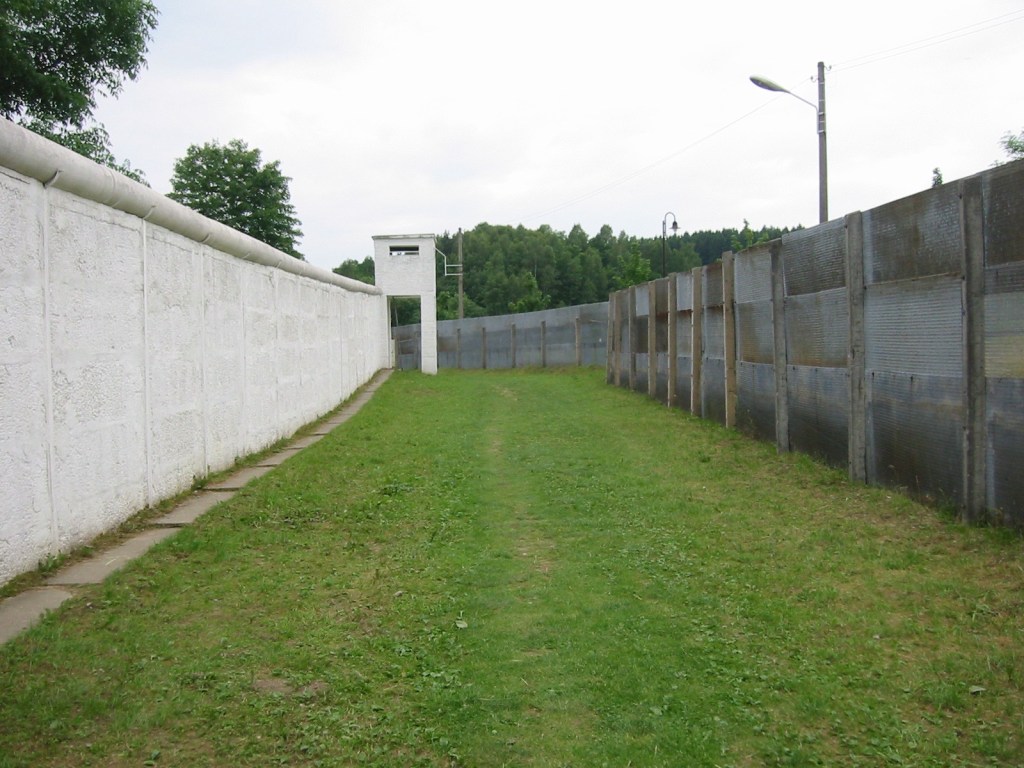
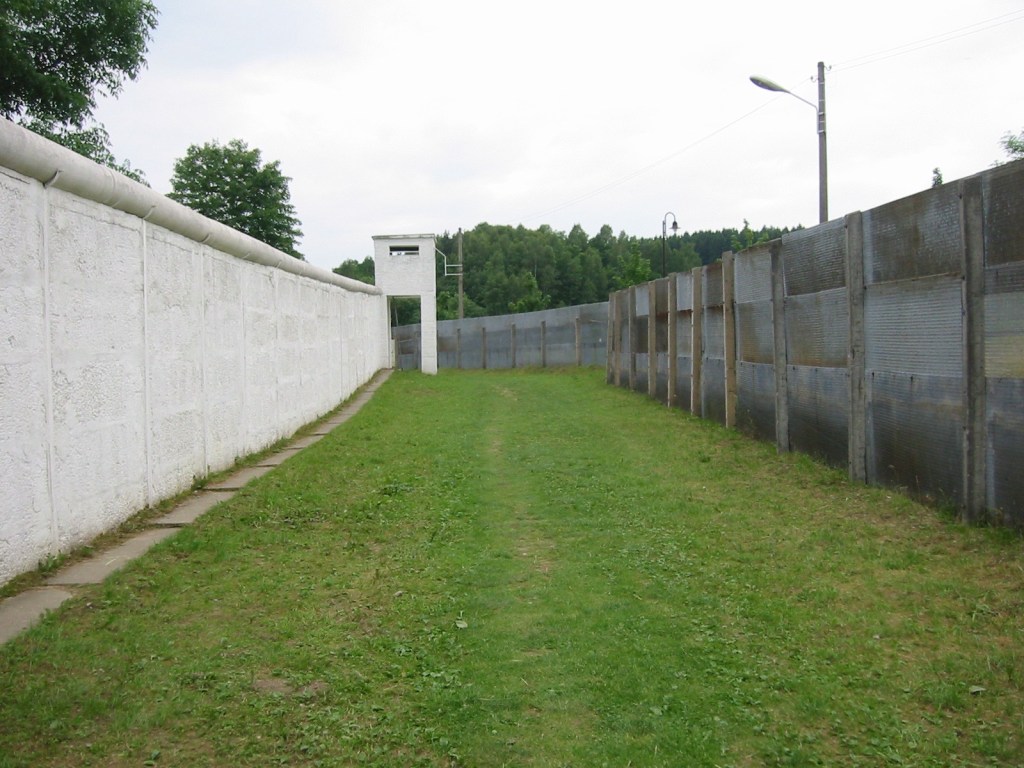
    Section of the border between East and West Germany.
    Image Wikimedia Commons

    One

    The term ‘Iron Curtain’ described the political and physical boundary dividing Europe from the end of World War II until the end of the Cold War. Who popularised its use in a speech at Westminster College, Fulton, Missouri, on 5 March 1946?

    Answer: Winston Churchill.

    …an iron curtain has descended across the Continent. Behind that line lie all the capitals of the ancient states of Central and Eastern Europe.
    — Winston Churchill, Former British prime minister, 5 March 1946, Westminster College, Fulton, Missouri

    The Iron Curtain was a political and physical boundary dividing Europe from 1945 to 1990/1991, symbolising the ideological divide between the Soviet-controlled Eastern Bloc and the Western nations. Popularised by Winston Churchill in 1946, the term originally described physical barriers but later encompassed broader cultural and ideological differences. The Iron Curtain largely dissolved in 1989-90 with the fall of communism.


    Two

    A 31-year-old American country singer, who was born Virginia Patterson Hensley in Virginia, died in a 1963 plane crash in Tennessee. She had enjoyed an eight-year recording career, which included two number ones as well as other major chart hits. By what name was she known professionally?

    Answer: Patsy Cline.

    Patsy Cline, born Virginia Patterson Hensley, was an American singer known for her crossover success from country to pop music. She achieved major hits like Walkin’ After Midnight and I Fall to Pieces, becoming a trailblazer for women in country music. Although, she died in a plane crash in 1963, her legacy endures through her influential music and posthumous recognition.

    Three Cigarettes in an Ashtray

    The post title, Three Cigarettes in an Ashtray, was the title of a Patsy Cline single from 1957.


    Three

    In 1616, 73 years after publication, On the Revolutions of the Heavenly Spheres (De revolutionibus orbium coelestium) was added to the Index of Forbidden Books (Index Librorum Prohibitorum) by the Sacred Congregation of the Index. Which astronomer had written On the Revolutions of the Heavenly Spheres?

    Answer: Nicolaus Copernicus

    Copernicus’s book placed the Sun rather than the Earth at the centre, meaning the Earth and other planets orbited the Sun. The Index Librorum Prohibitorum, active from 1560 to 1966, was a list of publications deemed heretical or immoral by the Catholic Church. It banned thousands of books, including works by theologians, astronomers, philosophers, and unapproved Bible editions, to protect church members from potentially disruptive ideas.


    Four

    In 1942 Japanese forces captured what is now Jakarta, Indonesia. At that time, what was the city called and of where was it the capital?

    Answers: Batavia; Dutch East Indies.

    Batavia, now known as Jakarta, was founded in 1619 by the Dutch East India Company (VOC) as a strategic trading post in the Dutch colonial empire. It became the capital of the Dutch East Indies and was pivotal for their trade routes, especially in spices and other commodities. Following Indonesia’s declaration of independence in 1945, Batavia was renamed Jakarta. The city evolved from a colonial outpost to a major urban centre reflecting Indonesia’s diversity and is a bustling metropolis and the capital of Indonesia. It is a hub for culture, economy, and politics in Southeast Asia.


    Five

    In 1496, England’s Henry VII issued letters patent authorising a navigator and his sons to explore unknown lands. This led to what is the earliest known exploration of the North American Atlantic coast since the Norse visits to Vinland in the eleventh century. Who was Henry VII’s explorer?

    Answer: John Cabot.

    John Cabot was an Italian navigator and explorer.  His 1497 voyage to North America, commissioned by Henry VII, King of England, is the earliest known European exploration of the region’s coast since the Norse visits to Vinland in the eleventh century.  To commemorate the 500th anniversary of Cabot’s expedition, both Canadian and British governments declared Cape Bonavista, Newfoundland, as his first landing site. However, alternative locations have also been suggested.


  • Three Cigarettes in an Ashtray

    These are five questions which are related to today, February 5th.

    Section of the border between East and West Germany.
    Image Wikimedia Commons

    One

    The term ‘Iron Curtain’ described the political and physical boundary dividing Europe from the end of World War II until the end of the Cold War. Who popularised its use in a speech at Westminster College, Fulton, Missouri, on 5 March 1946?


    Two

    A 31-year-old American country singer, who was born Virginia Patterson Hensley in Virginia, died in a 1963 plane crash in Tennessee. She had enjoyed an eight-year recording career, which included two number ones as well as other major chart hits. By what name was she known professionally?


    Three

    In 1616, 73 years after publication, On the Revolutions of the Heavenly Spheres (De revolutionibus orbium coelestium) was added to the Index of Forbidden Books (Index Librorum Prohibitorum) by the Sacred Congregation of the Index. Which astronomer had written On the Revolutions of the Heavenly Spheres?


    Four

    In 1942 Japanese forces captured what is now Jakarta, Indonesia. At that time, what was the city called and of where was it the capital?


    Five

    In 1496, England’s Henry VII issued letters patent authorising a navigator and his sons to explore unknown lands. This led to what is the earliest known exploration of the North American Atlantic coast since the Norse visits to Vinland in the eleventh century. Who was Henry VII’s explorer?

    Good luck! I’ll post the answers later.


  • What Goes Around Comes Around—Answers

    Here are the answers to today’s questions.

    Today’s questions are all related to March 3rd.

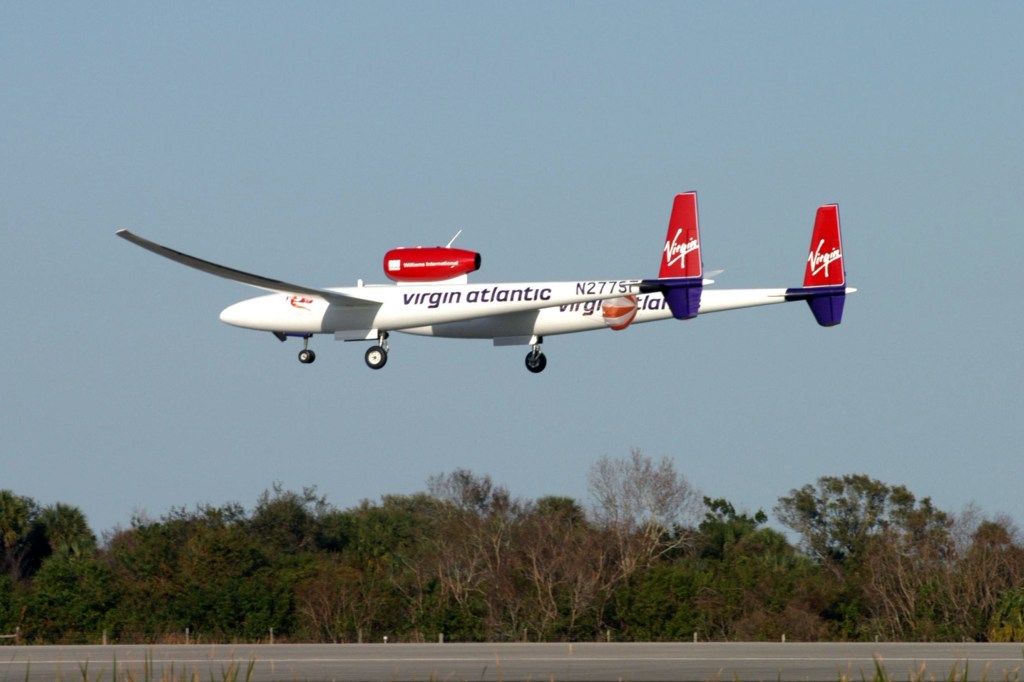
    Virgin Atlantic Airways GlobalFlyer.
    Image Wikimedia Commons

    One

    2005, a pilot became the first person to complete a solo, nonstop circumnavigation of the globe without refuelling. The pilot took off from and landed back at one of the several Salinas in the United States. Who was the pilot and specifically from which Salina did he depart and return?

    Answers: Steve Fossett; Salina, Kansas.

    In 2005, pilot Steve Fossett became the first person to fly solo around the world without stopping or refuelling. He piloted the specially designed GlobalFlyer, equipped with 13 fuel tanks and a 7-foot cockpit. Taking off from Salina, Kansas, on February 28, he successfully completed the journey and returned to Salina approximately 67 hours later on March 3.


    Two

    Born in Navsari, Gujarat, India in 1839, an Indian industrialist who founded Jamshedpur, established the Taj Mahal Hotel and developed businesses in cotton, steel and hydroelectric power amongst others. Who was he?

    Answer: Jamsetji Tata.

    Jamsetji Nusserwanji Tata, an Indian industrialist and philanthropist, founded the Tata Group and the city of Jamshedpur. He established key institutions such as the Taj Mahal Hotel, Tata Steel, and Tata Power, significantly impacting India’s industrial and social landscape. Tata was also a prominent philanthropist, establishing the J.N. Tata Endowment and supporting the Indian Institute of Science.


    Three

    Born in 1962, which athlete set a world record of 7,148 points in the heptathlon?

    Answer: Jackie Joyner-Kersee.

    Jackie Joyner-Kersee, born in 1962, is a retired American athlete who excelled in the heptathlon and long jump. She won three Olympic gold medals in the heptathlon and one in the long jump, setting world records in both events. In July 1986, she set a world record of 7,148 points in the heptathlon. Beyond her athletic achievements, Joyner-Kersee is known for her philanthropic work, including founding the Jackie Joyner-Kersee Foundation and co-founding Athletes for Hope.


    Four

    Born in 1968, this physicist and television science presenter who is known for his work on the ATLAS experiment at CERN, played keyboards in live appearances with D:Ream. Who is This?

    Answer: Brian Cox.

    Brian Cox is an English physicist and musician, known for his work on the ATLAS experiment at CERN and his role as a presenter of science programmes for the BBC. He has co-authored several popular science books and continues to perform music sporadically. Cox’s career spans from being a keyboard player for bands like Dare and D:Ream to becoming a professor of particle physics at the University of Manchester.


    Five

    Decommissioned on this day in 1980, a U.S. nuclear submarine made history by sailing under the Arctic ice pack and the North Pole in 1958. 

    1. What was the name of the submarine?
    2. What was the operational name for the submerged Arctic transit?
    3. The submarine had a namesake from an 1870s novel; what was the novel’s English title? 
    4. Who was the author of the novel?

    Answers

    1. USS Nautilus
    2. Operations Sunshine
    3. Twenty Thousand Leagues Under the Sea
    4. Jules Verne

    A Greek derivative meaning sailor or ship; a tropical mollusk having a many chambered, spiral shell with a pearly interior; and the namesake of Jules Verne’s submersible in his novel 20,000 Leagues Under the Sea.
    — Navy History and Heritage Command


  • What Goes Around Comes Around

    Today’s questions are all related to March 3rd.

    Image Wikimedia Commons

    One

    2005, a pilot became the first person to complete a solo, nonstop circumnavigation of the globe without refuelling. The pilot took off from and landed back at one of the several Salinas in the United States. Who was the pilot and specifically from which Salina did he depart and return?


    Two

    Born in Navsari, Gujarat, India in 1839, an Indian industrialist who founded Jamshedpur, established the Taj Mahal Hotel and developed businesses in cotton, steel and hydroelectric power amongst others. Who was he?


    Three

    Born in 1962, which athlete set a world record of 7,148 points in the heptathlon?


    Four

    Born in 1968, this physicist and television science presenter who is known for his work on the ATLAS experiment at CERN, played keyboards in live appearances with D:Ream. Who is This?


    Five

    Decommissioned on this day in 1980, a U.S. nuclear submarine made history by sailing under the Arctic ice pack and the North Pole in 1958. 

    1. What was the name of the submarine?
    2. What was the operational name for the submerged Arctic transit?
    3. The submarine had a namesake from an 1870s novel; what was the novel’s English title? 
    4. Who was the author of the novel?

    Good luck! I’ll post the answers later.


  • Hello Dolly!—Answers

    Here are the answers to the questions I posted earlier.

    Todays questions are all related to the date, February 22nd.

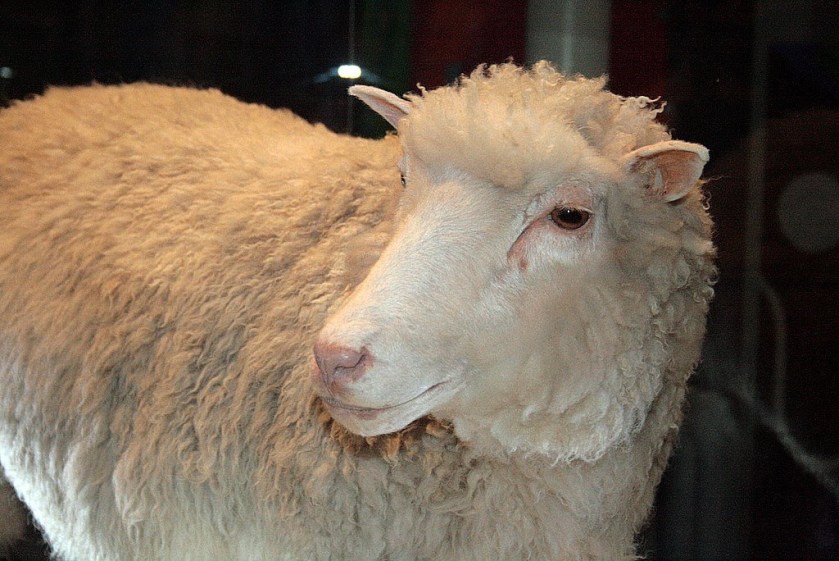
    Dolly the Sheep.
    The taxidermy mount of Dolly on exhibit at the National Museum of Scotland, 2009.
    Image Wikimedia Commons

    One

    On this day in 1997, the world was introduced to Dolly the sheep. Cloned at a Scottish institute sharing a name with a nearby chapel featured in a Dan Brown novel and film, both the institute and chapel’s names originate from that of a village with multiple spellings. What is it?

    Answer: Roslin (Institute) or Rosslyn (Chapel) or Roslyn.

    Dolly the Sheep was cloned at the Roslin Institute, the first mammal to be cloned from an adult cell. The nearby Rosslyn Chapel, founded in 1446 by Sir William St. Clair, is a remarkable example of ornate Gothic architecture. The chapel, known as a ‘Bible in stone’, features intricate carvings and sculptures, including the Apprentice Pillar, which is the subject of much speculation. Despite its association with the Knights Templar and the Holy Grail, the chapel’s true significance lies in its historical and architectural value. It featured in Dan Brown’s novel and film The Da Vinci Code.


    Two

    George Washington, the first president of the United States, was born on 22 February 1732 in Westmoreland, Virginia. This Virginian county was named after the British County of Westmorland, but on what island was this latter county found?

    Answer: Great Britain.

    Westmorland, a former county in North West England, is situated on the island of Great Britain. It encompassed part of the Lake District and the southern Vale of Eden. In 1974 it was incorporated into Cumbria and now forms part of the larger Westmorland and Furness unitary authority area.


    Three

    Exactly 200 years after the birth of George Washington, a United States politician was born into a political dynasty on this day. Who was he?

    Answer: Ted Kennedy (in full Edward Moore Kennedy).

    Edward Moore Kennedy, a prominent American politician and member of the Democratic Party, served as a United States Senator from Massachusetts from 1962 until his death in 2009. Known for his oratorical skills and liberal views, Kennedy championed numerous significant pieces of legislation, including the Immigration and Nationality Act of 1965 and the Americans with Disabilities Act of 1990. Despite his political achievements, his career was marred by the Chappaquiddick incident in 1969.


    Four

    In 1942, three members of an anti-Nazi group were executed by beheading in Munich. Over the following months, others were also executed and many more imprisoned for alleged connections to the group. The group’s two-word name was that of a colour and a flower; what was this name?

    Answer: White Rose.

    The White Rose was a non-violent resistance group in Nazi Germany, led by students and a professor. They conducted a leaflet and graffiti campaign against the Nazi regime, denouncing its crimes and calling for resistance. Their activities ended with further arrests and executions in 1943.


    Five

    On this date, NASCAR held the first Daytona 500. In what year was this, and which driver won the race?

    Answers: 1959; Lee Petty.

    The 1959 Daytona 500, the second race of the NASCAR Grand National Series season, was the inaugural race at the newly built Daytona International Speedway. The track, built by NASCAR founder Bill France, Sr., is a 2.5-mile superspeedway and is considered the most prestigious race on the NASCAR calendar.


  • Hello Dolly!

    Todays questions are all related to the date, February 22nd.

    Dolly the Sheep.
    The taxidermy mount of Dolly on exhibit at the National Museum of Scotland, 2009.
    Image Wikimedia Commons

    One

    On this day in 1997, the world was introduced to Dolly the sheep. Cloned at a Scottish institute sharing a name with a nearby chapel featured in a Dan Brown novel and film, both the institute and chapel’s names originate from that of a village with multiple spellings. What is it?


    Two

    George Washington, the first president of the United States, was born on 22 February 1732 in Westmoreland, Virginia. This Virginian county was named after the British County of Westmorland, but on what island was this latter county found?


    Three

    Exactly 200 years after the birth of George Washington, a United States politician was born into a political dynasty on this day. Who was he?


    Four

    In 1942, three members of an anti-Nazi group were executed by beheading in Munich. Over the following months, others were also executed and many more imprisoned for alleged connections to the group. The group’s two-word name was that of a colour and a flower; what was this name?


    Five

    On this date, NASCAR held the first Daytona 500. In what year was this, and which driver won the race?

    Good luck! I’ll post the answers later.


  • On the Revolutions of the Heavenly Spheres—Answers

    Here are the answers to my Walter posted questions.

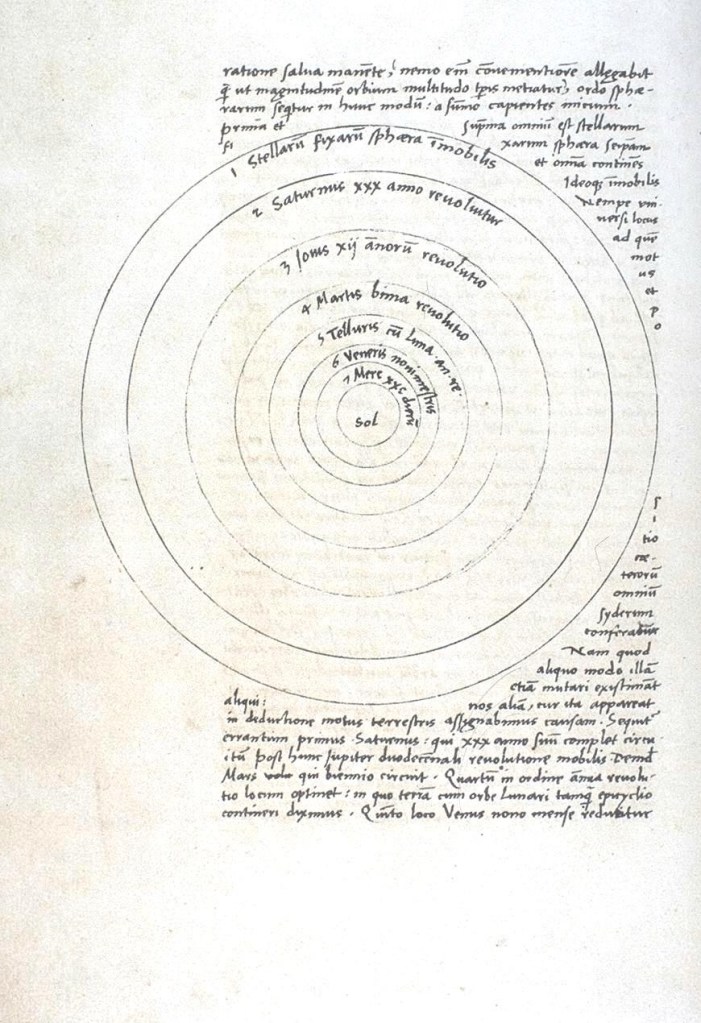
    Diagram of the Solar System from Copernicus’ manuscript of De revolutionibus orbium coelestium.
    Image Wikimedia Commons

    All of today’s questions relate to the date, February 19th.

    One

    In what century was Polish astronomer Nicolaus Copernicus born?

    Answer: 15th century.

    Born in 1473, Nicolaus Copernicus, a Renaissance polymath, formulated a heliocentric model of the universe, placing the Sun at its centre. His work, published in De revolutionibus orbium coelestium (On the Revolutions of the Heavenly Spheres) triggered the Copernican Revolution and significantly contributed to the Scientific Revolution.


    Two

    In 1945, the Battle of Iwo Jima began when US Marines invaded the Japanese volcanic island of Iwo Jima.  What does the name Iwo Jima mean in English?

    Answer: Sulfur Island.

    Iwo Jima, a volcanic island in the Ogasawara Archipelago, is administered by Tokyo. It was the site of a major WWII battle between Japan and the US, resulting in over 20,000 casualties on each side. Today, the island has no permanent inhabitants except for a Self-Defence Force base and is owned by a combination of individuals, the village, and the Japanese government.


    Three

    Andrew Mountbatten-Windsor was born in 1960 and was known as Prince Andrew. He would later also be known as the Duke of York. For the first 22 years of his life, he was second in the line of succession to the British throne, who, born in 1982, replaced him as second in the line of succession?

    Answer: Prince William (The eldest son of Charles, Prince of Wales (now King Charles III) and Diana, Princess of Wales).

    Andrew Mountbatten-Windsor faced controversy due to his friendship with Jeffrey Epstein. He denied allegations of sexual abuse but settled a civil lawsuit with Virginia Giuffre in 2022. In 2025, Charles III removed Andrew’s royal styles and honours, restricted his titles, and relocated him to private accommodation.


    Four

    Born in 1924, this actor was a decorated World War II veteran, where he served in the U.S. Marines. He won an Oscar for Best Actor for Cat Ballou (1965) where he played both Kid Shelleen and Tim Strawn. He appeared in The Dirty Dozen (1967) and Gorky Park (1983). He died in 1987. Who is this actor?

    Answer: Lee Marvin.

    Marvin, an American actor known for his tough-guy roles, received an Academy Award for his performance in Cat Ballou. He was also a decorated World War II veteran and a descendant of the Lee family of Virginia.


    Five

    In 1913, Pedro Lascuráin assumed the role of President of Mexico. What connects the number 45 to his presidency? Was it

    • 45 marriages (he was married 45 times during his presidency)
    • 45 minutes (he was in office for only 45 minutes)
    • 45 murders (he was connected to 45 murders during his presidency)

    Answer: 45 minutes (he was in office for only 45 minutes)

    During the Ten Tragic Days coup, Victoriano Huerta captured President Madero and convinced him to resign. Lascuráin, next in line, briefly assumed the presidency before appointing Huerta as his successor, making Lascuráin’s presidency the shortest in history of not only Mexico but the world.


  • On the Revolutions of the Heavenly Spheres

    Diagram of the Solar System from Copernicus’ manuscript of De revolutionibus orbium coelestium.
    Image Wikimedia Commons

    All of today’s questions relate to the date, February 19th.

    One

    In what century was Polish astronomer Nicolaus Copernicus born?


    Two

    In 1945, the Battle of Iwo Jima began when US Marines invaded the Japanese volcanic island of Iwo Jima.  What does the name Iwo Jima mean in English?


    Three

    Andrew Mountbatten-Windsor was born in 1960 and was known as Prince Andrew. He would later also be known as the Duke of York. For the first 22 years of his life, he was second in the line of succession to the British throne, who, born in 1982, replaced him as second in the line of succession?


    Four

    Born in 1924, this actor was a decorated World War II veteran, where he served in the U.S. Marines. He won an Oscar for Best Actor for Cat Ballou (1965) where he played both Kid Shelleen and Tim Strawn. He appeared in The Dirty Dozen (1967) and Gorky Park (1983). He died in 1987. Who is this actor?


    Five

    In 1913, Pedro Lascuráin assumed the role of President of Mexico. What connects the number 45 to his presidency? Was it

    • 45 marriages (he was married 45 times during his presidency)
    • 45 minutes (he was in office for only 45 minutes)
    • 45 murders (he was connected to 45 murders during his presidency)

    Good luck! I’ll post the answers later.