I am posing five questions each day for six days across various subjects, and each answer will begin with a distinct letter of the alphabet. As you likely deduced, five questions per day across six days yields thirty answers, each starting with a unique letter, leaving four unaccounted for. Consequently, four duplicates exist; in their order of appearance, they spell the name of a villainous figure from the eighth volume of a comic originally serialised in the first half of the 20th century. Although this character is not widely known, the aim is to correctly identify the second, duplicate iteration of these initial letters to reveal the name. The answers will not be given on the same day as the questions but at the end.
Six
How many times were the Olympic Games held in Asia during the 20th century?
Seven
Farrokh Bulsara became a chemical element, which one?
Eight
Scientists think the … is a giant spherical shell surrounding the Sun, planets and Kuiper Belt Objects. It’s like a big, thick bubble around our solar system, made of icy, comet-like objects.
My blog will be somewhat different over the next few days. I will pose five questions each day for six days across various subjects, and each answer will begin with a distinct letter of the alphabet. As you likely deduced, five questions per day across six days yields thirty answers, each starting with a unique letter, leaving four unaccounted for. Consequently, four duplicates exist; in their order of appearance, they spell the name of a villainous figure from the eighth volume of a comic originally serialised in the first half of the 20th century. Although this character is not widely known, the aim is to correctly identify the second, duplicate iteration of these initial letters to reveal the name. The answers will not be given on the same day as the questions but at the end.
One
Moloko Plus, a barbiturate-spiked milk drink, features in which Anthony Burgess novel?
Two
What is the only planet in our solar system named after a Greek god rather than a Roman one?
Three
Israel defeated Egypt, Jordan and Syria in the deftly named 5–10 June 1967 war?
Four
What English archaeologist, army officer, diplomat and writer had the forenames Thomas Edward?
Five
Which letter represents tungsten within the periodic table of elements?
Good Luck! The answers will be posted after day six questions. More questions tomorrow.
Today’s first question relates to 17 August and the subsequent ones follow on from the first.
One
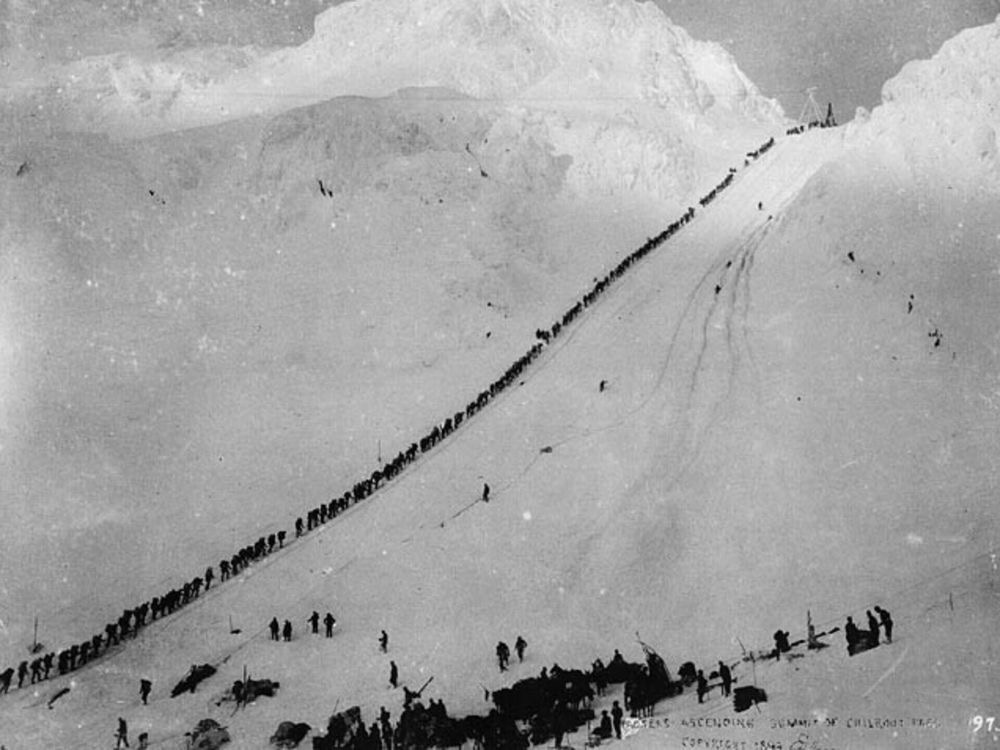
Set during the Klondike Gold Rush, complete the title of British-Canadian poet Robert Service’s The Shooting of …?
Answer: Dan McGrew.
Gold found in 1896 launched the Klondike Gold Rush. Robert William Service, an English-born Canadian writer, became well known for his Klondike poems, including The Shooting of Dan McGrew and The Cremation of Sam McGee. Commercial success from collections such as Songs of a Sourdough allowed for travel and a leisurely life.
Two
Which nesosilicate mineral derives its name from the Persian word for ‘gold-hued’?
Answer: Zircon.
Zircon is a tetragonal nesosilicate (ZrSiO₄) yielding zirconium and containing hafnium at 1–4%. It precipitates from silicate melts and occurs in varied colours. The name comes from Persian zargun (“gold-hued”), becoming jargoon for light zircons; English zircon derives from German Zirkon.
Three
Which Persian king, ruler of the Achaemenid Empire, was assassinated in 465BC by Artabanus, the commander of the royal guard?
Answer: Xerxes I or Xerxes the Great.
Founded by Cyrus the Great in 550 BC, the Achaemenid Empire became the largest of its time, spanning from the Balkans to the Indus Valley. Alexander the Great conquered it in 330 BC; later, the Parthian Empire emerged. Its bureaucracy, tolerance and infrastructure influenced later empires.
Four
Alexander the Great extended the Macedonian kingdom as far east as what modern country?
Answer: India.
The Beas River, in Himachal Pradesh and Punjab in northwestern India, marked Alexander the Great’s eastern limit in 326 BC after his troops mutinied at Mukerian. Alexander yielded after three days and raised twelve altars; their fate is unknown.
Five
What novel by Herman Wouk, which is about a mutiny, was turned into a 1954 film starring Humphrey Bogart?
Answer: The Caine Mutiny.
Herman Wouk’s 1951 novel The Caine Mutiny draws on Pacific Theater service to explore officers’ moral choices. A legalistic mutiny during Typhoon Cobra leads to a court-martial climax.
One Thing Leads to Another
The post title points to a trail through the questions. One is set during the Klondike Gold Rush; Two derives from Persian for ‘gold-hued’; Three is about a Persian king of the Achaemenid Empire; Four is about the conqueror of the Achaemenid Empire facing a mutiny; and Five is about a fictional mutiny.
Flag of Côte d’Ivoire/Ivory Coast. See question three. Image Wikimedia Commons
All of these questions relate to today’s date, 7 August.
One
In what sport could a ‘Salchow’ be performed?
Answer: Ice skating.
Swedish skater Ulrich Salchow, born 7 August 1877. The salchow, named the Salchow, an edge jump, after him. It is the easiest figure skating jump. It involves taking off from the back inside edge of one skate, completing one or more full turns, and landing on the back outside edge of the opposite skate. American skater Theresa Weld was reprimanded at the 1920 Olympics for performing a single Salchow jump because her skirt would fly up to her knees, creating an image deemed too risqué.
Two
The six-month-long Battle of Guadalcanal, which began on 7 August 1942, unfolded in which country?
Answer: Solomon Islands.
Guadalcanal Island, the largest island in the Solomon Islands, is situated in the southwestern Pacific Ocean. The Battle of Guadalcanal, occurring from August 1942 to February 1943, involved a series of World War II land and sea engagements between Allied and Japanese forces on and around Guadalcanal, one of the southern Solomon Islands in the South Pacific. Alongside the naval Battle of Midway, the combat on Guadalcanal signified a turning point in favour of the Allies in the Pacific War.
Three
In 1960, the country represented by the flag shown above gained independence from France. What country is it?
Answer: Côte d’Ivoire/Ivory Coast.
Côte d’Ivoire, located on the western coast of Africa, was previously a French colony. Abidjan functions as the de facto capital, while Yamoussoukro has been the administrative capital since 1983. Known as Ivory Coast, this West African nation is the leading cocoa exporter globally and has seen substantial economic growth since 2011. Nonetheless, 46.1% of its population remains in poverty. The economy is predominantly dependent on agriculture, especially smallholder cash-crop production.
Four
How many persons were onboard Thor Heyerdahl’s balsa wood raft, Kon-Tiki when it reached Raroia in the Tuamotu Islands after sailing 4,300 mile (7,000 km) in 101-days?
Answer: Six.
The Kon-Tiki expedition in 1947, led by Thor Heyerdahl, was a raft journey from South America to Polynesia. Named after the Inca god Viracocha, it inspired Heyerdahl’s book and a 1950 Oscar-winning documentary. A 2012 dramatised film was nominated for Best Foreign Language Film.
Five
In 1926, in motor racing the first British Grand Prix was held. Where was the race held?
Answer: Brooklands.
Built in 1907 near Weybridge, Surrey, Brooklands was the first purpose-built motor racing venue and one of the UK’s first airfields. The British Grand Prix debuted there on 7 August 1926, won by Robert Sénéchal and Louis Wagner. The second race, on 1 October 1927, was also held there.
Bonus Question
The post title is two lines taken from a popular song, what song?
In olden days a glimpse of stocking Was looked on as something shocking
It is part of the lyrics from Anything Goes from the Cole Porter musical of the same name. It is used here only as an oblique remark about Ms Weld’s risqué performance; see answer one.
Anything Goes
By Cole Porter
[RENO] Times have changed, And we’ve often rewound the clock, Since the Puritans got a shock, When they landed on Plymouth Rock. If today, Any shock they should try to stem, ‘Stead of landing on Plymouth Rock, Plymouth Rock would land on them.
In olden days a glimpse of stocking Was looked on as something shocking, But now, God knows, Anything Goes.
Good authors too who once knew better words, Now only use four letter words Writing prose, Anything Goes.
The world has gone mad today And good’s bad today, And black’s white today, And day’s night today, When most guys today That women prize today Are just silly gigolos And though I’m not a great romancer I know that you’re bound to answer When I propose, Anything goes
When grandmama whose age is eighty In night clubs is getting matey with gigolo’s, Anything Goes.
When mothers pack and leave poor father Because they decide they’d rather be tennis pros, Anything Goes.
If driving fast cars you like, If low bars you like, If old hymns you like, If bare limbs you like, If Mae West you like Or me undressed you like, Why, nobody will oppose! When every night, The set that’s smart Is intruding in nudist parties in studios, Anything Goes.
[RENO, PASSENGERS & CREW] The world has gone mad today And good’s bad today, And black’s white today, And day’s night today, When most guys today That women prize today Are just silly gigolos And though I’m not a great romancer I know that you’re bound to answer When I propose, Anything goes
[RENO] If saying your prayers you like, If green pears you like If old chairs you like, If back stairs you like, If love affairs you like With young bears you like, Why nobody will oppose!
[ALL] And though I’m not a great romancer And though I’m not a great romancer I know that you’re bound to answer When I propose, Anything goes… Anything goes! — All Musicals
All of these questions relate to today’s date, 7 August.
One
In what sport could a ‘Salchow’ be performed?
Two
The six-month-long Battle of Guadalcanal, which began on 7 August 1942, unfolded in which country?
Three
In 1960, the country represented by the flag shown above gained independence from France. What country is it?
Four
How many persons were onboard Thor Heyerdahl’s balsa wood raft, Kon-Tiki when it reached Raroia in the Tuamotu Islands after sailing 4,300 mile (7,000 km) in 101-days?
Five
In 1926, in motor racing the first British Grand Prix was held. Where was the race held?
Bonus Question
The post title is two lines taken from a popular song, what song?
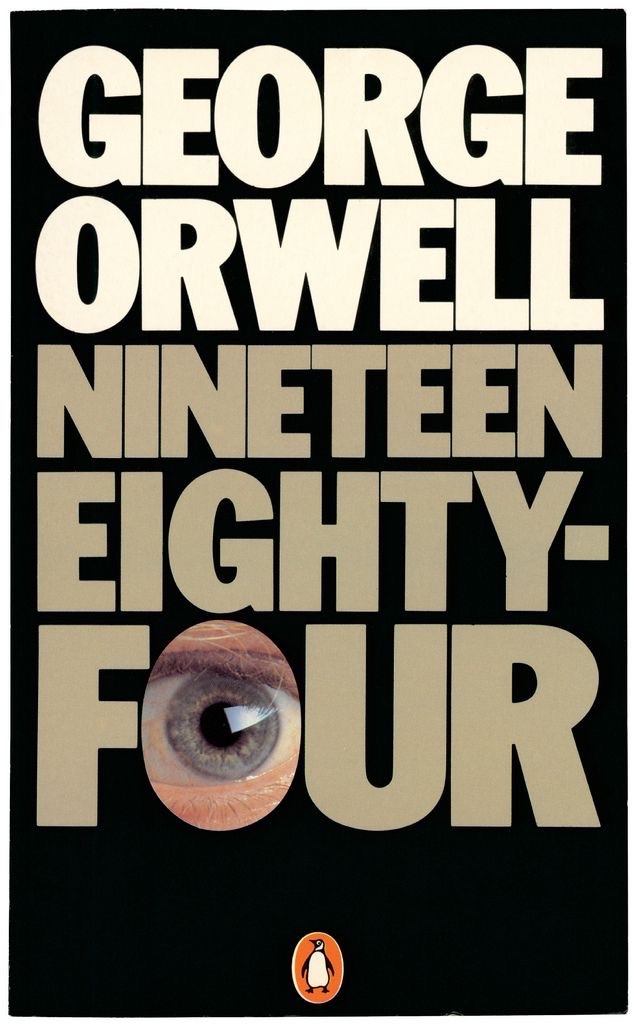
George Orwell’s Nineteen Eighty-four. Image Pinterest
Today’s questions are not related to the date; instead, they share a theme linked to the title in a subtle or hidden manner.
One
ZZ9 Plural Z Alpha, an appreciation society and their publication Mostly Harmless is connected to what science fiction franchise?
Answer: The Hitchhikers Guide to the Galaxy.
ZZ9 Plural Z Alpha organises gatherings and social events, produces the magazine Mostly Harmless and sells Beeblebears modelled on Zaphod Beeblebrox. It celebrates The Hitchhiker’s Guide to the Galaxy and Douglas Adams’s works.
Two
What single word can mean nought, a strong-lined fabric, a quick immersion, a bivalve mollusc, a lowering of the head or a bird and in which sport did the meaning ‘nought’ originate?
Answer: Duck: cricket.
All of the above are from definitions of duck.
Nought: in cricket a batter’s score of zero. Origin mid 19th century: short for duck’s egg, used for the figure 0 because of its similar outline.
Fabric: a strong cotton or linen fabric. Origin mid 17th century: from Middle Dutch doek ‘linen, linen cloth’; related to German Tuch ‘cloth’.
Immersion: to dip under water. Origin Middle English: of Germanic origin; related to Dutch duiken and German tauchen ‘dive, dip, plunge’.
Mollusc: a pure white thin-shelled bivalve mollusc found off the Atlantic coasts of America. Genus Anatina, family Mactridae.
Lowering head: lower the head or the body quickly. Origin Middle English: of Germanic origin; related to Dutch duiken and German tauchen ‘dive, dip, plunge’.
Bird: a waterbird with a broad blunt bill. Origin Old English duce, from the Germanic German tauchen ‘dive, dip, plunge’.
Three
Where is the mythical Snow Lion a celestial emblem?
Answer: Tibet.
The Snow Lion, Tibet’s celestial emblem, symbolises power, strength, fearlessness, joy, east, and earth. Featured on Tibet’s flag from 1916 to 1950, it remains used by the Tibetan Government-in-Exile. Depicted as white with a turquoise mane, it represents hermits and yogis, and is prominent in Tibetan culture.
Four
What character is named when symbols for sulphur, nobelium, oxygen, phosphorus and yttrium are placed together in order?
What are the three super-states in the novel Nineteen Eighty-four, and in which of these is London located?
Answers: Oceania, Eurasia and Eastasia; Oceania.
In April 1984, Winston Smith lives in Airstrip One (previously Great Britain), a province of Oceania, under totalitarian rule by ‘the Party’ and Big Brother. The Party enforces conformity through surveillance and Thought Police, erasing dissenters as “unpersons”. Winston, an Outer Party member at the Ministry of Truth, secretly rebels against the regime.
42-0-20-(Z 16-102–8-15-39)-13
The numbers in the title offer clues, perhaps obscure, to each of the questions in the correct order. The information breaks down like this
42: In The Hitchhiker’s Guide to the Galaxy 42 is the answer to the ultimate question of life, the universe, and everything.
0: A duck is 0 as explained above, see ‘Nought’ under the second answer.
20: The 20th letter of the alphabet ‘T’ is the initial to this answer.
(Z 16-102–8-15-39): Z is the symbol for atomic numbers and 16 is the atomic number for sulphur, 102 is nobelium 8 is oxygen 15 is phosphorus and 39 is yttrium each of which make Snoopy.
13: : ‘It was a bright cold day in April, and the clocks were striking thirteen.’ Thirteen concludes the opening line of George Orwell’s Nineteen Eighty-four.
George Orwell’s Nineteen Eighty-four. Image Pinterest
Today’s questions are not related to the date; instead, they share a theme linked to the title in a subtle or hidden manner.
One
ZZ9 Plural Z Alpha, an appreciation society and their publication Mostly Harmless is connected to what science fiction franchise?
Two
What single word can mean nought, a strong-lined fabric, a quick immersion, a bivalve mollusc, a lowering of the head or a bird and in which sport did the meaning ‘nought’ originate?
Three
Where is the mythical Snow Lion a celestial emblem?
Four
What character is named when symbols for sulphur, nobelium, oxygen, phosphorus and yttrium are placed together in order?
Five
What are the three super-states in the novel Nineteen Eighty-four, and in which of these is London located?
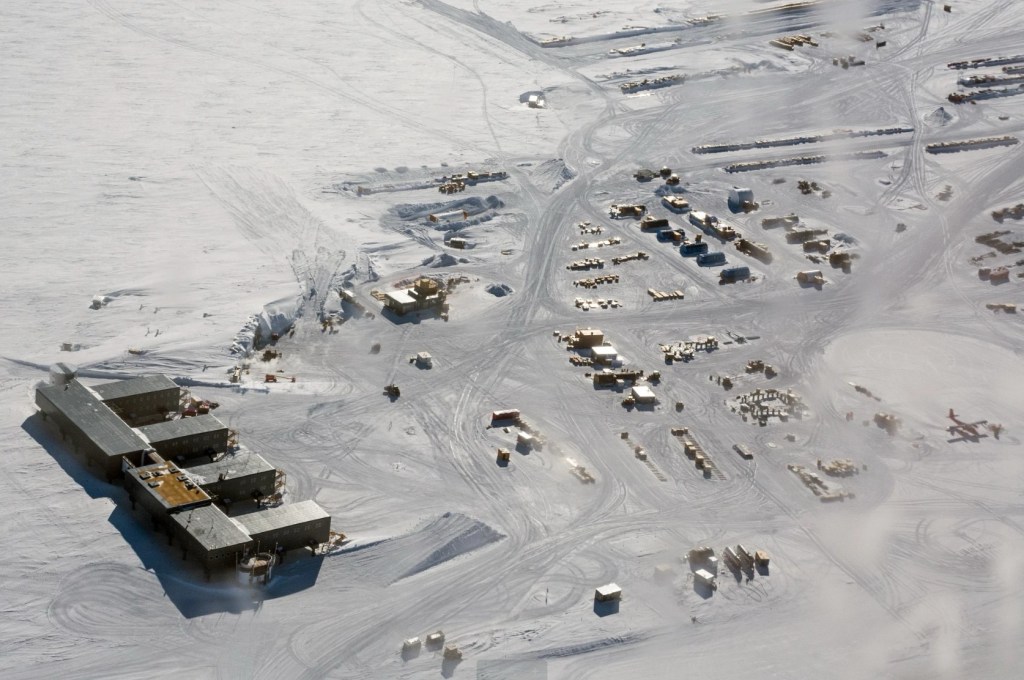
Amundsen-Scott South Pole Station. Image Marine Oceans
Today’s questions follow a theme, but I don’t have the remotest intention of mentioning it.
One
The Amundsen–Scott South Pole Station sits on the Antarctic ice at the South Pole. At approximately what elevation above sea level is this base? (The answer can be either feet or metres.)
Answer: 9,301 feet or 2,835 metres.
The station, which supports scientific exploration, is isolated in a polar desert with extreme cold with the annual average temperature is −49°C (−56°F), though winter conditions can push readings below −80°C (−112°F). Opened in 1956, named after explorers Roald Amundsen and Robert F. Scott, it was rebuilt in 1975 and expanded in the 1990s. Completed in 2008, it includes 47 buildings, housing offices, laboratories, observatories, accommodation, dining, recreation and medical facilities. The station accommodates up to 150 people a week in the summer but this drops to 42 in the winter.
Two
An Antarctic Mystery was a two-volume novel written in 1897 which is a continuation of a novel, The Narrative of Arthur Gordon Pym of Nantucket, written in 1838 by another author. Who were the authors of these novels?
Answers: Jules Verne (wrote the 1897 work); Edgar Allan Poe (wrote the 1838 novel).
Jules Verne’s 1897 two-volume novel An Antarctic Mystery continues Edgar Allan Poe’s 1838 work, following the narrator’s voyage from the Kerguelen Islands aboard Halbrane.
Three
The Kerguelen Islands, which are a World Heritage Site, part of the French Southern and Austral Lands and Seas, lie in what ocean?
Answer: Indian Ocean.
The Kerguelen Islands, also known as the Desolation Islands, are a remote sub-Antarctic archipelago administered by France. The islands, part of the Kerguelen Plateau, have a harsh climate and are home to a permanent French presence of 45 to 100 people.
Four
A part of a U.K. overseas territory holds the title of the world’s most remote human settlement. What is this settlement and where it’s located?
Answers: Tristan da Cunha; South Atlantic Ocean.
The remotest inhabited island in the world is Tristan da Cunha, discovered in the South Atlantic by Tristao da Cunha, a Portuguese admiral, in March 1506. It has an area of 98km² (38 miles²). After evacuation in 1961 (due to volcanic activity), 198 islanders returned in November 1963. The nearest inhabited land to the group is the island of St Helena, 2,435 km (1,315 nautical miles) to the north-east.
In The Guardian, 8 August 2005: “Tristan Da Cunha, an overseas territory of the UK which takes six days to reach by boat from Cape Town, was assigned the postcode TDCU 1ZZ when the 276 inhabitants asked the UK’s Royal Mail for help after being unable to shop online without a postcode.”
In 1726, an Anglo-Irish clergyman and writer wrote a satirical novel which contains the word ‘remote’ in its original title. By what title is the novel commonly known today?
Answer: Gulliver’s Travels.
The original title of Jonathan Swift’s Gulliver’s Travels is: Travels into Several Remote Nations of the World. In Four Parts. By Lemuel Gulliver, First a Surgeon, and then a Captain of Several Ships.
Amundsen-Scott South Pole Station. Image Marine Oceans
Today’s questions follow a theme, but I don’t have the remotest intention of mentioning it.
One
The Amundsen–Scott South Pole Station sits on the Antarctic ice at the South Pole. At approximately what elevation above sea level is this base? (The answer can be either feet or metres.)
Two
An Antarctic Mystery was a two-volume novel written in 1897 which is a continuation of a novel, The Narrative of Arthur Gordon Pym of Nantucket, written in 1838 by another author. Who were the authors of these novels?
Three
The Kerguelen Islands, which are a World Heritage Site, part of the French Southern and Austral Lands and Seas, lie in what ocean?
Four
A part of a U.K. overseas territory holds the title of the world’s most remote human settlement. What is this settlement and where it’s located?
Five
In 1726, an Anglo-Irish clergyman and writer wrote a satirical novel which contains the word ‘remote’ in its original title. By what title is the novel commonly known today?