The answers to the questions asked in my earlier post are shown, in bold, below.
Wikipedia
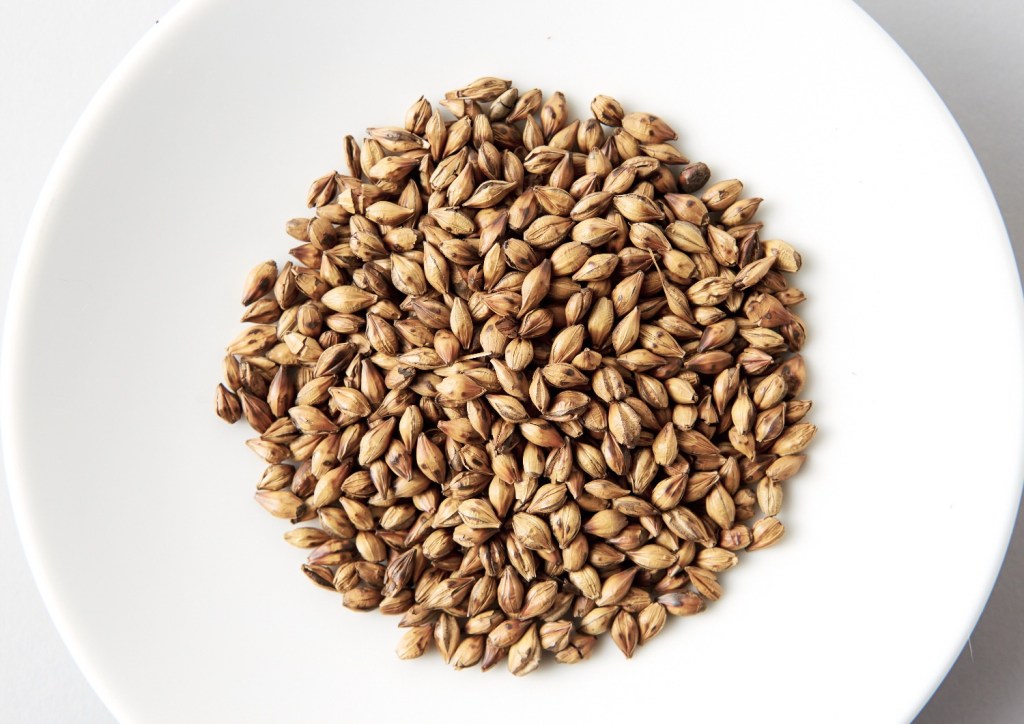
- Wheat or barleycorn—Grain (abbreviation gr.), the smallest unit of weight in the troy and avoirdupois systems; originally, the weight was equivalent to that of a grain of corn.
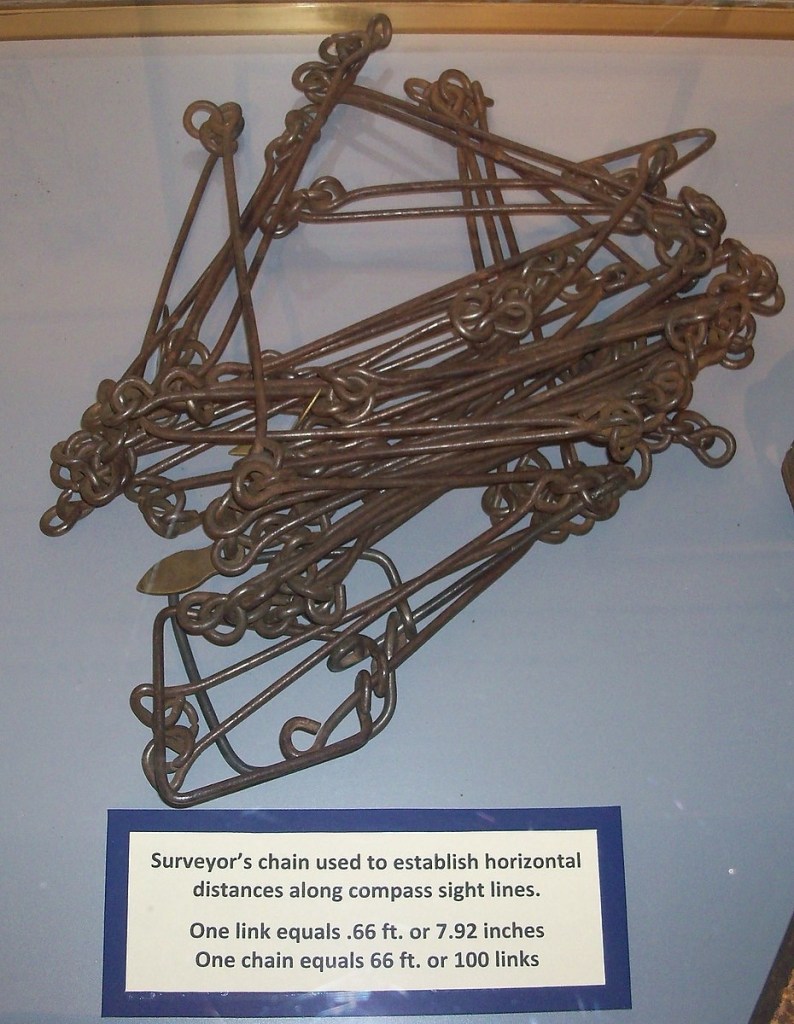
Surveyor’s chain.
Gunter’s chain photographed at Campus Martius Museum/Wikipedia - Chain—The chain, a unit of length equal to 66 feet, is used in both the US customary and Imperial unit systems. It is subdivided into 100 links and has been used since the early 17th century in England. The UK used 80 chains to the mile, but Scotland and Ireland used longer chains until 1824. India uses metric chains of 20 metres.
- Rod—which is a measure of length equal to a quarter of a chain or 5.5 yards (approximately 5.029 m). Also called perch or pole, it was especially used for measuring land.
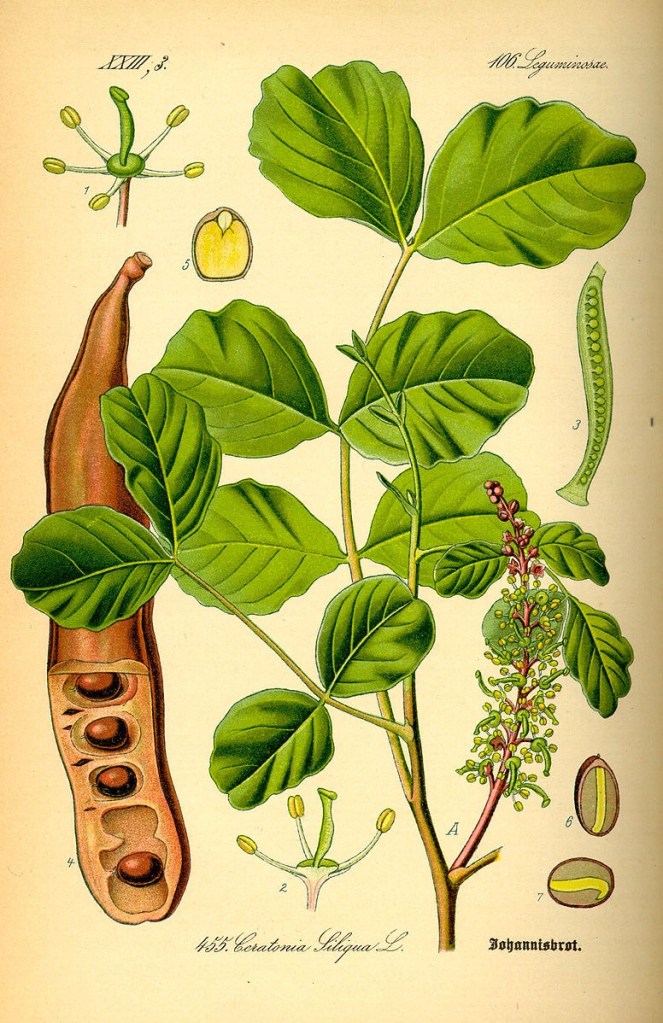
Illustration of Carob (Ceratonia siliqua)
Wikipedia - Carob seed—The carat (ct) is a unit of mass equal to 200 mg, used to measure gemstones and pearls. The current definition, adopted in 1907, is divisible into 100 points of 2 mg. Carob seeds, historically used to measure jewellery due to their believed consistent mass, actually vary in mass like other seeds.
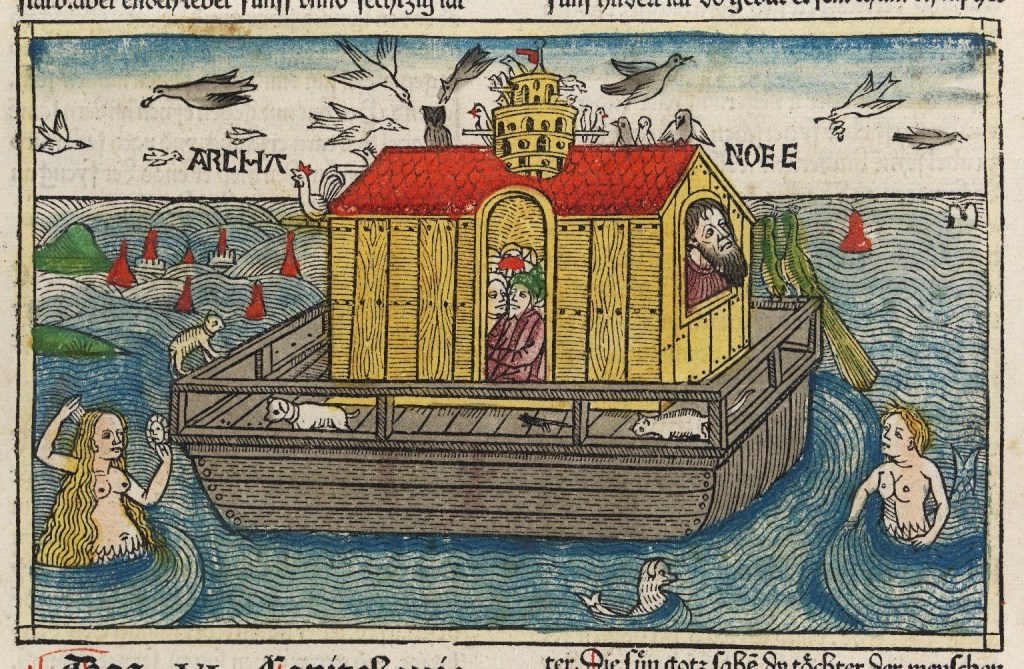
A woodcut of Noah’s Ark from Anton Koberger’s German Bible
University of Edinburgh Image Collections/Wikipedia - 300 cubits long, 50 cubits wide and 30 cubits high—Genesis 6:14–16 King James Bible reads,
- “14 Make thee an ark of gopher wood; rooms shalt thou make in the ark, and shalt pitch it within and without with pitch.
- 15 And this is the fashion which thou shalt make it of: The length of the ark shall be three hundred cubits, the breadth of it fifty cubits, and the height of it thirty cubits.
- 16 A window shalt thou make to the ark, and in a cubit shalt thou finish it above; and the door of the ark shalt thou set in the side thereof; with lower, second, and third stories shalt thou make it.”
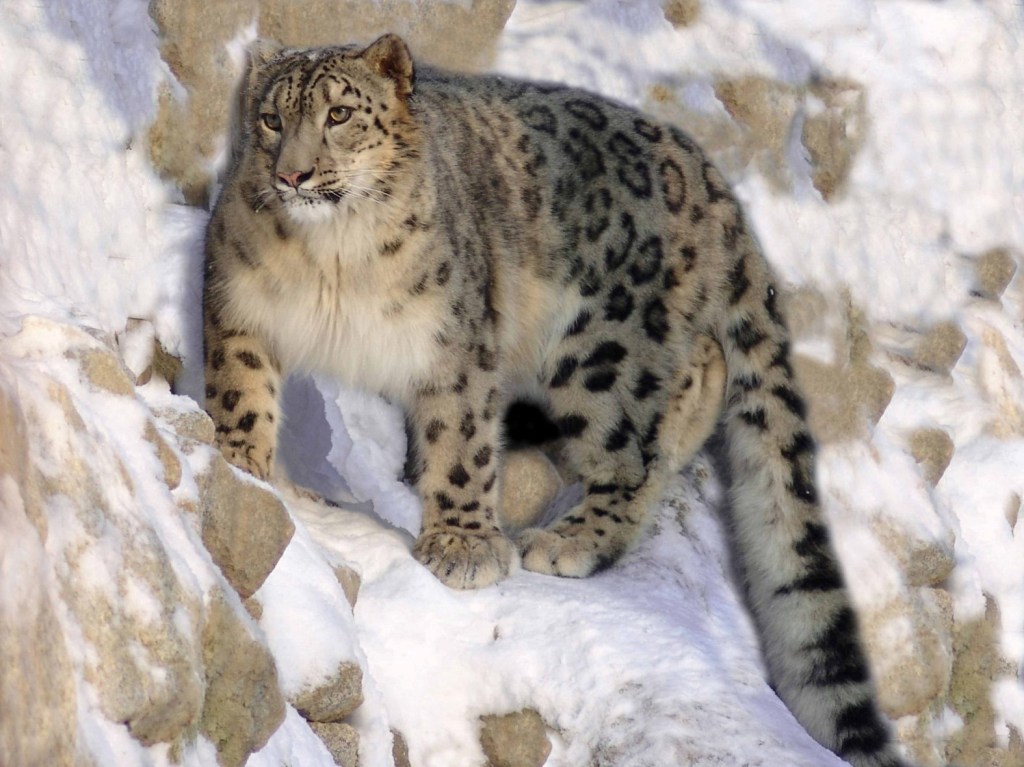
Snow leopard
Wikipedia - Snow leopard—which is also known as the Ounce. The Old French word “once,” originally intended for the Eurasian lynx, is the source of the Latin name “uncia” and the English word “ounce”. An ounce is also a unit of weight equal to 437.5 grains or 1/16 pound (28.35 grams) avoirdupois. Another unit is 480 grains, which is 1/12 pound (31.1 grams) troy or apothecaries’ weight.

The Nippur cubit-rod.
Archeological Museum of Istanbul, Turkey/Wikipedia - Euphrates—The Nippur cubit, one of the oldest known units of length, dates back to 2650 BCE. A copper bar standard for this Sumerian unit was discovered in Nippur, on the banks of the Euphrates, and is housed in the Istanbul Archaeological Museum.
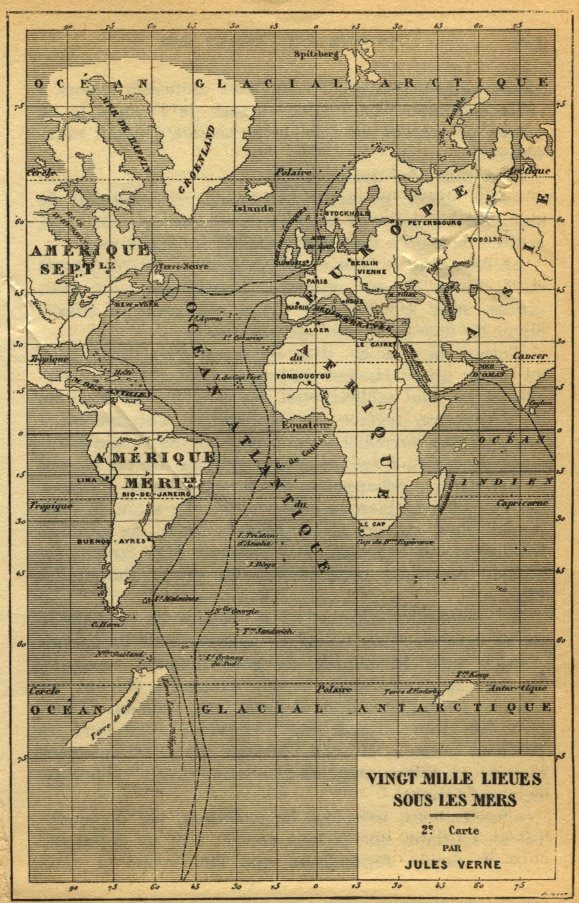
Nautilus’s route through the Atlantic. Wikipedia 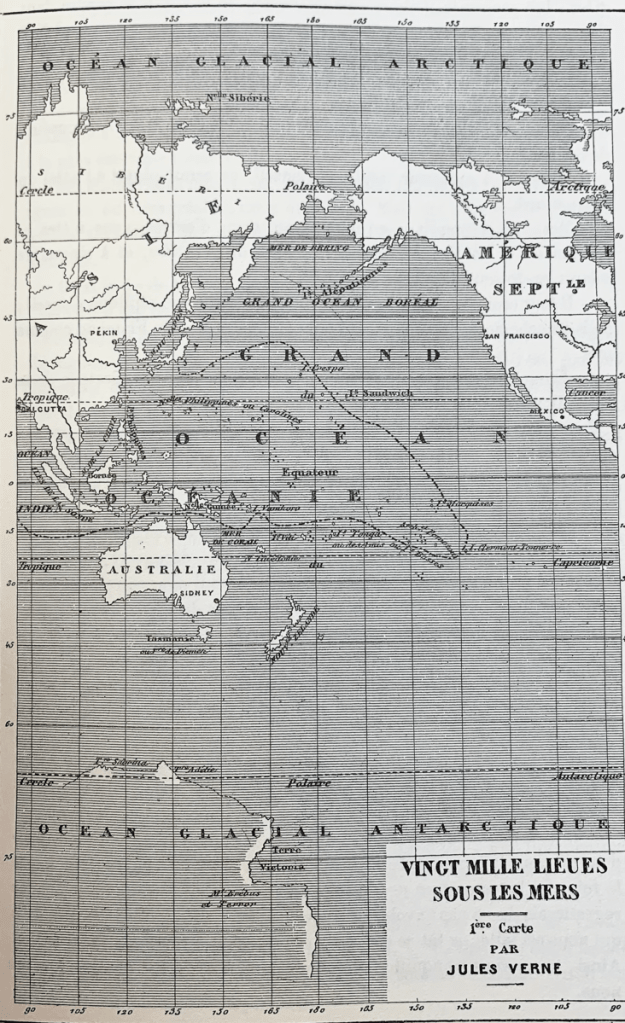
Nautilus’s route through the Pacific.Wikipedia - Jules Verne—Twenty Thousand Leagues Under the Seas is a science fiction adventure novel by Jules Verne. It was originally serialised in a French periodical and later published in a deluxe edition with illustrations.
- Grain—The grain, based on barley weight, is the only unit equal across troy, avoirdupois, and apothecaries’ systems. It was the fundamental unit of the pre-1527 English weight system, Tower weight, based on wheat grain, was defined as exactly 45⁄64 (≈+3⁄4) of the troy “barley” grain.
- AU—Astronomical unit, defined as exactly equal to 149,597,870,700 m (92,955,807.3 miles) and effectively equal to the average, or mean, distance between the Earth and the Sun.
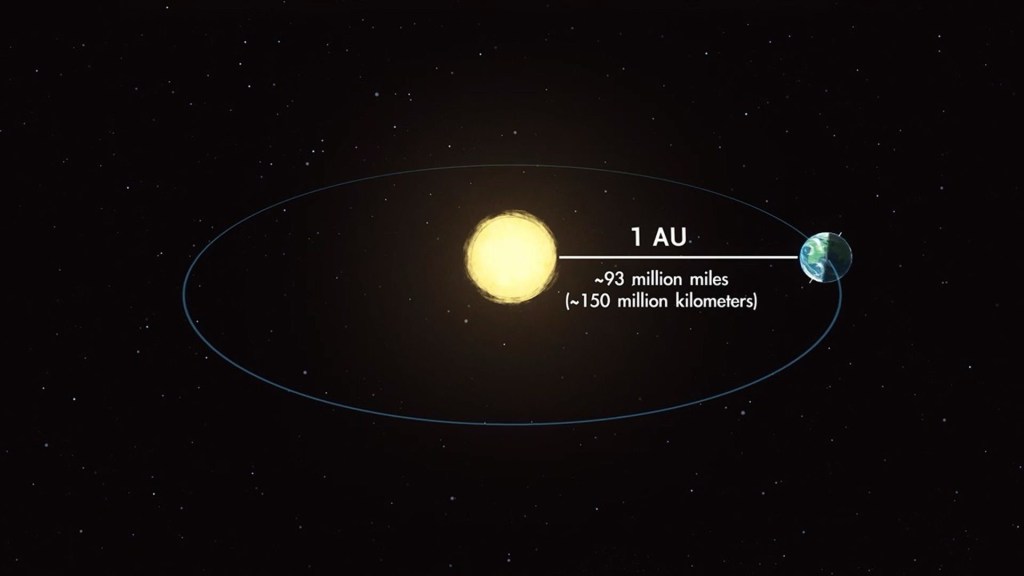
NASA/JPL-Caltech
 Quizology.Online
Leave a comment