The answers to my earlier post are shown in bold below. I have included the questions simply for your information.
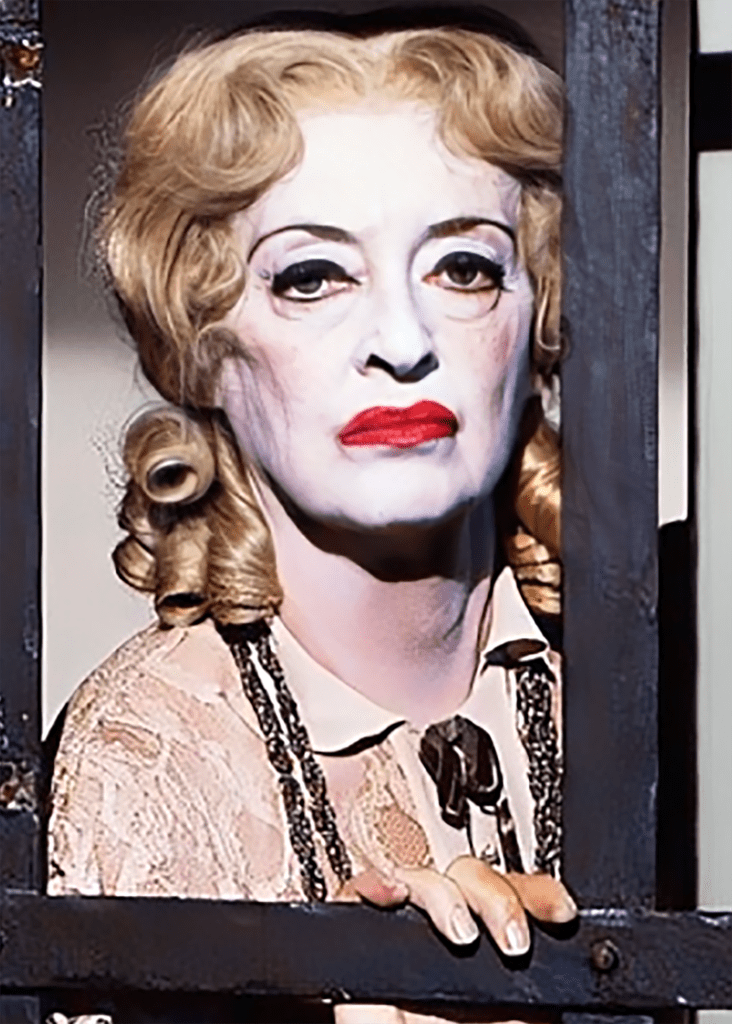
Image Wikipedia
- What two words link these: a Bette Davis role from 1962 film, a 1977 single from Dr Feelgood and a 1983 single by Rod Stewart?
- Baby Jane—Davis was nomininated for an Academy Award for her performance as the title character in Whatever Happened to Baby Jane? (1962). Baby Jane, by Dr Feelgood first appeared on Be Seeing You, a Dr. Feelgood album released in 1977 and was later a single. A track with the same name was the lead single from Rod Stewart’s twelfth studio album Body Wishes (1983).

A bearded Jeremy Paxman.
Image BBC
- Baby Jane—Davis was nomininated for an Academy Award for her performance as the title character in Whatever Happened to Baby Jane? (1962). Baby Jane, by Dr Feelgood first appeared on Be Seeing You, a Dr. Feelgood album released in 1977 and was later a single. A track with the same name was the lead single from Rod Stewart’s twelfth studio album Body Wishes (1983).
- Pogonophobia is an extreme dislike of what?
- Beards—Pogonophobia, derived from Greek words for “beard” and “fear”, is a fear of beards. The term is often used jokingly, but it has been studied in psychological experiments and has been associated with cultural norms, religious beliefs and societal perceptions. Jeremy Paxman accused the BBC of pogonophobia after facing criticism for presenting Newsnight with a beard.

Charles Dickens.
Image Wikipedia
- Beards—Pogonophobia, derived from Greek words for “beard” and “fear”, is a fear of beards. The term is often used jokingly, but it has been studied in psychological experiments and has been associated with cultural norms, religious beliefs and societal perceptions. Jeremy Paxman accused the BBC of pogonophobia after facing criticism for presenting Newsnight with a beard.
- Charles Dickens only wrote one book with a female narrator. What was it?
- Bleak House—Charles Dickens’s Bleak House, published serially from 1852 to 1853, satirises a long-running legal case, Jarndyce and Jarndyce, inspired by real-life precedents. The novel, set in London, is credited with introducing urban fog to Gothic fiction and helped support judicial reform.

City of Puno, Peru the largest urban area on Lake Titicaca.
Image Wikipedia
- Bleak House—Charles Dickens’s Bleak House, published serially from 1852 to 1853, satirises a long-running legal case, Jarndyce and Jarndyce, inspired by real-life precedents. The novel, set in London, is credited with introducing urban fog to Gothic fiction and helped support judicial reform.
- Two countries share shores on Lake Titicaca, but only one fits the theme of today’s questions. Which country is it?
- Bolivia—Lake Titicaca, located in the Andes mountains on the border of Bolivia and Peru, is the largest lake in South America. It is often called the highest navigable lake in the world, with a surface elevation of 3,812 metres. The lake consists of two sub-basins, Lago Grande and Wiñaymarka, connected by the Strait of Tiquina.

European beech (Fagus sylvatica)
Image Wikipedia
- Bolivia—Lake Titicaca, located in the Andes mountains on the border of Bolivia and Peru, is the largest lake in South America. It is often called the highest navigable lake in the world, with a surface elevation of 3,812 metres. The lake consists of two sub-basins, Lago Grande and Wiñaymarka, connected by the Strait of Tiquina.
- The following word origin from the Oxford English Dictionary relates to a natural world name. What is the name that has been removed below?
- Beech—Beech trees, native to Eurasia and North America, are deciduous trees with 14 accepted species. The European beech, Fagus sylvatica, is commonly cultivated for its timber, used in furniture, flooring, engineering, and brewing.
– ORIGIN Old English bēce, of Germanic origin; related to Latin fagus ‘beech’, Greek phagos ‘edible oak’.
– Oxford English Dictionary
 Quizology.Online
Leave a comment