Image Lee Abbamonte
One
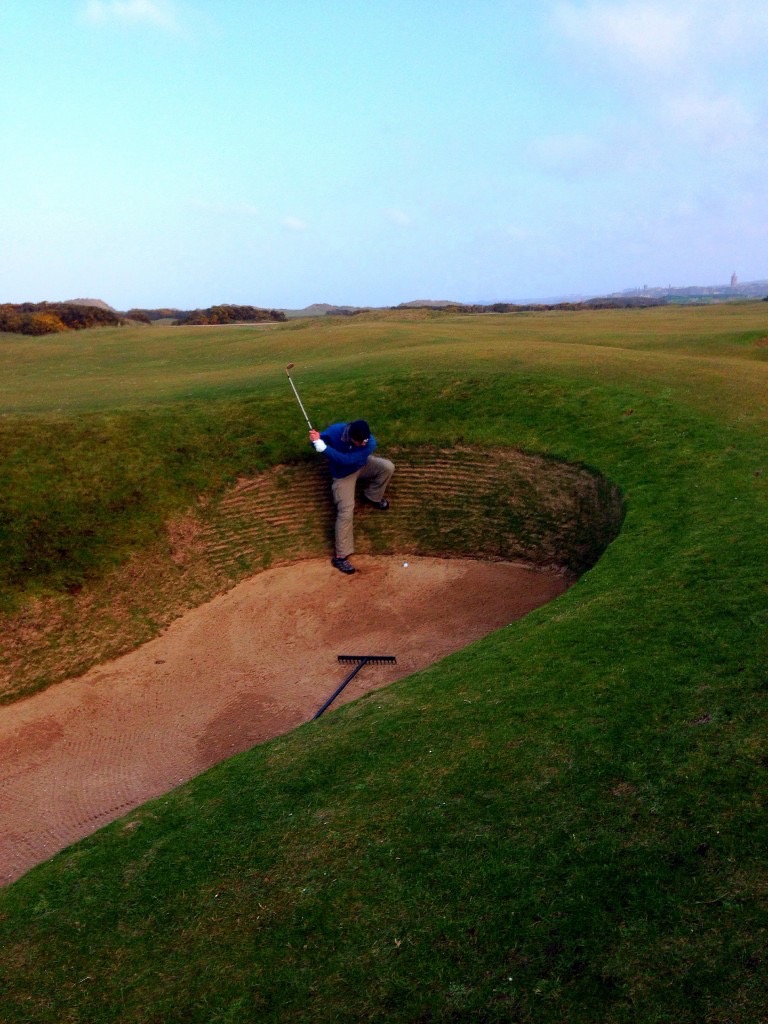
Golf courses traditionally include hazards like bunkers (sand traps). Is it true or false that the word ‘bunker’ originates from the Flemish dialect of Dutch?
— Answer: False
The word bunker originates from the Scots language.
OED’s earliest evidence for bunker is from before 1758, in the writing of Allan Ramsay, poet.
Bunker
1 a large container or compartment for storing fuel: a coal bunker.
2 a reinforced underground shelter, typically for use in wartime.
3 a hollow filled with sand, used as an obstacle on a golf course.
– ORIGIN mid 16th century (originally Scots, denoting a seat or bench): perhaps related to bunk1.
— Oxford English Dictionary
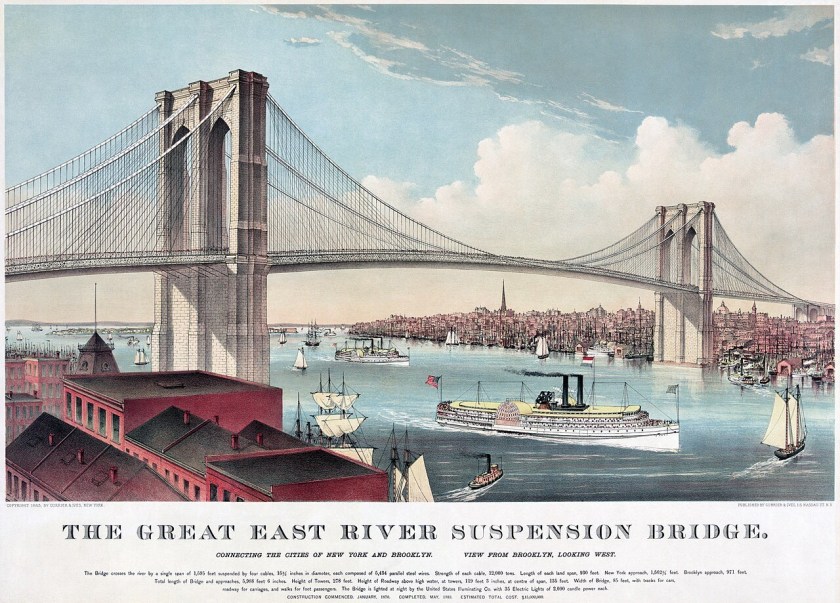
Chromolithograph of the “Great East River Suspension Bridge” by Currier and Ives, created in 1883. Image Wikipedia
Two
Is it true or false that vaults constructed within the ramps of New York’s Brooklyn Bridge were used as arsenals storing weapons for the National Guard?
— Answer: False
The New York City government rented out vaults under the Manhattan anchorage of the bridge starting in 1876 to fund maintenance. These vaults, used for wine storage due to their consistent temperature, were closed during WWI and Prohibition but reopened later. By the late 20th-century the spaces were being used as storage for maintenance equipment.
Three
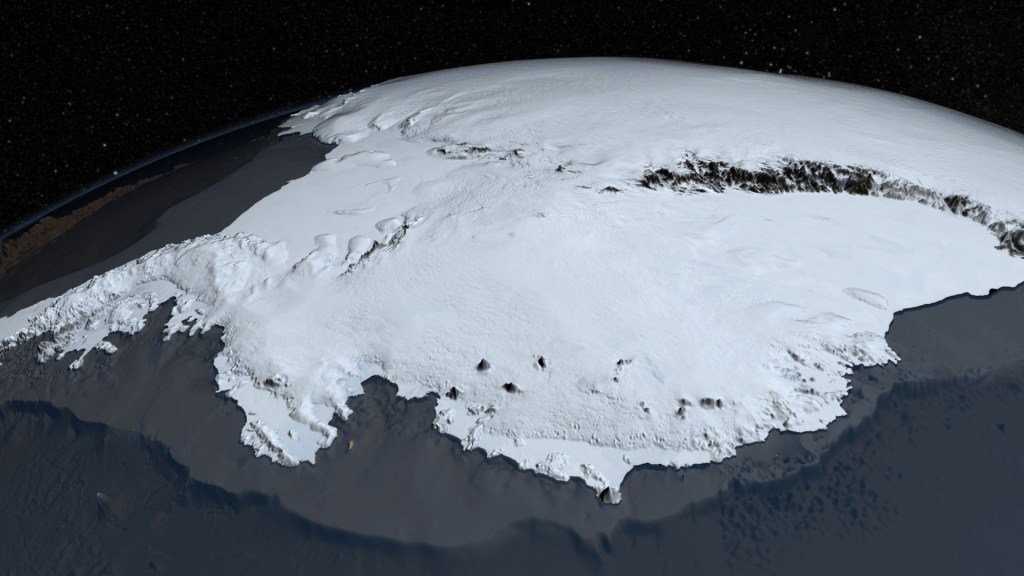
The South Pole is significantly colder than the North Pole during both summer and winter, as shown in a comparison of their average temperatures. Is the foregoing statement true or false?
— Answer: True
The South Pole is always colder
North Pole
32° F (0° C) summer
−40° F (−40° C) winter
South Pole
−18° F (−28.2° C) summer
−76° F (−60° C) winter
Data from NASA
The North Pole is located in the Arctic Ocean, which is mostly covered in sea ice due to its cold climate. This sea ice floats over water, affecting its thickness as the ocean warms the air and the water below the ice changes temperature. In contrast, Antarctica is a dry, high continent with extremely thick ice, up to 3 miles (5 kilometres), forming a plateau above sea level. The ice sits on tall mountains, and as altitude increases, the air becomes colder. The South Pole is significantly colder than the North Pole due to strong winds surrounding Antarctica, which prevent warmer air from mixing with the cold polar air. These winds are unimpeded by land, unlike around the Arctic, where land slows down the winds, allowing warmer air from the south to occasionally mix with the polar air, making the Arctic relatively warmer.
Four
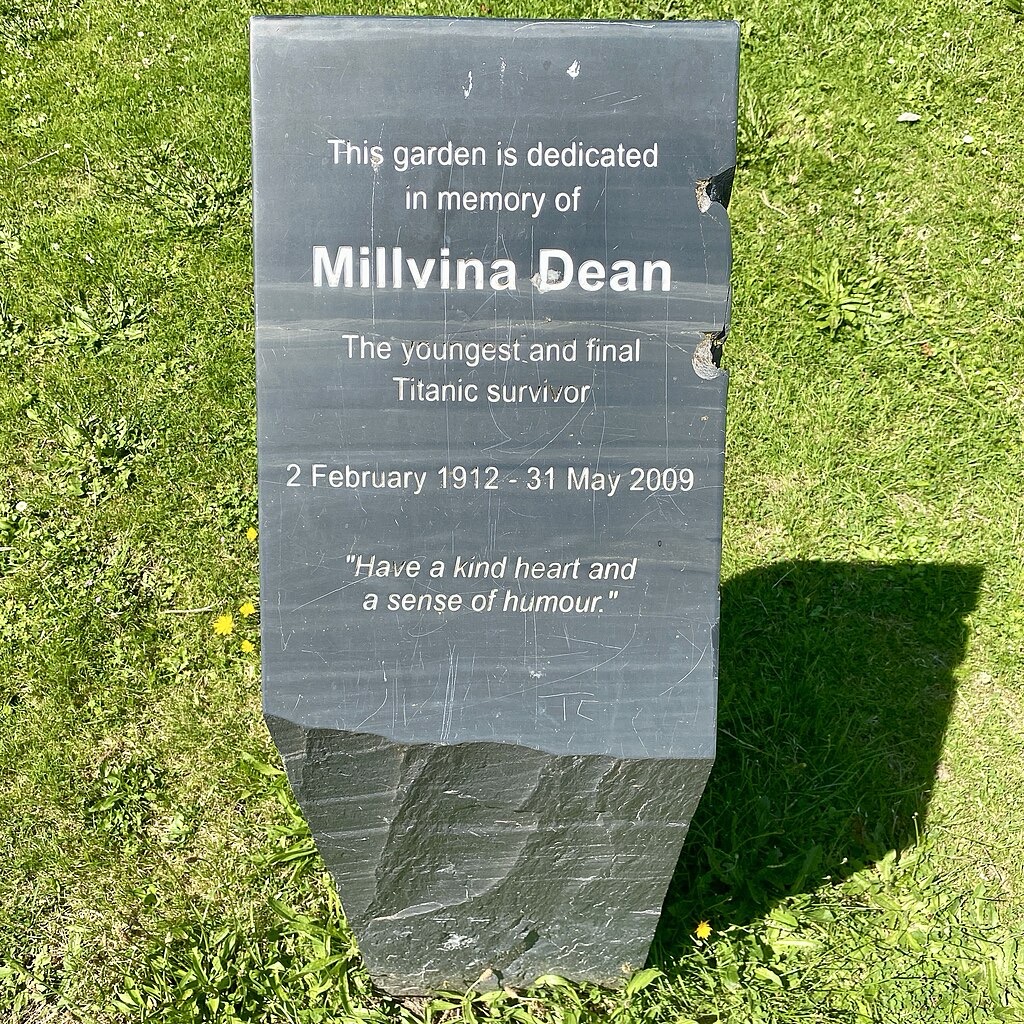
Image Wikipedia
Is it true or false that the last survivor of the RMS Titanic died in 2009?
— Answer: True
Millvina Dean, the last living survivor of the Titanic, was born in 1912 and boarded the ship as a nine-week-old infant with her family. After the Titanic sank, her mother returned to England with Millvina and her brother, as their father perished. Millvina became involved in Titanic-related events in her later years, but declined to see the film Titanic and criticised the BBC for a Doctor Who episode featuring a similar ship.
Five
The US State of New Hampshire had a law which required margarine to be dyed pink. Is this statement true or false?
— Answer: True
Margarine, created in 1869 as a cost-effective substitute for butter, encountered significant resistance from the American dairy industry. Although it was favoured by the lower classes, margarine was taxed and prohibited in various states, with critics arguing it endangered the American lifestyle. By 1902, 32 states imposed restrictions on margarine’s colour, with Vermont, New Hampshire, and South Dakota requiring pink dye. The Supreme Court eventually invalidated the ‘pink laws’ but maintained the ban on yellow margarine.
 Quizology.Online
Leave a comment