Here are the answers to the questions posed in my earlier post.
Today’s questions all relate to December 24th.
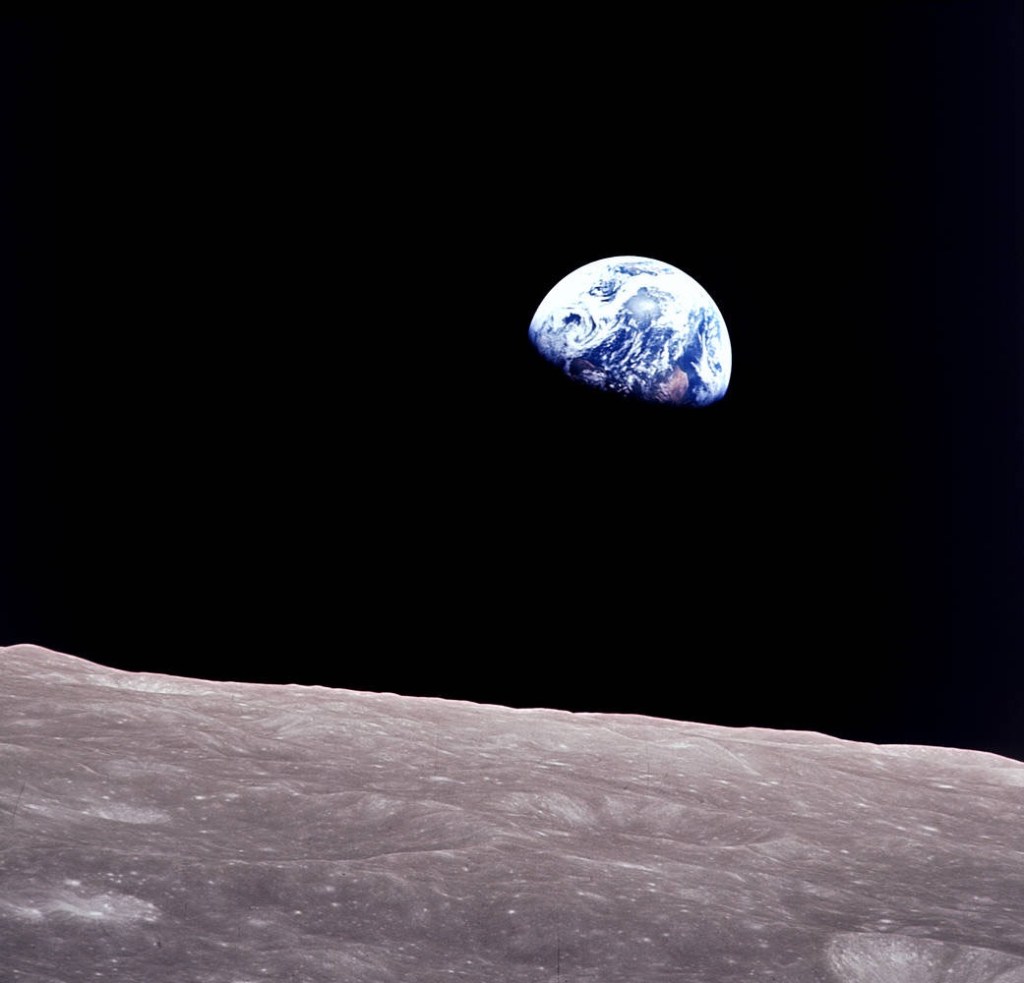
Image NASA
One
The Wrong Sort of Bees, published in London’s Evening News on 24 December 1925, introduced a fictional anthropomorphic character to children’s literature and entertainment. Who was this character, and who was the author?
Answer: Winnie-the-Pooh; AA Milne
Winnie-the-Pooh, a fictional teddy bear created by AA Milne and EH Shepard, first appeared in a 1925 children’s story. The character, inspired by Milne’s son’s toy and a bear at London Zoo, became the subject of several books and was later adapted into a successful Disney franchise.
Two
Kiritimati (pronounced Kir-is-Maas) part of the Republic of Kiribati was named by a British naval officer and explorer who visited in 1777. In what ocean is Kiritimati, and who named it?
Answer: Pacific Ocean; Captain James Cook
The name given to it by Captain Cook as he visited on Christmas Eve was Christmas Island. In Gilbertese, ‘Christmas’ is ‘Kiritimati’, the combination ‘ti’ is pronounced as ‘s’.
Three
In which year did the first Christmas truce of World War I occur?
Answer: 1914
The Christmas truce was a series of unofficial ceasefires along the Western Front during World War I.
Four
What armed forces invaded Afghanistan on this day in 1979?
Answer: Soviet Union
Soviet troops invaded Afghanistan in December 1979, supporting the communist government against anti-communist Muslim guerrillas until February 1989.
Five
In 1968, in a television broadcast from space the crew of Apollo 8 read the first ten verses of the Genesis creation narrative from the King James Bible. What specific feat did the Apollo 8 mission achieve?
Answer: The answer is any, or all, of the points listed below
- Apollo 8 was the first crewed spacecraft to leave Earth’s gravitational sphere of influence.
- It was also the first human spaceflight to reach the Moon.
- The crew orbited the Moon ten times without landing.
- The three astronauts, Frank Borman, Jim Lovell, and William Anders, were the first humans to see and photograph the far side of the Moon.
- They also witnessed and photographed an Earthrise (see image).
On Christmas Eve 1968, the Apollo 8 crew, the first humans to orbit the Moon, read from the Book of Genesis during a live television broadcast from lunar orbit. The reading, which was heard by an estimated one billion people worldwide, was a suggestion from Christine Laitin, the wife of one of those working on the project. Mrs Laitin had been a member of the French Resistance during World War II.
 Quizology.Online
Leave a comment