Here are the answers to the questions I posed in my earlier post.
These questions concerning various ’firsts’ also all relate to today’s date, January 7th.
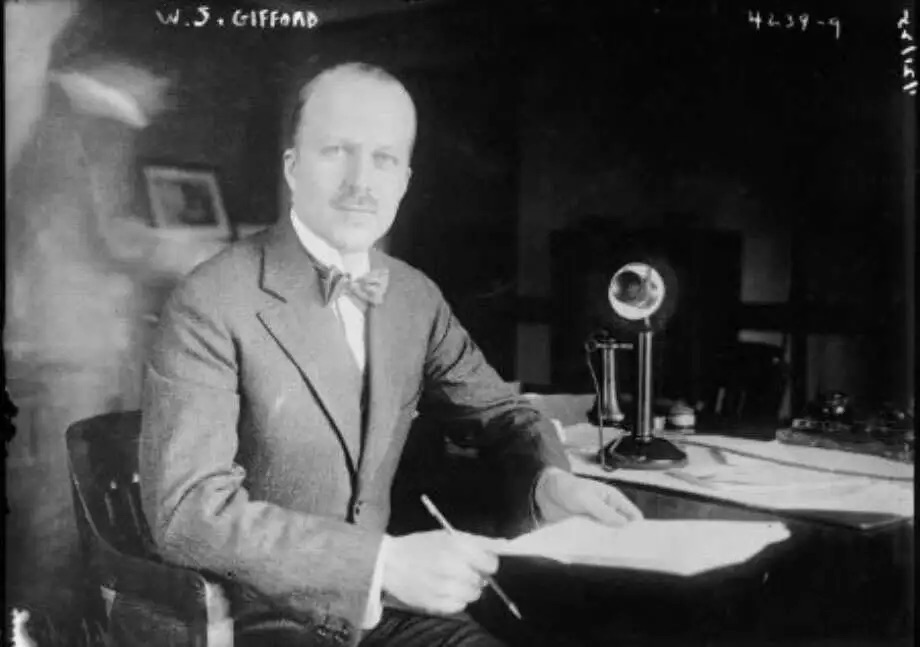
Library of Congress
One
The first ‘official’ commercial transatlantic telephone service was established on this date. In what decade, and between what two cities, was the connection made?
Answer: 1920s; New York City, United States and London, United Kingdom
On January 6 and 7, 1927, the first transatlantic telephone conversations took place between the United States and London. The initial test call, a casual conversation about the weather and travel distances, was followed by a formal ‘official’ inauguration call between AT&T President W.S. Gifford and Sir Evelyn P. Murray, head of the British General Post Office. This historic achievement marked the beginning of a new era of global communication. The previous day, the across-the-ocean ‘test’ conversation was also recorded for the purposes of history — ‘How’s the weather over in London?’. These calls travelled over 3,000 miles, via wire from New York City to a radio transmitter at Rocky Point, Long Island, New York, and then via radio waves—to a radio receiving station at Rugby, England, and finally via wire from there to London. The return conversation went from London via wire to Cupar, Scotland, from there via radio waves to a receiving station at Houlton, Maine, and finally via wire back to New York City. — Sourced from Library of Congress
Two
The first observation of the Galilean moons was made with two being visible. Who made this first observation and in what century was it made?
Answer: Galileo Galilei; 17th century
The Galilean moons, discovered by Galileo in 1610, are the four largest moons of Jupiter: Ganymede, Callisto, Io and Europa. They are planetary-mass moons, larger than any dwarf planet, and Ganymede is the largest moon in the Solar System. Their discovery challenged the geocentric Ptolemaic world system and demonstrated the importance of the telescope.
Three
In 1985, which country’s space agency launched the Sakigake spacecraft, the first deep space probe launched by a nation other than the United States or the Soviet Union?
Answer: Japan
Sakigake, a practice mission for Japan’s Suisei, flew by Comet Halley, providing data on the comet and Earth’s magnetic tail.
Four
What first three-letter distress signal was established in 1904, only to be replaced two years later by SOS?
Answer: CQD
CQD, one of the first radio distress signals, was adopted by the Marconi International Marine Communication Company on 7 January 1904. SOS, agreed upon by the International Radio Telegraphic Convention in 1906, was merely a distinctive Morse code sequence of three dots, three dashes and three dots with no spaces between the letters. Although not an abbreviation, SOS is often associated with phrases like ‘save our souls’ or ‘save our ship’.
Five
In 1954, the Georgetown-IBM experiment at the head office of IBM in New York City was the first public demonstration of a computer doing which of these?
- Performing arithmetic and complex mathematical calculations
- Scanning text and graphics
- Translating from one input language to another output language
Answer: 3. Translating from one input language to another output language
The Georgetown–IBM experiment, a 1954 demonstration of machine translation, showcased the automatic translation of over sixty Russian sentences into English. Developed by Georgetown University and IBM, the experiment utilised a limited vocabulary and grammar rules, focusing on specific domains like politics and science. While the demonstration received widespread attention and encouraged government investment, progress in machine translation was slower than anticipated.
 Quizology.Online
Leave a comment