The answers to my earlier questions are shown below.
Five pictures and some questions all of which are related to today’s date, March 24th.
One
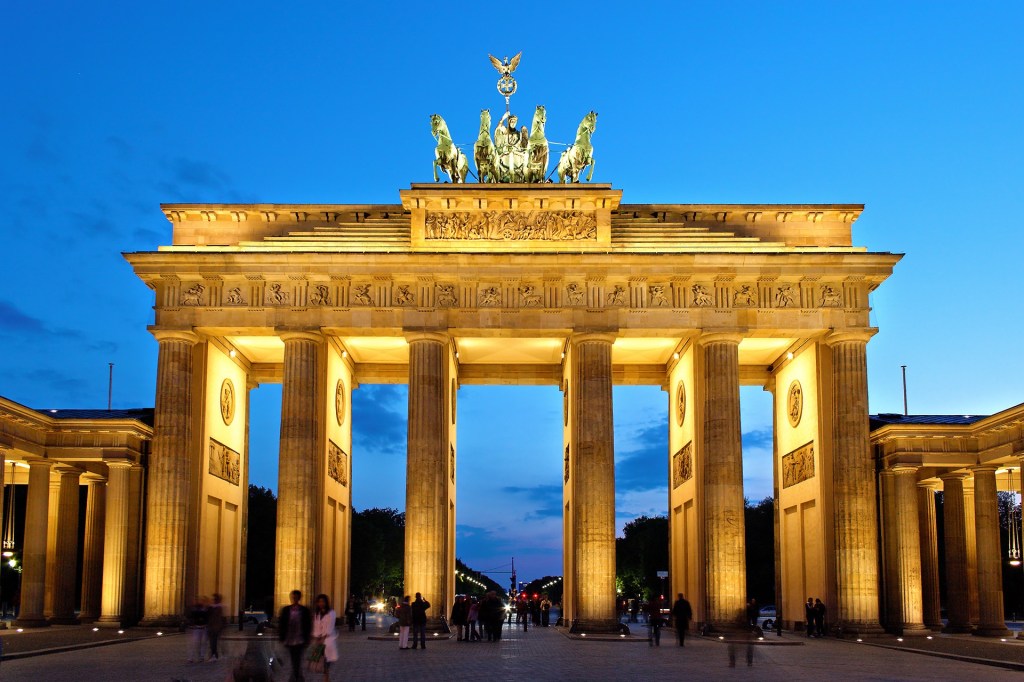
Image Wikimedia Commons
In 1721, a collection of six instrumental works—the composer’s own title was Six Concerts Avec plusieurs Instruments (Six Concertos With several Instruments)—were presented by Johann Sebastian Bach to Christian Ludwig, a marquess and younger brother of King Frederick I of Prussia. Using the above picture as a clue, by what name is this collection commonly known today?
Answer: Brandenburg Concertos
Johann Sebastian Bach’s Brandenburg Concertos, now his most popular work, were likely never performed during his lifetime. Bach sent the original manuscript to the Margrave (Marquess) of Brandenburg in 1721, possibly as a job application, but the Margrave never acknowledged the gift. The concertos were forgotten for over a century until they were rediscovered and published in the 19th century.
Two
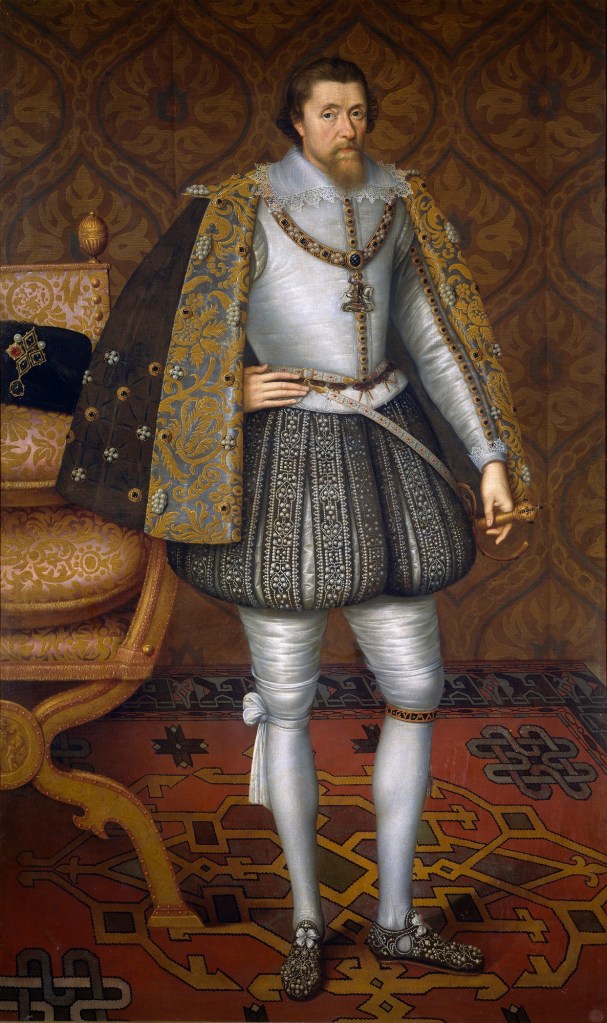
Image Wikimedia Commons
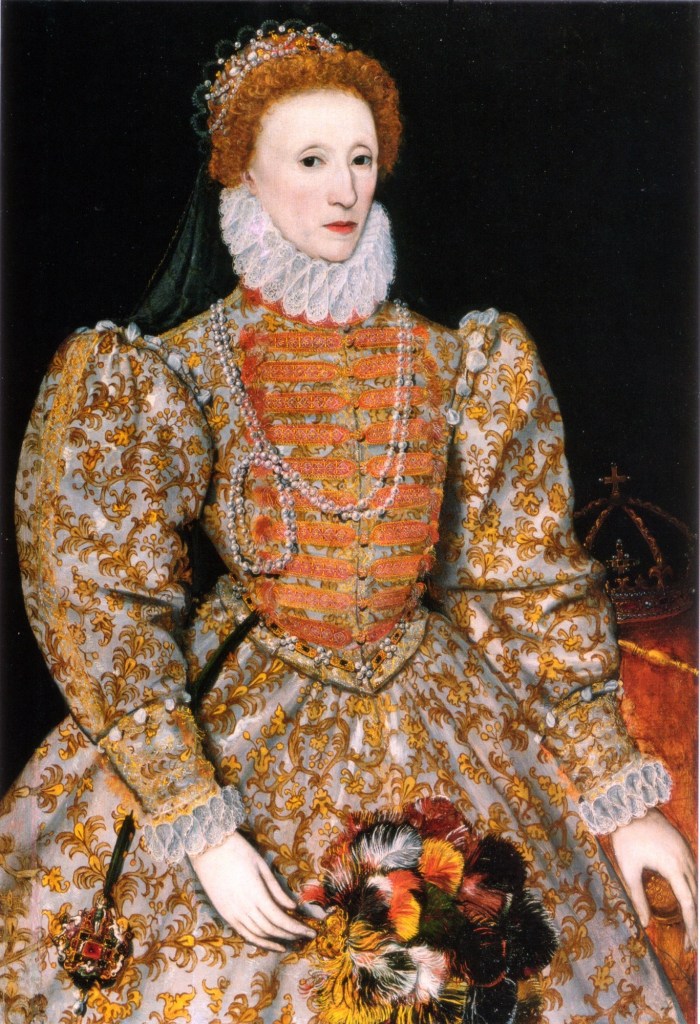
Image Wikimedia Commons
The male monarch pictured above succeeded the female one on her death in 1603.
- Who is the queen?
- Who was the king?
- What was the familial relationship between them?
Answers
- Queen Elizabeth I
- King James VI and I
- Cousins.
Queen Elizabeth I’s death in 1603 ended her reign of England and Ireland, leading to her cousin King James VI of Scotland’s succession as King of England and Ireland. Now both James VI and I, his reign saw the beginning of the Plantation of Ulster and English colonisation of the Americas.
Three
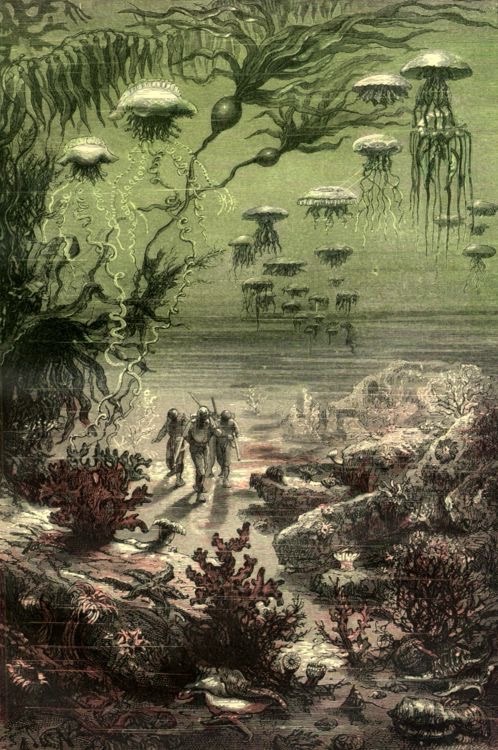
Image Wikimedia Commons
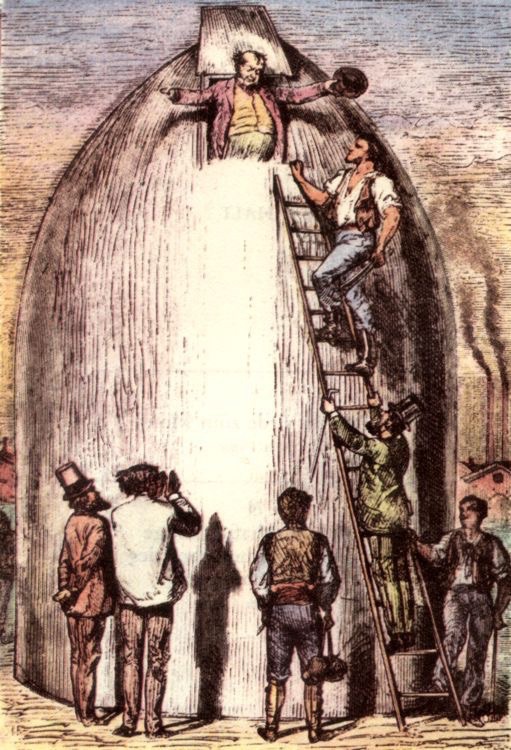
Image Wikimedia Commons
The two illustrations above are from novels by an author, ‘the father of science fiction’, who died in 1905, aged 77. Since 1979, he has been the second most translated author.
- Who was the author?
- From what novel is the first illustration?
- From what novel is the second illustration?
Answers
- Jules Verne
- Twenty Thousand Leagues Under the Sea
- From the Earth to the Moon
Jules Verne was a French novelist, poet, and playwright, best known for his adventure novels like Journey to the Centre of the Earth and Around the World in Eighty Days His work, often set in the 19th century, incorporated contemporary scientific knowledge and technological advances. Verne is considered an important author in Europe and has been the second most-translated author in the world since 1979.
Four
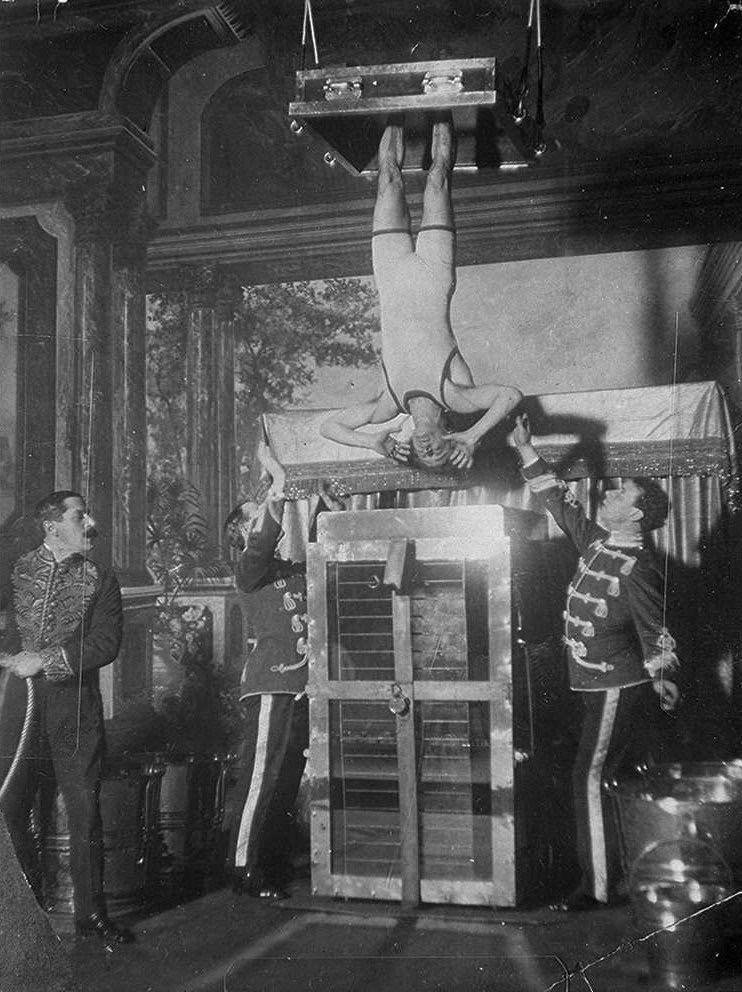
Image Wikimedia Commons
Erik Weisz, who was born in 1874, is pictured above during one of his acts, although he’s better known by his stage name.
- In what European city was he born?
- Who is he better known as?
Answers
- Budapest
- Harry Houdini.
Harry Houdini, a Hungarian-American escapologist, gained fame for his daring escape acts, including freeing himself from handcuffs, chains, and straitjackets. He also pursued a crusade against fraudulent spiritualists and was a pioneer aviator.
Five
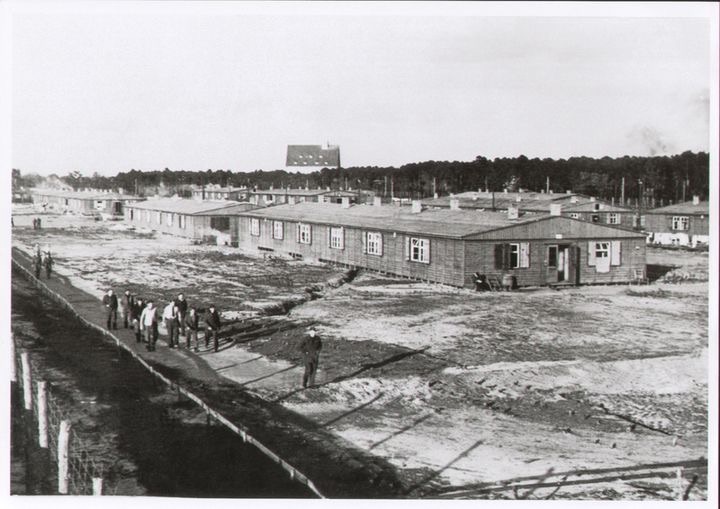
Image Wikimedia Commons
The prisoner of war camp above was made famous by a 1963 film which features the inmates attempts to leave it on the night of 24 March 1944.
- By what name is this POW camp commonly known?
- What was the 1963 film?
- In what modern country is the site of the camp today?
Answers
- Stalag Luft III
- The Great Escape
- Poland
Stalag Luft III (in full Stammlager Luft III; literally meaning Main Camp, Air, III) was a World War II POW camp for Allied airmen, known for escape plots including the Great Escape. Of the 76 men who escaped that night, 73 were recaptured, and fifty of those were executed. The camp, which was liberated in 1945 and is now a museum, was the subject of two feature films about the escape attempts that were made: The Wooden Horse (1950) and The Great Escape (1963).
 Quizology.Online
Leave a comment