The first question relates to today’s date, 14 June. The remainder follow a theme created by the first.
One
On 14 June …, the Continental Congress approved the Flag Resolution, establishing the Stars and Stripes as the first official flag of the United States. In what decade did this take place?
Two
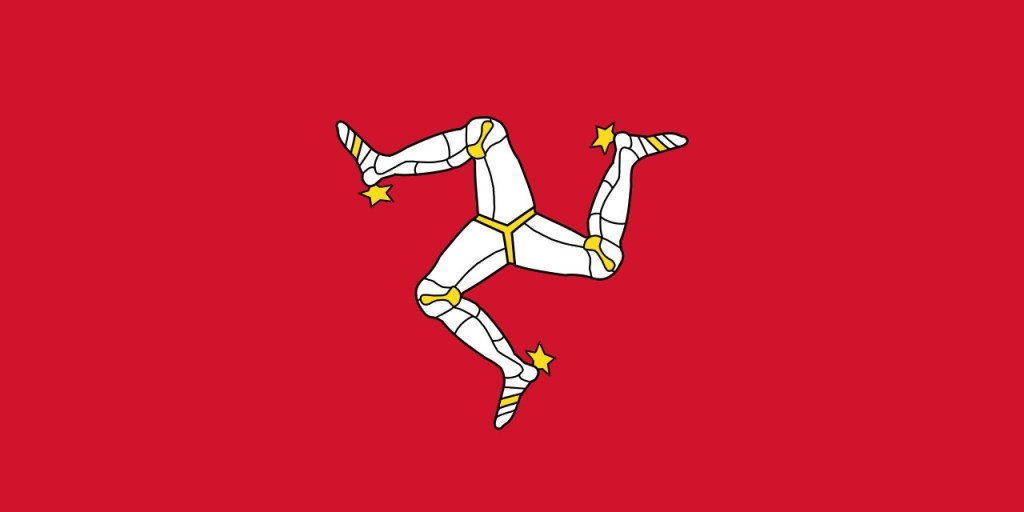
What ten-letter word describes the badge in the centre of the flag shown at the top of this post, and what self-governing British Crown Dependency does it represent?
Three
What national flag depicts an assault rifle, agricultural implement and a book described by Wikipedia as ‘a bayonet-equipped AK-47 crossed by a hoe, superimposed on an open book’?
Four
What national flag is described by Wikipedia as follows?
The flag of … is a concave pentagonal flag of red, white, and blue colour. It is used as both the state and civil flag of …. It is the only non-rectangular national flag in the world and the only one that is taller than it is wide. The flag’s unique shape is a combination of two single pennants, and is known as a double-pennon. The red colour of the field represents bravery and …’s national flower, the rhododendron, while the blue colour of the border represents peace.
Five
Apart from the flag mentioned in question four above, all flags are rectangular, and that includes the two which are square. What two sovereign states have flags which are square?
Today’s questions are not date related but follow a sequence which may become obvious as you venture through it.
One
What Canadian Province has borders with the US states of Maine, New Hampshire, New York and Vermont?
Answer: Quebec.
Quebec, Canada’s largest province by area, is the only Francophone-majority province. It has a rich history, having been a French colony, then a British colony, before becoming part of Canada in 1867. Quebec’s economy is diverse, with key industries including aeronautics, hydroelectricity, and mining, and it is renowned for its distinct culture and contributions to Canadian society.
Two
In the film Some Like It Hot (1959) the band’s singer Sugar Kane also played what stringed instrument?
Answer: Ukulele.
Some Like It Hot is a 1959 American crime comedy film directed by Billy Wilder, starring Marilyn Monroe, Tony Curtis and Jack Lemmon. The film, set in the Prohibition era, follows two musicians (Curtis and Lemmon) who disguise themselves as women to escape mobsters.
Three
What was the title of the 1983 Paul McCartney/Stevie Wonder duet?
Answer: Ebony and Ivory.
Ebony and Ivory is a 1982 duet by Paul McCartney and Stevie Wonder, promoting racial harmony. The song topped charts in the UK and US, but was banned in South Africa during apartheid after wonder dedicated his Academy Award to Nelson Mandela.
Four
What letter of the Greek alphabet is used to indicate a mathematical function for ‘the sum of’?
Answer: Sigma.
Sigma is the eighteenth letter of the Greek alphabet, with a value of 200 in Greek numerals. It is used as a summation operator in mathematics and is the origin of the Latin letter S.
Five
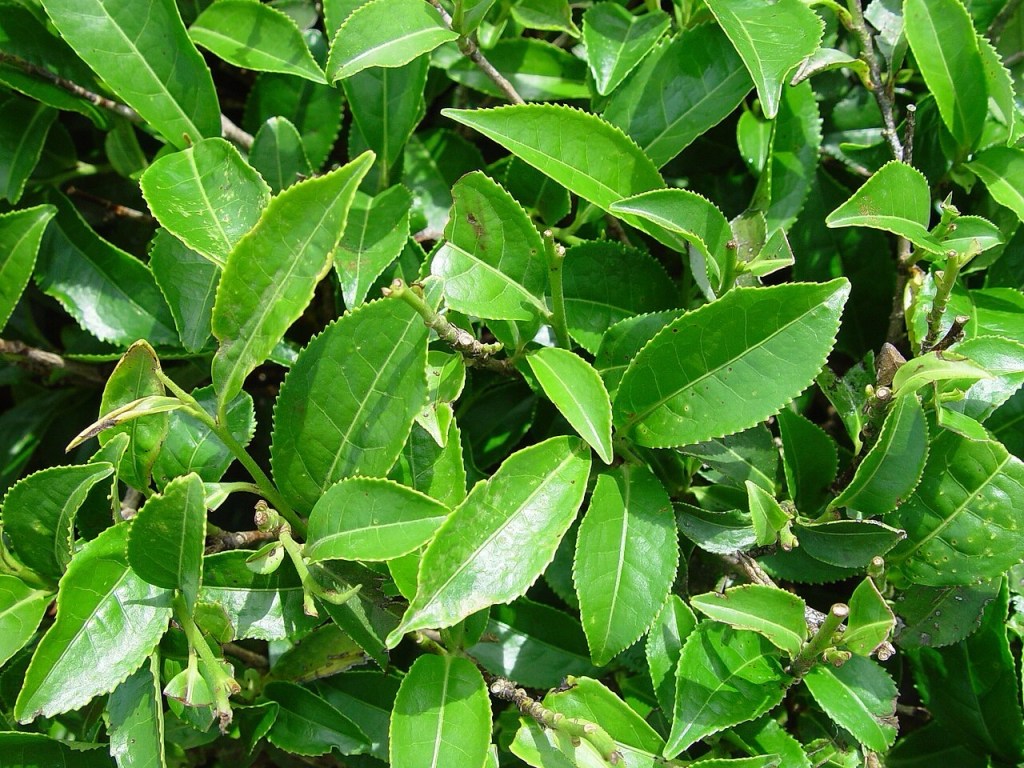
Camellia sinensis is the plant used to make what?
Answer: Tea.
Camellia sinensis, an evergreen shrub or small tree, is used to produce various types of tea. The name sinensis means ‘from China’ in Botanical Latin, and the genus name Camellia honours Rev. Georg Kamel.
Voyage of Discovery
The post title was a voyage of discovery, or a quest, and if you look at the answers, the initial letters spell out Q U E S T.
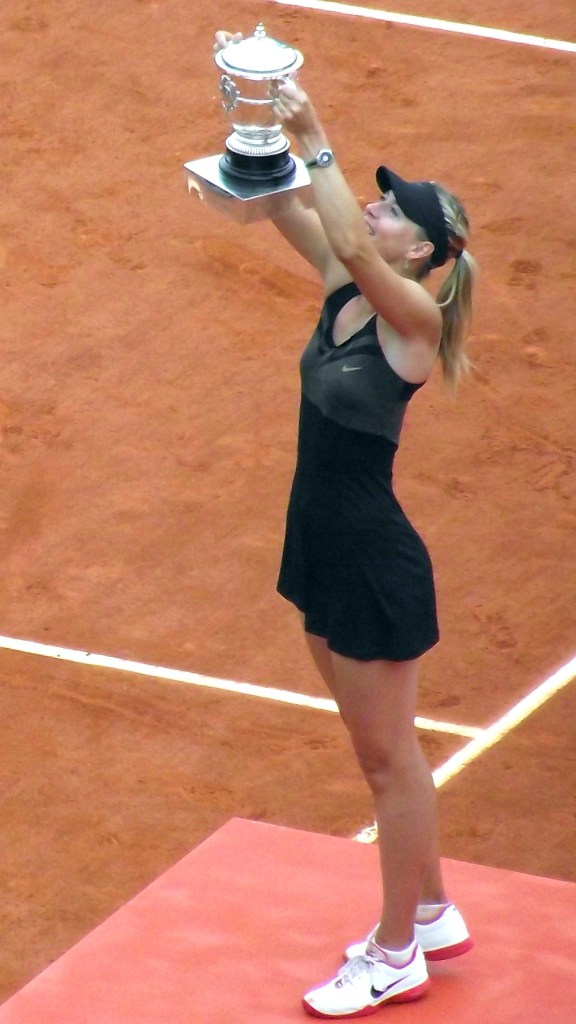
Maria Sharapova completed the Career Grand Slam after winning the 2012 French Open. Image Wikimedia Commons
Today’s answers are all single numbers — even the one that is a large number can be written as a single digit if you read the question carefully — and form part of a sequence.
One
How many of the eight planets in the solar system have one, and only one, natural satellite, and what are the names of this/these planet(s)?
Answer: 1. Earth.
Listing the eight planets in order from the nearest to the Sun: Mercury and Venus have no known moons. Earth has one known moon and is the only such planet. Mars has two; Jupiter, 115; Saturn, 292; Uranus, 29; and Neptune has 16.
Two
Maria Sharapova retired from tennis in 2020. Of the five Grand Slam Singles Championships she won, how many were at the French Open, and who, if any, was/were her defeated finalist(s)?
Answer: 2. Sara Errani; Simona Halep.
Maria Sharapova won the French Open in 2012, beating Sara Errani in the final, 6–3, 6–2; and in 2014, she defeated Simona Halep in the final, 6–4, 6–7(5–7), 6–4. Sharapova, a former Russian professional tennis player, achieved the career Grand Slam in singles and was ranked world No. 1 for 21 weeks. She won 36 WTA Tour-level singles titles, including five major titles, and was inducted into the International Tennis Hall of Fame in 2025. Sharapova retired from tennis in 2020.
Three
How many siblings does King Charles III of Great Britain have, and what are they known as?
Answer: 3. Anne, Princess Royal; Andrew Mountbatten-Windsor and Prince Edward, Duke of Edinburgh.
King Charles III has three siblings: Anne, Princess Royal, who was born in 1950; Andrew Mountbatten-Windsor, born in 1960; and Prince Edward, Duke of Edinburgh, born in 1964. Mountbatten-Windsor was previously known as Prince Andrew, Duke of York, but was stripped of his titles, royal styles and honours as a result of his association with convicted paedophile Jeffrey Epstein.
Four
The World Health Organisation estimates that approximately how many million people worldwide are bitten by snakes each year?
Answer: 5. (i.e. 5 million).
World Health Organisation estimates that annually, 5.4 million people are bitten by snakes, with 1.8 to 2.7 million envenomings. Snake bites result in 81,410 to 137,880 deaths and three times more amputations. Venomous bites cause paralysis, bleeding disorders, kidney failure, and tissue damage. Agricultural workers and children, especially, are severely affected.
Five
How many countries share a land border with Turkey (officially the Republic of Türkiye), and list them in alphabetical order?
If we make a start at the Black Sea to the north and go in a clockwise direction, they are Georgia, Armenia, Azerbaijan, Iran, Iraq, Syria (Mediterranean Sea and then Aegean Sea), Greece, and Bulgaria.
Numbers Game
Today’s title referred to the answers all being a number, but these are five numbers from near the start of the Fibonacci sequence: 0, 1, 1, 2, 3, 5, 8,13, 21.
Today’s answers are all single numbers — even the one that is a large number can be written as a single digit if you read the question carefully — and form part of a sequence.
One
How many of the eight planets in the solar system have one, and only one, natural satellite, and what are the names of this/these planet(s)?
Two
Maria Sharapova retired from tennis in 2020. Of the five Grand Slam Singles Championships she won, how many were at the French Open, and who, if any, was/were her defeated finalist(s)?
Three
How many siblings does King Charles III of Great Britain have, and what are they known as?
Four
The World Health Organisation estimates that approximately how many millions of people worldwide are bitten by snakes each year?
Five
How many countries share a land border with Turkey (officially the Republic of Türkiye), and list them in alphabetical order?
Today’s first question is the only one connected to the date 11 June. The others continue a theme created in the first.
One
Born in 1910, this French author, explorer, inventor, diver, and biologist was awarded the Legion of Honour, the highest and most prestigious French national order of merit, for espionage work while a member of the French resistance during World War II. Who is this?
Answer: Jacques Cousteau.
Jacques Cousteau (1910–1997) was a French naval officer, ocean explorer, filmmaker and co-inventor of the Aqua-Lung, which revolutionised scuba diving. A World War II resistance member and decorated naval officer, he pioneered underwater research, photography, and filmmaking. Using his research vessel Calypso (pictured), he led expeditions worldwide and helped popularise ocean exploration through books, documentaries and television. Cousteau also directed Monaco’s Oceanographic Museum, developed underwater habitats, and founded organisations dedicated to marine conservation and environmental protection.
Two
This actor, who links Hamlet and Ealing comedies with adaptations of John Le Carré’s novels and Star Wars, commanded a World War II landing craft during the invasions of Sicily and Elba. Who is he?
Answer: Alec Guinness.
Sir Alec Guinness, born Alec Guinness de Cuffe, was a renowned English actor, noted for his roles in nine of the BFI’s 100 most important British films. He won numerous awards, including an Academy Award, BAFTA, Golden Globe, Tony, and Volpi Cup. Knighted in 1959, he starred in films like Great Expectations, Lawrence of Arabia, and was Obi-Wan Kenobi in the original Star Wars trilogy. Guinness also excelled in theatre and television, notably as George Smiley in Tinker, Tailor, Soldier, Spy and Smiley’s People.
Three
This actress, who played Delilah in 1949’s Samson and Delilah, was the co-inventor of a 1941 torpedo radio guidance system which utilised pioneering spread spectrum and frequency hopping technology to prevent jamming. Who was she?
Answer: Hedy Lamarr.
Hedy Lamarr, an Austrian-American actress and inventor, co-invented a radio guidance system during World War II with composer George Antheil. Their invention utilised spread spectrum and frequency hopping technology to protect Allied torpedoes from Axis jamming. Lamarr received numerous awards for her contributions to spread-spectrum technology, including the Electronic Frontier Foundation’s Pioneer Award, the BULBIE Gnass Spirit of Achievement Award, and the Viktor Kaplan Medal. Its principles are utilised for secure wireless networking, such as Bluetooth and early versions of Wi-Fi, which use variants of spread spectrum to protect data from interception and interference. She was posthumously inducted into the National Inventors Hall of Fame.
Four
This actor, who worked in Royal Air Force Intelligence during World War II, links all of these: Count Dracula; a 1970s Bond villain; baddies in The Lord of the Rings and The Hobbit; a High Councillor in The Golden Compass and the voice of Death in animated versions from Terry Pratchett’s Discworld. Who is he?
Answer: Christopher Lee.
He was renowned for his portrayal of Count Dracula in Hammer Horror films, starting with Dracula (1958). He also starred as Bond villain Francisco Scaramanga in The Man with the Golden Gun (1974), Count Dooku in the Star Warsprequel trilogy (2002–2005), and Saruman in The Lord of the Rings and The Hobbit film trilogies (2001–2003 and 2012–2014, respectively). Lee voiced the character Death in two animated fantasy-comedy television series adaptations of the Discworld novels Soul Music and Wyrd Sisters (both 1997).
Five
An actor who flew US Liberator bombers over Europe during World War II had a starring role in 1939 in which he ‘went to Washington’. The following year, a ‘tale about Philadelphia’ won him a Best Actor Oscar. Who was this actor and pilot whose time in the Air Force and Air Force Reserve spanned 1941 to 1968?
Answer: James Stewart.
The two films referenced in the question are Mr. Smith Goes to Washington (1939) and The Philadelphia Story (1940). James Stewart, initially rejected for being underweight, enlisted in 1941 after gaining weight. An experienced pilot, he served in the Air Corps, becoming a second lieutenant in 1942. His celebrity aided recruitment, leading to 150,000 new troops. Volunteering for combat, he flew a B-24 Liberator in Europe, earning promotions to Major in 1944 and Colonel in 1945. Stewart received the Distinguished Flying Cross, French Croix de Guerre, and Air Medal. He served in the Air Force Reserve until 1968, retiring as a brigadier general.
The Best Way to Observe a Fish is to Become a Fish
The post title is a quote from Jacques Cousteau
“The best way to observe fish is to become a fish,” wrote Jacques-Yves Cousteau in 1952. “And the best way to become a fish…is to don an underwater breathing device called the Aqua-Lung.” — Time magazine
Today’s first question is the only one connected to the date 11 June. The others continue a theme created in the first.
One
Born in 1910, this French author, explorer, inventor, diver, and biologist was awarded the Legion of Honour, the highest and most prestigious French national order of merit, for espionage work while a member of the French resistance during World War II. Who is this?
Two
This actor, who links Hamlet and Ealing comedies with adaptations of John Le Carré’s novels and Star Wars, commanded a World War II landing craft during the invasions of Sicily and Elba. Who is he?
Three
This actress, who played Delilah in 1949’s Samson and Delilah, was the co-inventor of a 1941 torpedo radio guidance system which utilised pioneering spread spectrum and frequency hopping technology to prevent jamming. Who was she?
Four
This actor, who worked in Royal Air Force Intelligence during World War II, links all of these: Count Dracula; a 1970s Bond villain; baddies in The Lord of the Rings and The Hobbit; a High Councillor in The Golden Compass and the voice of Death in animated versions from Terry Pratchett’s Discworld. Who is he?
Five
An actor who flew US Liberator bombers over Europe during World War II had a starring role in 1939 in which he ‘went to Washington’. The following year, a ‘tale about Philadelphia’ won him a Best Actor Oscar. Who was this actor and pilot whose time in the Air Force and Air Force Reserve spanned 1941 to 1968?
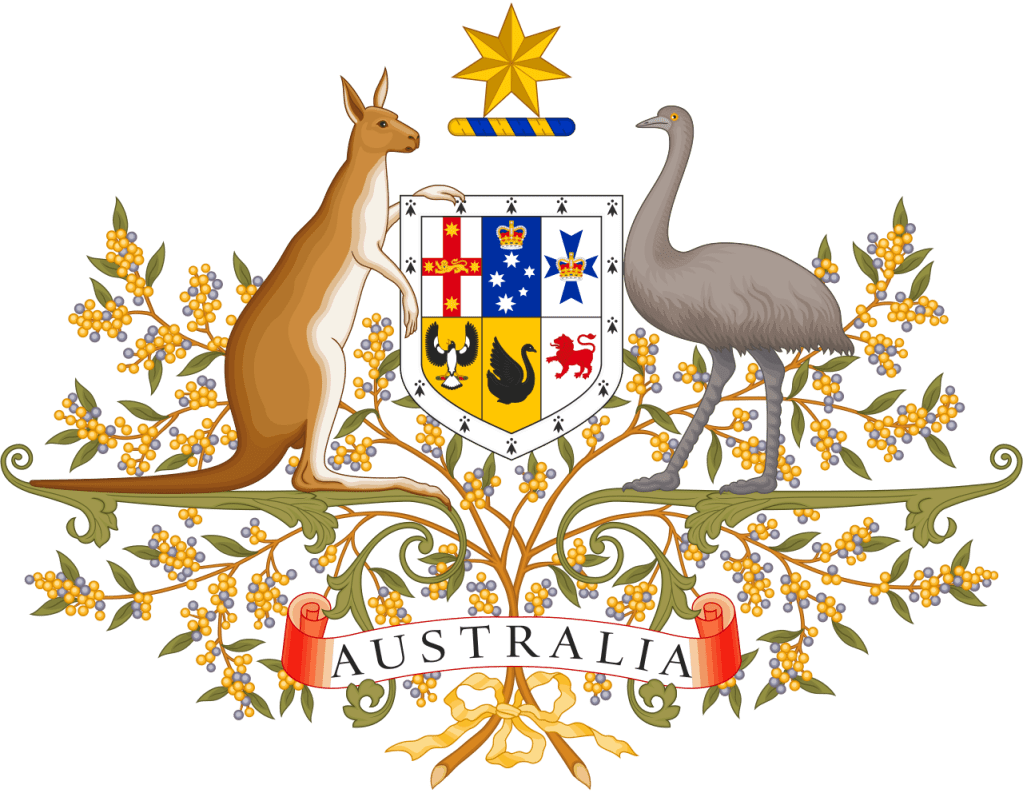
What birds are shown on the Australian coat of arms?
Answer: Emu, (Australian piping) shrike and black swan.
The shield’s centre features symbols representing Australia’s six states and its border symbolises federation. Holding the shield are the native Australian animals, the kangaroo and the emu. These were chosen to represent a nation moving forward as neither animal easily moves backwards. Above the shield sits a seven-point gold Commonwealth Star. Six of the star’s points represent the Australian states while the seventh point represents the territories. South Australia is represented by an Australian piping shrike and Western Australia, a black swan.
Two
A xylophage is an animal whose diet consists mainly of which substance?
Answer: Wood.
Xylophagy refers to herbivorous animals primarily consuming wood. Most are arthropods, especially insects, which may specialise in certain plant groups or wood characteristics. Many have symbiotic organisms aiding cellulose breakdown. Examples include Cossidae moths, termites, shipworms, and wood-boring beetles, among others.
Three
In the terminology used to describe swans: What is a young swan known as, and what two nouns of the same length are used for the male and female, respectively?
Answers: Cygnet; Cob and pen.
Young swans are known as cygnets, from Old French cigne or cisne (diminutive suffix et ‘little’), from the Latin word cygnus, a variant form of cycnus ‘swan’, itself from the Greek κύκνος kýknos, a word of the same meaning. An adult male is a cob, from Middle English cobbe (leader of a group); an adult female is a pen. — Wikipedia
Four
What species of whale was the fictional Moby Dick?
Answer: Sperm whale.
Moby Dick is a fictional white sperm whale and the main antagonist in Herman Melville’s novel. Based on the real-life Mocha Dick, Moby Dick is described as having distinctive white markings and a history of attacking and destroying whaling ships. The novel ends with Moby Dick destroying the Pequod, leaving Ishmael as the sole survivor.
Five
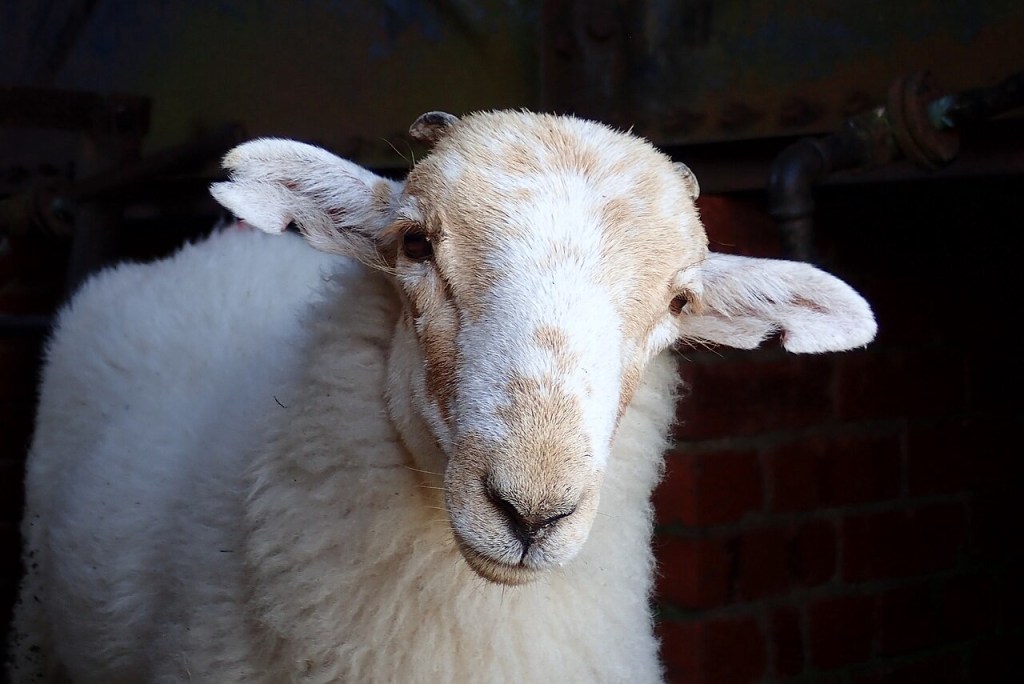
According to the narrative of the Bible’s Book of Genesis 4:2, who was the keeper of sheep?
Answer: Abel.
Now Abel was a keeper of sheep, and Cain a tiller of the ground. — Book of Genesis, The Bible
The Nabi Habeel Mosque, Bilad Ash-Sham, Syria, is believed by Muslims to be the grave of Abel. Abel, murdered by his brother Cain, is the world’s first homicide victim?
What birds are shown on the Australian coat of arms?
Two
A xylophage is an animal whose diet consists mainly of which substance?
Three
In the terminology used to describe swans: What is a young swan known as, and what two nouns of the same length are used for the male and female, respectively?
Four
What species of whale was the fictional Moby Dick?
Five
According to the narrative of the Bible’s Book of Genesis 4:2, who was the keeper of sheep?
Continuing the recent trend, today’s first question is connected to today’s date, 9 June. The remainder of the questions are not date-related but follow on a theme begun in question one.
One
In 1781, an English engineer who Encyclopædia Britannica describes as ‘the principal inventor of the railroad locomotive’ was born. Who is he, and which of his locomotives inaugurated public rail travel in September 1828?
Answer: George Stephenson; Active (aka Locomotion).
George Stephenson, born on 9 June 1781, in Wylam, Northumberland, England, revolutionised transportation with his locomotive innovations. After building the Blucher and introducing the ‘steam blast’, he gained fame with a mine-safety lamp. In 1825, his Active (renamed Locomotion) locomotive inaugurated public rail travel. He constructed the Liverpool-Manchester line, overcoming opposition, and his Rocket won a 1829 competition. Stephenson’s work spurred global railroad expansion, and he continued as a leading figure in transportation engineering until his death on 12 August 1848.
Two
Tea bags were reportedly invented by accident. Modern tea bags are made from paper but what material were the early ones made from?
Answer: Silk.
Tea bags were popularised in the early 20th century, reportedly by accident. Around 1908, American tea merchant Thomas Sullivan sent tea samples in small silk bags. Some customers are said to have brewed the tea directly in the bags, mistaking them for a replacement for traditional metal infusers, leading to the development of the modern tea bag. As stated, early tea bags were made of silk; paper tea bags did not become common until later, when manufacturers developed cheaper and more practical filter-paper versions.
Three
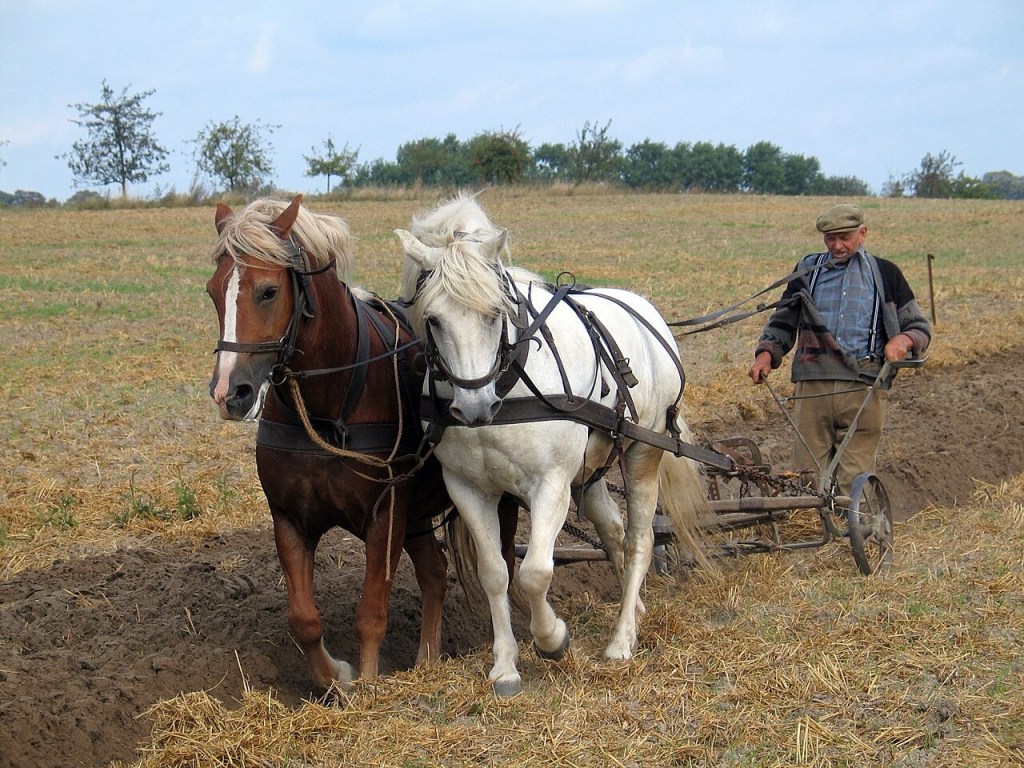
(Note, in this question, the word ‘houghing’ is an obsolete form of ‘hoeing’ as done with a horse-drawn hoe (hough)).
What name links the book The New Horse Houghing Husbandry: Or an Essay on the Principles of Tillage and Vegetation, which was published in 1731, with the 1978 album Heavy Horses?
Answer: Jethro Tull.
Jethro Tull (1674–1741) was an influential English agronomist and inventor whose innovations shaped modern British agriculture. Initially trained for law, Tull managed his father’s farm in Oxfordshire, where he developed a horse-drawn seed drill around 1701. In 1709, he purchased a farm in Berkshire, adopting vineyard cultivation methods and inventing a horse-drawn hoe. His work, published in The New Horse Houghing Husbandry: Or an Essay on the Principles of Tillage and Vegetation (1731), faced initial criticism but eventually revolutionised farming practices. The eleventh studio album by the band Jethro Tull, Heavy Horses, was released in 1978. It is a folk rock album dedicated to British working ponies and horses. It continues the band’s combination of folk and progressive rock with a darker sound.
Four
Adolphe Sax, best known for inventing the saxophone, was born in which present-day country, and in what decade did he patent the saxophone?
Answer: Belgium; 1840s.
Adolphe Sax, born in 1814 in Dinant, Belgium, was a Belgian-French instrument maker and inventor of the saxophone, which he patented in 1846. He also developed the saxhorn, saxo-tromba, and saxtuba, and redesigned the bass clarinet. Sax studied flute and clarinet before moving to Paris in 1842 to exhibit his saxophone. Appointed instructor at the Paris Conservatory in 1857, he faced legal battles over patents and died in poverty in 1894. Sax’s innovations significantly impacted the world of music.
Five
What are the ‘Four Great Inventions’ traditionally attributed to ancient China?
Answer: Papermaking, printing, the compass, and gunpowder.
These four inventions profoundly influenced world history. Papermaking and printing revolutionised the spread of knowledge, the compass transformed navigation and exploration, and gunpowder changed warfare. The concept of the ‘Four Great Inventions’ became especially popular in the nineteenth century as a way of highlighting China’s major contributions to global civilisation.
Before They Invented Drawing Boards What Did They Go Back To?
The post title was a quote from the American stand-up comedian, George Carlin (1937-2008).

 Quizology.Online