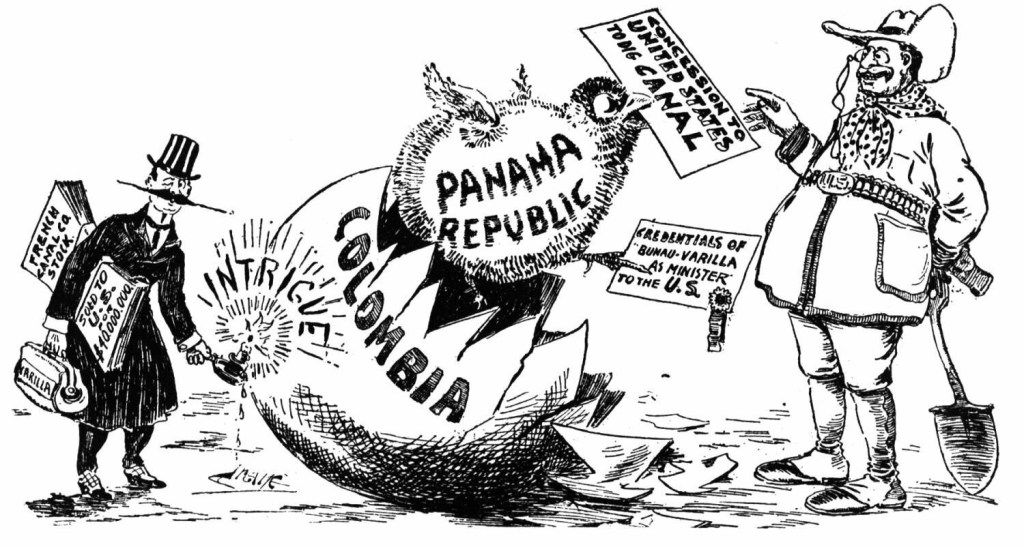
Panama Canal U.S. cartoon depicting Theodore Roosevelt, New York Times, 1903. [Image via Wikipedia]
The Hay-Pauncefote Treaties were two significant agreements between the United States and the United Kingdom, signed in the early 20th century, that facilitated the construction of the Panama Canal. These treaties addressed the control and management of the canal, which was a pivotal development in global maritime trade.
First Hay-Pauncefote Treaty (1900)
The first treaty was signed on 5 February 1900 by U.S. Secretary of State John Hay and British Ambassador to the United States, Lord Julian Pauncefote. This treaty aimed to supersede the Clayton-Bulwer Treaty of 1850, which had stipulated that neither country would have exclusive control over a canal across Central America. However, the U.S. Senate rejected this treaty due to concerns over restrictions on American control and fortification of the canal.
Second Hay-Pauncefote Treaty (1901)
The second treaty, successfully signed on 18 November 1901, resolved these issues by giving the United States the exclusive right to construct, operate, and fortify the Panama Canal. It stipulated that the canal should be open to the vessels of all nations on equal terms and without discrimination, whilst assuring that the canal would be neutral and available for peaceful use by all.
The Hay-Pauncefote Treaties marked a significant turning point in U.S.-British relations and set the stage for the construction of the Panama Canal, which greatly enhanced global maritime commerce by providing a quicker route between the Atlantic and Pacific Oceans.
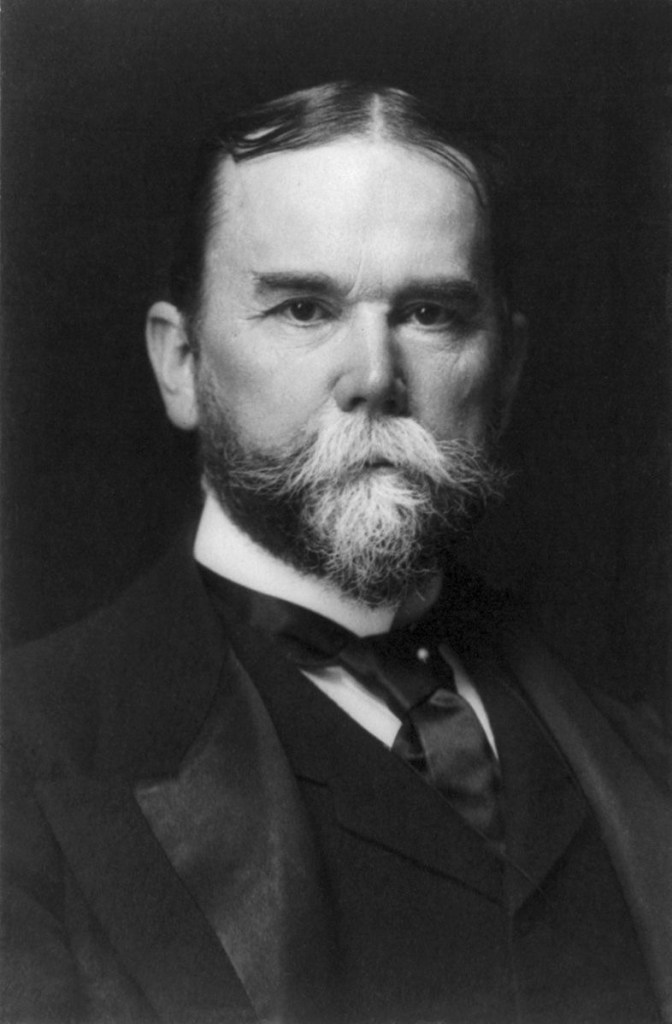
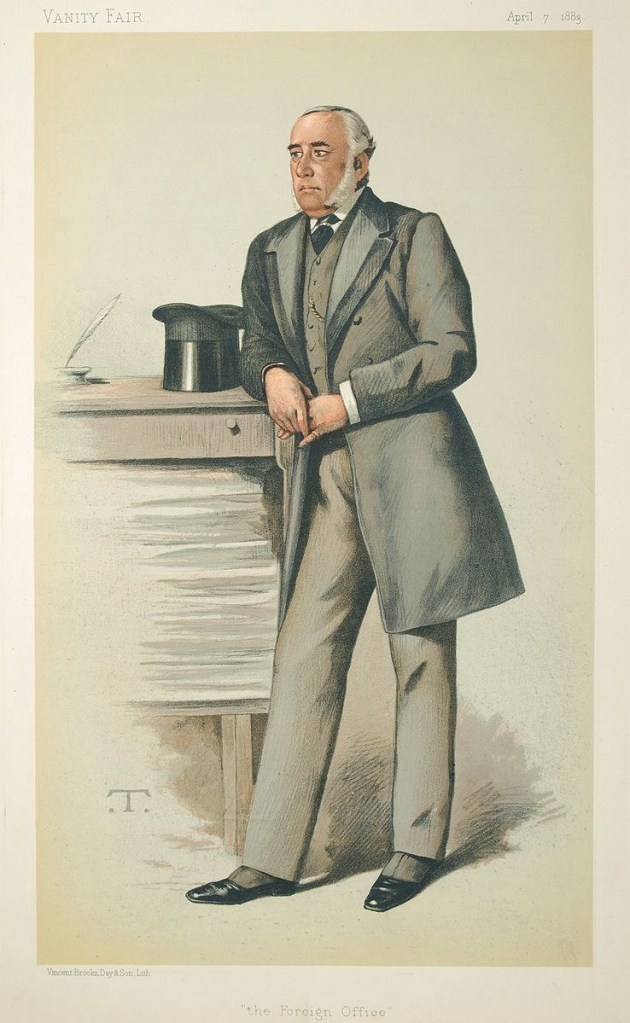
John Milton Hay [Image via Wikipedia]Caricature of Sir Julian Pauncefote KCMG CB[ Image via Wikipedia]
The (first) Hay-Pauncefote Treaty, signed on February 5, 1900, between the United States and the United Kingdom, pertained to which of these waterways?
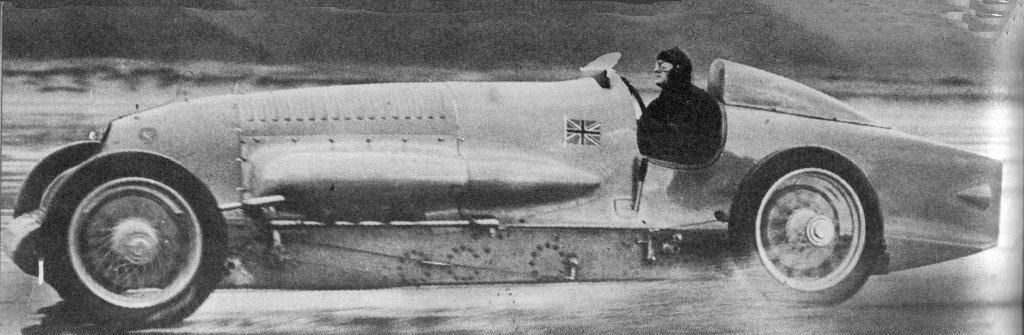
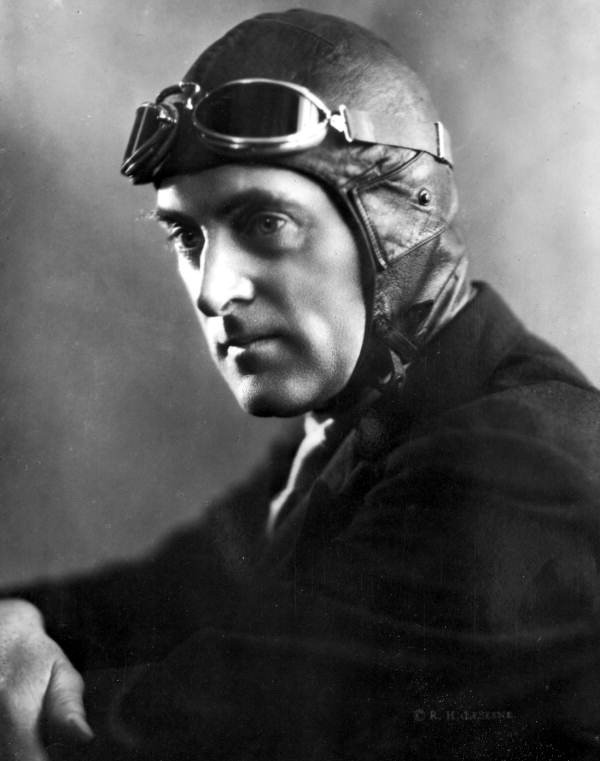
On February 4, 1927, Malcolm Campbell achieved the land speed record at Pendine Sands in Wales. In an average of two runs, the Napier-Campbell Blue Bird covered the flying kilometre at 174.883 miles per hour (281.447 kilometres per hour) and the flying mile at 174.224 miles per hour (280.386 kilometres per hour).
1927, Malcolm Campbell in the Napier-Campbell Blue Bird broke the world’s Land Speed Record at Pendine Sands. [Image via Wikipedia]
In total, Campbell set nine land speed records between 1924 and 1935, with three at Pendine Sands and five at Daytona Beach. His initial two records were achieved while driving a racing car built by Sunbeam. Additionally, he set the world water speed record four times, with his fastest recorded speed reaching an astonishing 141.740 mph (228.108 km/h) in the Blue Bird K4. This remarkable feat was accomplished on August 19, 1939, at Coniston Water.
Woodrow Wilson. Woodrow Wilson was the 28th President of the United States and played a significant role in the Paris Peace Conference in 1919, which led to the Treaty of Versailles. Wilson was an advocate for the League of Nations, although the United States never joined it. He passed away on 3 February 1924.
From left to right, Prime Minister David Lloyd George (Great Britain), Prime Minister Vittorio Emanuele Orlando (Italy), Premier Georges Clemenceau (France), President Woodrow Wilson (USA) [Image by Edward N. Jackson (US Army Signal Corps) via Wikipedia]
A former US president who passed away on 3 February 1924, was one of the prominent figures known as the Big Four, the chief Allied leaders who convened at the Paris Peace Conference in January 1919. Can you identify this president?
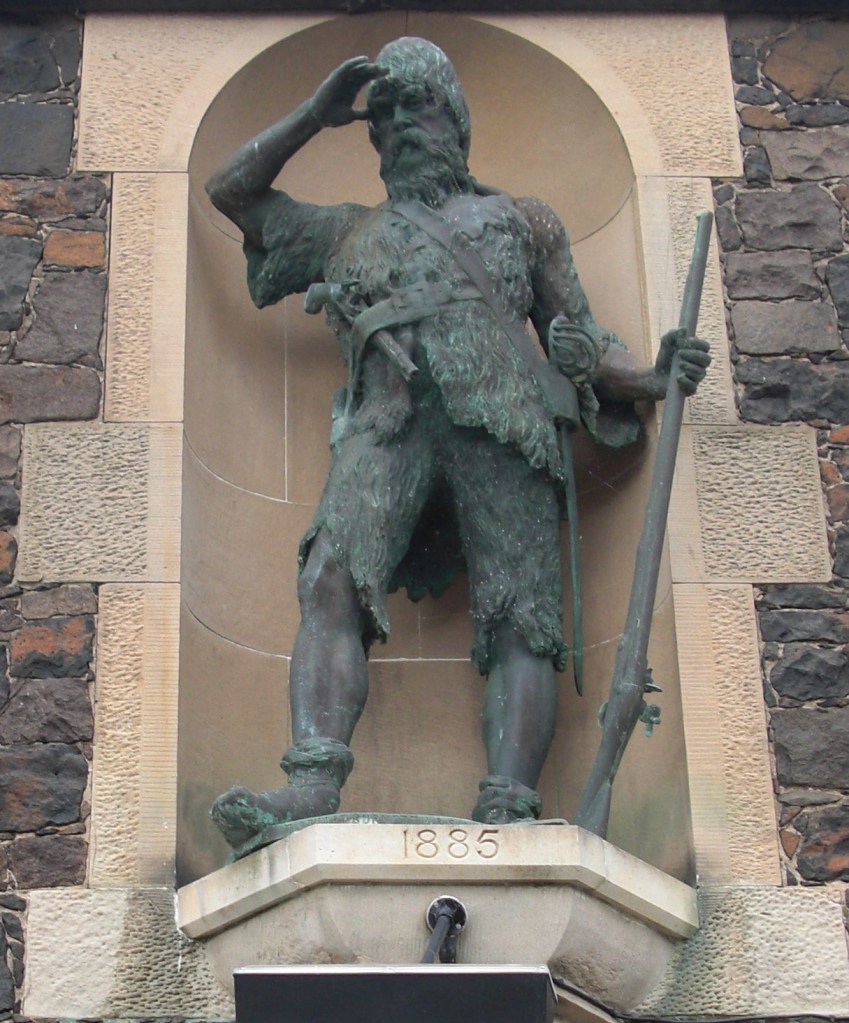
Statue of Alexander Selkirk at the site of his original house on Main Street, Lower Largo Fife, Scotland [Photo by SylviaStanley via Wikipedia]
Scottish mariner Alexander Selkirk’s extraordinary ordeal as a castaway reached a turning point on 2 February 1709 when he was rescued after four solitary years by English captain Woodes Rogers and his crew aboard the Duke. Selkirk had been stranded on an uninhabited island in the Juan Fernández archipelago, an experience that would later inspire Daniel Defoe’s classic novel Robinson Crusoe. The statue commemorating Selkirk at his original home serves as a reminder of his resilience and the enduring fascination with tales of survival and adventure.
Today, February 1, is Imbolc an ancient festival with roots in Celtic tradition. It signifies the arrival of spring and is associated with the goddess Brigid, symbolising fertility, healing and poetry. This day traditionally involved rituals to prepare for the agricultural season, including the lighting of fires to reflect the increasing strength of the sun.
In modern times, Imbolc is celebrated by many who follow Earth-based spiritual traditions. It is a time to honour the first signs of spring and the gradual return of warmth and light. Celebrations often include the creation of Brigid’s crosses and a cleaning of the home, symbolising purification and renewal.
Today, Imbolc is recognised as a time to set intentions for the coming year and to appreciate the cycles of nature. Whether through solitary reflection or communal gatherings, it provides an opportunity to connect with the earth and the changing seasons.


 Quizology Online