See question three. Aerial view of the New York City metropolitan area. Image Wikimedia Commons
The first question concerns an island and is linked to today’s date, April 5th. The other questions aren’t date-related but continue the island theme including a wee bonus at the end.
One
On 5 April 1946, Soviet military forces ended their year-long occupation of what island in the Baltic Sea?
Not date related anymore but continuing the island theme.
Two
Of what island nation is Antananarivo the capital city?
Three
Brooklyn and Queens, two of New York’s five boroughs, are mainly located on what island?
Four
What two distinct islands are home to the Althing and the Tynwald, the oldest legislatures in the world?
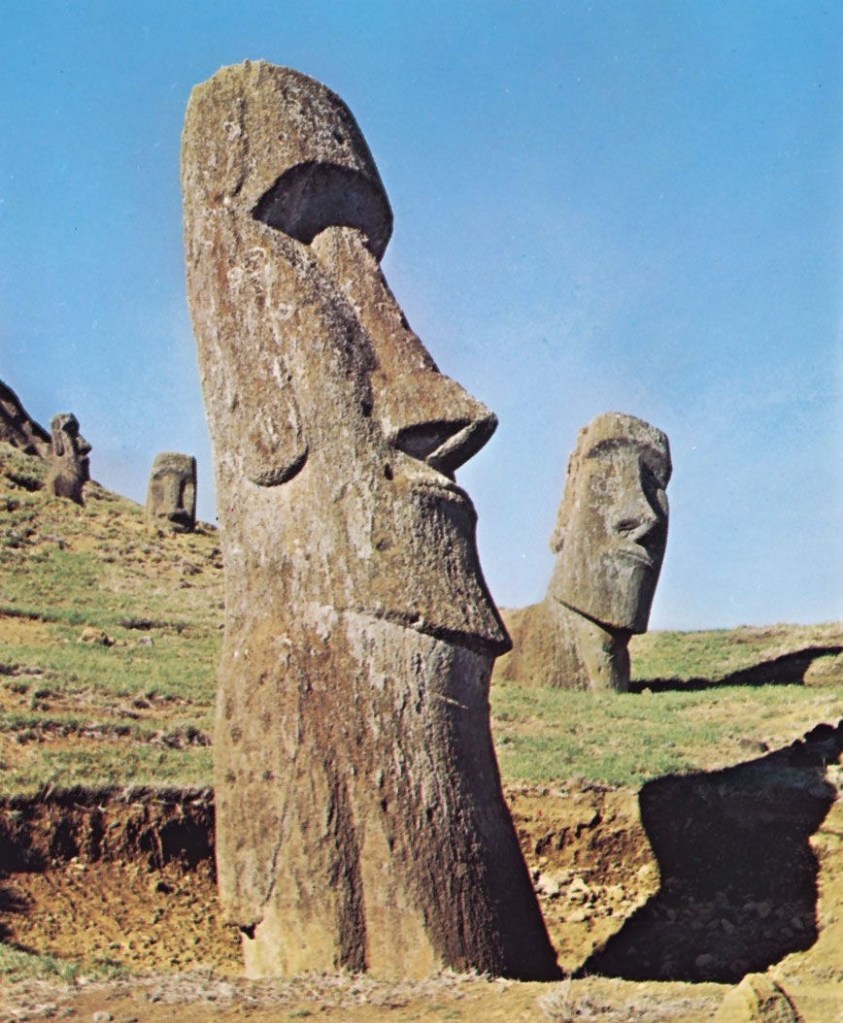
Image Encyclopædia Britannica
Five
On what island are these sculptures located?
Islands in the Stream
Today’s post title managed to top the U.S. Billboard Hot 100 as well as several other national charts in 1983-84. What performer(s) achieved this success, and who wrote the song?
Here are five questions that are related to today’s date, April 3rd. There is also a bonus question at the end.
One
The United States Pony Express, inaugurated in 1860, commenced its first run from one city to another. Can you name both cities in the order of travel of this first run?
Answer: St. Joseph, Missouri to Sacramento, California.
The Pony Express was a mail delivery system that operated between St. Joseph, Missouri, and Sacramento, California, from April 1860 to October 1861. Utilising horse-and-rider relays, the service significantly reduced mail delivery time from 24 days to about 10 days. Despite its efficiency, the Pony Express was a costly venture and ceased operations with the completion of the transcontinental telegraph system.
Two
On this day the first flight over Mount Everest took place. In what decade did this occur?
Answer: 1930s.
In April 1933, two Westland aircraft piloted by Lord Clydesdale and David McIntyre, with observers Stewart Blacker and Sidney Bonnett, became the first to fly over Mount Everest. The expedition, funded by Lucy, Lady Houston, aimed to promote British aviation and gather information for a planned summit attempt. Despite challenges with oxygen supply and weather conditions, the team successfully completed the flight, capturing valuable photographs of the terrain.
Three
The first public handheld mobile (cellular) phone call was made on this day. In what year did this occur and what telecommunications company made the call?
Answer: 1973; Motorola.
Motorola’s Martin Cooper made the first handheld mobile phone call in 1973. The prototype, nicknamed ‘the Brick’, weighed 2 kilograms and offered 30 minutes of talk time.
Four
In 2007, a conventional-train world record was set by a TGV train. In what country was this record set, and to the nearest 5 mph (5 km/h) what was the record-setting speed achieved?
Answer: France; 355 mph (575 km/h).
In 2007, a French TGV train on the LGV Est high-speed line set a new world speed record, achieving 357.2 mph (574.8 km/h) or 159.6 m/s. This was part of Operation V150, a series of high-speed trials that culminated in the record-breaking speed on 3 April 2007. The top speed was reached near the village of Le Chemin, between the Meuse and Champagne-Ardenne TGV stations, where the most favourable profile exists, 12 minutes and 40 seconds after leaving Prény from a standstill, covering 71 km.
Five
Sir Robert Walpole is regarded as the first prime minister of Great Britain. In what decade did he assume this office?
Answer: 1720s.
The office of prime minister in Britain emerged in the 18th century, with Sir Robert Walpole recognised as the first de facto prime minister, serving from 1721 to 1742. Walpole’s financial expertise, peaceful foreign policy, and adept management of Parliament established his authority and set the foundation for the modern Cabinet system. However, he faced criticism for bribery and corruption and resigned following a failed war with Spain.
Ride ‘Em Cowboy
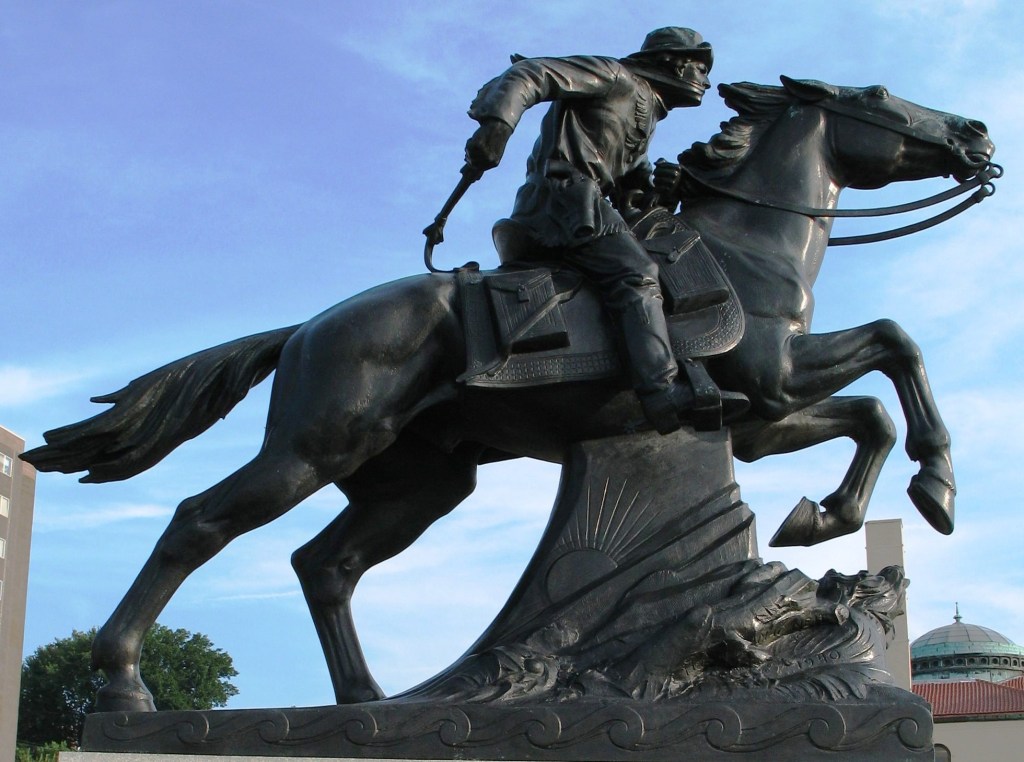
Today’s title alludes to the riders employed by the Pony Express but it was also the title of a 1942 comedy. What duo starred in it?
Answer: Abbott and Costello.
Bud Abbott and Lou Costello star as peanut vendors at a rodeo show who are forced to flee their boss, they hide on a train, and become cowboys on a dude ranch despite lacking experience whatever.
Here are five questions that are related to today’s date, April 3rd. There is also a bonus question at the end.
One
The United States Pony Express, inaugurated in 1860, commenced its first run from one city to another. Can you name both cities in the order of travel of this first run?
Two
On this day the first flight over Mount Everest took place. In what decade did this occur?
Three
The first public handheld mobile (cellular) phone call was made on this day. In what year did this occur and what telecommunications company made the call?
Four
In 2007, a conventional-train world record was set by a TGV train. In what country was this record set, and to the nearest 5 mph (5 km/h) what was the record-setting speed achieved?
Five
Sir Robert Walpole is regarded as the first prime minister of Great Britain. In what decade did he assume this office?
Ride ‘Em Cowboy
Today’s title alludes to the riders employed by the Pony Express but it was also the title of a 1942 comedy. What duo starred in it?
Here are the answers to the questions posted earlier.
These questions are all related to today, April 1st.
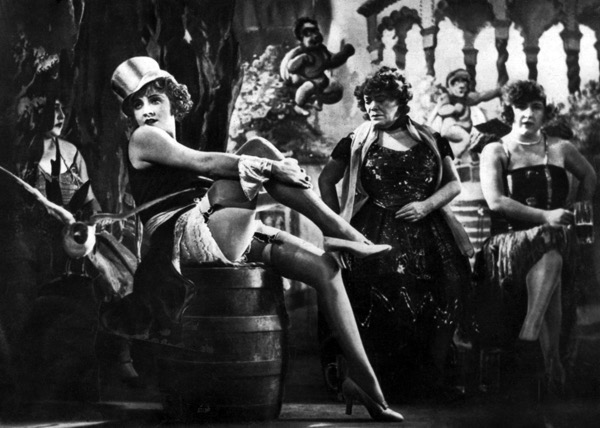
See question three. Marlene Dietrich in The Blue Angel. Image Wikimedia Commons
One
Established in 1999, Nunavut, at 135,000 square miles of land (350,000 square km), is the World’s fifth-largest country subdivision.
Of what country is Nunavut a subdivision?
What, to the nearest ten thousand, is the population of Nunavut?
Answers
1. Canada
2. 40,000
Nunavut, established in 1999, is the largest and northernmost Canadian territory, created for Inuit self-government. It covers a significant portion of Northern Canada and the Arctic Archipelago, making it the fifth-largest country subdivision globally. With a population of 36,858, it is the least densely populated major subdivision in the world.
Two
Gmail was launched on this day, in what year did this happen?
Answer: 2004.
Gmail, created by Paul Buchheit, was launched in 2004 and opened to the public in 2007, is the world’s largest email service with 1.8 billion users. It offers 15GB of free storage, supports large attachments, and integrates with Google Drive. The service is accessible from any internet-enabled device and features conversation view, integrated chat, and was briefly integrated with the social networking application Buzz.
Three
Josef von Sternberg’s Der blaue Engel (The Blue Angel) was released in Germany, and the classic film made Marlene Dietrich a star. What was Dietrich’s character name, as billed, in this film?
Answer: Lola Lola.
The Blue Angel (1930) is a German musical comedy-drama directed by Josef von Sternberg, featuring Marlene Dietrich, Emil Jannings, and Kurt Gerron. Based on Heinrich Mann’s novel Professor Unrat, it tells the tragic story of a professor’s downfall into madness due to his obsession with nightclub singer Lola Lola, played by Dietrich in her breakthrough role. This film introduced her iconic song, Falling in Love Again. Filmed in both German and English, the English version was initially lost but rediscovered and screened in 2009. The German version is preferred for its length and superior pronunciation.
Four
The Apple Computer Company, now Apple Inc., was founded in 1976, who were the three people who co-founded it?
Answer: Steve Jobs, Steve Wozniak and Ronald Wayne.
Apple Inc., founded in 1976 and headquartered in Cupertino, California, is a leading American multinational technology company renowned for its innovative consumer electronics, software, and online services. Known for its user-centric design and marketplace ecosystem, Apple revolutionised the technology sector with products like personal computers, smartphones and tablets. After nearly going bankrupt in the 1990s, the company returned to profitability under Steve Jobs’ leadership, introducing iconic products such as the iMac, iPod, iPhone and iPad. Today, Apple is the world’s largest company by market capitalisation and a major player in the PC, tablet, and mobile phone markets.
Five
In 1977, who had a U.S. number 1 and U.K. top ten hit with Got to Give It Up from the album Live at the London Palladium?
Answer: Marvin Gaye.
Marvin Gaye, an American soul singer-songwriter-producer, was a cultural icon and one of the greatest singers and songwriters of all time. He began his career with Motown Records, achieving success with hits like I Heard It Through the Grapevine and duets with Tammi Terrell. Gaye’s groundbreaking album What’s Going On showcased his musical individuality and social commentary, paving the way for other artists to take control of their music. He later produced his own albums, significantly influencing 1970s soul music and R&B sub-genres. Tragically, Gaye was shot and killed by his father on 1 April 1984.
1 GB of storage for free
The post title refers to Google offering users 1 GB of space, compared to the 2 to 4 MB that was the standard at the time.
These questions are all related to today, April 1st.
See question three. Marlene Dietrich in The Blue Angel. Image Wikimedia Commons
One
Established in 1999, Nunavut, at 135,000 square miles of land (350,000 square km), is the World’s fifth-largest country subdivision.
Of what country is Nunavut a subdivision?
What, to the nearest ten thousand, is the population of Nunavut?
Two
Gmail was launched on this day, in what year did this happen?
Three
Josef von Sternberg’s Der blaue Engel (The Blue Angel) was released in Germany, and the classic film made Marlene Dietrich a star. What was Dietrich’s character name, as billed, in this film?
Four
The Apple Computer Company, now Apple Inc., was founded in 1976, who were the three people who co-founded it?
Five
In 1977, who had a U.S. number 1 and U.K. top ten hit with Got to Give It Up from the album Live at the London Palladium?
Having finished our A to Z quizzes from the last few days, we now return to the date with questions about today, March 31st.
One
On this date Daylight Saving Time was introduced for the first time in the United States.
In what year did this occur?
True or false: Ancient Rome also adjusted their clocks to achieve similar results as daylight savings.
Answers
1. 1918
2. True
In the U.S., it was seen as a wartime implementation and was abandoned after 1918. It was again used during World War II. It came into general annual use in the 1960s. Ancient Romans used water clocks with varying scales for different months, adjusting the length of hours based on the season. A specific hour which lasted 44 minutes at the winter solstice would be 75 minutes long at the summer solstice.
Two
Born in 1809, Edward FitzGerald, an English poet and writer who is best known for his 1859 translation of the work of ‘the Astronomer-Poet of Persia’. He published this in 1859 as the Rubáiyát of ——. What two word name is that of the Persian astronomer-poet which completes the title of FitzGerald’s 1859 translation?
Answer: Omar Khayyám.
Edward FitzGerald’s 1859 translation of the Rubáiyát of Omar Khayyám gained popularity in the 1860s and 1870s, becoming a cultural phenomenon in the English-speaking world. The work inspired numerous translations and became something of a cult in the later part of the 19th century. Omar Khayyam (1048–1131) was a Persian polymath who made significant contributions to mathematics, astronomy, philosophy and literature.
Three
Born in 1984, Martins Dukurs, a Latvian sportsman, is a six-time world champion and double Olympic silver medallist. He holds the record for the most World Cup titles with 11. In which sport has Dukurs achieved this success?
Answer: Skeleton.
Martins Dukurs, born on 31 March 1984, is a former Latvian skeleton racer and current coach. Competing since 1998, he is a six-time world champion and double Olympic silver medallist (2010, 2014). Dukurs holds the record for the most World Cup titles, with 11, including eight consecutive from 2010 to 2017 and three from 2020 to 2022.
Four
Born in Scotland on this day in 1971, an actor links these two roles. The first is a character from a 1996 film also born in Scotland, in Leith, Edinburgh. The second is not Scottish but a character in a 2009 film who said ‘Have you come to make me a martyr?’. Who is the actor?
Answer: Ewan McGregor.
Ewan McGregor is a Scottish actor and filmmaker known for his roles in Trainspotting, Star Wars, and Moulin Rouge!. He has received numerous accolades, including a Golden Globe and a Primetime Emmy Award, and has also directed films and appeared in theatre productions.
Five
On this date, the U.S. Virgin Islands became American possessions.
By what name had they been known immediately prior to this?
In what decade did this occur?
Answers
1. Danish West Indies
2. 1910s
The United States purchased the three islands from Denmark for $25 million in 1917, recognising their strategic importance in controlling the main passage through the Caribbean to the Panama Canal. Previously controlled by Denmark–Norway from 1754 to 1814 and then by the Kingdom of Denmark from 1814 to 1917, the islands were sold under the 1917 Treaty of the Danish West Indies. Adjusted for inflation, this amount would be $628 million in 2025. Since the purchase, the islands have been an organised, unincorporated U.S. territory.
Having finished our A to Z quizzes from the last few days, we now return to the date with questions about today, March 31st.
One
On this date Daylight Saving Time was introduced for the first time in the United States.
In what year did this occur?
True or false: Ancient Rome also adjusted their clocks to achieve similar results as daylight savings.
Two
Born in 1809, Edward FitzGerald, an English poet and writer who is best known for his 1859 translation of the work of ‘the Astronomer-Poet of Persia’. He published this in 1859 as the Rubáiyát of ——. What two word name is that of the Persian astronomer-poet which completes the title of FitzGerald’s 1859 translation?
Three
Born in 1984, Martins Dukurs, a Latvian sportsman, is a six-time world champion and double Olympic silver medallist. He holds the record for the most World Cup titles with 11. In which sport has Dukurs achieved this success?
Four
Born in Scotland on this day in 1971, an actor links these two roles. The first is a character from a 1996 film also born in Scotland, in Leith, Edinburgh. The second is not Scottish but a character in a 2009 film who said ‘Have you come to make me a martyr?’. Who is the actor?
Five
On this date, the U.S. Virgin Islands became American possessions.
By what name had they been known immediately prior to this?
In 1721, a collection of six instrumental works—the composer’s own title was Six Concerts Avec plusieurs Instruments (Six Concertos With several Instruments)—were presented by Johann Sebastian Bach to Christian Ludwig, a marquess and younger brother of King Frederick I of Prussia. Using the above picture as a clue, by what name is this collection commonly known today?
Answer: Brandenburg Concertos
Johann Sebastian Bach’s Brandenburg Concertos, now his most popular work, were likely never performed during his lifetime. Bach sent the original manuscript to the Margrave (Marquess) of Brandenburg in 1721, possibly as a job application, but the Margrave never acknowledged the gift. The concertos were forgotten for over a century until they were rediscovered and published in the 19th century.
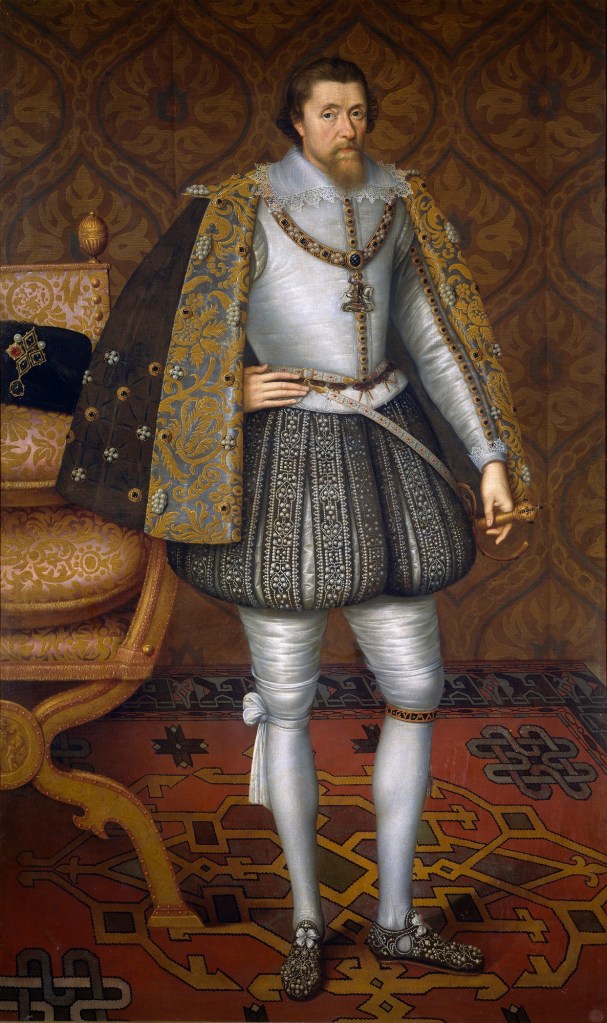
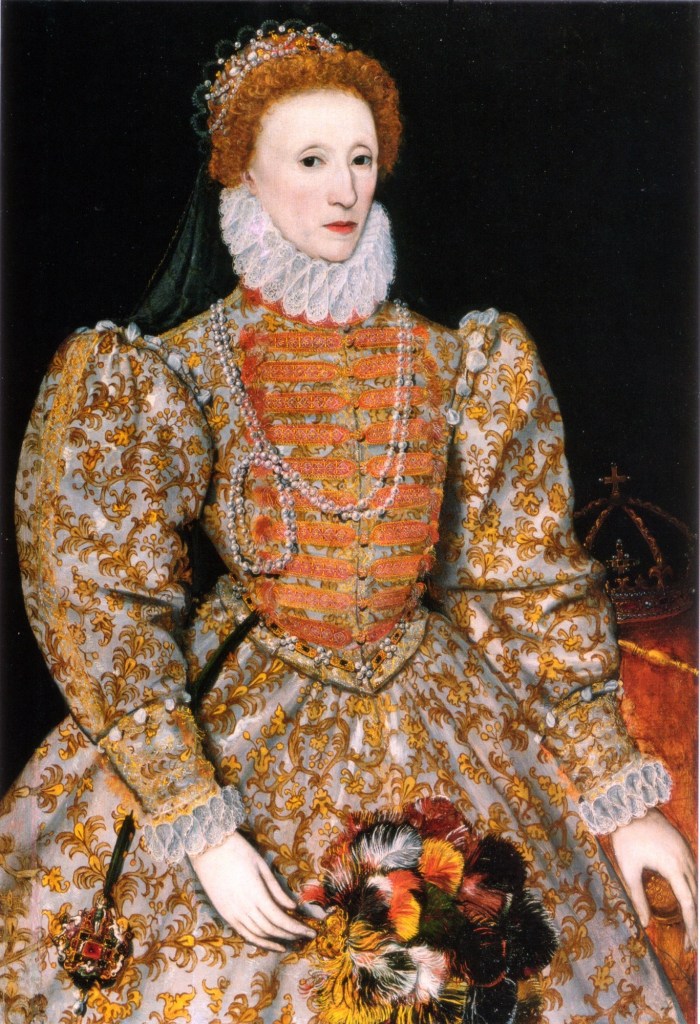
The male monarch pictured above succeeded the female one on her death in 1603.
Who is the queen?
Who was the king?
What was the familial relationship between them?
Answers
Queen Elizabeth I
King James VI and I
Cousins.
Queen Elizabeth I’s death in 1603 ended her reign of England and Ireland, leading to her cousin King James VI of Scotland’s succession as King of England and Ireland. Now both James VI and I, his reign saw the beginning of the Plantation of Ulster and English colonisation of the Americas.
Three
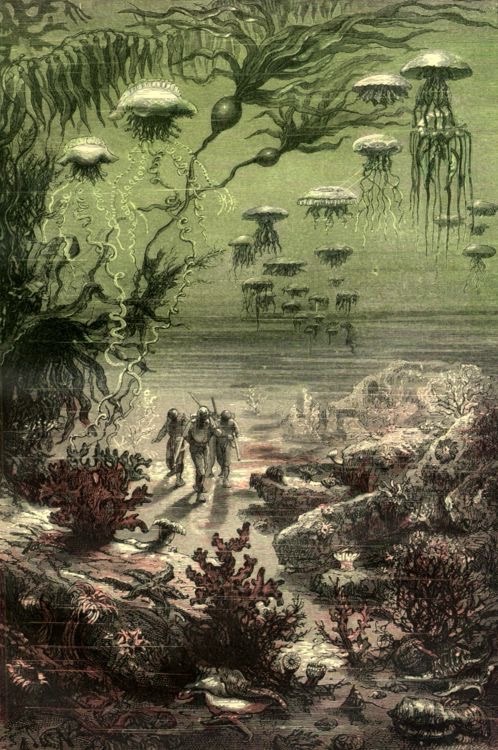
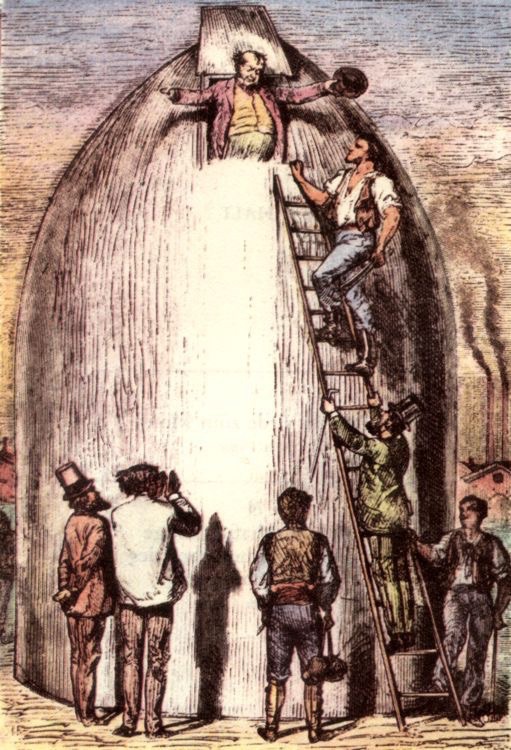
From Jules Verne’s novel Twenty Thousand Leagues Under the Sea. Image Wikimedia CommonsFrom the Earth to the Moon by Jules Verne Image Wikimedia Commons
The two illustrations above are from novels by an author, ‘the father of science fiction’, who died in 1905, aged 77. Since 1979, he has been the second most translated author.
Who was the author?
From what novel is the first illustration?
From what novel is the second illustration?
Answers
Jules Verne
Twenty Thousand Leagues Under the Sea
From the Earth to the Moon
Jules Verne was a French novelist, poet, and playwright, best known for his adventure novels like Journey to the Centre of the Earth and Around the World in Eighty Days His work, often set in the 19th century, incorporated contemporary scientific knowledge and technological advances. Verne is considered an important author in Europe and has been the second most-translated author in the world since 1979.
Four
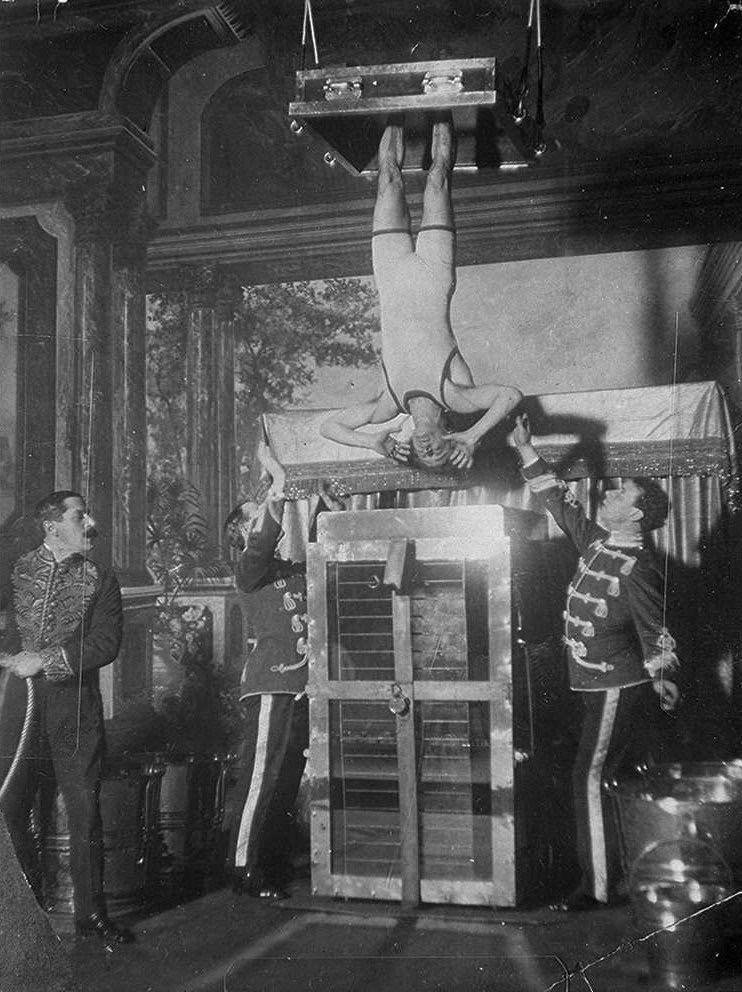
Harry Houdini, performing The Chinese Water Torture Cell. Image Wikimedia Commons
Erik Weisz, who was born in 1874, is pictured above during one of his acts, although he’s better known by his stage name.
In what European city was he born?
Who is he better known as?
Answers
Budapest
Harry Houdini.
Harry Houdini, a Hungarian-American escapologist, gained fame for his daring escape acts, including freeing himself from handcuffs, chains, and straitjackets. He also pursued a crusade against fraudulent spiritualists and was a pioneer aviator.
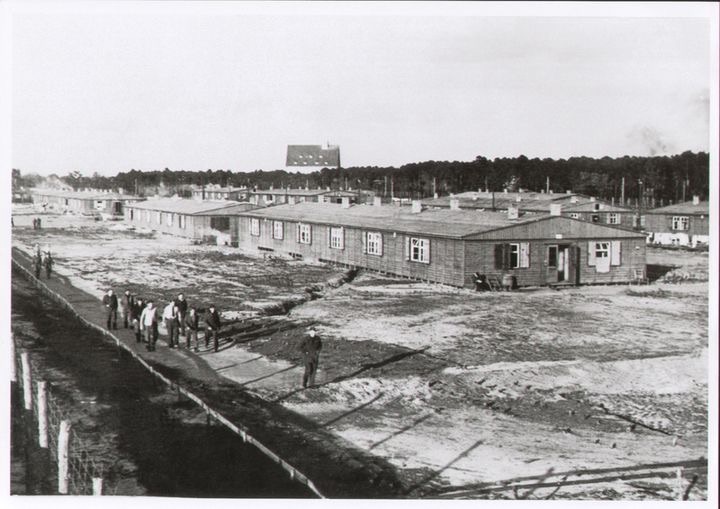
The prisoner of war camp above was made famous by a 1963 film which features the inmates attempts to leave it on the night of 24 March 1944.
By what name is this POW camp commonly known?
What was the 1963 film?
In what modern country is the site of the camp today?
Answers
Stalag Luft III
The Great Escape
Poland
Stalag Luft III (in full Stammlager Luft III; literally meaning Main Camp, Air, III) was a World War II POW camp for Allied airmen, known for escape plots including the Great Escape. Of the 76 men who escaped that night, 73 were recaptured, and fifty of those were executed. The camp, which was liberated in 1945 and is now a museum, was the subject of two feature films about the escape attempts that were made: The Wooden Horse (1950) and The Great Escape (1963).
Five pictures and some questions all of which are related to today’s date, March 24th.
One
Image Wikimedia Commons
In 1721, a collection of six instrumental works—the composer’s own title was Six Concerts Avec plusieurs Instruments (Six Concertos With several Instruments)—were presented by Johann Sebastian Bach to Christian Ludwig, a marquess and younger brother of King Frederick I of Prussia. Using the above picture as a clue, by what name is this collection commonly known today?
Two
Image Wikimedia CommonsImage Wikimedia Commons
The male monarch pictured above succeeded the female one on her death in 1603.
Who is the queen?
Who was the king?
What was the familial relationship between them?
Three
First illustration. Image Wikimedia Commons Second illustration. Image Wikimedia Commons
The two illustrations above are from novels by an author, ‘the father of science fiction’, who died in 1905, aged 77. Since 1979, he has been the second most translated author.
Who was the author?
From what novel is the first illustration?
From what novel is the second illustration?
Four
Eric Weisz. Image Wikimedia Commons
Erik Weisz, who was born in 1874, is pictured above during one of his acts, although he’s better known by his stage name.
In what European city was he born?
Who is he better known as?
Five
Image Wikimedia Commons
The prisoner of war camp above was made famous by a 1963 film which features the inmates attempts to leave it on the night of 24 March 1944.
By what name is this POW camp commonly known?
What was the 1963 film?
In what modern country is the site of the camp today?
These questions are all about today’s date, March 22nd.
One
Born in 1948, this composer wrote the music for a musical based on a 1939 T.S. Eliot poetry collection. Three questions…
Who is the composer?
What is the title of the musical?
What is the name of the poetry collection?
Answers
Andrew Lloyd Webber;
Cats
Old Possum’s Book of Practical Cats
Cats, a sung-through musical by Andrew Lloyd Webber based on T.S. Eliot’s poetry, tells the story of the Jellicle cats and their annual ‘Jellicle choice’. Premiering in 1981, it became a commercial success, running for decades in both the West End and Broadway, and sparking the mega-musical phenomenon.
Two
Canadian actor William Shatner, who was born on 22 March 1931, first appeared in the role of James T. Kirk in series 1 episode 1 of the original television series Star Trek in September 1966. What was the episode title?
Answer: The Man Trap.
William Shatner, born in 1931, is a Canadian actor renowned for his iconic role as Captain Kirk in the Star Trek franchise. He also starred in T.J. Hooker, Rescue 911, and Boston Legal, earning two Emmy Awards for the latter. Beyond acting, Shatner has released several albums and made history in 2021 as the oldest person to fly in space.
Three
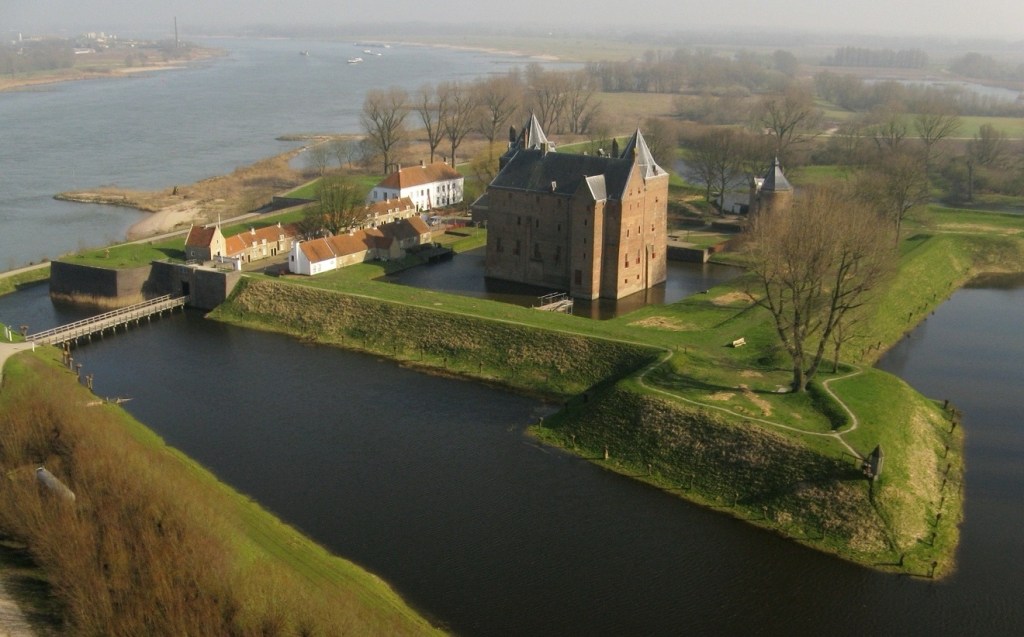
Hugo Grotius, a Dutch jurist, scholar and diplomat, is often called the ‘father of modern international law’. Today, he is best known for escaping imprisonment in Loevestein Castle, Netherlands, on this date in 1621. His wife devised the escape plan; what was it?
Answer: Hidden in a wooden chest.
On this day in 1621, Hugo Grotius was smuggled out of prison in a chest. Religious tensions were high in Holland and Grotius, who favoured tolerance, made many enemies. Arrested and sentenced to life in prison in 1618, his guards grew careless, neglecting to inspect the large book chest he often received. His wife then devised a plan to smuggle him out using the same chest. The plan was successful and the couple later reunited in Paris. Grotius is also remembered for his extensive legal writings which earned him the title ‘father of international law’.
Four
Born in 1976 in New Orleans, Louisiana, this actress won an Academy Award in 2006 for her role in Walk the Line. Who is she?
Answer: Reese Witherspoon.
Reese Witherspoon, born on March 22, 1976, in New Orleans, Louisiana, is an acclaimed American actress and producer renowned for her roles in romantic comedies and films like Legally Blonde and Walk the Line — for which she won an Academy Award for Best Actress for her portrayal of June Carter. Witherspoon founded Hello Sunshine, a production company dedicated to female-led literary adaptations, and is actively involved in advocacy for children and women.
Five
Born in 1641 in Antwerp, Spanish Netherlands (now Belgium), this Flemish Baroque artist became a leading court painter in England. He is also known for having a beard named after him. Who is he?
Answer: Anthony van Dyck.
Sir Anthony van Dyck, a Flemish Baroque artist, revolutionised court portraiture in England, notably painting Charles I. He was a prolific painter of portraits, religious and mythological subjects, and a fine draftsman and etcher. The Van Dyke beard is named after him.
Mungojerrie and Rumpelteazer
Today’s post title is the names of two feline characters from T.S. Eliot’s Old Possum’s Book of Practical Cats and the musical Cats.