The first question is related to today, 20 August. The subsequent ones relate to each other.
One
On 20 August 1968, the Soviet Union led the other member nations of the Warsaw Pact, with the exception of Albania and Romania, in an invasion of … to end Alexander Dubček’s liberalisation, known as the … Spring.
What country and city respectively are missing from the above statement?
Two
When the Warsaw Pact was established in 1955, how many nations were members, and what were they?
Three
The Soviet Union was also known as the USSR; what did this abbreviation stand for in English; and for how many years did it exist?
Four
Name the permanent members of the United Nations Security Council?
Five
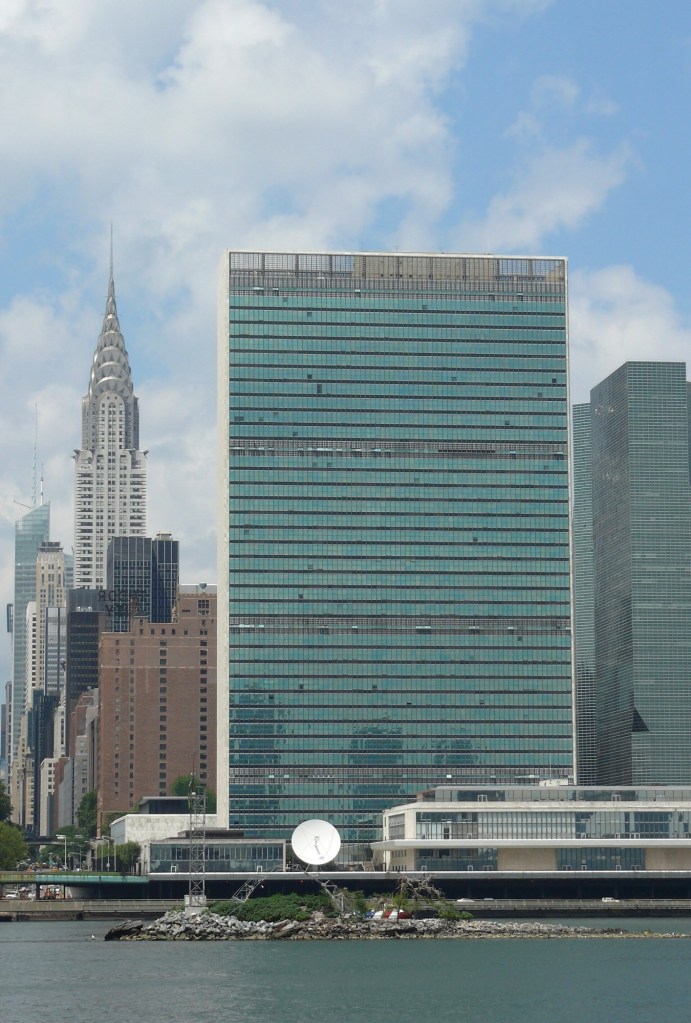
The picture above shows the United Nations Building. What body of water is in the foreground of this picture?
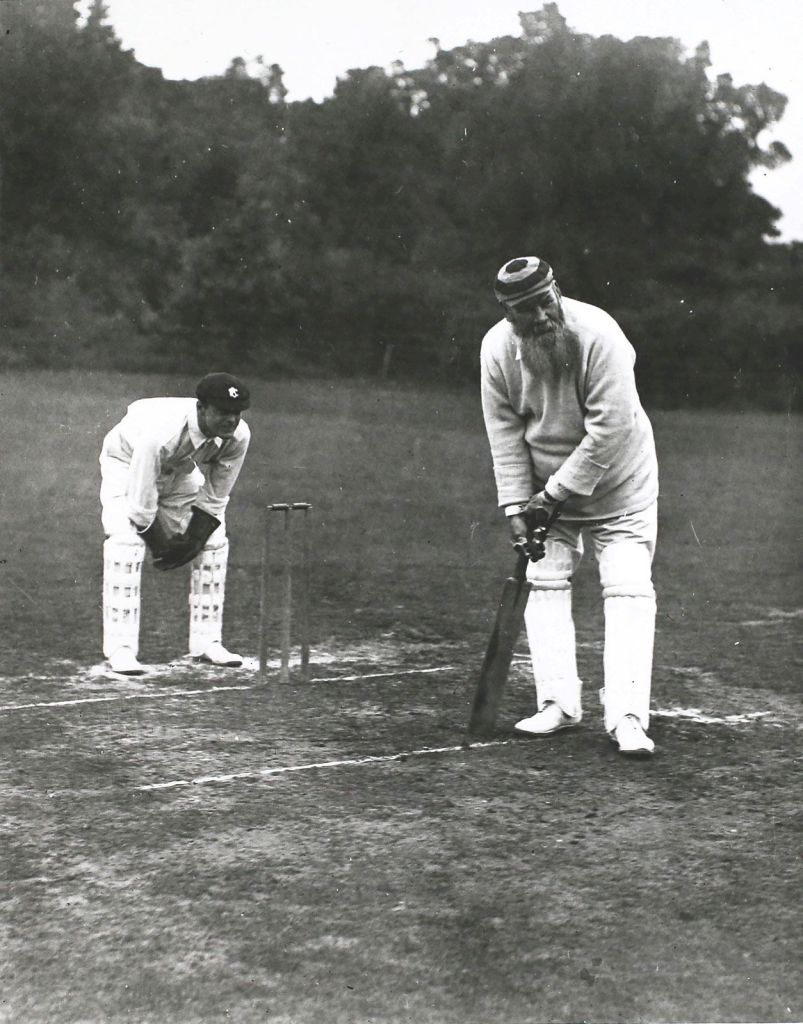
See question one. Although this is not the Olympics it is Victorian-era cricket. W.G. Grace (right), batting in an 1890s cricket match. Image Encyclopædia Britannica
Today’s first question relates to 19 August. The subsequent questions are not date-related but follow on (continuing the cricketing sayings).
One
Cricket first appeared at the Olympic Games in 1900. How many national teams competed in that tournament, and in how many Olympic events has the sport featured?
Answers: Two; One.
Cricket at the 1900 Paris Olympics featured only Great Britain and France, with the latter being a mixed team of English expatriates. The match, played over two days with 12-a-side, was won by Great Britain by 158 runs. John Symes preserved the game’s details with a handwritten scorecard. A cricket tournament was planned for the 1904 Summer Olympics in St Louis but was cancelled because there were insufficient entries. Cricket will return to the Olympics in 2028 at Los Angeles.
Two
The modern Olympics are numbered in Roman Numerals, for example the second and fifth would be referred to as the II Olympiad and the V Olympiad. What officially were the 2008 Summer Olympic Games in Beijing, China known as?
Answer: XXIX Olympiad.
Held in Beijing, China, the 2008 Summer Olympic Games in Beijing, China, were officially the Games of the XXIX Olympiad. Inspired by Ancient Greece and led by Baron Pierre de Coubertin, the modern Olympic Games began with the Games of the I Olympiad being held in Athens in 1896. The IOC governs the Olympic Movement, adapting to changes like professional athletes, media influence, and global events. The Games include various competitions, rituals, and symbols, fostering international representation and showcasing host cities. The Olympic Games promote global cooperation and cultural exchange. Hosting them offers economic benefits but also presents challenges, impacting infrastructure, tourism, and local communities.
Three
What is the IATA code for Beijing Capital International Airport?
Answer: PEK.
Beijing Capital International Airport (PEK) is the busier of Beijing’s two international airports, located 32 km northeast of the city centre. Owned by a state-controlled company, it covers 1,480 hectares and opened in 1958. The IATA code PEK derives from the city’s former romanised name, Peking.
Four
In 2025 Beijing Capital (question two above) was the 15th busiest airport in the world for passenger traffic. What city’s airport was the world’s busiest that year with 106,302,208 passengers?
Answer: Atlanta, Georgia, United States.
Hartsfield–Jackson Atlanta International Airport has been the world’s busiest since 1998 except in 2020 (Covid), regaining the position in 2021; London has the busiest city airport system.
Five
This Province was established as a proprietary colony in 1732 and a royal colony from 1752. One of thirteen, it was named after a reigning British monarch: what monarch?
Answer: George II.
The corporate charter for the colony was issued to General James Oglethorpe on 21 April 1732 by George II, the monarch for whom the territory was named. The King’s privy council completed the document on 9 June 1732. George II ruled Great Britain and Ireland from 1727 to 1760, the last monarch born abroad.
It’s Just Not Cricket
The post title means that something is contrary to traditional standards of fairness or rectitude, but here it is actually used to mean there are other things as well as cricket in these questions. The questions also link to each other:
See question one. Although this is not the Olympics it is still Victorian-era cricket. W.G. Grace (right), batting in an 1890s cricket match. Image Encyclopædia Britannica
Today’s first question relates to 19 August. The subsequent questions are not date-related but follow on (continuing the cricketing sayings).
One
Cricket first appeared at the Olympic Games in 1900. How many national teams competed in that tournament, and in how many Olympic events has the sport featured?
Two
The modern Olympics are numbered in Roman Numerals, for example the second and fifth would be referred to as the II Olympiad and the V Olympiad. What officially were the 2008 Summer Olympic Games in Beijing, China known as?
Three
What is the IATA code for Beijing Capital International Airport?
Four
In 2025 Beijing Capital (question two above) was the 15th busiest airport in the world for passenger traffic. What city’s airport was the world’s busiest that year with 106,302,208 passengers?
Five
This Province was established as a proprietary colony in 1732 and a royal colony from 1752. One of thirteen, it was named after a reigning British monarch: what monarch?
Today’s first question relates to 17 August and the subsequent ones follow on from the first.
One
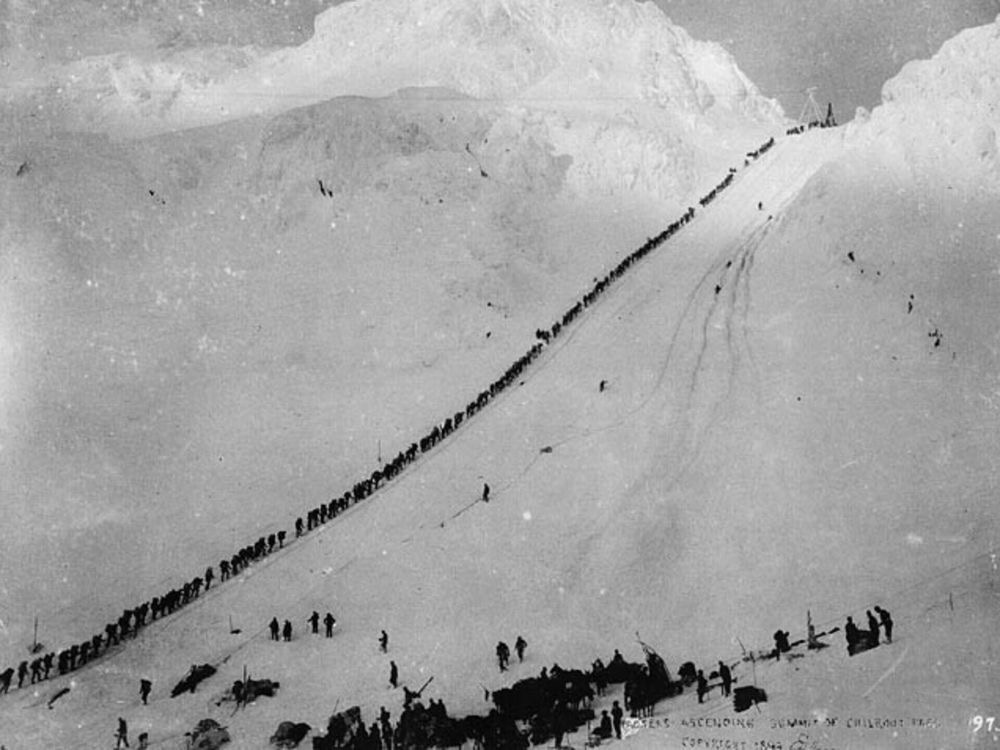
Set during the Klondike Gold Rush, complete the title of British-Canadian poet Robert Service’s The Shooting of …?
Answer: Dan McGrew.
Gold found in 1896 launched the Klondike Gold Rush. Robert William Service, an English-born Canadian writer, became well known for his Klondike poems, including The Shooting of Dan McGrew and The Cremation of Sam McGee. Commercial success from collections such as Songs of a Sourdough allowed for travel and a leisurely life.
Two
Which nesosilicate mineral derives its name from the Persian word for ‘gold-hued’?
Answer: Zircon.
Zircon is a tetragonal nesosilicate (ZrSiO₄) yielding zirconium and containing hafnium at 1–4%. It precipitates from silicate melts and occurs in varied colours. The name comes from Persian zargun (“gold-hued”), becoming jargoon for light zircons; English zircon derives from German Zirkon.
Three
Which Persian king, ruler of the Achaemenid Empire, was assassinated in 465BC by Artabanus, the commander of the royal guard?
Answer: Xerxes I or Xerxes the Great.
Founded by Cyrus the Great in 550 BC, the Achaemenid Empire became the largest of its time, spanning from the Balkans to the Indus Valley. Alexander the Great conquered it in 330 BC; later, the Parthian Empire emerged. Its bureaucracy, tolerance and infrastructure influenced later empires.
Four
Alexander the Great extended the Macedonian kingdom as far east as what modern country?
Answer: India.
The Beas River, in Himachal Pradesh and Punjab in northwestern India, marked Alexander the Great’s eastern limit in 326 BC after his troops mutinied at Mukerian. Alexander yielded after three days and raised twelve altars; their fate is unknown.
Five
What novel by Herman Wouk, which is about a mutiny, was turned into a 1954 film starring Humphrey Bogart?
Answer: The Caine Mutiny.
Herman Wouk’s 1951 novel The Caine Mutiny draws on Pacific Theater service to explore officers’ moral choices. A legalistic mutiny during Typhoon Cobra leads to a court-martial climax.
One Thing Leads to Another
The post title points to a trail through the questions. One is set during the Klondike Gold Rush; Two derives from Persian for ‘gold-hued’; Three is about a Persian king of the Achaemenid Empire; Four is about the conqueror of the Achaemenid Empire facing a mutiny; and Five is about a fictional mutiny.
The first date-related question sets a theme for the subsequent questions and/or answers.
One
Napoleon Bonaparte was strongly linked to three islands: (i) where he was born on 15 August 1769; (ii) where he was exiled in 1814 and subsequently escaped; and (iii) where he was exiled in 1815 and subsequently died. What are these islands and in what seas or oceans are they found?
Answers: (i) Corsica, Mediterranean Sea; (ii) Elba, Mediterranean Sea and (iii) Saint Helena, South Atlantic Ocean (or Atlantic Ocean).
Corsica is a French island in the Mediterranean Sea, known for its mountainous terrain and historical ties to Italy it has a population of 355,528. Napoleon was born in Ajaccio, Corsica in 1769. Elba is a Mediterranean island in Tuscany, Italy, known for being the site of Napoleon’s first exile from 1814 to 1815. It is the largest island in the Tuscan Archipelago and the third largest in Italy. Saint Helena is a remote volcanic island in the South Atlantic Ocean, part of a British overseas territory. It was uninhabited until the 16th century and served as a crucial stopover for ships between Europe and Asia before the Suez Canal opened. The island is also known for being Napoleon Bonaparte’s second place of exile from 1815 until his death in 1821.
Two
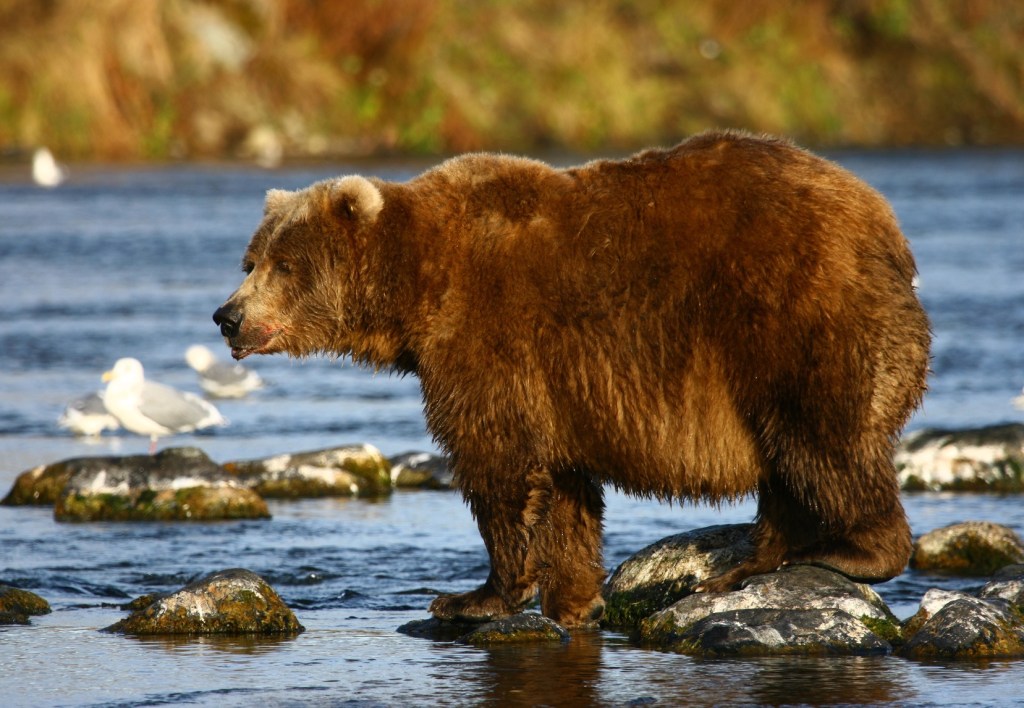
Ursus arctos middendorffi, the largest brown bear species, has a common name derived from an archipelago; which archipelago is it, and in what sea or ocean is it located?
Answer: Kodiak (Archipelago); North Pacific Ocean (or Pacific Ocean).
The Kodiak bear inhabits the Kodiak Archipelago and is among the largest bears, averaging 1.5 to 2 times larger than other brown bears. Human interactions include hunting and protection efforts; the Alaska Department of Fish and Game and United States Fish and Wildlife Service monitor the population.
Three
Puerto Ayora, also called Santa Cruz, is the largest town in which island group, and these islands are part of which country?
Answers: Galápagos Islands; Ecuador.
Puerto Ayora, the most populous Galápagos town with 12,696 people, sits on Santa Cruz Island’s southern shore as the seat of Santa Cruz Canton and honours former president, Isidro Ayora.
Four
Leaving in about 982 from Snæfellsjökull, one of the westernmost points of …, Erik and a small group of men reached land on the opposite shore of …, a land that had been skirted by the Norwegian Gunnbjörn Ulfsson earlier in the 10th century. — Encyclopædia Britannica
The above quote from Encyclopædia Britannica has had two island countries removed from it. What are these two countries?
Answers: Iceland; Greenland.
Exiled from Iceland around 980, Erik explored and named Greenland, settling at Brattahlid. Returning in 985 or 986, he led 14 ships to Eystribygd, Norse Greenland, establishing a colony of up to 3,000 that lasted until the mid-15th century.
Five
What is the second-largest Canadian island, and in what ocean is it found?
Answers; Victoria Island; Arctic Ocean.
Victoria Island, Canada’s second-largest landmass, spans Nunavut and the Northwest Territories, supporting 2,168 residents in Cambridge Bay and Ulukhaktok. It lies off the northern coast within the Arctic Ocean, east of the Beaufort Sea. Known in Inuinnaqtun as Kitlineq, the island was named for Queen Victoria and charted by Europeans beginning in 1826.
See question two. Ursus arctos middendorffi. Image Wildlife Trip.
The first date-related question sets a theme for the subsequent questions and/or answers.
One
Napoleon Bonaparte was strongly linked to three islands: (i) where he was born on 15 August 1769; (ii) where he was exiled in 1814 and subsequently escaped; and (iii) where he was exiled in 1815 and subsequently died. What are these islands and in what seas or oceans are they found?
Two
Ursus arctos middendorffi, the largest brown bear species, has a common name derived from an archipelago; which archipelago is it, and in what sea or ocean is it located?
Three
Puerto Ayora, also called Santa Cruz, is the largest town in which island group, and these islands are part of which country?
Four
Leaving in about 982 from Snæfellsjökull, one of the westernmost points of …, Erik and a small group of men reached land on the opposite shore of …, a land that had been skirted by the Norwegian Gunnbjörn Ulfsson earlier in the 10th century. — Encyclopædia Britannica
The above quote from Encyclopædia Britannica has had two island countries removed from it. What are these two countries?
Five
What is the second-largest Canadian island, and in what ocean is it found?
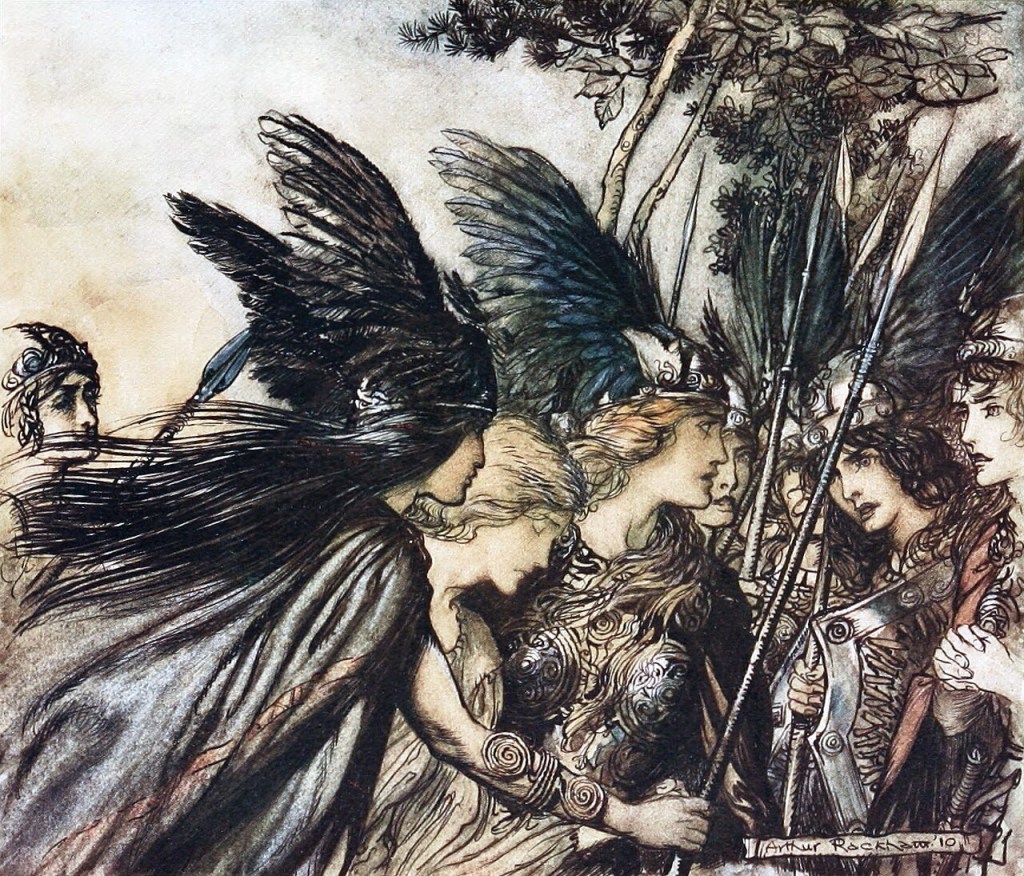
See question three. Brünnhilde pleads with her sisters to rescue Sieglinde: (Arthur Rackham, 1910). Image Wikimedia Commons
These questions are not date-related but do follow a theme mentioned in the title.
One
What is the title of the second volume of J.R.R. Tolkien’s The Lord of the Rings novel?
Answer: The Two Towers.
Published in 1954, The Two Towers is the second volume of J.R.R. Tolkien’s The Lord of the Rings. Its title remains ambiguous, as five towers appear in the text. The narrative creates suspense through interwoven storylines. Critics have praised its epic and romantic qualities, and it became the basis for Peter Jackson’s 2002 film The Lord of the Rings: The Two Towers.
Two
When it is visible, it is the most brilliant planet in the sky.
The above sentence is from an Encyclopædia Britannica article about a planet. What planet?
Answer: Venus.
Venus, second from the Sun and closest large body to Earth, appears near sunrise or sunset as the brightest planet. Although today named after the Roman goddess of love and beauty, ancient records, which include Babylonian, Chinese, Central American, Egyptian, and Greek, show it was studied by multiple civilisations.
Three
The third drama conceived and written, yet the second opera in Wagner’s tetralogy Der Ring des Nibelungen. Which mythic creatures does this drama take its name from?
Answer: Valkyries.
Die Walküre, the second opera in Wagner’s Der Ring des Nibelungen (The Ring of the Nibelung), premiered in Munich in June 1870 and as part of the cycle in 1876. Based on Norse mythology, it follows Volsung twins Sieglinde and Siegmund, whose love angers the gods. Brünnhilde defies them, saving Sieglinde and her unborn child.
Four
The … Revolution created the second independent country in the Americas after the United States became independent in 1783.
An adjective has been omitted from the preceding quote; which nation does the term describe?
Answer: Haiti.
Haitian was removed from the quote. The Haitian Revolution established the second independent American nation after the U.S. in 1783. Haiti, formerly St. Domingue, was a profitable French colony reliant on slave labour. The French Revolution sparked a slave revolt in 1791, led by Toussaint L’Ouverture. U.S. leaders, many of whom were slaveowners, were ambivalent about the revolt. Initially, they aided its suppression but later supported L’Ouverture. Due to policy shifts and domestic issues, the U.S. didn’t recognise Haiti’s independence until 1862. Jefferson initially aided L’Ouverture but later isolated Haiti.
Five
Sir Arthur Conan Doyle’s second Sherlock Holmes novel involves the theft of the Agra treasure. What is the title of the novel?
Answer: The Sign of the Four (aka The Sign of Four).
The Sign of the Four is Arthur Conan Doyle’s second novel featuring Sherlock Holmes. In it, he investigates Mary Morstan’s case involving her missing father. Dr Watson, Holmes’ companion, marries Mary Morstan. Published in February 1890 it followed the first novel, A Study in Scarlet.
See question three. Brünnhilde pleads with her sisters to rescue Sieglinde: (Arthur Rackham, 1910). Image Wikimedia Commons
These questions are not date-related but do follow a theme mentioned in the title.
One
What is the title of the second volume of J.R.R. Tolkien’s The Lord of the Rings novel?
Two
When it is visible, it is the most brilliant planet in the sky.
The above sentence is from an Encyclopædia Britannica article about a planet. What planet?
Three
The third drama conceived and written, yet the second opera in Wagner’s tetralogy Der Ring des Nibelungen. Which mythic creatures does this drama take its name from?
Four
The … Revolution created the second independent country in the Americas after the United States became independent in 1783.
An adjective has been omitted from the preceding quote; which nation does the term describe?
Five
Sir Arthur Conan Doyle’s second Sherlock Holmes novel involves the theft of the Agra treasure. What is the title of the novel?
Flag of Côte d’Ivoire/Ivory Coast. See question three. Image Wikimedia Commons
All of these questions relate to today’s date, 7 August.
One
In what sport could a ‘Salchow’ be performed?
Answer: Ice skating.
Swedish skater Ulrich Salchow, born 7 August 1877. The salchow, named the Salchow, an edge jump, after him. It is the easiest figure skating jump. It involves taking off from the back inside edge of one skate, completing one or more full turns, and landing on the back outside edge of the opposite skate. American skater Theresa Weld was reprimanded at the 1920 Olympics for performing a single Salchow jump because her skirt would fly up to her knees, creating an image deemed too risqué.
Two
The six-month-long Battle of Guadalcanal, which began on 7 August 1942, unfolded in which country?
Answer: Solomon Islands.
Guadalcanal Island, the largest island in the Solomon Islands, is situated in the southwestern Pacific Ocean. The Battle of Guadalcanal, occurring from August 1942 to February 1943, involved a series of World War II land and sea engagements between Allied and Japanese forces on and around Guadalcanal, one of the southern Solomon Islands in the South Pacific. Alongside the naval Battle of Midway, the combat on Guadalcanal signified a turning point in favour of the Allies in the Pacific War.
Three
In 1960, the country represented by the flag shown above gained independence from France. What country is it?
Answer: Côte d’Ivoire/Ivory Coast.
Côte d’Ivoire, located on the western coast of Africa, was previously a French colony. Abidjan functions as the de facto capital, while Yamoussoukro has been the administrative capital since 1983. Known as Ivory Coast, this West African nation is the leading cocoa exporter globally and has seen substantial economic growth since 2011. Nonetheless, 46.1% of its population remains in poverty. The economy is predominantly dependent on agriculture, especially smallholder cash-crop production.
Four
How many persons were onboard Thor Heyerdahl’s balsa wood raft, Kon-Tiki when it reached Raroia in the Tuamotu Islands after sailing 4,300 mile (7,000 km) in 101-days?
Answer: Six.
The Kon-Tiki expedition in 1947, led by Thor Heyerdahl, was a raft journey from South America to Polynesia. Named after the Inca god Viracocha, it inspired Heyerdahl’s book and a 1950 Oscar-winning documentary. A 2012 dramatised film was nominated for Best Foreign Language Film.
Five
In 1926, in motor racing the first British Grand Prix was held. Where was the race held?
Answer: Brooklands.
Built in 1907 near Weybridge, Surrey, Brooklands was the first purpose-built motor racing venue and one of the UK’s first airfields. The British Grand Prix debuted there on 7 August 1926, won by Robert Sénéchal and Louis Wagner. The second race, on 1 October 1927, was also held there.
Bonus Question
The post title is two lines taken from a popular song, what song?
In olden days a glimpse of stocking Was looked on as something shocking
It is part of the lyrics from Anything Goes from the Cole Porter musical of the same name. It is used here only as an oblique remark about Ms Weld’s risqué performance; see answer one.
Anything Goes
By Cole Porter
[RENO] Times have changed, And we’ve often rewound the clock, Since the Puritans got a shock, When they landed on Plymouth Rock. If today, Any shock they should try to stem, ‘Stead of landing on Plymouth Rock, Plymouth Rock would land on them.
In olden days a glimpse of stocking Was looked on as something shocking, But now, God knows, Anything Goes.
Good authors too who once knew better words, Now only use four letter words Writing prose, Anything Goes.
The world has gone mad today And good’s bad today, And black’s white today, And day’s night today, When most guys today That women prize today Are just silly gigolos And though I’m not a great romancer I know that you’re bound to answer When I propose, Anything goes
When grandmama whose age is eighty In night clubs is getting matey with gigolo’s, Anything Goes.
When mothers pack and leave poor father Because they decide they’d rather be tennis pros, Anything Goes.
If driving fast cars you like, If low bars you like, If old hymns you like, If bare limbs you like, If Mae West you like Or me undressed you like, Why, nobody will oppose! When every night, The set that’s smart Is intruding in nudist parties in studios, Anything Goes.
[RENO, PASSENGERS & CREW] The world has gone mad today And good’s bad today, And black’s white today, And day’s night today, When most guys today That women prize today Are just silly gigolos And though I’m not a great romancer I know that you’re bound to answer When I propose, Anything goes
[RENO] If saying your prayers you like, If green pears you like If old chairs you like, If back stairs you like, If love affairs you like With young bears you like, Why nobody will oppose!
[ALL] And though I’m not a great romancer And though I’m not a great romancer I know that you’re bound to answer When I propose, Anything goes… Anything goes! — All Musicals