The answers to my earlier post are shown in bold below. I have included the questions simply for your information.

Image Wikipedia
- An inn featuring in the first chapter of Robert Louis Stevenson’s Treasure Island is the…
- Admiral Benbow—The narrator recounts the arrival of a mysterious seaman, the Captain, at the Admiral Benbow inn. The Captain, a silent and brooding figure, pays for a long stay and requests the narrator to keep watch for a one-legged seafarer. The narrator, haunted by dreams of this ominous figure, becomes entangled in the Captain’s web of secrecy and fear.
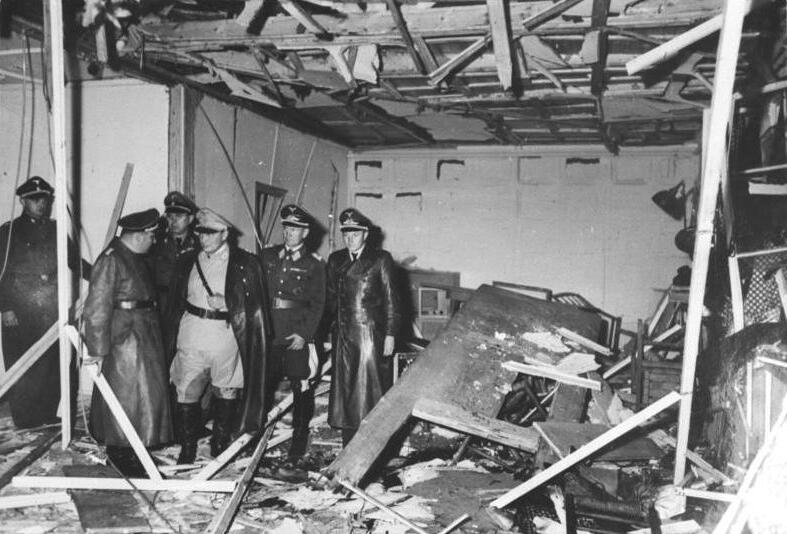
The view of destroyed interior of briefing room in Hitler’s headquatter Wolfsschanze near Rastenburg (Ketrzyn) in East Prussia.
(from left to right Heinz Linge, Martin Bormann, Julius Schaub, Hermann Göring, Bruno Loerzer, unknown.)
Image Wikipedia
- Admiral Benbow—The narrator recounts the arrival of a mysterious seaman, the Captain, at the Admiral Benbow inn. The Captain, a silent and brooding figure, pays for a long stay and requests the narrator to keep watch for a one-legged seafarer. The narrator, haunted by dreams of this ominous figure, becomes entangled in the Captain’s web of secrecy and fear.
- In the film Valkyrie (2008) who do the German army officers plot to assassinate?
- Adolf Hitler—During World War II, Colonel Claus von Stauffenberg (Tom Cruise), disillusioned with Nazi Germany, joins the German Resistance. He proposes using Operation Valkyrie to seize power after assassinating Hitler, but the plan fails when Hitler survives the bomb attack. The plotters are arrested, and Stauffenberg, along with other leaders, is executed.

Alain Prost, 1990, US Grand Prix, Phoenix.
Image Wikipedia
- Adolf Hitler—During World War II, Colonel Claus von Stauffenberg (Tom Cruise), disillusioned with Nazi Germany, joins the German Resistance. He proposes using Operation Valkyrie to seize power after assassinating Hitler, but the plan fails when Hitler survives the bomb attack. The plotters are arrested, and Stauffenberg, along with other leaders, is executed.
- Who is missing from this chronological list of motor racing’s Formula 1 World Drivers’ Champions from the 1990s: Ayrton Senna, Ayrton Senna, Nigel Mansell, …, Michael Schumacher, Michael Schumacher?
- Alain Prost—nicknamed “the Professor”, is a French former racing driver who competed in Formula One from 1980 to 1993. He won four Formula One World Drivers’ Championship titles and held records for most wins, fastest laps and podium finishes at the time of his retirement. After retiring from Formula One, Prost competed in various racing series, including the FFSA GT Championship and the Andros Trophy, and was inducted into the International Motorsports Hall of Fame in 1999.

Uluru/Ayers Rock.
Image Wikipedia
- Alain Prost—nicknamed “the Professor”, is a French former racing driver who competed in Formula One from 1980 to 1993. He won four Formula One World Drivers’ Championship titles and held records for most wins, fastest laps and podium finishes at the time of his retirement. After retiring from Formula One, Prost competed in various racing series, including the FFSA GT Championship and the Andros Trophy, and was inducted into the International Motorsports Hall of Fame in 1999.
- In 1873, William Gosse became the first European to visit Uluru. What did he name it?
- Ayers Rock—Uluru, a landmark in the Northern Territory, is known as Uluṟu by the local Aṉangu people. It was named Ayers Rock in 1873 after Sir Henry Ayers, but officially became Uluru/Ayers Rock in 1993 and Uluru/Ayers Rock in 2002.
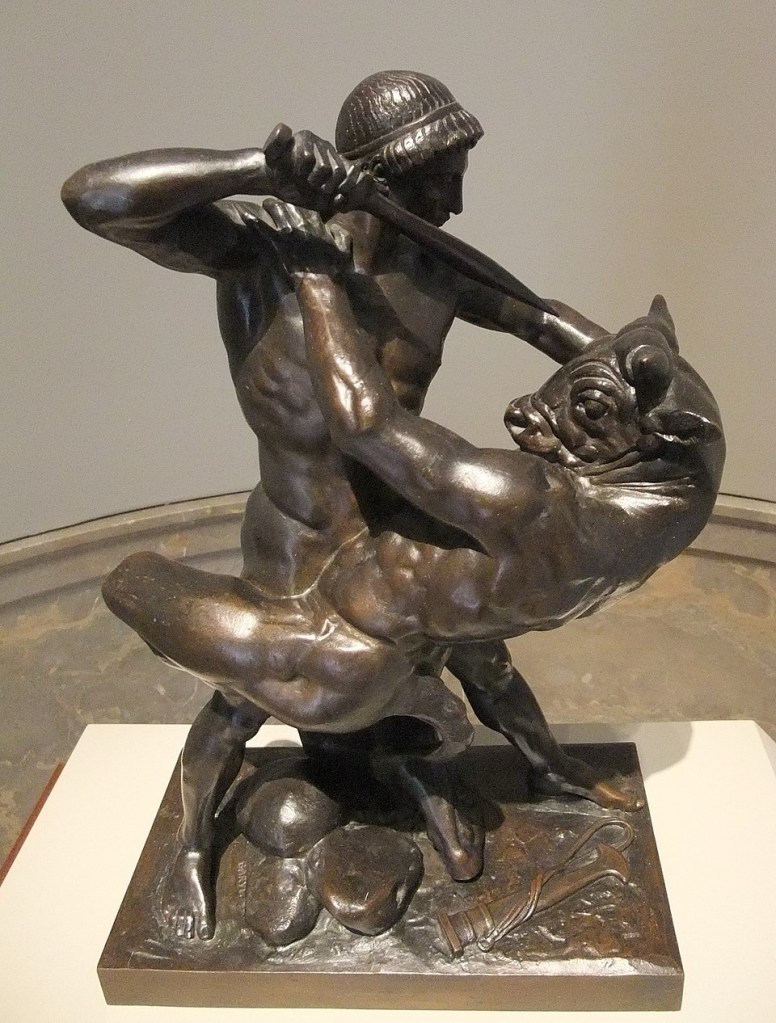
Theseus slaying the Minotaur by Bayre.
Image Wikipedia
- Ayers Rock—Uluru, a landmark in the Northern Territory, is known as Uluṟu by the local Aṉangu people. It was named Ayers Rock in 1873 after Sir Henry Ayers, but officially became Uluru/Ayers Rock in 1993 and Uluru/Ayers Rock in 2002.
- In Greek myth, which daughter of King Minos helped Theseus escape the Labyrinth?
- Ariadne—Ariadne, a Cretan princess, helped Theseus escape the Minotaur but was abandoned on Naxos. There, Dionysus fell in love with her, married her, and created the Corona Borealis constellation.







 Quizology.Online

