Here are the answers to the questions I posted earlier.
These are five questions which are related to today, February 5th.
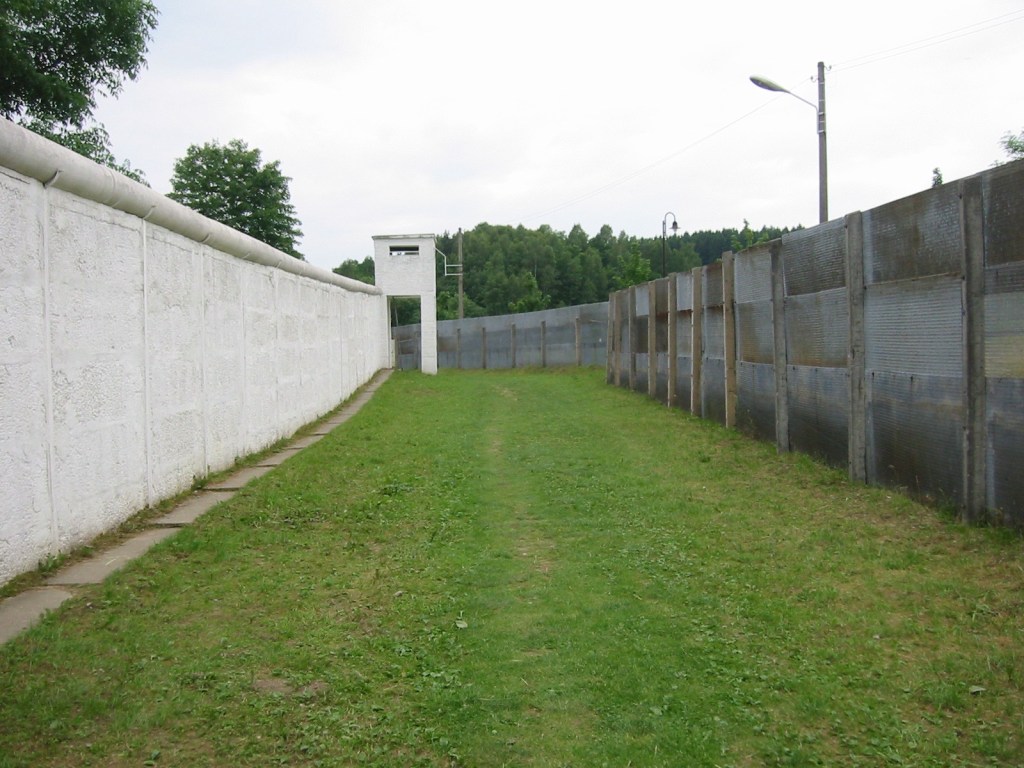
Image Wikimedia Commons
One
The term ‘Iron Curtain’ described the political and physical boundary dividing Europe from the end of World War II until the end of the Cold War. Who popularised its use in a speech at Westminster College, Fulton, Missouri, on 5 March 1946?
Answer: Winston Churchill.
…an iron curtain has descended across the Continent. Behind that line lie all the capitals of the ancient states of Central and Eastern Europe.
— Winston Churchill, Former British prime minister, 5 March 1946, Westminster College, Fulton, Missouri
The Iron Curtain was a political and physical boundary dividing Europe from 1945 to 1990/1991, symbolising the ideological divide between the Soviet-controlled Eastern Bloc and the Western nations. Popularised by Winston Churchill in 1946, the term originally described physical barriers but later encompassed broader cultural and ideological differences. The Iron Curtain largely dissolved in 1989-90 with the fall of communism.
Two
A 31-year-old American country singer, who was born Virginia Patterson Hensley in Virginia, died in a 1963 plane crash in Tennessee. She had enjoyed an eight-year recording career, which included two number ones as well as other major chart hits. By what name was she known professionally?
Answer: Patsy Cline.
Patsy Cline, born Virginia Patterson Hensley, was an American singer known for her crossover success from country to pop music. She achieved major hits like Walkin’ After Midnight and I Fall to Pieces, becoming a trailblazer for women in country music. Although, she died in a plane crash in 1963, her legacy endures through her influential music and posthumous recognition.
Three Cigarettes in an Ashtray
The post title, Three Cigarettes in an Ashtray, was the title of a Patsy Cline single from 1957.
Three
In 1616, 73 years after publication, On the Revolutions of the Heavenly Spheres (De revolutionibus orbium coelestium) was added to the Index of Forbidden Books (Index Librorum Prohibitorum) by the Sacred Congregation of the Index. Which astronomer had written On the Revolutions of the Heavenly Spheres?
Answer: Nicolaus Copernicus
Copernicus’s book placed the Sun rather than the Earth at the centre, meaning the Earth and other planets orbited the Sun. The Index Librorum Prohibitorum, active from 1560 to 1966, was a list of publications deemed heretical or immoral by the Catholic Church. It banned thousands of books, including works by theologians, astronomers, philosophers, and unapproved Bible editions, to protect church members from potentially disruptive ideas.
Four
In 1942 Japanese forces captured what is now Jakarta, Indonesia. At that time, what was the city called and of where was it the capital?
Answers: Batavia; Dutch East Indies.
Batavia, now known as Jakarta, was founded in 1619 by the Dutch East India Company (VOC) as a strategic trading post in the Dutch colonial empire. It became the capital of the Dutch East Indies and was pivotal for their trade routes, especially in spices and other commodities. Following Indonesia’s declaration of independence in 1945, Batavia was renamed Jakarta. The city evolved from a colonial outpost to a major urban centre reflecting Indonesia’s diversity and is a bustling metropolis and the capital of Indonesia. It is a hub for culture, economy, and politics in Southeast Asia.
Five
In 1496, England’s Henry VII issued letters patent authorising a navigator and his sons to explore unknown lands. This led to what is the earliest known exploration of the North American Atlantic coast since the Norse visits to Vinland in the eleventh century. Who was Henry VII’s explorer?
Answer: John Cabot.
John Cabot was an Italian navigator and explorer. His 1497 voyage to North America, commissioned by Henry VII, King of England, is the earliest known European exploration of the region’s coast since the Norse visits to Vinland in the eleventh century. To commemorate the 500th anniversary of Cabot’s expedition, both Canadian and British governments declared Cape Bonavista, Newfoundland, as his first landing site. However, alternative locations have also been suggested.

 Quizology Online