Today’s Answers
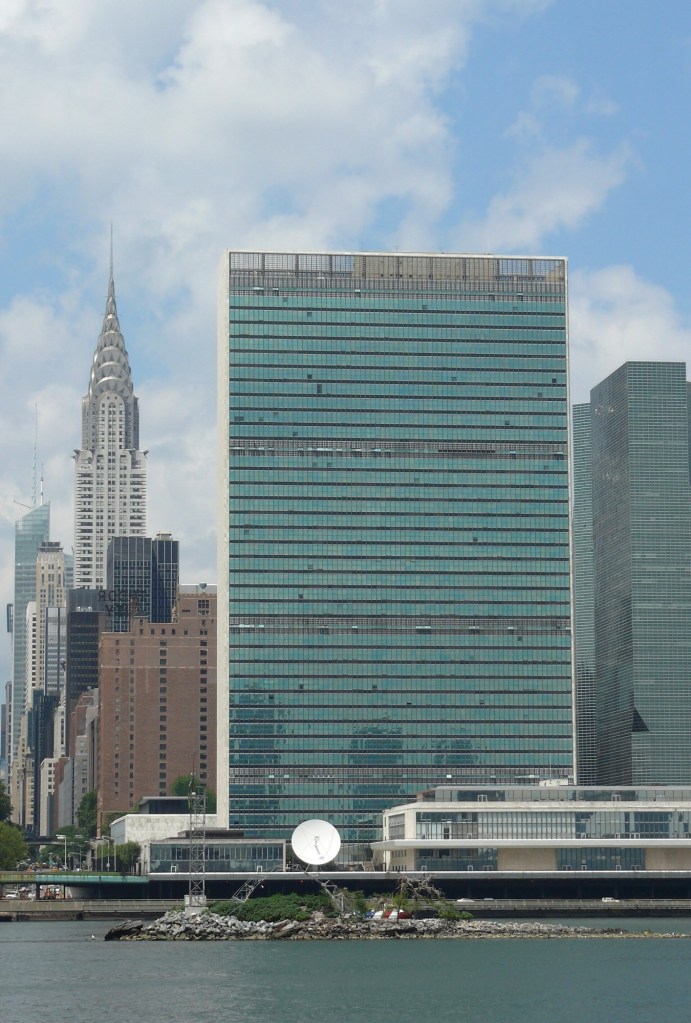
Image Wikimedia Commons
The first question is related to today, 20 August. The subsequent ones relate to each other.
One
On 20 August 1968, the Soviet Union led the other member nations of the Warsaw Pact, with the exception of Albania and Romania, in an invasion of Czechoslovakia to end Alexander Dubček’s liberalisation, known as the Prague Spring.
What country and city respectively are missing from the above statement?
Answers: Czechoslovakia; Prague.
The Prague Spring was a period of political liberalisation in Czechoslovakia from January to August 1968, led by Alexander Dubček. It ended with a Soviet-led invasion. Dubček’s reforms included media freedom and decentralisation. Czechoslovakia remained under Soviet control until 1989 and, in 1993, split into the Czech Republic and Slovakia.
Two
When the Warsaw Pact was established in 1955, how many nations were members, and what were they?
Answers: Eight; Albania, Bulgaria, Czechoslovakia, East Germany, Hungary, Poland, Romania and Soviet Union.
The Warsaw Pact, established in 1955, served as a Soviet-led military alliance opposing NATO during the Cold War. It encompassed the Eastern Bloc states listed above; Albania was removed in 1961 and officially left in 1968, while East Germany exited in 1990 and Romania remained an independent, non-Soviet member. Following the Revolutions of 1989 and German reunification, the pact ended in 1991. Former members such as East Germany, the Czech Republic, and Slovakia later joined NATO.
Three
The Soviet Union was also known as the USSR; what did this abbreviation stand for in English; and for how many years did it exist?
Answer: Union of Soviet Socialist Republics; 69 years.
Established in 1922 and ending in 1991, the Soviet Union was a transcontinental communist state directed by the Communist Party from Moscow. Stalin’s leadership produced industrialisation and purges, while World War II resulted in 27 million deaths. Cold War tensions emerged, and reforms under Gorbachev prompted secession and dissolution. As a superpower, it possessed the largest nuclear arsenal and served on the UN Security Council.
Four
Name the permanent members of the United Nations Security Council?
Answer: China, France, Russia, United Kingdom and United States.
The UN Charter grants China, France, Russia, the United Kingdom, and the United States permanent Security Council seats with veto power. Ten elected members complete the 15-state body. The permanent members of the UN Security Council, known as the P5, are China, France, Russia, the UK, and the US. They were WWII Allies and possess nuclear weapons and veto power. The Council has 15 members, with 10 elected. Reform proposals face opposition from the Uniting for Consensus movement.
Five
The picture above shows the United Nations Building. What body of water is in the foreground of this picture?
Answer: East River.
The United Nations headquarters is located in Midtown Manhattan, New York City, completed in 1952. It includes the Secretariat, Conference, and General Assembly buildings. Designed by Wallace Harrison, it is extraterritorial under a U.S. treaty. The UN has regional headquarters in Geneva, Vienna, and Nairobi, but not its specialised agencies. The East River is not a river but a saltwater tidal estuary and strait in New York City linking Upper New York Bay to Long Island Sound. It separates Brooklyn and Queens from Manhattan and the Bronx.


Leave a Reply