
Image Wikimedia Commons
Today’s Answers
Today there are six questions to get us to the end of the alphabet.
One
Now. . . those three curses – Avada Kedavra, Imperius, and Cruciatus – are known as the … Curses.
— Professor Moody, Harry Potter and the Goblet of Fire, Chapter 14.
What ‘U’ is the word removed from before the word ‘Curses’ in the above quote from JK Rowling’s Harry Potter and the Goblet of Fire? Secondly, what subject is being taught to the class when the quote is used?
Answers: Unforgivable; Defence Against the Dark Arts.
The Unforgivable Curses—Killing, Cruciatus and Imperius—carried life sentences in Azkaban from 1717, with exceptions such as Auror use or Imperius influence. They were permitted during the First Wizarding War and legalised under Lord Voldemort before repeal.
Two
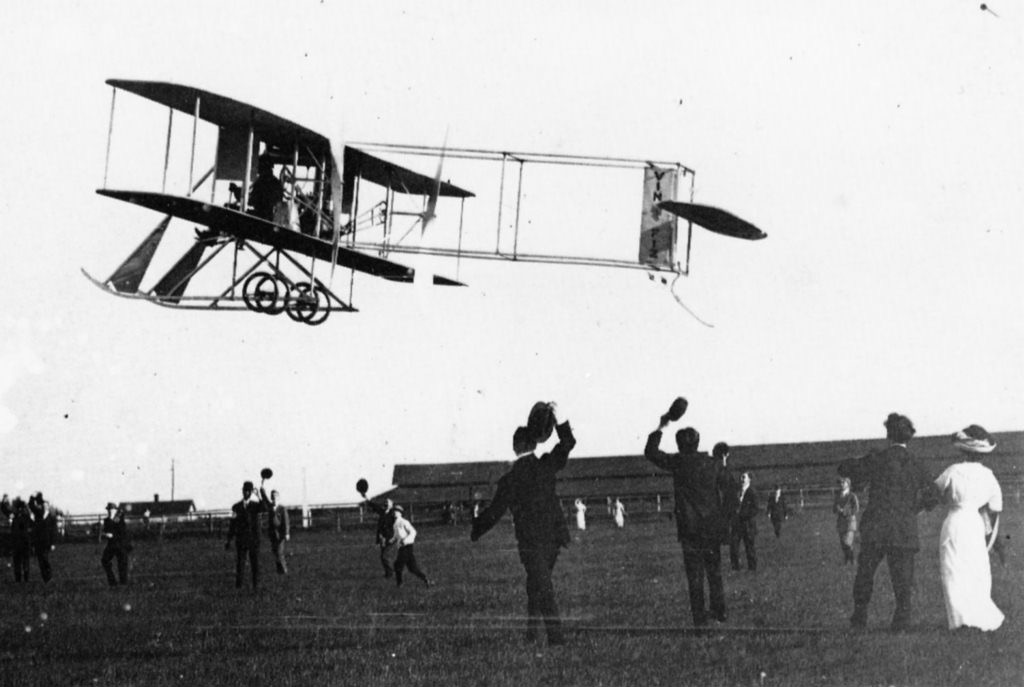
What ‘V’, the first aeroplane to fly coast to coast across the United States, was named after a sponsor’s soft drink? What company made the aircraft, and in what cities were the starting point and official destination of the flight?
Answers: Vin Fiz Flyer. Wright Company (or Wright Brothers); New York and Pasadena, California (or Long Beach).
Starting point: Sheepshead Bay, Brooklyn, New York, on the Atlantic coast.
Official finishing point: Pasadena, California.
Final destination: Long Beach, California, on the Pacific coast.
The first crossing of the United States by airplane was achieved by Calbraith Perry Rodgers in 1911. In 1910, famed publishing magnate William Randolph Hearst announced his offer of a $50,000-prize for a U.S. transcontinental flight in thirty days or less. Rodgers’ Wright EX biplane was named the Vin Fiz after his sponsor’s grape soda product. He left Sheepshead Bay, New York, on September 17, 1911. A “hangar” car, a rolling workshop filled with spare parts to repair and maintain the airplane, followed along. The flight was punctuated by numerous stops, delays, and accidents. When Hearst’s 30-day time limit expired, Rodgers had only reached Kansas City, Missouri. Undaunted, he continued on, determined to make the first transcontinental airplane flight whether he received the money or not. He arrived in Pasadena, California, to a hero’s welcome, 49 days after setting out. Although Pasadena was the official end of the coast-to-coast journey, Rodgers flew on to Long Beach to complete the flight at the shore of the Pacific Ocean. The total distance covered was 6,914 km (4,321 mi) in 82 hours, 4 minutes, total flying time at an average speed of 82.4 kph (51.5 mph).
Rodgers was killed in a crash shortly after his coast to coast flight.
Three
What ‘W’, a 19th-century battle, was known at the time as both the Battle of Mont Saint-Jean and La Belle Alliance? In what present-day country was it fought?
Answers: Waterloo; Belgium.
The Battle of Waterloo, fought on June 18, 1815, near Waterloo, marked the final defeat of Napoleon Bonaparte. The French Imperial Army, led by Napoleon, was defeated by the combined forces of the Seventh Coalition: a British-led army under the Duke of Wellington and a Prussian army under Field Marshal Gebhard Leberecht von Blücher.
Four
What ‘X’ was a film directed by Matthew Vaughn that was released in 2011, and who in this film plays a character with a surname also beginning with ‘X’?
Answers: X-Men: First Class; James McAvoy.
The 2011 superhero film X-Men: First Class, directed by Matthew Vaughn. Serving as a prequel to the original X-Men movie, it is set in 1962 during the Cuban Missile Crisis and explores the early relationship between Charles Xavier and Erik Lehnsherr (Magneto) as they confront the Hellfire Club.
Five
What ‘Y’, a present-day city, did the Roman Empire know as Eboracum? How many Roman emperors died at Eboracum?
Answers: York. Two.
The name Eboracum derives from the Common Brittonic Eburākon, which carries a debated meaning. It might signify “yew tree place” or “rowan tree place”, or perhaps stem from the Latin for ivory, suggesting boar’s tusks. Latinisation altered the ending to -um, and the term shares origins with several modern French place names. Two Roman emperors died in Eboracum: Septimius Severus in 211 AD and Constantius Chlorus in ‘Y306 AD.
Six
What ‘Z’ was the regal name of the last king of Albania and in what two decades did he reign?
Answer: Zog I; 1920s and ‘30s.
After serving as prime minister and president with dictatorial powers, Ahmed Muhtar Bey Zogolli declared himself King Zog I of Albania in 1928. His reign was marked by an alliance with Fascist Italy, which eventually led to the Italian invasion of Albania in 1939. Zog was forced into exile, living in England during World War II and later in France, as the post-war Communist government barred his return. He died in 1961, and his remains were transferred to Tirana in 2012.



Leave a Reply