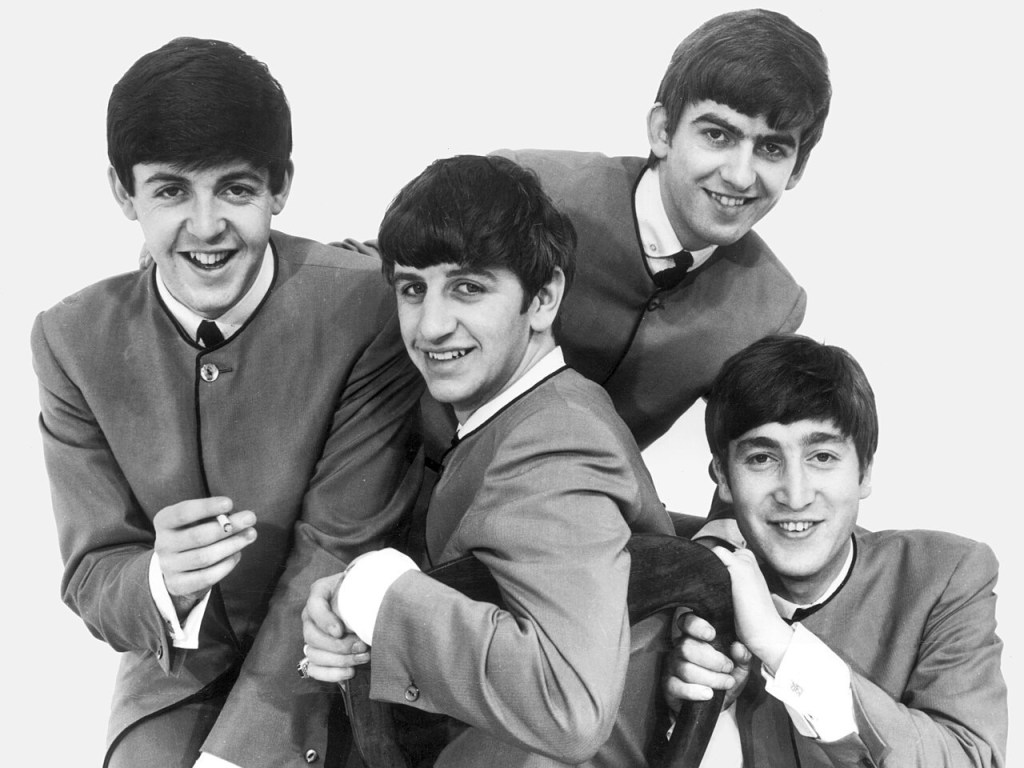
The Beatles held the festive top spot with four singles topping the UK singles chart on Christmas Day in 1963, 1964, 1965 and 1967. Which songs secured these number one positions?
Answers: I Wanna Hold Your Hand
The Beatles hold the record for the most British Christmas number ones according to Guinness World Records,
The Beatles (UK) have had four singles in the festive top spot: “I Wanna Hold Your Hand” which went to No.1 on 12 December 1963, “I Feel Fine” (10 December 1964), “Day Tripper/We Can Work it Out” (16 December 1965) and “Hello Goodbye” (6 December 1967).
In 2004, researchers discovered that the rock summit of Mont Blanc was located west of the ice-covered summit. What is the distance between these two summits?
4 m (13 feet)
26 m (85 feet)
40 m (130 feet)
Answer: 40 m (130 feet)
Researchers discovered that the rock summit of Mont Blanc is 40 metres west of its ice summit. The rock summit, which reaches 4,792 metres, is actually 40 metres west of the ice summit at 4,807 metres. This finding informed an ice core drilling programme beginning in autumn 2004.
Three
What words are missing from this book title — The … at the … of the … — the second book in a ‘trilogy’?
Answer: Restaurant; End; Universe
The Restaurant at the End of the Universe, the second book in Douglas Adams’ Hitchhiker’s Guide to the Galaxy, a trilogy in five parts, follows Arthur Dent and his companions on their cosmic adventures. The book, like its predecessor, was an adaptation of Adams’ BBC radio series.
Four
What Australian city, a state capital, stands on the Swan River?
Answer: Perth
The Swan River in southwestern Western Australia flows 224 miles from the Avon River to the Indian Ocean. It is known for its black swans and was the site of Western Australia’s first free settlement in 1829.
Five
Who played Eloise Chandler, a florist, in the 2009 film Love Happens?
Answer: Jennifer Aniston
Love Happens is a 2009 romantic drama film starring Aaron Eckhart and Jennifer Aniston. The film, about a grieving widower finding love again.
The Beatles held the festive top spot with four singles topping the UK singles chart on Christmas Day in 1963, 1964, 1965 and 1967. Which songs secured these number one positions?
Two
In 2004, researchers discovered that the rock summit of Mont Blanc was located west of the ice-covered summit. What is the distance between these two summits?
4 m (13 feet)
26 m (85 feet)
40 m (130 feet)
Three
What words are missing from this book title — The … at the … of the … — the second book in a ‘trilogy’?
Four
What Australian city, a state capital, stands on the Swan River?
Five
Who played Eloise Chandler, a florist, in the 2009 film Love Happens?
Jean-Luc Picard, commanding officer of the Federation starship USS Enterprise, is known for this catchphrase ‘tea, … …, hot’. What two words are missing?
Answer: Earl Grey
Earl Grey tea is a black tea blend flavoured with bergamot oil, though many use artificial flavouring. Traditionally made from Chinese keemun, it can also be blended with lapsang souchong or made with green or oolong tea.
Two
The Italian hero Giuseppe Maria Garibaldi, Italian general, revolutionary and republican, was born in what city?
Answer: Nice (France)
Giuseppe Garibaldi was an Italian general, revolutionary, and republican who played a key role in the Unification of Italy. He embraced republican nationalism but allied with the monarchist Cavour for unification. Garibaldi led successful military campaigns, including the Expedition of the Thousand, and became an international figurehead for national independence and republican ideals.
Three
New York’s Central Park is bordered by what four roadways?
Answer: Central Park North, Fifth Avenue, Central Park South and Central Park West
Central Park, a 843-acre urban park in Manhattan, is the most visited urban park in the United States. Designed by Frederick Law Olmsted and Calvert Vaux, it opened in 1858 and was completed in 1876. The park features attractions like the Ramble and Lake, Jacqueline Kennedy Onassis Reservoir, and Central Park Zoo. It also offers recreational activities such as carriage rides and concerts.
Four
Jennifer Grey plays ‘Baby’ in 1987’s Dirty Dancing but what is the character’s actual name?
Answer: Frances Houseman
Dirty Dancing is a 1987 American romantic drama dance film starring Patrick Swayze and Jennifer Grey. The film, based on screenwriter Eleanor Bergstein’s childhood, was a commercial success, earning over $214 million worldwide and spawning a successful franchise.
Five
In music, what ten-letter noun means ‘a passage marked to be performed very loudly’. What word?
Answer: Fortissimo
Fortissimo, abbreviated ff, is an Italian musical term meaning ‘very loud’. Italian has been the standard language for musical dynamics since the Baroque era. Pipe organs are among the few acoustic instruments capable of sustaining true fortissimo levels for long periods, sometimes producing sound pressures that can be physically felt. Some modern composers and film scores push beyond traditional notation, using ffff or textual instructions to indicate overwhelming or explosive sound effects.
Jean-Luc Picard, commanding officer of the Federation starship USS Enterprise, is known for this catchphrase ‘tea, … …, hot’. What two words are missing?
Two
The Italian hero Giuseppe Maria Garibaldi, Italian general, revolutionary and republican, was born in what city?
Three
New York’s Central Park is bordered by what four roadways?
Four
Jennifer Grey plays ‘Baby’ in 1987’s Dirty Dancing but what is the character’s actual name?
Five
In music, what ten-letter noun means ‘a passage marked to be performed very loudly’. What word?
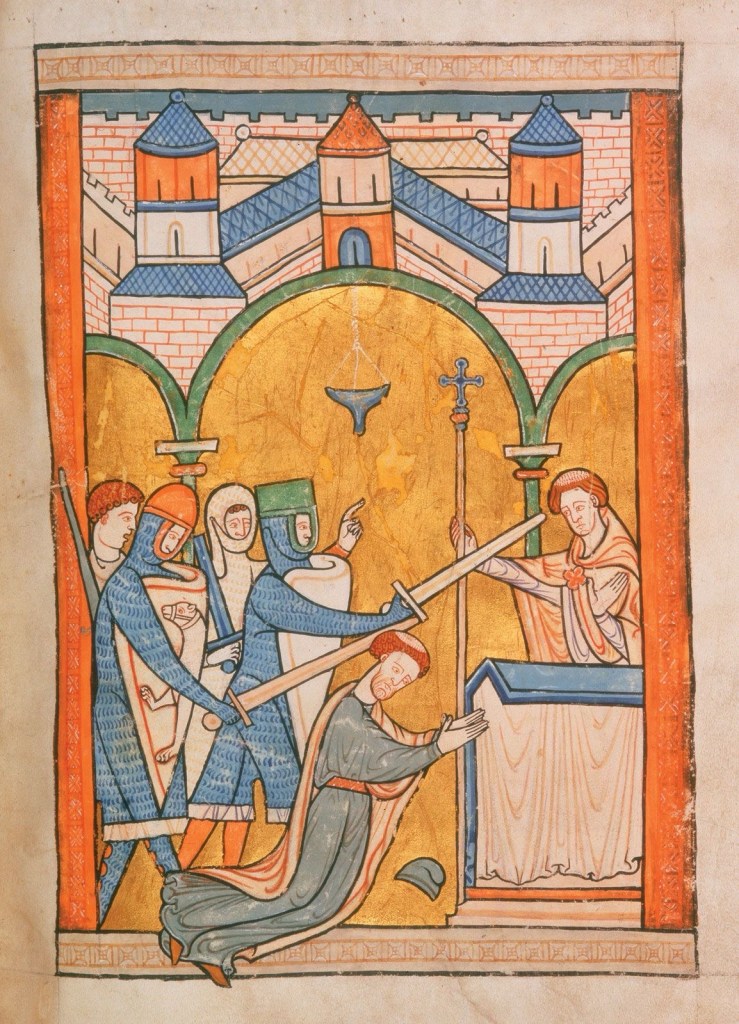
Four knights—Reginald FitzUrse, Hugh de Morville, William de Tracy and Richard le Breton—were responsible for an assassination in England on this date in 1170. Who was the victim of this assassination?
Answer: Thomas Becket
St. Thomas Becket, chancellor of England and archbishop of Canterbury, clashed with King Henry II, leading to his murder in 1170. He is venerated as a saint and martyr in the Roman Catholic Church and the Anglican Communion.
Two
In 1890, the Wounded Knee massacre resulted in 300 Lakota deaths on the Pine Ridge Indian Reservation. Which US state is Wounded Knee located in, and which US regiment was responsible for this massacre?
Answer: South Dakota; 7th Cavalry Regiment
The Wounded Knee massacre is widely regarded as marking the end of the Indian Wars, a series of conflicts between the United States and Native American tribes that spanned much of the 19th century.
Three
In 1911, after gaining independence, the 8th Jebtsundamba Khutughtu was enthroned as Khagan. This took place in which country?
Answer: Mongolia
The 8th Jebtsundamba Khutughtu became both the spiritual and temporal leader of the newly independent state, establishing a theocratic government that lasted until Mongolia fell under strong influence from the Soviet Union.
Four
1860 – The launch of HMS Warrior, with her combination of …, … and …, renders all previous warships obsolete
The above quote from Wikipedia is missing the three factors which rendered previous warships obsolete. What were these factors?
Answer: Screw propeller, iron hull and iron armour
HMS Warrior demonstrated that ironclad, steam-powered warships were superior to traditional wooden sailing vessels, prompting navies worldwide to rapidly abandon older ship designs.
Five
According to his own account, which Native American woman saved the life of English explorer John Smith in 1607 by pleading with her father, the Powhatan leader Wahunsenacawh?
Answer: Pocahontas
Pocahontas was the daughter of Wahunsenacawh, the paramount chief of the Powhatan Confederacy, and her dramatic rescue of John Smith is known primarily from Smith’s own later writings—leading historians to debate how literally the event should be interpreted.
Four knights—Reginald FitzUrse, Hugh de Morville, William de Tracy and Richard le Breton—were responsible for an assassination in England on this date in 1170. Who was the victim of this assassination?
Two
In 1890, the Wounded Knee massacre resulted in 300 Lakota deaths on the Pine Ridge Indian Reservation. Which US state is Wounded Knee located in, and which US regiment was responsible for this massacre?
Three
In 1911, after gaining independence, the 8th Jebtsundamba Khutughtu was enthroned as Khagan. This took place in which country?
Four
1860 – The launch of HMS Warrior, with her combination of …, … and …, renders all previous warships obsolete.
The above quote from Wikipedia is missing the three factors which rendered previous warships obsolete. What were these factors?
Five
According to his own account, which Native American woman saved the life of English explorer John Smith in 1607 by pleading with her father, the Powhatan leader Wahunsenacawh?
Here are the answers to the questions I posed earlier.
A bit of a mix today with questions based on literature, film and television.
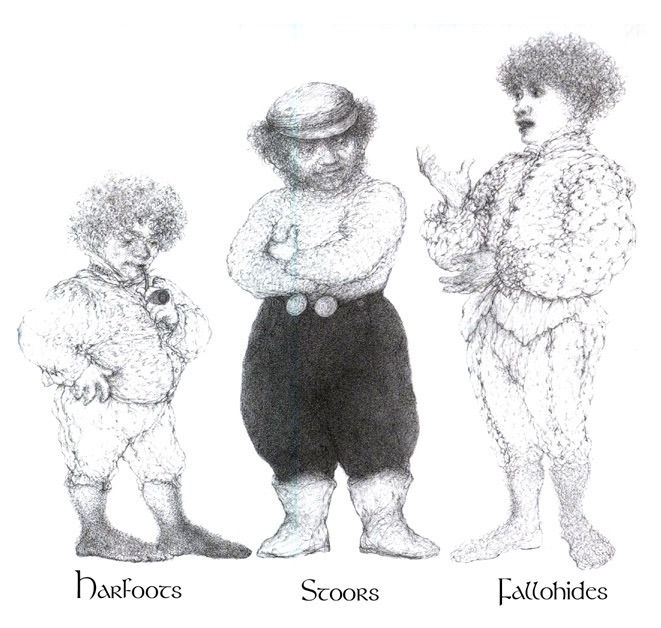
The three kinds of Hobbits: Harfoots, Stoors and Fallohides. Image — Art by Lidia Postma. Tolkien Gateway
One
Fallohides and Stoors are two of the three Hobbit breeds created in J.R.R. Tolkien’s fictional history of Middle-earth. Which is the third?
Answer: Harfoots
J.R.R. Tolkien crafted a fictional history encompassing three hobbit breeds distinguished by their physical characteristics and temperaments: Harfoots, Fallohides and Stoors. Over centuries, by the time of Bilbo and Frodo, these groups had intermingled unevenly, with some families and regions favouring descent from one of the three.
Two
What TV presenter—top guy who did a tour on the farm apparently—when a child in 1972, was one of the recipients of the first prototype Paddington Bear stuffed toy, which was made by his parents?
Answer: Jeremy Clarkson
Clarkson, known for Top Gear, The Grand Tour in and Clarkson’s Farm, received the gift from his parents. Shirley and Eddie Clarkson’s small family business created the first Paddington Bear stuffed toy in 1972. This was after Michael Bond, the author and creator of Paddington, granted the Clarksons worldwide licensing rights.
Three
There were five stones in the beginning. Over the centuries, they were dispersed by wars, sold off by thieves like you.
The above quote is from a 1984 adventure film. What film, and who co-starred as Willie Scott in this film?
Answer: Indiana Jones and the Temple of Doom
Indiana Jones and the Temple of Doom is a 1984 action-adventure film directed by Steven Spielberg. It is a prequel to Raiders of the Lost Ark, following Indiana Jones as he battles a Thuggee cult in British India. The film was a financial success but received mixed reviews due to its violence and darker themes.
Four
Zem, is an affable, yet stupid, swamp-dwelling m…
An eight-letter word, finishes the above quote from Wikipedia about a creature from the swampy planet Sqornshellous Zeta in The Hitchhiker’s Guide to the Galaxy?
Answer: Mattress
Zem, a swamp-dwelling mattress on Sqornshellous Zeta, befriends Marvin the Paranoid Android and witnesses Marvin’s abduction by Krikkit war robots. He appears in the novel Life, the Universe and Everything.
Five
In HBO’s Game of Thrones, what role does Gwendoline Christie play?
Answer: Brienne of Tarth
Brienne of Tarth, a skilled warrior, is sworn into Catelyn Stark’s service after being falsely accused of murder. She escorts Jaime Lannister, fights a bear, and searches for Sansa and Arya Stark. Brienne fulfils her oath to Catelyn, becomes head of Bran the Broken’s Kingsguard, and reunites with Jaime before his death.
A bit of a mix today with questions based on literature, film and television.
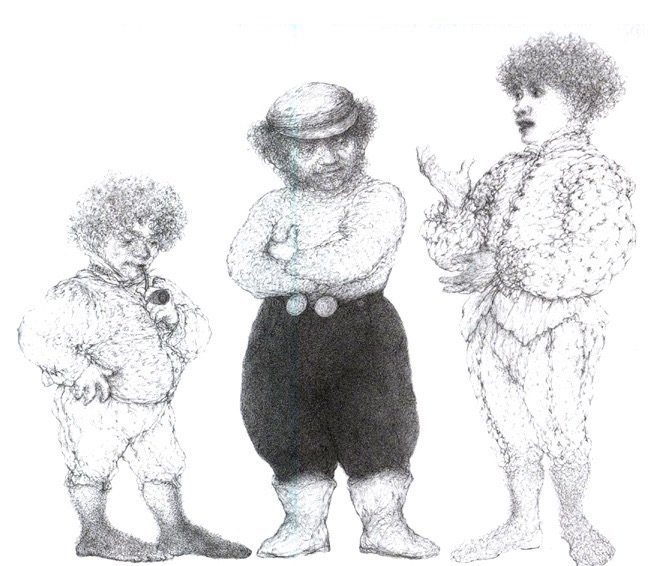
The three kinds of Hobbits: …, Stoors (centre) and Fallohides (right). Image — Art by Lidia Postma. Tolkien Gateway
One
Fallohides and Stoors are two of the three Hobbit breeds created in J.R.R. Tolkien’s fictional history of Middle-earth. Which is the third?
Two
What TV presenter—top guy who did a tour on the farm apparently—when a child in 1972, was one of the recipients of the first prototype Paddington Bear stuffed toy, which was made by his parents?
Three
There were five stones in the beginning. Over the centuries, they were dispersed by wars, sold off by thieves like you.
The above quote is from a 1984 adventure film. What film, and who co-starred as Willie Scott in this film?
Four
Zem, is an affable, yet stupid, swamp-dwelling m…
An eight-letter word, finishes the above quote from Wikipedia about a creature from the swampy planet Sqornshellous Zeta in The Hitchhiker’s Guide to the Galaxy?
Five
In HBO’s Game of Thrones, what role does Gwendoline Christie play?
Happy Christmas. Here are five festive questions for you.
A Visit From Saint Nicholas by Clement Clarke Moore Project Gutenberg Caption “Now, Dasher! now, Dancer! now, Prancer and Vixen! On! Comet, on! Cupid, on! Dunder and Blitzen— To the top of the porch, to the top of the wall! Now, dash away, dash away, dash away all!”
One
The names for Santa’s reindeer originate from a poem known variously as A Visit from St. Nicholas (in full Account of a Visit from St. Nicholas); The Night Before Christmas or ’Twas the Night Before Christmas. In this, there are eight reindeer, and below are anagrams of their names.
(Two are doubled — two reindeer names joined by ‘and’ — for example, if we were looking for cartoon characters, ‘trendy major’ would be ‘Tom and Jerry’.) The confused reindeer are
shared
craned
cavern annex drip
me cot
up cid
Over the years, the final two reindeer have had various names, so I’ve provided you with three versions: (1) is from the original publication, (2) is from Project Gutenberg, and (3) is [possibly] the best known.
darn mixed bundle
bland intruded zen
bland intern zoned
Answers
Dasher
Dancer
Prancer and Vixen
Comet
Cupid
The final two reindeer with their various names
Dunder and Blixem — published in the Sentinel of Troy, New York, on 23 December 1823
There is an even greater variety of spellings for the last two names than I’ve shown. A quick look online finds, for example, the Poetry Foundation using Donder and Blitzen from The Random House Book of Poetry for Children (Random House Inc., 1983).
Two
A writer best known for his 1900 novel, which was adapted into a musical film in 1939, penned The Life and Adventures of Santa Claus in 1902. In this work, he renamed Santa’s reindeer and increased their number to ten: Flossie, Glossie, Racer, Pacer, Fearless, Peerless, Ready, Steady, Feckless and Speckless. Who was the writer, and what was the title of his 1900 novel?
Answer: L. Frank Baum; The Wonderful Wizard of Oz
The Wonderful Wizard of Oz, a 1900 children’s novel by L. Frank Baum, follows Dorothy’s journey in the magical Land of Oz. The book’s success led to thirteen sequels, and it is considered a beloved American fairytale. The Life and Adventures of Santa Claus is a 1902 children’s book by L. Frank Baum. The story follows Claus, a human raised by fairies in the Forest of Burzee, who becomes known for his kindness to children and his gift-giving. After a battle with the evil Awgwas, Claus is granted immortality and becomes the immortal Santa Claus, with his deputies Wisk, Peter, Kilter, and Nuter.
Three
In Arthur C. Clarke’s short story The Star (1955), the faith of a Jesuit priest is tried when he discovers the Star of Bethlehem was actually a… — What nine-letter word completes this?
Answer: Supernova
The Star is a 1955 science fiction short story by Arthur C. Clarke. It follows a group of space explorers who discover the remnants of an advanced civilisation destroyed by a supernova. The story explores themes of faith and the intersection of religion and science, culminating in a crisis of faith for the chief astrophysicist, a Jesuit priest.
Four
The first solo female vocalist to reach number one on the UK Christmas chart simultaneously topped the Billboard Hot 100 for 14 weeks – a record at the time. Who was the singer and with what song did she achieve these feats?
Answer: Whitney Houston: I Will Always Love You
I Will Always Love You from The Bodyguard soundtrack, spent 14 weeks at number one on the Hot 100, won GRAMMYs and was selected by the Library of Congress to be preserved in the National Recording Registry.
Five
Christmas crept into Pine Cove like a creeping Christmas thing: dragging garland, ribbon, and sleigh bells, oozing eggnog, reeking of pine, and threatening festive doom like a cold sore under the mistletoe.”
This is the opening of ‘Christmas Creeps’, which is chapter one of what novel, and who wrote it?
Answer: The Stupidest Angel or The Stupidest Angel: A Heartwarming Tale of Christmas Terror; Christopher Moore
The Stupidest Angel is a 2004 novel by Christopher Moore, set in the fictional town of Pine Cove. The story follows an angel named Raziel, who accidentally turns the townspeople into zombies while trying to grant a child’s wish. The novel won the 2005 Quill Award for Science Fiction/Fantasy/Horror.
Six
The creature who performed the wedding ceremony in The Owl and the Pussycat is popular at Christmas. What is this creature?
Answer: Turkey
The creature is a turkey — specifically, ‘the Turkey who lives on the hill’ from Edward Lear’s poem The Owl and the Pussycat. Turkey is very popular as a dinner ingredient at Christmas.
Seven
What Christmas ballet features the ‘Sugar Plum Fairy’?
Answer: The Nutcracker
The Nutcracker, a two-act ballet by Tchaikovsky, premiered in 1892. Though initially not as successful as the Nutcracker Suite, it gained popularity and is now performed by many ballet companies, especially in North America.
Eight
In A Charlie Brown Christmas, Charlie Brown visits a psychiatric booth for help with his problems. Who runs this booth?
Answer: Lucy Van Pelt
A Charlie Brown Christmas is a 1965 animated TV special based on the Peanuts comic strip. It follows Charlie Brown as he struggles with holiday depression and directs a neighbourhood Christmas play.
Nine
In which decade did the first commercially available Christmas cards go on sale to the public?
Answer: 1840s
The first commercially available Christmas card, designed by John Callcott Horsley in 1843, depicted a family toasting and scenes of charity. Early British cards favoured fanciful designs, humour, and sentimentality over winter or religious themes.
Ten
White Christmas is Guinness World Records’ best-selling single. Who composed the song, for what film was it written, and who sang it in that film?
Answer: Irving Berlin; Holiday Inn (1942)
White Christmas was composed by Irving Berlin for Holiday Inn and sung by Bing Crosby. It has sold an estimated 50 million copies worldwide, having topped the charts for eleven weeks in 1942 and won the Academy Award for Best Original Song. Elton John’s tribute to Diana, Princess of Wales, Candle in the Wind 1997, has sold 33 million copies.
I hope you are having a Happy Christmas and continue to do so. At the moment, I do not have posts planned for the next couple of days, but I’ll see what happens.
Happy Christmas. Here are five festive questions for you.
A Visit From Saint Nicholas by Clement Clarke Moore Project Gutenberg
One
The names for Santa’s reindeer originate from a poem known variously as A Visit from St. Nicholas (in full Account of a Visit from St. Nicholas); The Night Before Christmas or ’Twas the Night Before Christmas. In this, there are eight reindeer, and below are anagrams of their names.
(Two are doubled — two reindeer names joined by ‘and’ — for example, if we were looking for cartoon characters, ‘trendy major’ would be ‘Tom and Jerry’.) The confused reindeer are
shared
craned
cavern annex drip
me cot
up cid
Over the years, the final two reindeer have had various names, so I’ve provided you with three versions: (1) is from the original publication, (2) is from Project Gutenberg, and (3) is [possibly] the best known.
darn mixed bundle
bland intruded zen
bland intern zoned
Two
A writer best known for his 1900 novel, which was adapted into a musical film in 1939, penned The Life and Adventures of Santa Claus in 1902. In this work, he renamed Santa’s reindeer and increased their number to ten: Flossie, Glossie, Racer, Pacer, Fearless, Peerless, Ready, Steady, Feckless and Speckless. Who was the writer, and what was the title of his 1900 novel?
Three
In Arthur C. Clarke’s short story The Star (1955), the faith of a Jesuit priest is tried when he discovers the Star of Bethlehem was actually a… — What nine-letter word completes this?
Four
The first solo female vocalist to reach number one on the UK Christmas chart simultaneously topped the Billboard Hot 100 for 14 weeks – a record at the time. Who was the singer and with what song did she achieve these feats?
Five
Christmas crept into Pine Cove like a creeping Christmas thing: dragging garland, ribbon, and sleigh bells, oozing eggnog, reeking of pine, and threatening festive doom like a cold sore under the mistletoe.”
This is the opening of ‘Christmas Creeps’, which is chapter one of what novel, and who wrote it?
Six
The creature who performed the wedding ceremony in The Owl and the Pussycat is popular at Christmas. What is this creature?
Seven
What Christmas ballet features the ‘Sugar Plum Fairy’?
Eight
In A Charlie Brown Christmas, Charlie Brown visits a psychiatric booth for help with his problems. Who runs this booth?
Nine
In which decade did the first commercially available Christmas cards go on sale to the public?
Ten
White Christmas is Guinness World Records’ best-selling single. Who composed the song, for what film was it written, and who sang it in that film?



 Quizology Online
