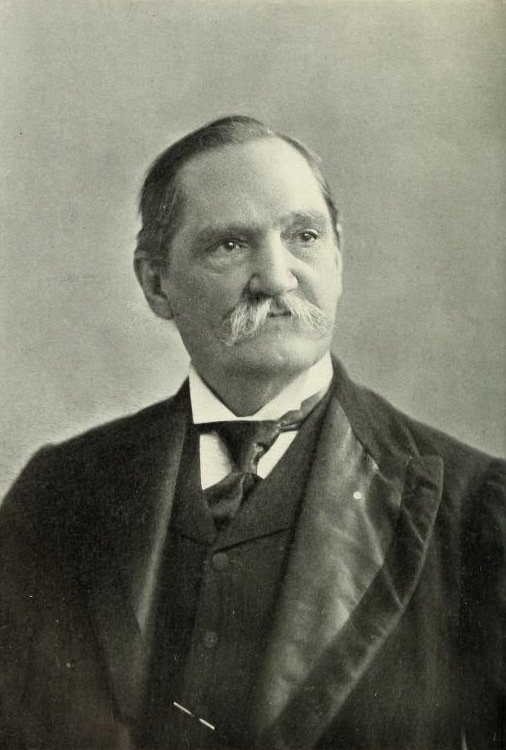
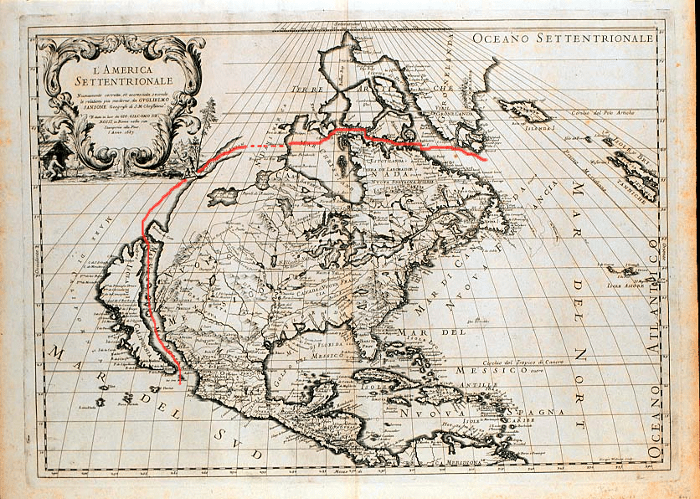
Juan Ponce de León—a Spanish explorer, founded the first European settlement on Puerto Rico and is credited with being the first European to reach Florida in 1513. He named the region Florida due to its lush vegetation and discovery during Easter. A photographic portrait of Hans Christian Andersen by Thora Hallager, 1869. Wikipedia
Hans Christian Andersen—Hans Christian Andersen, a Danish author, is best known for his fairy tales, including The Emperor’s New Clothes and The Little Mermaid. His stories, translated into over 125 languages, have inspired numerous adaptations. Richard Strauss, 1894. Wikipedia
Richard Strauss—Strauss’s Thus Spoke Zarathustra is used for the dramatic opening scene of the film depicting an alignment of the Sun, the Earth and the Moon and which has been called the greatest movie opening ever. 2001: A Space Odyssey is a 1968 film by Stanley Kubrick, based on Arthur C. Clarke’s stories. It explores human evolution, technology and artificial intelligence through a journey to Jupiter involving a malfunctioning computer, HAL 9000, and a mysterious monolith. Col. Nicholson, The Bridge on the River Kwai, 1957. WikipediaPrince Faisal, 3rd from left, in Lawrence of Arabia, 1962. WikipediaObi-Wan Kenobi, Star Wars, 1977. Wikipedia
Alec Guinness—Kwai: played Colonel Nicholson in The Bridge on the River Kwai (1957); Hejaz: Prince Faisal in Lawrence of Arabia (1962); London: George Smiley in both Tinker, Tailor, Soldier, Spy (1979) and Smiley’s People (1982); Tatooine: in the original three Star Wars films, Ben Kenobi—aka Obi-Wan Kenobi. A British actor, he was known for his diverse and acclaimed stage and screen performances. He won an Academy Award, a BAFTA, a Golden Globe, and a Tony Award; he was knighted by Queen Elizabeth II in 1959.
Quaker—William Penn, seeking a haven for Quakers, secured a charter from King Charles II granting him over 45,000 square miles of land in North America. This land, named Pennsylvania, became a haven for Quakers, guaranteeing religious freedom and other liberties.
On 2 April 1513, an explorer landed on the coast of what is now Florida, he is believed to be the first European to land in Florida. Who was this explorer?
Sebastian Cabot
Hermenegildo de Brito Capelo
Juan Ponce de León
Born this day in 1805, an author who is probably best known for works such as The Red Shoes, The Ugly Duckling and Thumbelina. Who is he?
Hans Christian Andersen
Jacob Grimm
George MacDonald
Today in 1968, Stanley Kubrick’s 2001: A Space Odyssey had its world premiere. The film was noted for its use of classical music such as the dramatic Thus Spoke Zarathustra for the opening scene of the film. Who composed this piece of music?
Camille Saint-Saëns
Richard Strauss
Igor Stravinsky
Born today in 1914, what actor links these film and television locations: River Kwai, Hejaz, London and Tatooine?
Peter Cushing
Alec Guinness
James Earl Ray
On 2 April 1681, England’s King Charles II proclaimed the charter he had granted in March to William Penn for his colony of Pennsylvania in North America. What word best describes this colony?
Montreal, Quebec – William Shatner, a Canadian actor, is renowned for his prolific output and self-deprecating humour, which have solidified his place in North American pop culture. He is best known for his iconic role as Captain James T. Kirk in the science fiction television series Star Trek (1966–69) and several Star Trek films.
Amerigo Vespucci—is best remembered for the place named after him. He believed Brazil was part of a new continent, inspiring Waldseemüller to name it “America”—the Latinised Amerigo—in 1507. This name became standard on maps of the New World. Ruins of the Great Dam of Marib, Yemen. Wikipedia
Yemen—The Arab League, formed in Cairo in 1945 with seven members, is a regional organisation in the Arab world. It now has 22 members and its main goals are to strengthen relations, safeguard independence, and consider the affairs of Arab countries.
1934—The 1934 Masters Tournament, the first of its kind, was held at Augusta National Golf Club. Horton Smith won the event with a 284 (−4), one stroke ahead of Craig Wood.
Joseph and the Amazing Technicolor Dreamcoat—the following quote is about Lloyd Webber and Rice’s collaboration: “The names of Andrew Lloyd Webber and Tim Rice are, of course, forever bound together in musical theatre history, like those of Gilbert and Sullivan.”—Theatre critic Mark Shenton on the partnership of Lloyd Webber and Rice.
All of the following are about today’s date, 22 March, but in a variety of years.
William Shatner as Captain James T. Kirk. Wikipedia
William Shatner was born today in 1931 in the Canadian city of…
Montreal, Quebec
Toronto, Ontario
Vancouver, British Columbia
On this day in 1508, Ferdinand II of Aragon commissioned a new chief navigator of the Spanish Empire. Born in the Republic of Florence, he was…
Amerigo Vespucci
Vasco da Gama
Christopher Columbus.
The Arab League was formed this day in Cairo by Egypt, Iraq, Lebanon, Saudi Arabia, Syria, Transjordan (now Jordan) and…
Tunisia
United Arab Emirates
Yemen
The first Masters Tournament took place at Augusta National Golf Club in Georgia on this date in…
1934
1938
1941
The 22nd March 1948 saw the birth of the English composer Andrew Lloyd Webber, who is well known for his collaboration with Tim Rice. The first of their works to be performed publicly was…
The answers to the questions posted earlier are shown in bold.
Bryan Cranston, Comic-Con, San Diego, 2012 Wikipedia
Bryan Cranston—Bryan Lee Cranston is an acclaimed American actor renowned for his roles as Walter White in Breaking Bad and Hal in Malcolm in the Middle. He has won six Primetime Emmy Awards, two Tony Awards and two Golden Globes, with nominations for an Academy Award and a BAFTA. Cranston’s Breaking Bad performance earned him four Emmys and a Golden Globe, and he also won for Outstanding Drama Series as a producer. On stage, he won a Tony for All the Way and another for Network. Notable films include Trumbo, Saving Private Ryan, and Godzilla.
Sir Edwin Landseer By Francis Grant. National Portrait Gallery Wikipedia
Edwin Landseer—Landseer, born in London to engraver John Landseer and Jane Potts, was a prodigious artist recognised early on. He studied under his father and Benjamin Robert Haydon, who encouraged dissections to understand animal anatomy. Landseer’s association with the Royal Academy began at 13, exhibiting as an “Honorary Exhibitor,” becoming an Associate at 24, and an Academician in 1831. He was acquainted with Charles Robert Leslie and visited Scotland in 1824, which influenced him. In 1823, he painted Georgiana Russell, Duchess of Bedford, with whom he had an affair. Knighted in 1850, he declined the Royal Academy Presidency in 1866. Suffering from mental health issues, he was declared insane in 1872.
Crossing of the Strait of Dover by Blanchard and Jefferies, 1785. Wikipedia
Jean-Pierre Blanchard—Jean-Pierre Blanchard (1753–1809) was a French inventor and pioneer of gas balloon flight. He achieved fame with a hydrogen balloon flight in Paris in 1784 and later crossed the English Channel in 1785, earning praise from Louis XVI. Blanchard toured Europe, demonstrating balloons and parachutes, using the latter for a successful escape in 1793. In 1792, he conducted the first balloon flight in the Americas, observed by President George Washington. Blanchard married Sophie Blanchard in 1804 and died of a heart attack in 1808. His widow continued balloon demonstrations until her accidental death.
Rachel Weisz Wikipedia
Rachel Weisz—Rachel Weisz is an acclaimed English actress known for her roles in both independent films and blockbusters. She began her career in the early 1990s, gaining recognition with her film debut in Death Machine (1994) and winning a Critics’ Circle Theatre Award for Design for Living. Her breakthrough came with The Mummy series (1999-2001). Weisz won an Academy Award for The Constant Gardener (2005) and a Laurence Olivier Award for A Streetcar Named Desire (2009). She continued to excel in films like The Bourne Legacy (2012) and The Favourite (2018),winning a BAFTA for the latter.
Viv Richards Wikipedia
Viv Richards—Sir Vivian Richards is a retired Antiguan cricketer celebrated as one of the greatest batsmen ever. Representing the West Indies from 1974 to 1991, he was pivotal in their 1975 and 1979 World Cup victories and a runner-up in 1983. Richards made his Test debut in 1974 and scored 8,540 runs in 121 matches, becoming the West Indies’ leading run-scorer. Despite eye surgery in 1984, he continued to excel. Knighted in 1999, he was named a Cricketer of the Century by Wisden in 2000 and inducted into the ICC Hall of Fame in 2009.
Ranulph Fiennes at the Celebrating Captain Scott’s Legacy: 100 Years of Discovery and Diplomacy in Antarctica event in London. Wikipedia
Ranulph Fiennes—Sir Ranulph Twisleton-Wykeham-Fiennes is a renowned British explorer, writer and poet, holding several endurance records. He served in the British Army for eight years, including counter-insurgency work in Oman. Fiennes is celebrated for being the first to visit both the North and South Poles by surface means and the first to cross Antarctica on foot. In 2009, at 65, he summited Mount Everest. Recognised by the Guinness Book of World Records in 1984 as the world’s greatest living explorer, he has authored numerous books on his adventures and explorers like Robert Falcon Scott and Ernest Shackleton.
Maurice Ravel Wikipedia
Maurice Ravel—Maurice Ravel was a distinguished French composer, pianist, and conductor, often associated with Impressionism alongside Claude Debussy, though both distanced themselves from the label. His work gained international acclaim in the 1920s and 1930s, earning him the title of France’s greatest living composer. Ravel’s compositions are celebrated for their intricate harmonies and innovative orchestration, exemplified in Boléro (1928) and his arrangement of Mussorgsky’s Pictures at an Exhibition (1922). Despite facing bias at the Paris Conservatoire, he developed a unique style blending modernism, baroque, neoclassicism and jazz, known for its clarity and experimentation.
Amanda Gorman steps to the podium to recite her inaugural poem, “The Hill We Climb,” during the 59th Presidential Inauguration ceremony in Washington, Jan. 20, 2021. (DOD Photo by Navy Petty Officer 1st Class Carlos M. Vazquez II) Wikipedia
Amanda Gorman—Amanda Gorman is an American poet, activist and model known for addressing issues like oppression, feminism, race, and marginalisation. She was the first National Youth Poet Laureate and published The One for Whom Food Is Not Enough in 2015. Gorman gained global fame in 2021 for her poem The Hill We Climb at Joe Biden’s inauguration, leading to best-selling books and a management contract. She was featured in Time magazine’s 100 Next list and became the first poet to perform at the Super Bowl, delivering Chorus of the Captains at Super Bowl LV.
Ivan Lendl, 1984. Wikipedia
Ivan Lendl—Ivan Lendl is a Czech-American former professional tennis player and coach, celebrated as one of the greatest in the sport. He held the world No. 1 ranking for 270 weeks and won 94 singles titles, including eight majors. Lendl is the only player with a match-winning percentage over 90% in five different years and leads head-to-head against rivals Jimmy Connors and John McEnroe. Known as the ‘Father Of Modern Tennis’, he pioneered aggressive baseline power tennis. Post-retirement, he coached Andy Murray to three major titles and a world No. 1 ranking.
Stanley Kubrick—Stanley Kubrick (1928–1999) was an acclaimed American filmmaker known for his meticulous attention to detail, innovative cinematography and dark humour. Born in New York City, he developed an early interest in literature, photography, and film, teaching himself filmmaking after high school. Kubrick’s notable works include The Killing, Paths of Glory, Spartacus, Lolita, Dr. Strangelove, 2001: A Space Odyssey, A Clockwork Orange, Barry Lyndon, The Shining and Full Metal Jacket. He moved to England in 1961, where he maintained artistic control over his films, often using groundbreaking techniques. Kubrick’s legacy includes numerous award nominations and critical acclaim.
Production photo of director Stanley Kubrick (left, seated) and actor Tony Curtis (right) on the set of the 1960 film Spartacus. Wikipedia
See question 10. Poster for the film Spartacus (1960) Wikipedia
Ten questions about people who were either born or sadly died on the 7 March—each answer will follow these two words: “I am…”
Question 1. The second man to walk on the Moon. Wikipedia
Born today in 1956 in Los Angeles, California, I played the second man to walk on the moon in From the Earth to the Moon (1998). I did voice work on the animated series Family Guy, Robot Chicken and SuperMansion. I am…
Bryan Cranston
Patrick Warburton
Hulk Hogan
Question 2. Monarch of the Glen. Wikipedia
Born 7 March 1802, I am British painter and sculptor best known for my paintings of animals such as the Monarch of the Glen (above). I am…
Frank Knight
Edwin Landseer
Langford Monroe
Died today in 1809. I am a French balloonist who, with the American physician John Jeffries, made the first aerial crossing of the English Channel. I am…
Jean Pierre Alfred Nadal
Jacques-Étienne Montgolfier
Jean-Pierre Blanchard
Born today in 1970, I am an actor and appeared as as Evelyn Carnahan in the Hollywood action films The Mummy (1999) and its sequel. I was Tessa Abbott-Quayle in the 2005 film adaptation of John le Carré’s The Constant Gardener. I am…
Abigail Cruttenden
Olivia d’Abo
Rachel Weisz
Born this day in 1952, I am a West Indian cricketer described by Encyclopædia Britannica as “arguably the finest batsman of his generation”. I am…
Born today in 1944, I am a British adventurer and explorer who, as part of the Transglobe Expedition circumnavigated the world via the North and South Pole. I also ran seven marathons on seven continents in seven consecutive days. I am…
Benedict Allen
Ranulph Fiennes
Gino Watkins
Question 7. Jayne Torville and Christopher Dean, Dancing on Ice, 2011 Wikipedia
Born 7 March 1875, I am a composer probably best known for Boléro (1928) which gained new popular following after featuring in the film 10 (1979) and the 1984 Olympics when used by ice-dancers Torvill and Dean. I am…
Antonín Dvořák
Maurice Ravel
John Philip Sousa
Born this in 1998, I am a poet and activist who gained international fame when I read my poem The Hill We Climb at Joe Biden’s 2021 presidential inauguration. I am…
Amanda Gorman
Amanda Grayson
Amanda Hunsaker
Born today in 1960, I’m a former American tennis player of Czech descent who was very successful in the 1980s and early 1990s. As a right-hander, I was known for my powerful forehand. I won eight Grand Slam titles, including three consecutive US Open championships from 1985 to 1987. I am…
Goran Ivanišević
Ivan Lendl
Ilie Năstase
Died this day in 1999 in England. In 1960, I took over direction of Spartacus, the slave revolt epic set in Ancient Rome; I am also known for my Odyssey. I am…
Q1. A.60 days and 21 hours Q2. B. USS Triton Q3. A. Captain Edward L. Beach Jr. Q4. B. Jules Verne
Map of the 1960 circumnavigation of the world by the U.S. nuclear-powered submarine USS Triton (SSRN-586). [Image from Wikipedia]
Operation Sandblast, as this first-ever submerged circumnavigation of the globe was named, was accomplished by the United States Navy’s nuclear-powered submarine, USS Triton (SSRN-586), in 1960.
Captain Edward L Beach announcing Operation Sandblast to crew onboard USS Triton, 17 February 1960. [Image from Wikipedia]
First Submerged Circumnavigation
Led by Captain Edward L. Beach Jr., the Triton departed New London, Connecticut on 16 February 1960 to head to the start /finish line for the journey—the St. Peter and Paul Rocks in the middle of the Atlantic Ocean, near the Equator.
The Triton crossed the equator four times and notably, Triton’s overall navigational track during Operation Sandblast was similar to that of the historic Spanish expedition that successfully completed the first circumnavigation of the world.
Historic First Circumnavigation
In 1519, Portuguese explorer Ferdinand Magellan started an epic journey that took his expedition all the way around the world; Spanish explorer Juan Sebastián Elcano finished it in 1522. Of the 270 men and five ships that set sail, only about 40 men and one ship made it back. Magellan died in battle in the Philippines in April 1521.
Nao Victoria, the only ship in the fleet to complete the circumnavigation. Detail from a map by Abraham Ortelius, 1590. [Image from Wikipedia]
*Ten Thousand Leagues Under the Sea
The title is a poetic licence as the actual distance travelled converts to 10,251 leagues. This conversion from 26,723 nautical miles to leagues was carried out at metric-conversions.org.
USS ___ (SSRN-586) heading out for the beginning of the circumnavigation 16 February 1960. [Image from Wikipedia]
On 16 February 1960 a United States nuclear-powered submarine departed New London, Connecticut to circumnavigate the world whilst submerged. The submarine would follow the route of the first circumnavigation of the world, started under the command of Ferdinand Magellan and completed by Juan Sebastián Elcanofrom between 1519 and 1522.
Q1. How long did this submerged circumnavigation take? A. 60 days and 21 hours B. 87 days and 9 hours C. 115 days and 17 hours
Q2. What submarine carried out this voyage? A. USS Thresher B. USS Triton C. USS Tullibee
Q3. The commanding officer of this submarine also wrote several books, both fiction and non-fiction, including Run Silent, Run Deep: who was he? A. Captain Edward L. Beach Jr. B. Captain William D. Sand C. Captain Thomas J. Shore II
Q4. The title of this piece is a take on the title of the 19th century novel Twenty Thousand Leagues Under the Seas. Who wrote that novel? A. Victor Hugo B. Jules Verne C. H.G. Wells