Tag: UK

  • Ride ‘Em Cowboy — Answers

    The answers to the earlier posted questions are below.
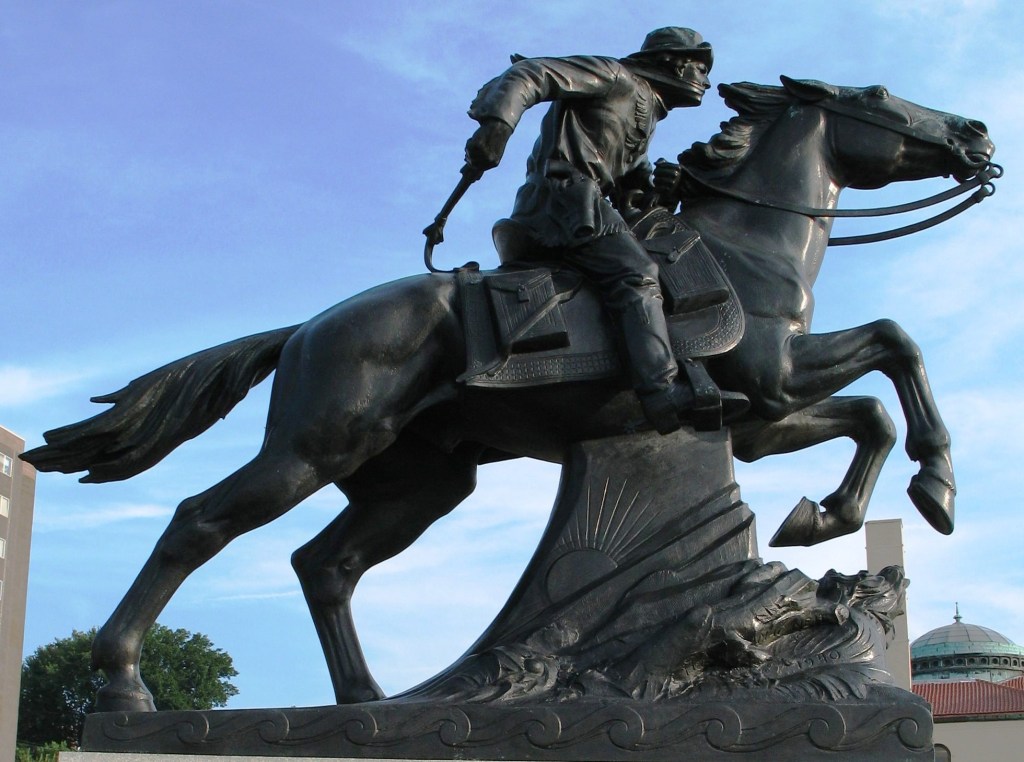
    Pony Express Statue, St, Joseph, Missouri.
    Image Wikimedia Commons

    Here are five questions that are related to today’s date, April 3rd. There is also a bonus question at the end.

    One

    The United States Pony Express, inaugurated in 1860, commenced its first run from one city to another. Can you name both cities in the order of travel of this first run?

    Answer: St. Joseph, Missouri to Sacramento, California.

    The Pony Express was a mail delivery system that operated between St. Joseph, Missouri, and Sacramento, California, from April 1860 to October 1861. Utilising horse-and-rider relays, the service significantly reduced mail delivery time from 24 days to about 10 days. Despite its efficiency, the Pony Express was a costly venture and ceased operations with the completion of the transcontinental telegraph system.


    Two

    On this day the first flight over Mount Everest took place. In what decade did this occur? 

    Answer: 1930s.

    In April 1933, two Westland aircraft piloted by Lord Clydesdale and David McIntyre, with observers Stewart Blacker and Sidney Bonnett, became the first to fly over Mount Everest. The expedition, funded by Lucy, Lady Houston, aimed to promote British aviation and gather information for a planned summit attempt. Despite challenges with oxygen supply and weather conditions, the team successfully completed the flight, capturing valuable photographs of the terrain.


    Three

    The first public handheld mobile (cellular) phone call was made on this day. In what year did this occur and what telecommunications company made the call?

    Answer: 1973; Motorola.

    Motorola’s Martin Cooper made the first handheld mobile phone call in 1973. The prototype, nicknamed ‘the Brick’, weighed 2 kilograms and offered 30 minutes of talk time.


    Four

    In 2007, a conventional-train world record was set by a TGV train. In what country was this record set, and to the nearest 5 mph (5 km/h) what was the record-setting speed achieved?

    Answer: France; 355 mph (575 km/h).

    In 2007, a French TGV train on the LGV Est high-speed line set a new world speed record, achieving 357.2 mph (574.8 km/h) or 159.6 m/s. This was part of Operation V150, a series of high-speed trials that culminated in the record-breaking speed on 3 April 2007. The top speed was reached near the village of Le Chemin, between the Meuse and Champagne-Ardenne TGV stations, where the most favourable profile exists, 12 minutes and 40 seconds after leaving Prény from a standstill, covering 71 km.


    Five

    Sir Robert Walpole is regarded as the first prime minister of Great Britain. In what decade did he assume this office? 

    Answer: 1720s.

    The office of prime minister in Britain emerged in the 18th century, with Sir Robert Walpole recognised as the first de facto prime minister, serving from 1721 to 1742. Walpole’s financial expertise, peaceful foreign policy, and adept management of Parliament established his authority and set the foundation for the modern Cabinet system. However, he faced criticism for bribery and corruption and resigned following a failed war with Spain.


    Ride ‘Em Cowboy

    Today’s title alludes to the riders employed by the Pony Express but it was also the title of a 1942 comedy. What duo starred in it?

    Answer: Abbott and Costello.

    Bud Abbott and Lou Costello star as peanut vendors at a rodeo show who are forced to flee their boss, they hide on a train, and become cowboys on a dude ranch despite lacking experience whatever.

  • Ride ‘Em Cowboy

    Pony Express Statue.
    Image Wikimedia Commons

    Here are five questions that are related to today’s date, April 3rd. There is also a bonus question at the end.

    One

    The United States Pony Express, inaugurated in 1860, commenced its first run from one city to another. Can you name both cities in the order of travel of this first run?


    Two

    On this day the first flight over Mount Everest took place. In what decade did this occur? 


    Three

    The first public handheld mobile (cellular) phone call was made on this day. In what year did this occur and what telecommunications company made the call?


    Four

    In 2007, a conventional-train world record was set by a TGV train. In what country was this record set, and to the nearest 5 mph (5 km/h) what was the record-setting speed achieved?


    Five

    Sir Robert Walpole is regarded as the first prime minister of Great Britain. In what decade did he assume this office? 


    Ride ‘Em Cowboy

    Today’s title alludes to the riders employed by the Pony Express but it was also the title of a 1942 comedy. What duo starred in it?

    Good luck! I’ll post the answers later.


  • Every Picture Tells a Story — Answers

    The answers to my earlier questions are shown below.

    Five pictures and some questions all of which are related to today’s date, March 24th.

    One

    Brandenburg Gate, Berlin.
    Image Wikimedia Commons

    In 1721, a collection of six instrumental works—the composer’s own title was Six Concerts Avec plusieurs Instruments (Six Concertos With several Instruments)—were presented by Johann Sebastian Bach to Christian Ludwig, a marquess and younger brother of King Frederick I of Prussia. Using the above picture as a clue, by what name is this collection commonly known today?

    Answer: Brandenburg Concertos

    Johann Sebastian Bach’s Brandenburg Concertos, now his most popular work, were likely never performed during his lifetime. Bach sent the original manuscript to the Margrave (Marquess) of Brandenburg in 1721, possibly as a job application, but the Margrave never acknowledged the gift. The concertos were forgotten for over a century until they were rediscovered and published in the 19th century.


    Two

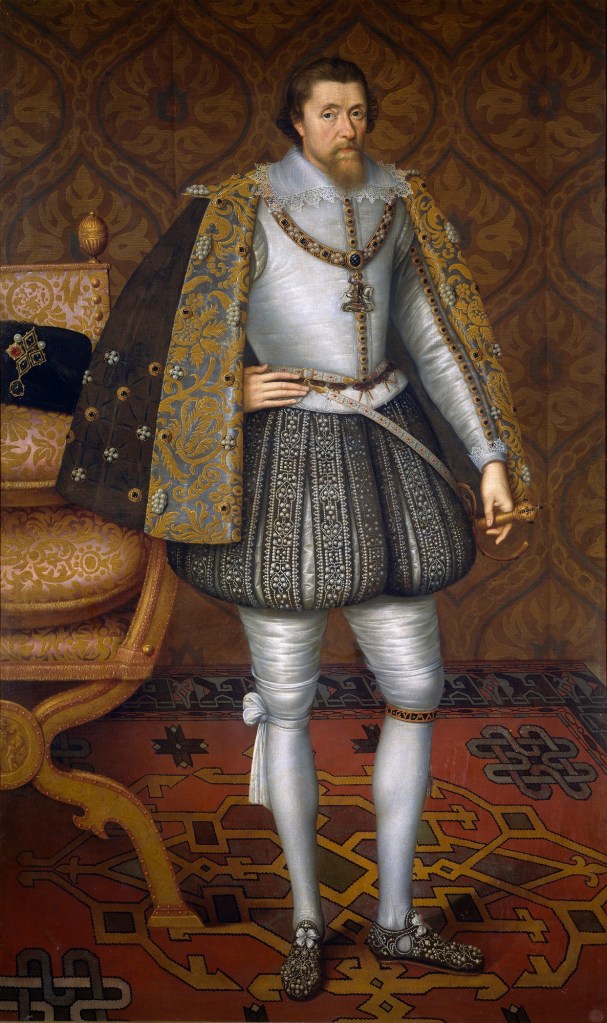
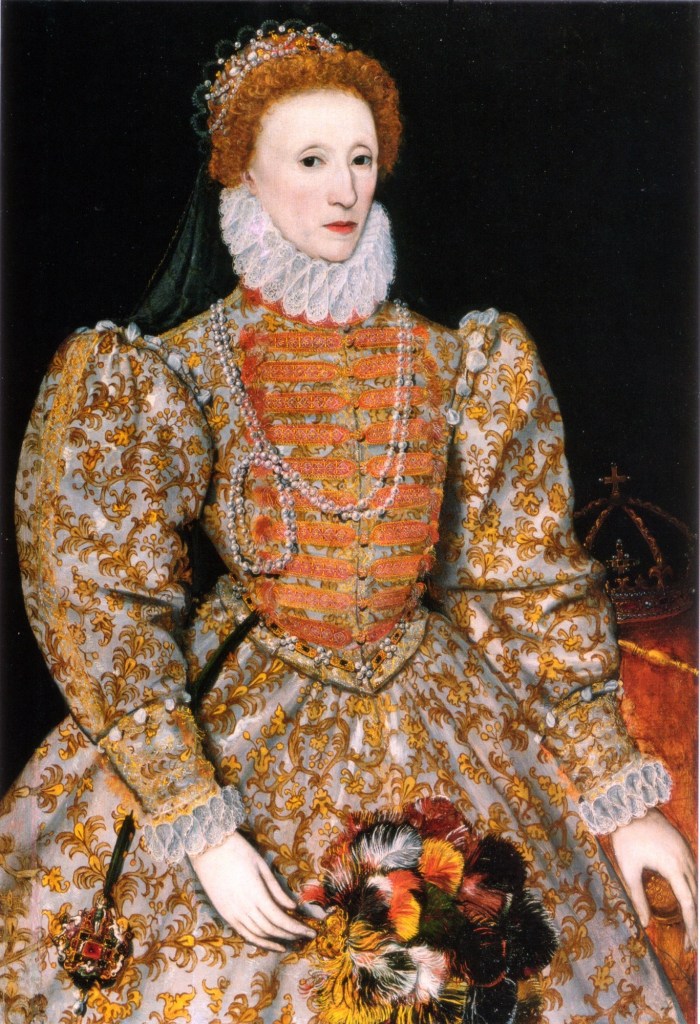
    The male monarch pictured above succeeded the female one on her death in 1603. 

    1. Who is the queen?
    2. Who was the king?
    3. What was the familial relationship between them?

    Answers

    1. Queen Elizabeth I
    2. King James VI and I
    3. Cousins.

    Queen Elizabeth I’s death in 1603 ended her reign of England and Ireland, leading to her cousin King James VI of Scotland’s succession as King of England and Ireland. Now both James VI and I, his reign saw the beginning of the Plantation of Ulster and English colonisation of the Americas.


    Three

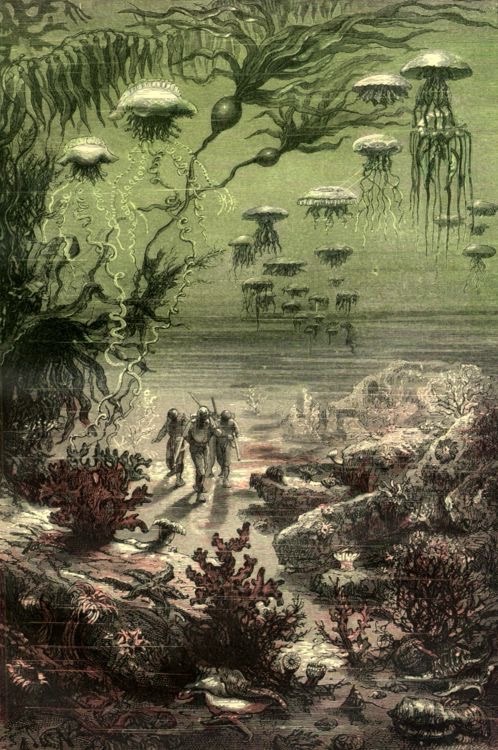
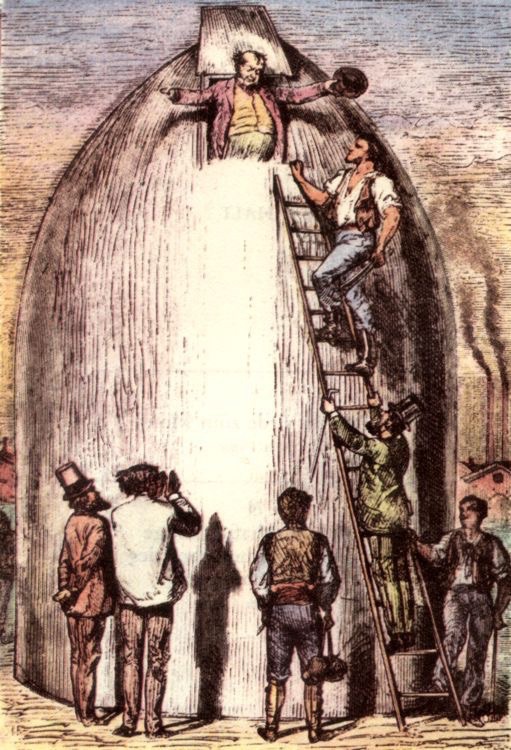
    The two illustrations above are from novels by an author, ‘the father of science fiction’, who died in 1905, aged 77. Since 1979, he has been the second most translated author.

    1. Who was the author?
    2. From what novel is the first illustration?
    3. From what novel is the second illustration?

    Answers

    1. Jules Verne 
    2. Twenty Thousand Leagues Under the Sea
    3. From the Earth to the Moon

    Jules Verne was a French novelist, poet, and playwright, best known for his adventure novels like Journey to the Centre of the Earth and Around the World in Eighty Days His work, often set in the 19th century, incorporated contemporary scientific knowledge and technological advances. Verne is considered an important author in Europe and has been the second most-translated author in the world since 1979.


    Four

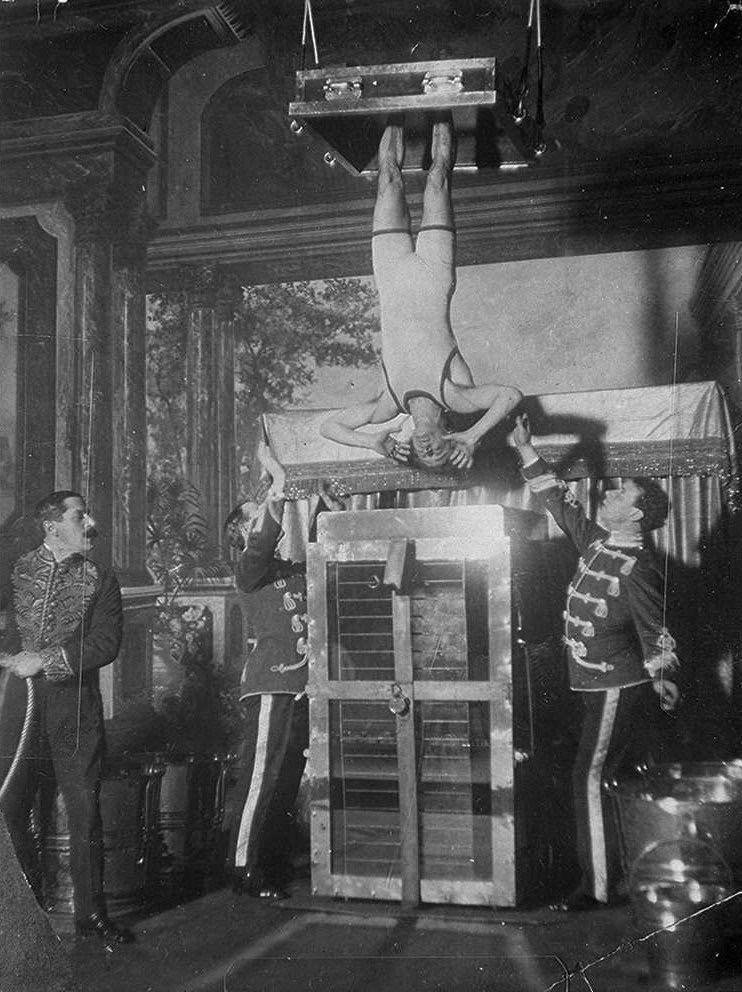
    Harry Houdini, performing The Chinese Water Torture Cell.
    Image Wikimedia Commons

    Erik Weisz, who was born in 1874, is pictured above during one of his acts, although he’s better known by his stage name.

    1. In what European city was he born?
    2. Who is he better known as?

    Answers

    1. Budapest
    2. Harry Houdini.

    Harry Houdini, a Hungarian-American escapologist, gained fame for his daring escape acts, including freeing himself from handcuffs, chains, and straitjackets. He also pursued a crusade against fraudulent spiritualists and was a pioneer aviator.


    Five

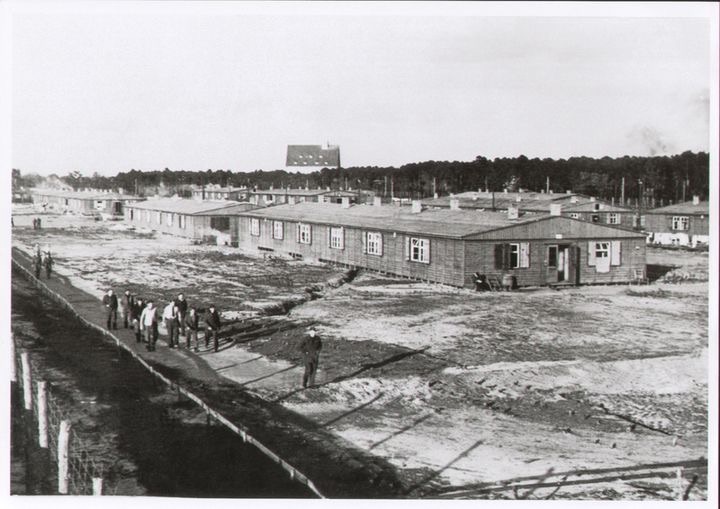
    Stalag Luft III.
    Image Wikimedia Commons

    The prisoner of war camp above was made famous by a 1963 film which features the inmates attempts to leave it on the night of 24 March 1944.

    1. By what name is this POW camp commonly known?
    2. What was the 1963 film?
    3. In what modern country is the site of the camp today?

    Answers

    1. Stalag Luft III
    2. The Great Escape
    3. Poland

    Stalag Luft III (in full Stammlager Luft III; literally meaning Main Camp, Air, III) was a World War II POW camp for Allied airmen, known for escape plots including the Great Escape. Of the 76 men who escaped that night, 73 were recaptured, and fifty of those were executed. The camp, which was liberated in 1945 and is now a museum, was the subject of two feature films about the escape attempts that were made: The Wooden Horse (1950) and The Great Escape (1963).


  • Every Picture Tells a Story

    Five pictures and some questions all of which are related to today’s date, March 24th.

    One

    Image Wikimedia Commons

    In 1721, a collection of six instrumental works—the composer’s own title was Six Concerts Avec plusieurs Instruments (Six Concertos With several Instruments)—were presented by Johann Sebastian Bach to Christian Ludwig, a marquess and younger brother of King Frederick I of Prussia. Using the above picture as a clue, by what name is this collection commonly known today?


    Two

    The male monarch pictured above succeeded the female one on her death in 1603. 

    1. Who is the queen?
    2. Who was the king?
    3. What was the familial relationship between them?

    Three

    The two illustrations above are from novels by an author, ‘the father of science fiction’, who died in 1905, aged 77. Since 1979, he has been the second most translated author.

    1. Who was the author?
    2. From what novel is the first illustration?
    3. From what novel is the second illustration?

    Four

    Eric Weisz.
    Image Wikimedia Commons

    Erik Weisz, who was born in 1874, is pictured above during one of his acts, although he’s better known by his stage name.

    1. In what European city was he born?
    2. Who is he better known as?

    Five

    Image Wikimedia Commons

    The prisoner of war camp above was made famous by a 1963 film which features the inmates attempts to leave it on the night of 24 March 1944. 

    1. By what name is this POW camp commonly known?
    2. What was the 1963 film?
    3. In what modern country is the site of the camp today?

    Good luck! I’ll post the answers later.


  • Mungojerrie and Rumpelteazer — Answers

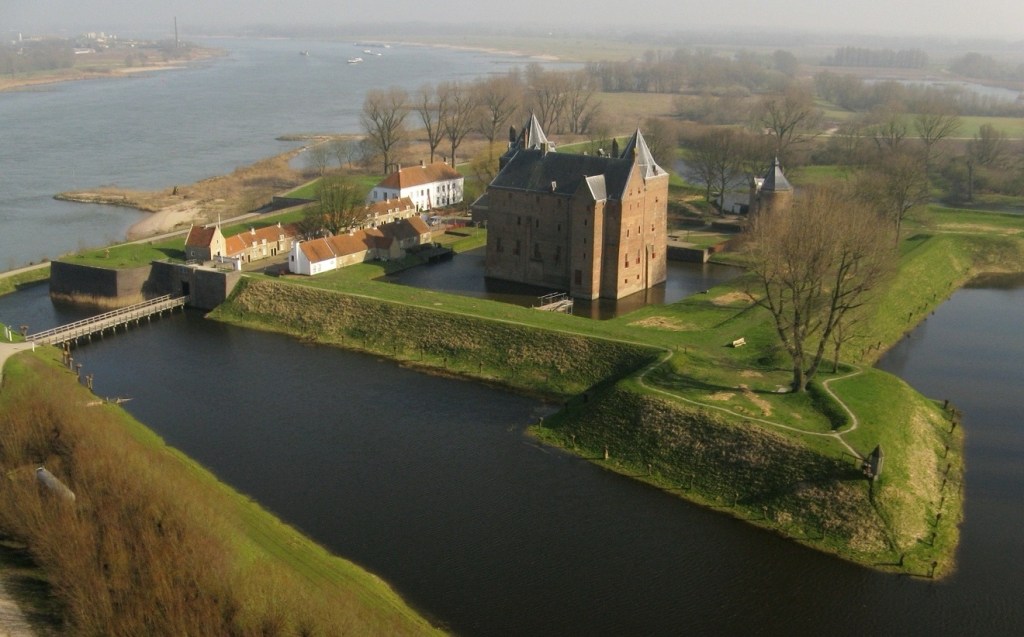
    See question three. Loevestein Castle.
    Image Wikimedia Commons

    These questions are all about today’s date, March 22nd.

    One

    Born in 1948, this composer wrote the music for a musical based on a 1939 T.S. Eliot poetry collection. Three questions…

    1. Who is the composer?
    2. What is the title of the musical? 
    3. What is the name of the poetry collection?

    Answers

    1. Andrew Lloyd Webber;
    2. Cats
    3. Old Possum’s Book of Practical Cats

    Cats, a sung-through musical by Andrew Lloyd Webber based on T.S. Eliot’s poetry, tells the story of the Jellicle cats and their annual ‘Jellicle choice’. Premiering in 1981, it became a commercial success, running for decades in both the West End and Broadway, and sparking the mega-musical phenomenon.


    Two

    Canadian actor William Shatner, who was born on 22 March 1931, first appeared in the role of James T. Kirk in series 1 episode 1 of the original television series Star Trek in September 1966. What was the episode title?

    Answer: The Man Trap.

    William Shatner, born in 1931, is a Canadian actor renowned for his iconic role as Captain Kirk in the Star Trek franchise. He also starred in T.J. HookerRescue 911, and Boston Legal, earning two Emmy Awards for the latter. Beyond acting, Shatner has released several albums and made history in 2021 as the oldest person to fly in space.


    Three

    Hugo Grotius, a Dutch jurist, scholar and diplomat, is often called the ‘father of modern international law’. Today, he is best known for escaping imprisonment in Loevestein Castle, Netherlands, on this date in 1621. His wife devised the escape plan; what was it?

    Answer: Hidden in a wooden chest.

    On this day in 1621, Hugo Grotius was smuggled out of prison in a chest. Religious tensions were high in Holland and Grotius, who favoured tolerance, made many enemies. Arrested and sentenced to life in prison in 1618, his guards grew careless, neglecting to inspect the large book chest he often received. His wife then devised a plan to smuggle him out using the same chest. The plan was successful and the couple later reunited in Paris. Grotius is also remembered for his extensive legal writings which earned him the title ‘father of international law’.


    Four

    Born in 1976 in New Orleans, Louisiana, this actress won an Academy Award in 2006 for her role in Walk the Line. Who is she?

    Answer: Reese Witherspoon.

    Reese Witherspoon, born on March 22, 1976, in New Orleans, Louisiana, is an acclaimed American actress and producer renowned for her roles in romantic comedies and films like Legally Blonde and Walk the Line — for which she won an Academy Award for Best Actress for her portrayal of June Carter. Witherspoon founded Hello Sunshine, a production company dedicated to female-led literary adaptations, and is actively involved in advocacy for children and women.


    Five

    Born in 1641 in Antwerp, Spanish Netherlands (now Belgium), this Flemish Baroque artist became a leading court painter in England. He is also known for having a beard named after him. Who is he? 

    Answer: Anthony van Dyck.

    Sir Anthony van Dyck, a Flemish Baroque artist, revolutionised court portraiture in England, notably painting Charles I. He was a prolific painter of portraits, religious and mythological subjects, and a fine draftsman and etcher. The Van Dyke beard is named after him.


    Mungojerrie and Rumpelteazer

    Today’s post title is the names of two feline characters from T.S. Eliot’s Old Possum’s Book of Practical Cats and the musical Cats.


  • Mungojerrie and Rumpelteazer

    See question three. Loevestein Castle.
    Image Wikimedia Commons

    These questions are all about today’s date, March 22nd.

    One

    Born in 1948, this composer wrote the music for a musical based on a 1939 T.S. Eliot poetry collection. Three questions…

    1. Who is the composer?
    2. What is the title of the musical? 
    3. What is the name of the poetry collection?

    Two

    Canadian actor William Shatner, who was born on 22 March 1931, first appeared in the role of James T. Kirk in series 1 episode 1 of the original television series Star Trek in September 1966. What was the episode title?


    Three

    Hugo Grotius, a Dutch jurist, scholar and diplomat, is often called the ‘father of modern international law’. Today, he is best known for escaping imprisonment in Loevestein Castle, Netherlands, on this date in 1621. His wife devised the escape plan; what was it?


    Four

    Born in 1976 in New Orleans, Louisiana, this actress won an Academy Award in 2006 for her role in Walk the Line. Who is she?


    Five

    Born in 1641 in Antwerp, Spanish Netherlands (now Belgium), this Flemish Baroque artist became a leading court painter in England. He is also known for having a beard named after him. Who is he? 

    Good luck! I’ll post the answers later.


  • Down the Rabbit Hole—Answers

    Here are the answers to my earlier questions.

    All today’s questions relate to the date, March 12th.

    Down the Rabbit Hole.
    Image r/dalle2 on Reddit

    One

    On this day a proposal was submitted to The European Organization for Nuclear Research for an information management system which would subsequently develop in the World Wide Web. 

    1. Who submitted the proposal?
    2. What is The European Organization for Nuclear Research more commonly known as?

    Answers.

    1. Tim Berners-Lee
    2. CERN
      Tim Berners-Lee invented the World Wide Web in 1989 at CERN to facilitate information sharing among scientists. CERN released the web software into the public domain in 1993, enabling its widespread adoption. The acronym CERN relates to the original provisional council which was set up in 1952 — Conseil Européen pour la Recherche Nucléaire (European Council for Nuclear Research).

    Two

    Urban II, elected Pope on this day, initiated the Crusades. In which century did he become Pope?

    Answer: 11th Century.

    Urban II, pope from 1088 to 1099, furthered ecclesiastical reforms, launched the Crusade movement, and strengthened the papacy’s political power.


    Three

    James Taylor was born on this day in 1948. The singer-songwriter’s breakthrough came in 1970 with the single Fire and Rain, which reached number three in the charts. The following year, he had his first number one hit with You’ve Got a Friend. Who wrote these two songs?

    Answers: James Taylor; Carole King.

    Fire and Rain by James Taylor, released in 1970, is about his friend’s suicide and his struggles with addiction and fame. You’ve Got a Friend is a 1971 song by Carole King, recorded for her album Tapestry. James Taylor’s version, featuring Joni Mitchell, reached number one in the United States on the Billboard Hot 100.


    Four

    André Le Nôtre, was born on this day, designed a 2,000-acre (800 ha) formal garden that now forms part of a UNESCO World Heritage site. Which one?

    Answer: Palace and Park of Versailles.

    The Palace and Park of Versailles, a UNESCO World Heritage Site, served as the residence and seat of power for the French monarchy from Louis XIV to Louis XVI. The site, a masterpiece of French art and architecture, includes the Palace, Trianon châteaux, and gardens, all designed by renowned artists and architects. Despite the loss of its original function during the Revolution, the site’s integrity and authenticity have been preserved through conservation efforts and the reconstruction of interior spaces and furnishings.


    Five

    An English author who died on this day in 2015 created characters named Cheery Littlebottom, a dwarf and Detritus a troll who are both sergeants in a city’s police force. Who is the author?

    Answer: Terry Pratchett.

    The Ankh-Morpork City Watch, founded in 1561 UC, evolved from a small, ineffective force to a modern, multi-ethnic police department. Under the leadership of Sam Vimes and Carrot Ironfoundersson, the Watch was revitalised, merging the Day Watch, Night Watch and Palace Guard. The Watch now serves as a powerful deterrent to crime, with a focus on public service and a strong presence in the city. Cheery, the first female dwarf in the Ankh-Morpork City Watch, revolutionises dwarfish culture by openly identifying as female. Detritus, a troll, joined the Ankh-Morpork City Watch under Lord Vetinari’s hiring procedures. Despite being initially considered stupid, he became a natural sergeant, aided by a cooling helmet that improved his intelligence. He is known for his destructive crossbow, the Piecemaker, and his overprotective nature, earning him the respect of Commander Vimes.


    Down the Rabbit Hole

    In Lewis Carroll’s Alice’s Adventures in Wonderland, Alice falls into a rabbit hole and finds herself in Wonderland.  Today the phrase ‘down the rabbit hole’ is commonly used to describe endlessly clicking through online links or items.  As Collins Dictionary puts it, ‘The internet is a great research tool – but be warned you might end up down a rabbit hole.’


  • Down the Rabbit Hole

    All today’s questions relate to the date, March 12th.

    Down the Rabbit Hole.
    Image r/dalle2 on Reddit

    One

    On this day a proposal was submitted to The European Organization for Nuclear Research for an information management system which would subsequently develop in the World Wide Web. 


    Two

    Urban II, elected Pope on this day, initiated the Crusades. In which century did he become Pope?


    Three

    James Taylor was born on this day in 1948. The singer-songwriter’s breakthrough came in 1970 with the single Fire and Rain, which reached number three in the charts. The following year, he had his first number one hit with You’ve Got a Friend. Who wrote these two songs?


    Four

    André Le Nôtre, was born on this day, designed a 2,000-acre (800 ha) formal garden that now forms part of a UNESCO World Heritage site. Which one?


    Five

    An English author who died on this day in 2015 created characters named Cheery Littlebottom, a dwarf and Detritus a troll who are both sergeants in a city’s police force. Who is the author?

    Good luck! I’ll post the answers later.


  • Impressionable—Answers

    Here are the answers to my questions which were posted earlier.

    All of these questions relate to today’s date, February 25th.

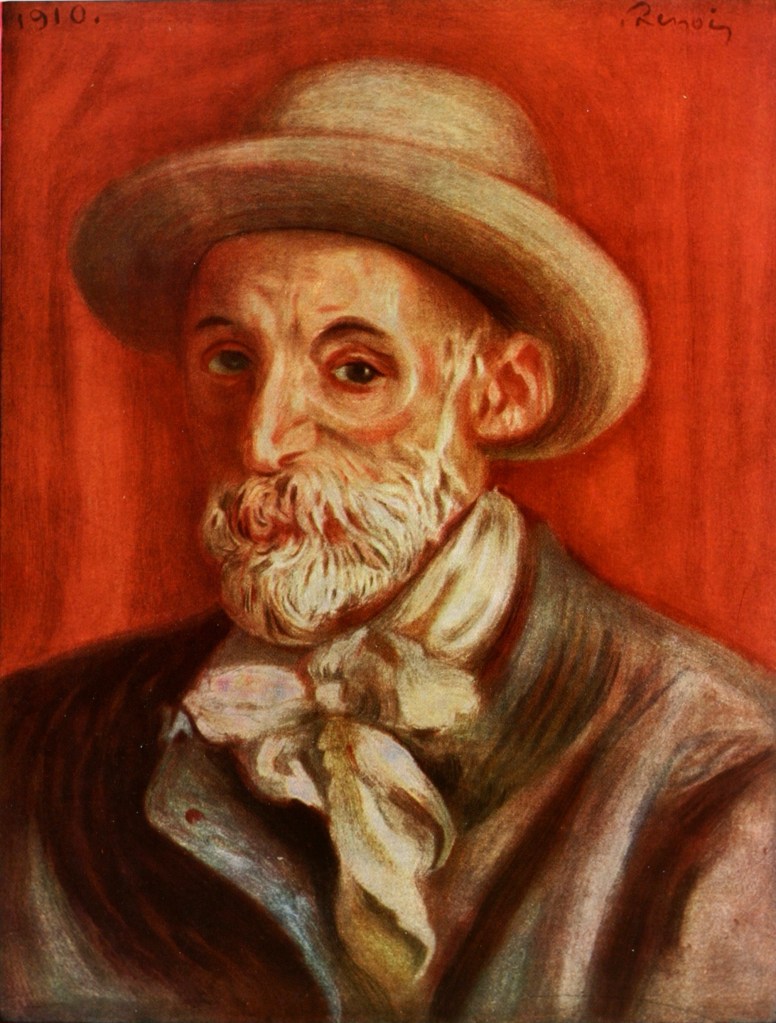
    Pierre-Auguste Renoir, self-portrait, 1910.
    Image Wikimedia Commons

    One

    The painter of the above self-portrait was born in Limoges, France, on 25 February 1841. He became an early Impressionist but later adopted a more traditional style. Who is he?

    Answer: Pierre-Auguste Renoir.

    Pierre-Auguste Renoir (1841-1919) was a French artist and leading Impressionist painter. He later developed a more disciplined technique, focusing on portraits and figure paintings, particularly of women.


    Two

    This author, best known by a pen name but also using another — Joseph Kell, was born John Burgess Wilson on this day in 1917 in an inner-city suburb of Manchester, England. After wartime service, he left the British army in 1946 with the rank of sergeant-major. His most famous work, a dystopian satire published in 1962, was adapted into a controversial film in 1971. What is his best-known pen name?

    Answer: Anthony Burgess.

    Anthony Burgess (1917-1993) was an English novelist, critic, and man of letters renowned for his fictional explorations of modern dilemmas. He wrote over 50 books, including novels, literary criticism, biographies, and musical compositions. Burgess’s works often combined linguistic ingenuity, witty erudition, and sharp social satire. He is best known for his dystopian satire A Clockwork Orange and was also a versatile linguist and literary critic, writing numerous novels, librettos and screenplays.


    Three

    In 1986, after claiming victory in a fraudulent election which led to a military coup and revolution, President Ferdinand Marcos fled his country. Of what country was Marcos president, and which opposition leader replaced him as president?

    Answers: Philippines; Corazon Aquino.

    Ferdinand Marcos fled the Philippines on 25 February 1986, seeking refuge in Hawaii with his family and a vast fortune, in part consisting of 22 crates of cash valued at $717 million, 300 crates of assorted jewellery, $4 million worth of unset precious gems, 65 Seiko and Cartier watches, a 12 by 4 ft box full of pearls, a 3 ft solid gold statue covered in diamonds and other precious stones, $200,000 in gold bullion, nearly $1 million in Philippine pesos, and deposit slips to banks in the United States, Switzerland, and the Cayman Islands worth $124 million. While enjoying a lavish lifestyle, Filipinos back home grappled with the economic consequences of his rule. Amongst other things, Imelda Marcos, the ousted First Lady, was found to have a collection of 2,700 pairs of shoes. The revolution that ousted Marcos was fuelled by widespread discontent, with protests erupting not only in Manila but also in the provinces and islands. Source: Wikipedia.


    Four

    Born in 1943, this musician was a prominent figure in the music world during the swinging sixties. He was originally part of a band where he wrote hits like Here Comes the Sun and While My Guitar Gently Weeps. His sitar teacher was singer Norah Jones’ father. He later enjoyed a successful solo career. Who was he and who taught him to play the sitar?

    Answers: George Harrison; Ravi Shankar.

    George Harrison, lead guitarist of the Beatles, was known for his significant contributions to the band’s musical direction and his successful solo career. He incorporated non-Western musical influences, particularly Indian classical music, into the Beatles’ sound and later established himself as a solo artist with hits like My Sweet Lord. Harrison was also a prolific music and film producer, co-founding HandMade Films and producing acts for Apple Records. He produced the Monty Python’s troupe’s comedy film The Life of Brian (1979).


    Five

    In 1570, Pope Pius V excommunicated the English monarch from the Roman Catholic Church. Who was this monarch?

    Answer: Elizabeth I.

    Elizabeth I, the last Tudor monarch, ruled England and Ireland from 1558 to 1603. Her reign, marked by religious tolerance and cautious foreign policy, saw the establishment of the Church of England and the defeat of the Spanish Armada. Despite numerous courtships, Elizabeth remained unmarried, earning her the moniker ‘Virgin Queen’.


  • Impressionable

    All of these questions relate to today’s date, February 25th.

    Question One. Self-portrait, 1910.
    Image Wikimedia Commons

    One

    The painter of the above self-portrait was born in Limoges, France, on 25 February 1841. He became an early Impressionist but later adopted a more traditional style. Who is he?


    Two

    This author, best known by a pen name but also using another — Joseph Kell, was born John Burgess Wilson on this day in 1917 in an inner-city suburb of Manchester, England. After wartime service, he left the British army in 1946 with the rank of sergeant-major. His most famous work, a dystopian satire published in 1962, was adapted into a controversial film in 1971. What is his best-known pen name?


    Three

    In 1986, after claiming victory in a fraudulent election which led to a military coup and revolution, President Ferdinand Marcos fled his country. Of what country was Marcos president, and which opposition leader replaced him as president?


    Four

    Born in 1943, this musician was a prominent figure in the music world during the swinging sixties. He was originally part of a band where he wrote hits like Here Comes the Sun and While My Guitar Gently Weeps. His sitar teacher was singer Norah Jones’ father. He later enjoyed a successful solo career. Who was he and who taught him to play the sitar?

    Five

    In 1570, Pope Pius V excommunicated the English monarch from the Roman Catholic Church. Who was this monarch?

    Good luck! I’ll post the answers later.