
Here are the answers to my earlier questions.
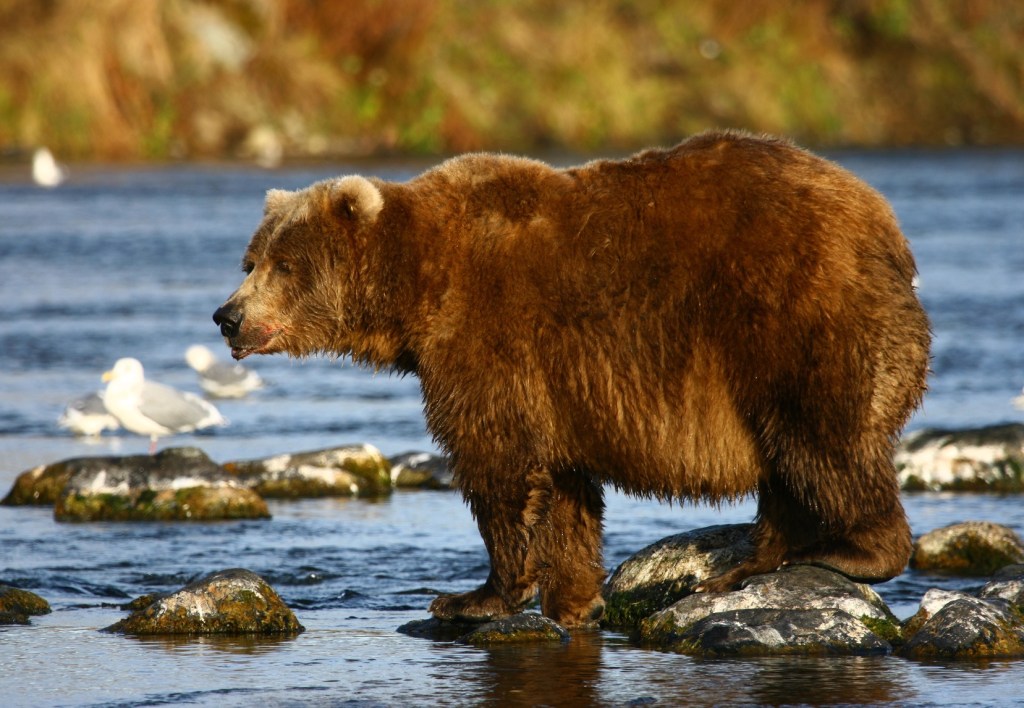
Ursus arctos middendorffi aka Kodiak Bear.
Image Wildlife Trip.
The first date-related question sets a theme for the subsequent questions and/or answers.
One
Napoleon Bonaparte was strongly linked to three islands: (i) where he was born on 15 August 1769; (ii) where he was exiled in 1814 and subsequently escaped; and (iii) where he was exiled in 1815 and subsequently died. What are these islands and in what seas or oceans are they found?
Answers: (i) Corsica, Mediterranean Sea; (ii) Elba, Mediterranean Sea and (iii) Saint Helena, South Atlantic Ocean (or Atlantic Ocean).
Corsica is a French island in the Mediterranean Sea, known for its mountainous terrain and historical ties to Italy it has a population of 355,528. Napoleon was born in Ajaccio, Corsica in 1769. Elba is a Mediterranean island in Tuscany, Italy, known for being the site of Napoleon’s first exile from 1814 to 1815. It is the largest island in the Tuscan Archipelago and the third largest in Italy. Saint Helena is a remote volcanic island in the South Atlantic Ocean, part of a British overseas territory. It was uninhabited until the 16th century and served as a crucial stopover for ships between Europe and Asia before the Suez Canal opened. The island is also known for being Napoleon Bonaparte’s second place of exile from 1815 until his death in 1821.
Two
Ursus arctos middendorffi, the largest brown bear species, has a common name derived from an archipelago; which archipelago is it, and in what sea or ocean is it located?
Answer: Kodiak (Archipelago); North Pacific Ocean (or Pacific Ocean).
The Kodiak bear inhabits the Kodiak Archipelago and is among the largest bears, averaging 1.5 to 2 times larger than other brown bears. Human interactions include hunting and protection efforts; the Alaska Department of Fish and Game and United States Fish and Wildlife Service monitor the population.
Three
Puerto Ayora, also called Santa Cruz, is the largest town in which island group, and these islands are part of which country?
Answers: Galápagos Islands; Ecuador.
Puerto Ayora, the most populous Galápagos town with 12,696 people, sits on Santa Cruz Island’s southern shore as the seat of Santa Cruz Canton and honours former president, Isidro Ayora.
Four
Leaving in about 982 from Snæfellsjökull, one of the westernmost points of …, Erik and a small group of men reached land on the opposite shore of …, a land that had been skirted by the Norwegian Gunnbjörn Ulfsson earlier in the 10th century.
— Encyclopædia Britannica
The above quote from Encyclopædia Britannica has had two island countries removed from it. What are these two countries?
Answers: Iceland; Greenland.
Exiled from Iceland around 980, Erik explored and named Greenland, settling at Brattahlid. Returning in 985 or 986, he led 14 ships to Eystribygd, Norse Greenland, establishing a colony of up to 3,000 that lasted until the mid-15th century.
Five
What is the second-largest Canadian island, and in what ocean is it found?
Answers; Victoria Island; Arctic Ocean.
Victoria Island, Canada’s second-largest landmass, spans Nunavut and the Northwest Territories, supporting 2,168 residents in Cambridge Bay and Ulukhaktok. It lies off the northern coast within the Arctic Ocean, east of the Beaufort Sea. Known in Inuinnaqtun as Kitlineq, the island was named for Queen Victoria and charted by Europeans beginning in 1826.


Leave a comment