Water Under the Bridge

All of these questions relate to today’s date, November 21st.

Verrazano-Narrows Bridge at night, 2012.
Image Wikipedia

One

Which two boroughs of New York City were linked by the Verrazzano-Narrows Bridge, pictured above, upon its opening on 21 November 1964?


Two

The first crewed hot air balloon flight took place on this day in 1783 in a balloon constructed by the Montgolfier brothers. Which of contemporary Paris’s over 400 public parks was the site of this historic flight?


Three

On this date, Danish astronomer Ole Rømer presented the first quantitative measurements of the speed of light. Which century was this?


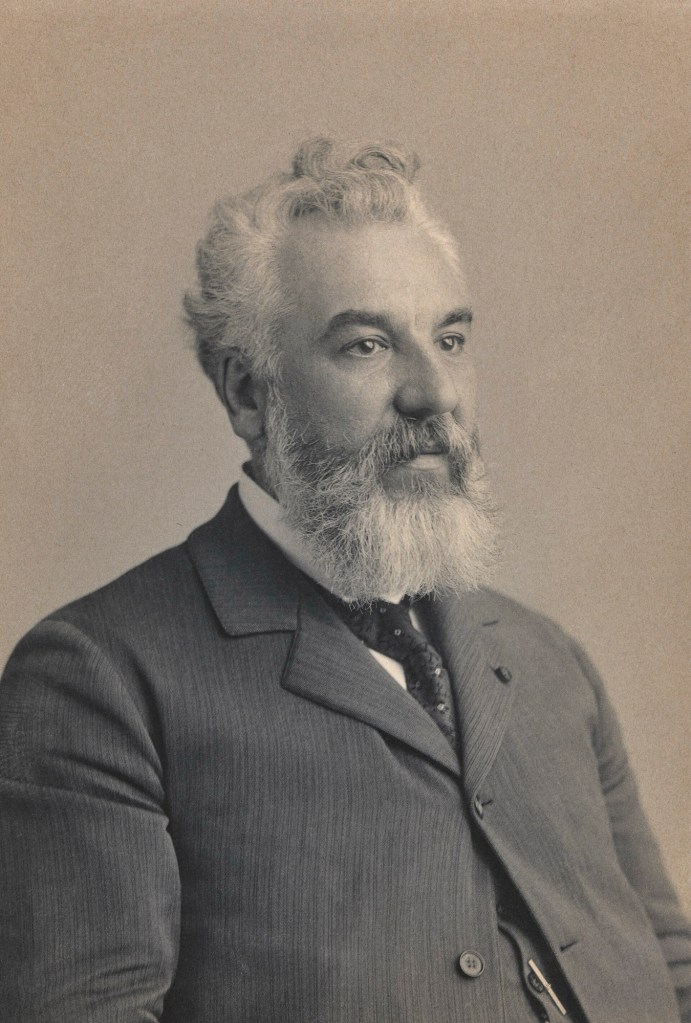
See question four. Artist with one of his works featuring his recurring motif, a bowler hat.
Image Encyclopædia Britannica

Four

Who is this Belgian artist, born on 21 November 1898 and pictured above with one of his works?


Five

Frankenstein, the classic horror film, was released in the US today in 1931. Who played the monster in this film?

Good luck! I’ll post the answers later today.

Every Man for Himself—Answers

Here are the answers to the questions I posted earlier.

Today’s first question draws on a real-life event from November 20th, which was later adapted into a work of fiction. The rest of the questions also blend fact and fiction to varying degrees.

Essex.
Image The Collector

One

The 20 November 1820 ramming and sinking of the American ship Essex inspired a climatic scene in what 1851 epic maritime novel?

Answer: Moby Dick

The Essex, an American whaling ship, was rammed by a sperm whale on November 20, 1820, and subsequently sank. Despite initial survival for all 20 crewmen only eight were rescued after a difficult journey that ultimately led to cannibalism. This sinking inspired the climactic scene in Herman Melville’s Moby Dick (1851).


Two

The series of novels first published in 1980, written by Robert, and the subsequent films first released in 2002 starring Matthew, may have taken their title character’s surname from a 19th-century psychology case involving a patient named Ansel who likely suffered from reversible amnesia.

Answer: Bourne

Robert Ludlum’s character Jason Bourne who first appeared in The Bourne Identity which was published in 1980 may have been named after Ansel Bourne.
A.J. Brown, a resident of Norristown, Pennsylvania, woke up in 1887 with no memory of his identity. Physicians diagnosed him with amnesia, but it was later revealed that he was actually Ansel Bourne, a carpenter and pastor from Coventry, Rhode Island, who had no recollection of the past two months. During further study of him he was put under hypnosis where he could be induced to assume the personality of either Bourne or Brown, and neither personality had any knowledge of the other.


Three

The Terror, a 2007 novel by Dan Simmons is a fictionalised account of what failed 1845 expedition of Arctic exploration?

Answer: Franklin Expedition

Franklin’s lost expedition, led by Sir John Franklin, aimed to traverse the Northwest Passage and record magnetic data. The expedition ended in disaster when both ships—HMS Erebus and HMS Terror—became icebound, leading to the abandonment of the vessels and the disappearance of the crew.


RMS Titanic.
Image Wikipedia

Four

James Cameron’s 1997 film Titanic depicts the real-life disaster that occurred in what year? Secondly, Titanic sank approximately 370 miles (600 kilometers) southeast of where?

Answer: 1912; Newfoundland, Canada

Cameron’s film is a mix of fictional and historical fact about the RMS Titanic, a British luxury passenger liner, which sank in the early hours of 15 April 1912 southeast of Newfoundland, Canada. See RMS Titanic below for further information.


Five

Every Man for Himself, a 1996 novel which is also set on the Titanic, was a Booker Prize nominee. Who wrote this novel?

Secondly, although not explained in this book or indeed in the film mentioned at question four above, what does the term RMS mean in the name, RMS Titanic?

Answer: Beryl Bainbridge; Royal Mail Ship (RMS)

Like the film above, Every Man for Himself is a combination of fiction and history. It is narrated by Morgan over a period of four days up to the sinking.


RMS Titanic

The RMS Titanic, a British luxury passenger liner, which sank in the early hours of 15 April 1912 during its maiden voyage from Southampton to New York City. About two-and-a-half hours after hitting an iceberg, the ship sank approximately 370 miles (600 km) southeast of Newfoundland in approximately 12,500 feet (3,800 m) of water, tragically resulting in the loss of around 1,500 lives. Despite its advanced safety features and luxurious first-class accommodations, the Titanic only carried enough lifeboats for half its passengers. This catastrophe prompted changes in maritime safety regulations and left an enduring legacy in popular culture.

Every Man for Himself

Today’s first question draws on a real-life event from November 20th, which was later adapted into a work of fiction. The rest of the questions also blend fact and fiction to varying degrees.

Essex.
Image The Collector

One

The 20 November 1820 ramming and sinking of the American ship Essex inspired a climatic scene in what 1851 epic maritime novel?


Two

The series of novels first published in 1980, written by Robert, and the subsequent films first released in 2002 starring Matthew, may have taken their title character’s surname from a 19th-century psychology case involving a patient named Ansel who likely suffered from reversible amnesia.


Three

The Terror, a 2007 novel by Dan Simmons is a fictionalised account of what failed 1845 expedition of Arctic exploration?


RMS Titanic.
Image Wikipedia

Four

James Cameron’s 1997 film Titanic depicts the real-life disaster that occurred in what year?

Secondly, Titanic sank approximately 370 miles (600 kilometers) southeast of where?


Five

Every Man for Himself, a 1996 novel which is also set on the Titanic, was a Booker Prize nominee. Who wrote this novel?

Secondly, although not explained in this book or indeed in the film mentioned at question four above, what does the term RMS mean in the ships name, RMS Titanic?


Good luck! I’ll post the answers later.

Now You See It, Now You Don’t—Answers

Here are the answers to the questions I posted earlier.

Today’s Question 1 concerns the revocation of an award on this date, November 19th. The subsequent questions explore a similar theme, focusing on disqualification, revocation or stripping of awards, medals and other honours.

Grammy Award.
Image Recording Academy

One

Which pop duo had their 1989 Grammy Award for Best New Artist revoked on 19 November 1990 after it was revealed they had not actually sung on their album?

Answer: Milli Vanilli

This remains the only time in Grammy history that an award has been formally withdrawn.


Two

Which professional cyclist had all of his Tour de France titles stripped after a major doping investigation, and how many titles were involved?

Answer: Lance Armstrong; seven (1999–2005)

Armstrong was stripped of seven titles (1999–2005). After his disqualification, race organisers chose not to award his vacated titles to anyone else.


Three

In 2024, the arrest and subsequent conviction of a multi-BAFTA award winner forced the British Academy of Film and Television Arts (BAFTA) to amend its procedures to include the power to retrospectively strip future award winners should they be convicted of a crime. Whose arrest and conviction led to this change?

Answer: Huw Edwards

Huw Edwards, a Welsh news presenter, was the lead presenter of BBC News at Ten from 2003 to 2023. He resigned from the BBC in 2024 after pleading guilty to child pornography offences.


Ben Johnson, 2017.
Image Wikipedia

Four

Which Canadian sprinter was stripped of his 1988 Olympic gold medal in the 100 metres after testing positive for steroids?

Answer: Ben Johnson.

His world-record-breaking time of 9.79 seconds was erased, and the gold medal was reassigned to American runner Carl Lewis.


Five

What event in 1966 saw the competitors who finished in the first four places disqualified because of a single filament bulb?

Answer: Monte Carlo Rally

In 1966, the Monte Carlo Rally was marred by controversy when the winning Minis were disqualified for using an illegal lighting system with non-standard bulbs. Despite the disqualification, the incident generated significant publicity for the Minis and the rally, ultimately leading to a Mini victory in 1967. The event highlighted the growing professionalism of rallying and the complexities of navigating evolving regulations.

Now You See It, Now You Don’t

Today’s Question 1 concerns the revocation of an award on this date, November 19th. The subsequent questions explore a similar theme, focusing on disqualification, revocation or stripping of awards, medals and other honours.

Grammy Award.
Image Recording Academy

One

Which pop duo had their 1989 Grammy Award for Best New Artist revoked on 19 November 1990 after it was revealed they had not actually sung on their album?


Two

Which professional cyclist had all of his Tour de France titles stripped after a major doping investigation, and how many titles were involved?


Three

In 2024, the arrest and subsequent conviction of a multi-BAFTA award winner forced the British Academy of Film and Television Arts (BAFTA) to amend its procedures to include the power to retrospectively strip future award winners should they be convicted of a crime. Whose arrest and conviction led to this change?


Four

Which Canadian sprinter was stripped of his 1988 Olympic gold medal in the 100 metres after testing positive for steroids?


Five

What event in 1966 saw the competitors who finished in the first four places disqualified because of a single filament bulb?

Good luck! I’ll post the answers later.

And the Winner is—Answers

Here are the answers to the questions posted earlier.

Today’s first question relates to today, November 18th and the subsequent questions follow a theme established by it.

Ben-Hur film poster.
Image Wikipedia

One

On 18 November 1959, Ben-Hur had its world premiere. It is quite well known that the film went on to win an unprecedented eleven Academy Awards but how many was it actually nominated for?

Answer: Twelve

Ben-Hur missed out only on Best Adapted Screenplay at the 32nd Academy Awards but still came away with eleven Oscars, surpassing the previous record of nine set by Gigi. Its tally of eleven wins was later equalled by Titanic at the 70th Awards and The Lord of the Rings: The Return of the King at the 76th.


Each of the remaining questions have some connection to the Oscars.

Two

The first actor to receive two consecutive Academy Awards for Best Actor was whom?

Answer: Spencer Tracy

Spencer Tracy won the Best Actor Oscar for his performances in Captains Courageous (1937) and Boys Town (1938), making him the first to win two consecutive Academy Awards for Best Actor. Tracy was an American actor known for his natural performing style and versatility. He starred in 75 films, including nine with Katharine Hepburn. Despite personal struggles, including alcoholism and a troubled marriage, Tracy remained a prominent figure in Hollywood until his death in 1967.


Three

This Scottish actor portrayed various roles including a British MI6 agent seven times between 1962 and 1983. He also played an immortal named Ramirez in 1986, the archaeologist father of an archaeologist in 1989 and the captain of the Soviet Union’s latest nuclear-powered submarine in 1990. His performance as Jimmy in a 1987 film directed by Brian De Palma earned him an Academy Award for Best Supporting Actor. Who is the actor, what was the 1987 film and what was the full name of his character in that film?

Answer: Sean Connery; The Untouchables and Jimmy Malone

Sean Connery was a Scottish actor best known for his portrayal of James Bond in seven films. He also starred in numerous other films, including collaborations with Alfred Hitchcock and John Huston, and received numerous accolades, including an Academy Award and a knighthood.


Julie Andrews as Mary Poppins.
Image Wikipedia

Four

Walt Disney visited Broadway to watch an actress perform as Queen Guinevere in Camelot. Impressed, he offered her the lead role in her first film. Released in 1964, the film earned her an Oscar for Best Actress. Who was the actress and what was her title role?

Answer: Julie Andrews

Dame Julie Andrews, born Julia Elizabeth Wells, is an English actress, singer and author. She is a highly acclaimed performer, having won numerous awards including an Academy Award, three Emmy Awards and seven Golden Globe Awards. Andrews is known for her roles in films like Mary Poppins, The Sound of Music and The Princess Diaries, as well as her collaborations with Carol Burnett and her work as an author.


Five

An actor who portrayed Obi-Wan Kenobi in Star Wars also starred in two films directed by the same person in 1957 and 1962. In the first, he played Colonel Richardson, the British Commander, and won an Academy Award for his performance. In the second, he portrayed Prince Faisal. Who was the actor and what were the titles of the other two films?

Answer: Alec Guinness; The Bridge on the River Kwai (1957) and Lawrence of Arabia (1962)

Alec Guinness, an English actor knighted for his contributions to the arts, starred in numerous films including six Ealing comedies and collaborations with David Lean. He won an Academy Award for his role in The Bridge on the River Kwai. Guinness also portrayed Obi-Wan Kenobi in the original Star Wars trilogy and George Smiley in the BBC television adaptations of John le Carré’s Tinker, Tailor, Soldier, Spy (1979) and Smiley’s People (1982).


And the Winner is

Today’s first question relates to today, November 18th and the subsequent questions follow a theme established by it.

Ben-Hur film poster.
Image Wikipedia

One

On 18 November 1959, Ben-Hur had its world premiere. It is quite well known that the film went on to win an unprecedented eleven Academy Awards but how many was it actually nominated for?


Each of the remaining questions have some connection to the Oscars.

Two

The first actor to receive two consecutive Academy Awards for Best Actor was whom?


Three

This Scottish actor portrayed various roles including a British MI6 agent seven times between 1962 and 1983. He also played an immortal named Ramirez in 1986, the archaeologist father of an archaeologist in 1989 and the captain of the Soviet Union’s latest nuclear-powered submarine in 1990. His performance as Jimmy in a 1987 film directed by Brian De Palma earned him an Academy Award for Best Supporting Actor. Who is the actor, what was the 1987 film and what was the full name of his character in that film?


Four

Walt Disney visited Broadway to watch an actress perform as Queen Guinevere in Camelot. Impressed, he offered her the lead role in her first film. Released in 1964, the film earned her an Oscar for Best Actress. Who was the actress and what was her title role?


Five

An actor who portrayed Obi-Wan Kenobi in Star Wars also starred in two films directed by the same person in 1957 and 1962. In the first, he played Colonel Richardson, the British Commander, and won an Academy Award for his performance. In the second, he portrayed Prince Faisal. Who was the actor and what were the titles of the other two films?


Lies, You can fool some of the people all of the time, and all of the people some of the time, but you can not fool all of the people all of the time. (Abraham Lincoln)—Answers

Here are the answers to the questions posted earlier.

The first question relates to today, November 17th.  The others follow a theme connected to it.

Richard Nixon, President of the United States.
Image Wikipedia

One

On November 17th, sometime in the 20th century, which US President declared, “I am not a crook”?

Answer: Richard Nixon

On 17 November 1973, during a televised press conference at the Contemporary Resort in Walt Disney World, Florida, Richard Nixon famously declared ‘I am not a crook’. This response came amid questions about his personal finances as the Watergate scandal unfolded.


Two

In Carlo Collodi’s The Adventures of Pinocchio, what physical feature of the wooden puppet famously grows longer whenever he tells a lie?

Answer: His nose

In Collodi’s original 1883 novel, Pinocchio is far more mischievous than in the later Disney adaptation, and his nose grows several times—not just once—making it a recurring symbol of the moral consequences of dishonesty.


The Shepherd Boy and the Wolf. An illustration of The Shepherd Boy and the Wolf (also known as The Boy Who Cried Wolf) by Milo Winter, from The Aesop for Children, published by Rand McNally & Company, Chicago, 1919.
Image Encyclopædia Britannica

Three

Which ancient Greek is traditionally credited with moral tales such as The Boy Who Cried Wolf, a story warning of the consequences of repeated lying?

Answer: Aesop

Although Aesop is believed to have lived in ancient Greece around the 6th century BC, there is no firm historical record of his life; many scholars think ‘Aesop’ may represent a tradition of oral storytelling rather than a single individual.


Four

In which Shakespeare play does the villain Iago manipulate Othello through lies and insinuations, ultimately leading to tragedy?

Answer: Othello

Iago actually speaks more lines than Othello, making him one of Shakespeare’s most verbally dominant villains—a fitting trait for a character whose destructive power lies almost entirely in persuasion and deceit.


Five

What 18th-century literary character, created by Rudolf Erich Raspe, is famous for outrageous tall tales such as riding on a cannonball and escaping a swamp by pulling himself up by his own hair?

Answer: Baron Munchausen

The fictional Baron was loosely inspired by a real nobleman, Hieronymus Karl Friedrich von Münchhausen, who entertained guests with wildly exaggerated stories about his life—though nowhere near as fantastical as those in the book.


Lies, You can fool some of the people all of the time, and all of the people some of the time, but you can not fool all of the people all of the time. (Abraham Lincoln)

The first question relates to today, November 17th.  The others follow a theme connected to it.

See question 3.
Image Encyclopædia Britannica

One

On November 17th, sometime in the 20th century, which US President declared, “I am not a crook”?


Two

In Carlo Collodi’s The Adventures of Pinocchio, what physical feature of the wooden puppet famously grows longer whenever he tells a lie?


Three

Which ancient Greek is traditionally credited with moral tales such as The Boy Who Cried Wolf, a story warning of the consequences of repeated lying?


Four

In which Shakespeare play does the villain Iago manipulate Othello through lies and insinuations, ultimately leading to tragedy?


Five

What 18th-century literary character, created by Rudolf Erich Raspe, is famous for outrageous tall tales such as riding on a cannonball and escaping a swamp by pulling himself up by his own hair?

Good luck! I’ll post the answers later.

The Smoke That Thunders—Answers

Here are the answers to the earlier posed questions.

All of these questions are related to today, November 16th.

José Saramago, 2001.
Image Carlos Alvarez/Getty Images via Encyclopædia Britannica

One

José Saramago, the novelist pictured above, won the Nobel Prize for Literature for his extensive body of work including O Evangelho Segundo Jesus Cristo (The Gospel According to Jesus Christ). What nationality was he?

Answer: Portuguese

Born in 1922, Portuguese novelist José Saramago, a Nobel Prize winner, grew up in poverty. He worked various jobs including mechanic journalist and translator before achieving international fame with novels like Memorial do convento (English title Baltasar and Blimunda) and O evangelho segundo Jesus Cristo (The Gospel According to Jesus Christ). His subversive perspectives on historic events and critique of institutions like the Catholic Church, often set against historical backdrops, earned him both acclaim and controversy. This led to his self-imposed exile in the Canary Islands after the Portuguese government censored his work.


Two

On this day, the Trans-Alaska Pipeline Authorization Act was signed authorising the construction of a pipeline across Alaska. Which US President signed it and what communities are at either end?

Answer: Richard Nixon; Prudhoe Bay and Valdez

The Trans-Alaska Pipeline, built to transport oil 800 miles from Prudhoe Bay to Valdez, was constructed in response to the 1968 oil discovery on Alaska’s North Slope. Environmental concerns led to design modifications, including elevated sections to prevent permafrost thawing and wildlife crossings. Construction, completed between 1975 and 1977, faced challenges due to extreme cold and permafrost. Despite initial mechanical issues, subsequent oil spills, and incidents of oil leakage, the pipeline remains operational and has shipped over 17 billion barrels of oil since 1977.


Diana Krall, 2010.
Image Wikipedia

Three

Who is this Canadian singer, born on 16 November 1964, as pictured in 2010?

Answer: Diana Krall

Diana Krall, a Canadian jazz pianist and singer, is renowned for her contralto vocals and has sold over 15 million albums worldwide. She holds the record for the most albums debuting at number one on the Billboard Jazz Albums chart and has won numerous awards, including two Grammys and eight Junos.


Four

With NASA’s ___ campaign, we are exploring the Moon for scientific discovery, technology advancement, and to learn how to live and work on another world as we prepare for human missions to Mars. We will collaborate with commercial and international partners and establish the first long-term presence on the Moon.

NASA

The above is taken from a NASA website and describes a program which is named after the twin sister of Apollo. What is this name which has been omitted from the above quote?

Answer: Artemis

Artemis, the Greek goddess of wild animals, the hunt, vegetation, chastity, and childbirth, was the daughter of Zeus and Leto and twin sister of Apollo. Apollo and Artemis were respectively personifications of the Sun and the Moon Her worship varied across regions, reflecting her diverse roles as a huntress, protector of young animals, and goddess of nature and fertility. While poets emphasised her chastity and love for the hunt, Greek sculpture often depicted her in a more gentle and graceful manner. She was also a protector of young children and a patron of healing, particularly among women and children. Widely venerated, her worship spread throughout ancient Greece, with her great temple at Ephesus being one of the Seven Wonders of the Ancient World.


Five

On this day in 1855, an explorer became the first European to witness Mosi-oa-Tunya, a now-renowned World Heritage Site. What name did he give it?

Answer: Victoria Falls

The Zambezi River does not gather speed as it nears the drop, the approach being signaled only by the mighty roar and characteristic veil of mist for which the Kalolo-Lozi people named the falls Mosi-oa-Tunya (“The Smoke That Thunders”).

Encyclopædia Britannica

Mosi-oa-Tunya / Victoria Falls, located on the Zambezi River between Zambia and Zimbabwe, is a spectacular waterfall twice as wide and deep as Niagara Falls. The falls plunge over a sheer precipice into a chasm, creating a dramatic gorge and the Boiling Pot pool. In 1855, British explorer David Livingstone was the first European to see the falls which he named after Great Britain’s Queen Victoria. The surrounding national parks offer diverse wildlife and recreational facilities, and the area was designated a World Heritage site in 1989.

The Smoke That Thunders.
Mosi-oa-Tunya / Victoria Falls.
Image Wikipedia