What is the alcoholic drink that is made from the fermented juice of pears?
Two
Which Avril Lavigne album cover features her with a red ‘X’ on her sleeve?
Three
—— was beginning to get very tired of sitting by her sister on the bank, and of having nothing to do: once or twice she had peeped into the book her sister was reading, but it had no pictures or conversations in it, ‘and what is the use of a book’, thought —— ‘without pictures or conversation?’
What name is missing twice from, and what book opens with, the above quote?
Four
List all the countries and their capital cities where that city stands on the River Danube.
Five
How many playing squares does a Scrabble board have?
Today, production of the iconic Type 2 Volkswagen began. In which even-numbered year did this occur?
Answer: 1950.
The first generation Volkswagen Type 2, known as the Microbus or Splitscreen, was produced from 8 March 1950 to the end of 1967. Initially assembled in Wolfsburg from 1950 to 1956, production shifted to Hanover’s Transporter factory in 1956. Like the Beetle, it featured an 1100 cc air-cooled flat-four engine. Initially, only two models were available: the Kombi and the Commercial. The Microbus debuted in May 1950, followed by the Deluxe Microbus in June 1951. In its first year, 9,541 Type 2s were manufactured, marking the beginning of a popular and versatile vehicle line.
Two
In 2014, Malaysia Airlines Flight 370 vanished from radar an hour and 40 minutes after takeoff and has never been seen again. Its fate remains a mystery. What was the departure city and destination of the flight?
Answer: Kuala Lumpur to Beijing.
Malaysia Airlines Flight 370 disappeared on 8 March 2014 while flying from Kuala Lumpur to Beijing. Despite extensive searches and investigations, the cause of the disappearance remains unknown, with theories ranging from hypoxia to hijacking. The disappearance led to safety recommendations and regulations to prevent similar incidents in the future. The official search concluded in January 2017 but was succeeded by a private search the following year that lasted six months.
Three
In 1979, the NASA spacecraft Voyager 1 witnessed volcanic eruption on the moon Io. Of what planet is Io a moon of?
Answer: Jupiter.
Io, Jupiter’s third largest moon, is the most volcanically active world in the solar system, featuring hundreds of volcanoes that can erupt lava fountains dozens of miles high. These powerful eruptions are sometimes visible with large telescopes on Earth, and leave Io’s surface with lakes of molten silicate lava. Slightly larger than Earth’s Moon, Io is about one-quarter the diameter of Earth.
Four
The compact disc was first demonstrated in 1979. Its subsequent development was the result of a collaboration between what two companies?
Answer: Philips and Sony.
The 1979 demonstration was made by Philips in Eindhoven, Netherlands. The compact disc, an evolution of LaserDisc technology, was developed through a collaboration between Philips and Sony in the late 1970s. The Red Book CD-DA standard, published in 1980, utilised Sony’s error correction system and Philips’ eight-to-fourteen modulation, leading to the CD’s commercial success and dominance in the home music market.
Five
The Battle of Guadalajara commenced in 1937. Which war was it a part of?
Answer: Spanish Civil War.
The Battle of Guadalajara (March 8–23, 1937) saw the Spanish Republican Army and International Brigades defeat the Italian and Nationalist forces attempting to encircle Madrid during the Spanish Civil War. The Italian Corps of Volunteer Troops led the Nationalist offensive, which began on March 8 but was halted by March 11. Renewed attacks were repelled between March 12 and 14. A Republican counter-offensive from March 18 to 23 was successful, largely due to superior Soviet armoured vehicles. Italian and Nationalist losses were 17,400, while Republicans suffered 6,258.
Today, production of the iconic Type 2 Volkswagen began. In which even-numbered year did this occur?
Two
In 2014, Malaysia Airlines Flight 370 vanished from radar an hour and 40 minutes after takeoff and has never been seen again. Its fate remains a mystery. What was the departure city and destination of the flight?
Three
In 1979, the NASA spacecraft Voyager 1 witnessed volcanic eruption on the moon Io. Of what planet is Io a moon of?
Four
The compact disc was first demonstrated in 1979. Its subsequent development was the result of a collaboration between what two companies?
Five
The Battle of Guadalajara commenced in 1937. Which war was it a part of?
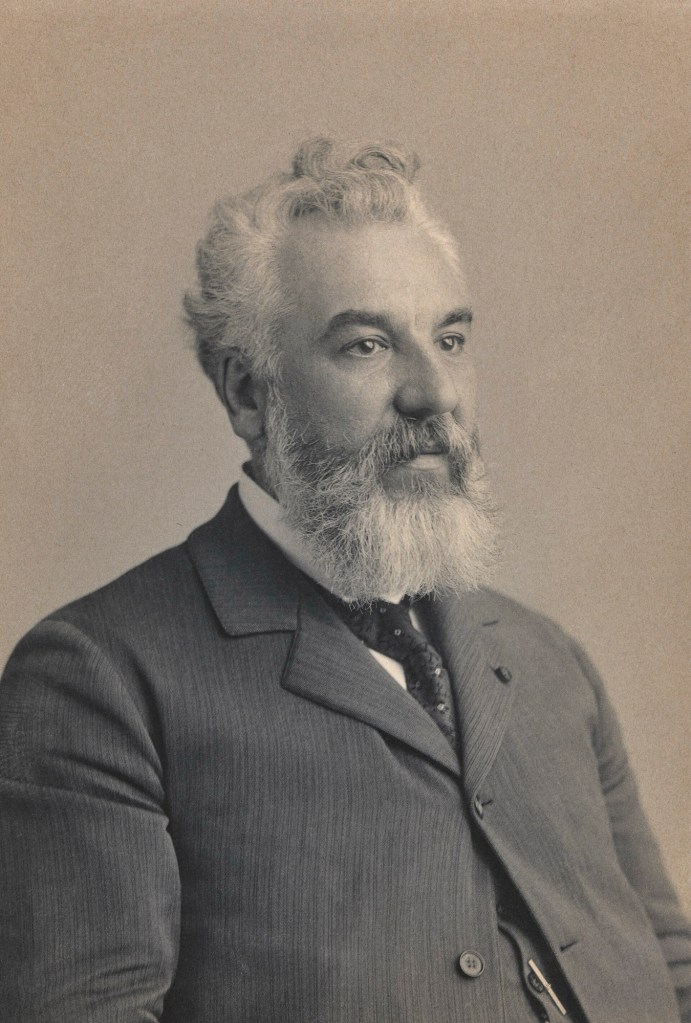
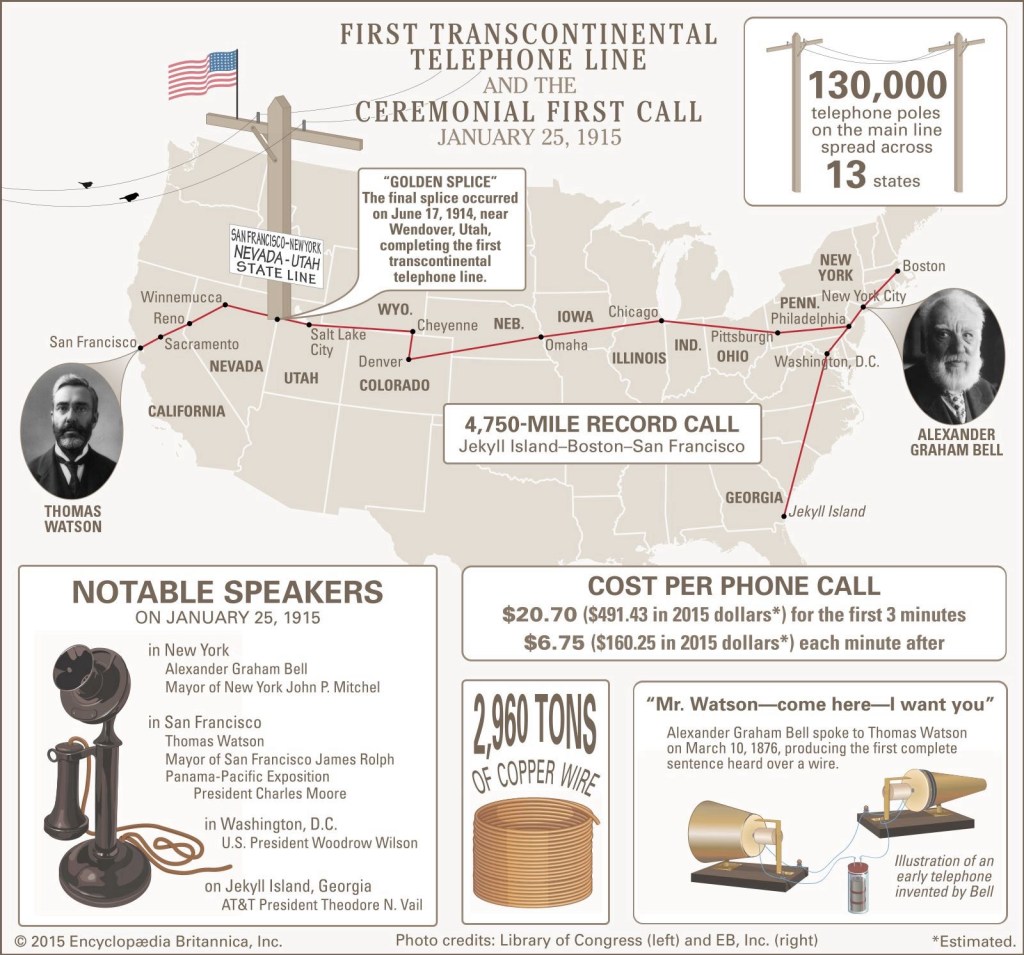
On 7 March 1876, Alexander Graham Bell secured a patent for his invention, the telephone. Once the first transcontinental telephone line was laid across the United States, a ceremonial first transcontinental call was made. Which decade did this happen in?
Answer: 1910s.
On 25 January 1915, Alexander Graham Bell made the ceremonial first transcontinental call. From New York City, he called his assistant, Thomas Watson, in San Francisco using the same words he’d used when he first successfully called Watson in a neighbouring room: ‘Mr Watson—come here—I want you.’ This time, Watson replied, ‘It will take me five days to get there now!’ The call also involved Woodrow Wilson, the US president, in Washington D.C. and Theodore Vail, AT&T president, on Jekyll Island, Georgia.
Rob Roy MacGregor, a Scottish outlaw, was the subject of the 1817 novel Rob Roy. Who was the author of this work?
Answer: Sir Walter Scott.
Rob Roy, a Highland outlaw known for his red hair and exploits against the Duke of Montrose, was often compared to Robin Hood. However, his life was marked by brigandage, debt, and a complex relationship with the Jacobite cause. Born in 1671, Robert Roy MacGregor was a Scottish outlaw and Jacobite hero who initially became a cattleman and later a respected figure. His life took a turn when he defaulted on a loan and was branded an outlaw. Despite this status, he gained fame, and his story was immortalised in literature and film and his letters reveal that he was well educated, suggesting that the view of him as a mere brutish highwayman does not do him justice.
Three
Born in 1875 in Cibourne, France, this composer’s work would be used by skaters Jayne Torvill and Christopher Dean in their gold medal winning performance at the 1984 Sarajevo Winter Olympics. Who was this composer and what was the piece of music?
Answers: Maurice Ravel; Boléro.
Performing their free dance to Boléro, British ice dancers Jayne Torvill and Christopher Dean triumphed at the Sarajevo 1984 Winter Olympics, securing gold and setting a new record for the highest score ever achieved in a single figure skating programme.
Four
On this date in 2024, which Northern European country joined NATO as its 32nd member?
Answer: Sweden.
The 2022 Russian invasion of Ukraine prompted a significant reinforcement of NATO’s eastern flank. Consequently, Sweden, previously neutral, decided to abandon that neutrality and join the alliance.
Born in 1872, this Dutch artist became famous for a style featuring black grid lines and blocks of primary colours such as red, blue, and yellow. The style became known as Neoplasticism or De Stijl. Who was the artist?
Answer: Piet Mondrian.
Piet Mondrian, a Dutch painter and art theoretician, was a pioneer of 20th-century abstract art. He co-founded the De Stijl art movement and developed Neoplasticism, a non-representational form using primary colours, values, and directions.
On 7 March 1876, Alexander Graham Bell secured a patent for his invention, the telephone. Once the first transcontinental telephone line was laid across the United States, a ceremonial first transcontinental call was made. Which decade did this happen in?
Two
Rob Roy MacGregor, a Scottish outlaw, was the subject of the 1817 novel Rob Roy. Who was the author of this work?
Three
Born in 1875 in Cibourne, France, this composer’s work would be used by skaters Jayne Torvill and Christopher Dean in their gold medal winning performance at the 1984 Sarajevo Winter Olympics. Who was this composer and what was the piece of music?
Four
On this date in 2024, which Northern European country joined NATO as its 32nd member?
Born in 1872, this Dutch artist became famous for a style featuring black grid lines and blocks of primary colours such as red, blue and yellow. The style became known as Neoplasticism or De Stijl. Who was the artist?
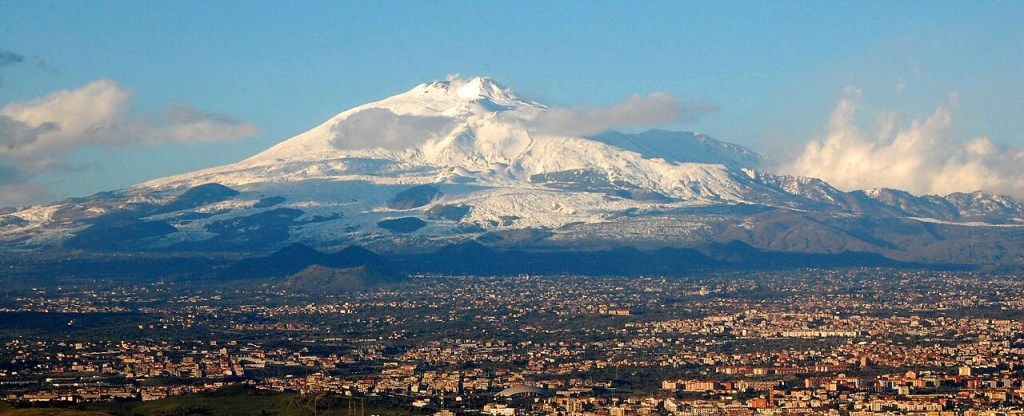
An otherworld castle from Arthurian Romance is located at the same spot as the Oxford English Dictionary identifies as Europe’s highest active volcano?
Answer: Mount Etna
Mount Etna, is an active stratovolcano in eastern Sicily, Italy, standing at 3,323 meters (10,902 feet). It is the highest and most active volcano in Europe. Its fertile volcanic soils support agriculture, and its historical activity has earned it the designation of a Decade Volcano and a UNESCO World Heritage Site. In various stories, Mongibel is associated with the legendary figure Morgan le Fay, depicted as her magical stronghold linked to Avalon.
Two
Svetlana Savitskaya on 25 July 1984; Kathryn D. Sullivan, 11 October 1984; and Wang Yaping, 8 November 2021 all achieved a first. What common milestone do these dates mark??
Answer: They were the first females of their nationalities and for their space programs to perform extravehicular activity (EVA) or spacewalk
Specifically, they were the first females of their nationalities and space programs to perform EVAs. EVAs. The first woman to perform an extravehicular activity (EVA) was Soviet Svetlana Savitskaya on 25 July 1984, while aboard the Salyut 7 space station. Her EVA lasted 3 hours and 35 minutes. The first American woman to perform an EVA was Kathryn D. Sullivan on 11 October 1984, during the STS-41-G mission. The first female Asian and Chinese woman to perform an EVA was Wang Yaping on 8 November 2021, outside the Chinese Tiangong space station.
Three
The University of St Andrews, Scotland, was founded in what century?
Answer: 15th century.
The University of St Andrews, founded in 1413, is the oldest university in Scotland and the third-oldest in the English-speaking world — after Oxford and Cambridge. Located in St Andrews, Scotland, it is part of the ancient universities of Scotland and played a role in the Scottish Enlightenment. The university consists of three colleges and 18 academic schools across four faculties, with a diverse student body representing over 145 nationalities. It is known for its selective undergraduate admissions and traditional student customs. Notable alumni include Alex Salmond, Chris Hoy, and the Prince and Princess of Wales, with five Nobel laureates among its graduates and staff.
Four
The cave system with the world’s longest known length, Mammoth Cave is in which US state and, according to the U.S. National Park Service, what length is it at present (March 2026) to the nearest 25 miles/40 km?
Answer: Kentucky; 425 miles or 680 km.
Mammoth Cave is currently mapped and explored at 426 miles (686 km), but that is just what has been discovered to date. — U.S. National Park Service.
Mammoth Cave, currently mapped at 426 miles (686 km), is the longest known cave system in the world. Early explorers, including Stephen Bishop and the Hanson and Hunt families, significantly contributed to its discovery. The 1972 connection between the Flint Ridge and Mammoth Cave systems, achieved by a team of six explorers, solidified its status as the longest cave system.
Five
NOUN the scientific study of old age, the process of ageing, and the particular problems of old people. — Oxford English Dictionary.
What word, an –ology, is defined above?
Answer: Gerontology.
Gerontology, a multidisciplinary field, aims to understand the ageing process to minimise age-related disabilities. While geriatrics focuses on treating diseases in older adults, gerontology encompasses a broader study of ageing.
Post title — Mongibel
The name Mongibel, associated with Morgan le Fay and King Arthur, originates from Arthurian Romance and is linked to Etna (Mongibello). Welsh conceptions of a Celtic underworld were adapted and transplanted to Sicily by Bretons.
An otherworld castle from Arthurian Romance is located at the same spot as the Oxford English Dictionary identifies as Europe’s highest active volcano?
Two
Svetlana Savitskaya on 25 July 1984; Kathryn D. Sullivan, 11 October 1984; and Wang Yaping, 8 November 2021 all achieved a first. What common milestone do these dates mark?
Three
The University of St Andrews, Scotland, was founded in what century?
Four
The cave system with the world’s longest known length, Mammoth Cave is in which US state and, according to the U.S. National Park Service, what length is it at present (March 2026) to the nearest 25 miles/40 km?
Five
NOUN the scientific study of old age, the process of ageing, and the particular problems of old people. — Oxford English Dictionary.
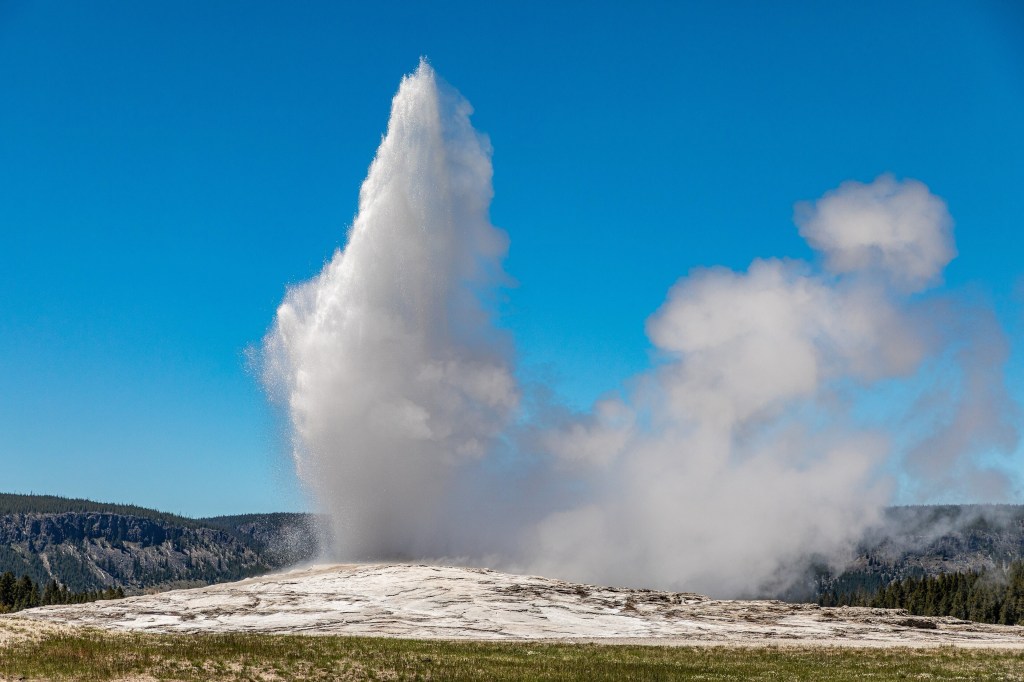
On 1 March, the President of the United States signed the Act of Dedication, which established Yellowstone National Park. Which president signed it and in which decade did this occur?
Answers: President Ulysses S. Grant; 1870s.
Yellowstone National Park, established in 1872, is the first national park in the US and the world. It spans three states and is renowned for its geothermal features, diverse wildlife, and the Yellowstone Caldera.
Two
The Massacre of Vassy (French: massacre de Wassy) was the murder of … worshippers and citizens in an armed action by troops of the Duke of Guise, in Wassy, France on 1 March 1562.— Wikipedia
A word has been omitted from the text ‘murder of the … worshippers’ in the above edited version of the opening sequence of the Wikipedia article The Massacre of Vassy. This omission is a noun describing the worshippers as being of the Reformed (Calvinist) tradition of Protestantism. What is this missing word?
Answer: Huguenot.
The Massacre of Vassy in 1562, where about 60 Huguenot worshippers were murdered, marked the start of the French Wars of Religion. The conflict ended with the Peace of Amboise in 1563.
Three
On 1 March 1936, after five years of construction, the Hoover Dam was officially handed over to the US government. The reservoir it created was named Lake Mead. Here are three statements about Lake Mead: two are true and one is false. Which one is false?
Lake Mead is named after Fort Mead
Lake Mead provides water to Mexico
Lake Mead stretches for 115 miles (185 km) upstream from the Hoover Dam
Answer: No. 1 is false.
The dam created Lake Mead which was named after Elwood Mead, Commissioner of the Bureau of Reclamation from 1924 to 1936. It supplies water to the states of Arizona, California and Nevada as well as some parts of Mexico. It stretches for 115 miles (185 km) upstream from the dam.
Four
In 1956, the International Air Transport Association finalised the Radiotelephony spelling alphabet for the International Civil Aviation Organization which implemented it on this date. It was later adopted by the International Telecommunications Union and is still in place today. Spelling of the words in this alphabet is important to assist with correct pronunciation over the air. What words represent these six letters: A — F — J — Q — W — Z?
Alfa is spelled with an f as it is in most European languages. This is because the spelling Alpha may not be pronounced properly by some who do not realise that ph should be pronounced as f. Similarly, Juliett is used rather than Juliet for French speakers, because they might otherwise treat a single final t as silent.
Five
On this day, a U.S. president established the Peace Corps by executive order. Which decade saw this event and who was the president involved?
Answers: 1960s; John F. Kennedy.
The Peace Corps, established in 1961 by President John F. Kennedy, is a U.S. government agency that trains and deploys volunteers to assist developing countries in fields like education, agriculture, and health. Typically American citizens with a college degree, volunteers serve for at least two years, living and working alongside local communities. Since its inception, the Peace Corps has grown significantly, expanding its reach to 141 countries by 2018.
On 1 March, the President of the United States signed the Act of Dedication, which established Yellowstone National Park. Which president signed it and in which decade did this occur?
Two
The Massacre of Vassy (French: massacre de Wassy) was the murder of … worshippers and citizens in an armed action by troops of the Duke of Guise, in Wassy, France on 1 March 1562.— Wikipedia
A word has been omitted from the text ‘murder of the … worshippers’ in the above edited version of the opening sequence of the Wikipedia article The Massacre of Vassy. This omission is a noun describing the worshippers as being of the Reformed (Calvinist) tradition of Protestantism. What is this missing word?
Three
On 1 March 1936, after five years of construction, the Hoover Dam was officially handed over to the US government. The reservoir it created was named Lake Mead. Here are three statements about Lake Mead: two are true and one is false. Which one is false?
Lake Mead is named after Fort Mead
Lake Mead provides water to Mexico
Lake Mead stretches for 115 miles (185 km) upstream from the Hoover Dam
Four
In 1956, the International Air Transport Association finalised the Radiotelephony spelling alphabet for the International Civil Aviation Organization which implemented it on this date. It was later adopted by the International Telecommunications Union and is still in place today. Spelling of the words in this alphabet is important to assist with correct pronunciation over the air. What words represent these six letters: A — F — J — Q — W — Z?
Five
On this day, a U.S. president established the Peace Corps by executive order. Which decade saw this event and who was the president involved?
These questions all relate to today’s date, February 26th.
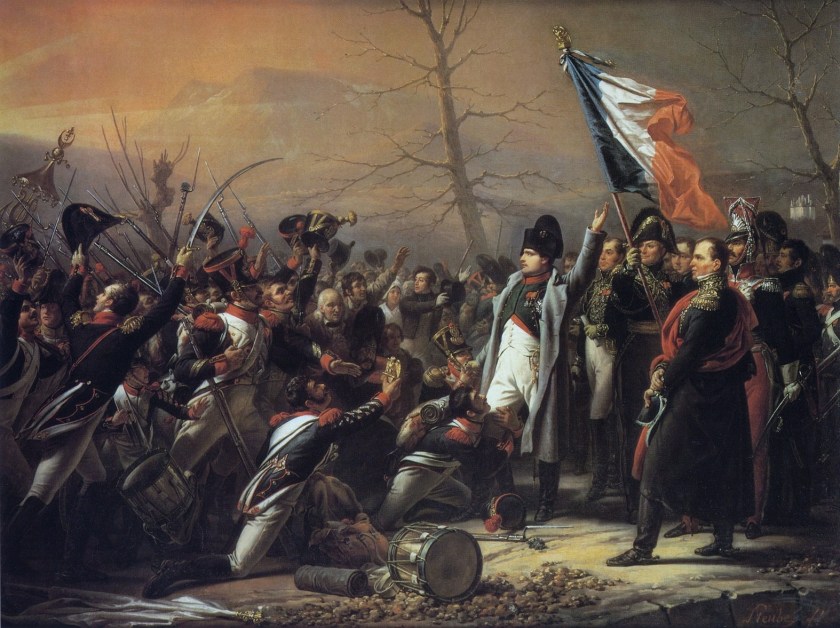
Napoleon’s Return from Elba 1815 by Charles de Steuben. Image Wikimedia Commons
One
On this day in 1815, Napoleon escaping from captivity ushered in the Hundred Days. From where had he escaped?
Answer: Elba.
The Hundred Days in French history refers to the period between Napoleon’s return to Paris on 20 March 1815 and Louis XVIII’s return on 8 July 1815. This period marked Napoleon’s return from exile, his subsequent defeat at Waterloo, and his permanent exile, which led to the restoration of the French monarchy. After escaping from Elba, Napoleon regained power but faced opposition from the Fourth Coalition, resulting in his final defeat at Waterloo and second abdication.
Two
Who, born in Arkansas in 1932, often sang railroad songs such as Orange Blossom Special; Hey, Porter and Rock Island Line?
Answer: Johnny Cash.
Johnny Cash, the ‘Man in Black’, was an American singer-songwriter known for his deep voice, rebellious spirit, and songs about sorrow, redemption and prison life. He sold over 90 million records and was inducted into the Country Music, Rock and Roll and Gospel Music Halls of Fame.
Three
On this day in 1914, less than two years since Titanic sank, her sister ship was launched in Belfast. What was the name of the sister ship?
Answer: Britannic
HMHS (His Majesties Hospital Ship) Britannic, the largest hospital ship of its time, was the third and final vessel of the White Star Line’s Olympic class. Launched just before World War I, it operated between the UK and the Dardanelles until it sank in 1916 after hitting a mine, resulting in 30 fatalities. The wreck, the largest intact passenger ship on the seabed, was located by Jacques Cousteau in 1975.
Four
Born in Besançon, eastern France, in 1802, this novelist, poet and dramatist was one of France’s foremost Romantic writers. His characters include Oliver Cromwell, Archdeacon Claude Frollo and Bishop Muriel. Who is he?
Answer: Victor Hugo.
The characters mentioned in the question are in order from his works Oliver Cromwell, The Hunchback of Notre-Dame and Les Misérables. Victor Hugo (1802–1885) was a French Romantic author, poet, and playwright. He was a prominent political figure, advocating for republicanism and social causes. Hugo’s legacy includes his influence on music and his role as a national hero
Five
The first non-stop circumnavigation of the globe began on this day in what decade?
Answer: 1940s
In 1949, the Lucky Lady II, a Boeing B-50 Superfortress, became the first aircraft to circumnavigate the globe nonstop. The 94-hour and one minute journey, assisted by in-flight refuelling, showcased the potential of aerial refuelling for long-range missions. The crew received the Distinguished Flying Cross and prestigious aviation awards for their achievement.



 Quizology.Online