Today’s Answers
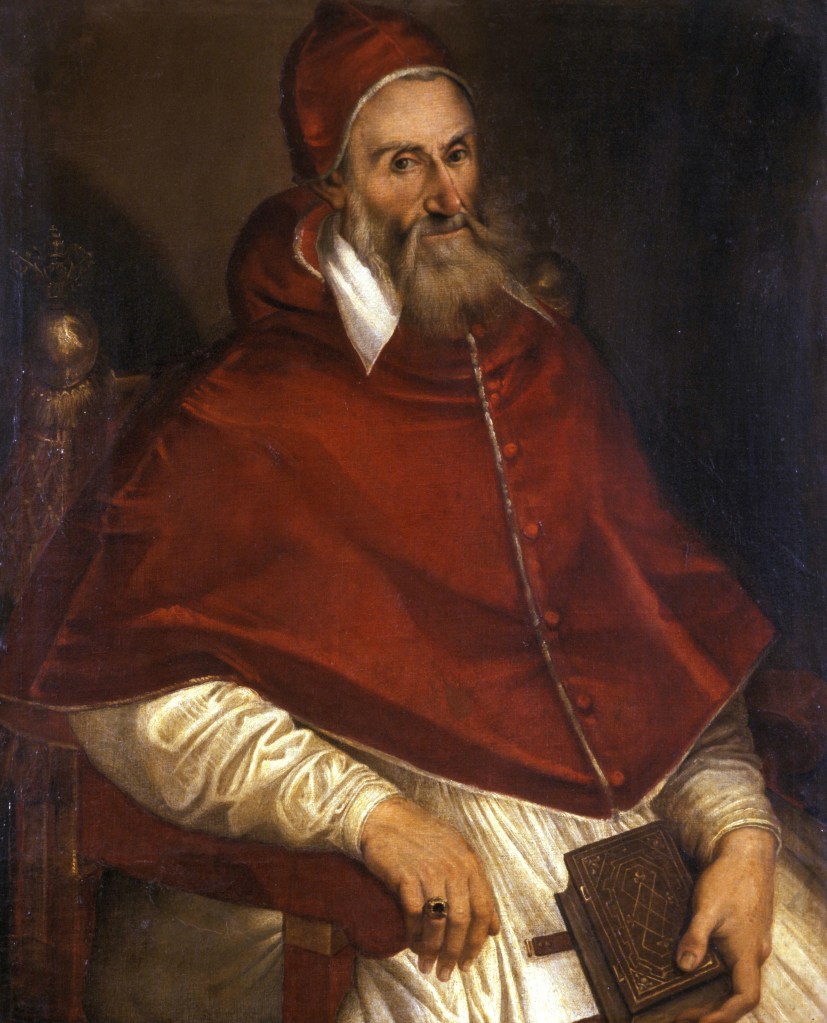
Image Wikimedia Commons
Today’s first question is date-related being connected to today, 4 October. Subsequently, the questions are not date-related but maybe they really are!
One
This day in 1582 saw the introduction of the Gregorian calendar to replace the … calendar meaning that Thursday 4 October 1582 was followed by Friday … — what calendar’s name, and date complete the previous sentence?
Answer: Julian (calendar); and (Friday) 15 October 1582.
The Gregorian calendar was introduced by Pope Gregory XIII in 1582 to correct the Julian calendar’s 11-minute yearly drift. By dropping 10 days and adjusting the leap year rule for century years, it realigned the calendar with the vernal equinox. Although adoption was gradual, most of continental Catholic Europe adopted the new calendar in 1582, while Great Britain and Ireland waited until 1752. More recent shifts occurred with Greece in 1923 and Saudi Arabia in 2016 and it is now the primary international dating system.
Two
Which song featuring lyrics by Howard Greenfield contains these lines, and which singer wrote the music?
(January)
You start the year all fine
(February)
You’re my little Valentine
(March)
I’m gonna march you down the aisle
(April)
You’re the Easter bunny
When you smile
Answers: Calendar Girl: Neil Sedaka.
Released in December 1960, Calendar Girl by Neil Sedaka and Howard Greenfield reached No. 1 for Sedaka in Canada and Japan, and made the top ten in both the UK and US. Inspired by Lloyd Price, Al Jolson, Eddie Cantor and Ricky Nelson, it uses monthly imagery including Betty Grable and Marilyn Monroe. Stan Applebaum and Gary Chester provided instrumentation.
Three
What secular device and tradition is associated with the beginning of the Christian liturgical year?
Answer: Advent Calendar.
An Advent calendar is a decorative tool used to count down the days leading up to Christmas, typically spanning from December 1 or the First Sunday of Advent through December 24 or 25. While often secular today, the practice originated with German Lutherans as a period of spiritual preparation for the birth of Jesus Christ. Early 19th-century traditions included lighting candles or marking doors to track the days. The modern format—featuring compartments, flaps, or pockets that reveal images, stories, Bible verses, or small gifts like chocolate—emerged in early 20th-century Germany. Following a decline during World War II, the tradition gained global popularity.
Four
Clues to this fitting novel are immersed in the following: it marked its author’s debut in 1984; sales rose after US President Ronald Reagan noted his enjoyment; a film with a former James Bond followed in 1990. What were the titles of the book and film; who wrote the book; and what was the former Bond actor’s character name?
Answers: The Hunt for Red October; Tom Clancy; Marko Ramius.
Tom Clancy’s debut novel, The Hunt for Red October, published by Naval Institute Press in 1984, features Soviet captain Marko Ramius allegedly defecting with the revolutionary new ballistic submarine Red October; CIA analyst Jack Ryan must try to assist Ramius’s defection and capture the submarine.
Five
This list from 1793 arranged names in sequence: vintage, mist, frost, snow, rain, wind, seedtime, blossom, meadow, harvest, heat and fruits. What did these terms denote; what system were they part of; and in what year was it replaced by a more international choice?
Answers: Months; the French Republican calendar (also called the French Revolutionary calendar); 1806.
Adopted on 5 October 1793, the French republican calendar replaced the Gregorian system with a secular structure of 12 months and supplementary days. It was abandoned by Emperor Napoleon on 1 January 1806.
Ox, Tiger, Dragon, Monkey, Rooster And Pig
The post title is a list of a few of the animals from the Chinese calendar. Although questions two to five are not date-related as in connected to 4 October they are date-related in being connected to calendars in general and calendars are collections of dates.


Leave a comment