There is much pleasure to be gained from useless knowledge. (Bertrand Russell)
Author: Quizologist
As a retired trivia writer, editor and quiz compiler, I wholeheartedly agree with Bertrand Russell’s quote: “There’s much pleasure to be gained in useless knowledge.” Trivia of all sorts has always fascinated me, and for many years, I’ve written and compiled trivia for various media, including traditional TV and radio quiz shows, newspapers and magazines, apps, and other digital platforms.
Today’s questions focus on five words, each starting with a different letter: W, O, R, D, S. These words are all found in the Oxford English Dictionary. Each word is listed below with three definitions, so simply select the correct one for each.
One
Welkin
A. A barrel with a capacity of 12 pecks (24 gallons) B. A grandchild C. The sky or heavens
Answer: The sky or heavens
noun literary the sky or heaven.
– ORIGIN Old English wolcen ‘cloud, sky’, of West Germanic origin; related to Dutch wolk and German Wolke.
— Oxford English Dictionary
Two
Ouabain
A. A poisonous white crystalline glycoside B. A two-wheeled cart C. A witches potion
Answer: A. A poisonous white crystalline glycoside
noun [mass noun] Chemistry a toxic compound obtained from certain trees, used as a very rapid cardiac stimulant. It is a polycyclic glycoside.
– ORIGIN late 19th century: via French from Somali wabayo, denoting a tree that yields poison (used on arrow points) containing ouabain.
— Oxford English Dictionary
Three
Regolith
A. Unified register of official documents. B. An order of reptiles characterised by a bony plate shell covered in horny scales. C. The layer of unconsolidated solid material covering a planet’s bedrock.
Answer: The layer of unconsolidated solid material covering the bedrock of a planet
noun [mass noun] Geology the layer of unconsolidated solid material covering the bedrock of a planet.
– ORIGIN late 19th century: from Greek rhēgos ‘rug, blanket’ + -lith.
— Oxford English Dictionary
Four
Deemster
A. An apprentice printer B. A judge C. A person falsely claiming to have a special knowledge
Answer: A Judge
noun a judge (of whom there are two) in the Isle of Man judiciary.
– ORIGIN Middle English (originally a general word for a judge): from deem + -ster. The current sense dates from the early 17th century.
— Oxford English Dictionary
Five
Starets
A. A magnesium flare
B. A spiritual leader
C. A Vietnamese roasted snake dish
Answer: A spiritual leader
noun A spiritual adviser, often a monk or religious hermit, in the Eastern Orthodox Church.
A religious adviser (not necessarily a priest) in the Eastern Orthodox Church.
Today’s questions focus on five words, each starting with a different letter: W, O, R, D, S. These words are all found in the Oxford English Dictionary. Each word is listed below with three definitions, so simply select the correct one for each.
One
Welkin
A. A barrel with a capacity of 12 pecks (24 gallons)
B. A grandchild
C. The sky or heavens
Two
Ouabain
A. A poisonous white crystalline glycoside
B. A two-wheeled cart
C. A witches potion
Three
Regolith
A. Unified register of official documents
B. An order of reptiles characterised by a bony plate shell covered in horny scales
C. The layer of unconsolidated solid material covering a planet’s bedrock.
Four
Deemster
A. A printer’s apprentice
B. A judge
C. A person falsely claiming to have a special knowledge
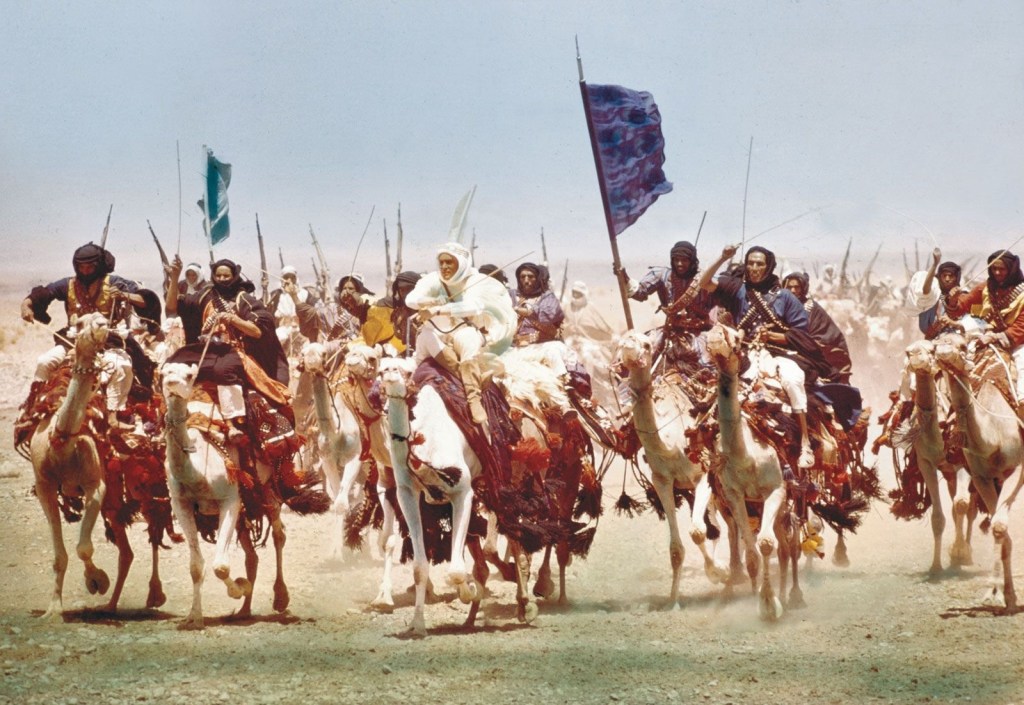
In 1962, David Lean’s Lawrence of Arabia, which went on to became one of the most celebrated epics in the history of cinema, had its world premiere. Who starred as _ _ Lawrence, and what two initials are missing before his surname?
Answer: Peter O’Toole (as) T.E. (Lawrence)
Lawrence of Arabia is a 1962 British historical epic biographical adventure drama film directed by David Lean. It portrays Thomas Edward Lawrence’s experiences in the Ottoman provinces during World War I and his involvement in the Arab National Council. The film, which won seven Academy Awards including Best Picture and Best Director, is widely regarded as one of the greatest films ever made. It follows Lawrence’s journey from a military cartographer to a leader of the Arab Revolt against the Turks, and is renowned for its stunning desert landscapes, shot on location in Jordan, Spain and Morocco.
Two
Which government officially surrendered on this day in 1932 after a month-long battle against thousands of large flightless birds, and what were the birds?
Answer: Australian; Emus
The Emu War was a brief and unsuccessful 1932 military operation in Australia aimed at controlling the emu population, which was damaging crops in Western Australia. Three members of the Royal Australian Artillery were tasked with culling approximately 20,000 emus using machine guns, but the weapons and tactics were ineffective. Despite petitions from local farmers, the campaign, which lasted from November to December, resulted in fewer than 1,000 emus being killed and became a subject of national and international ridicule.
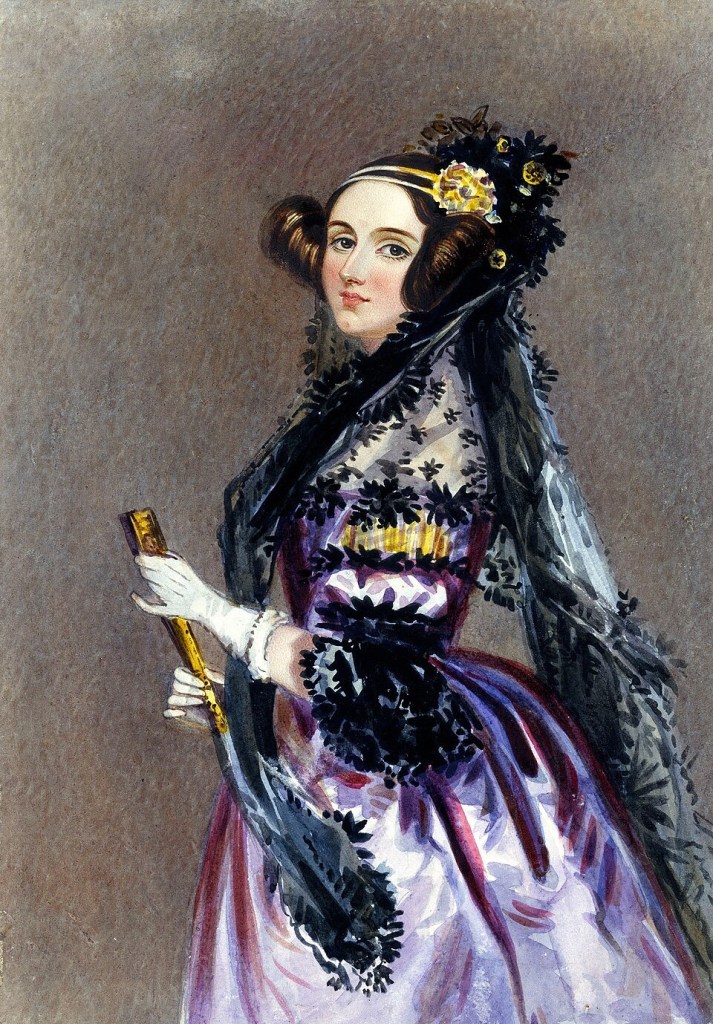
Portrait of Ada, Countess of Lovelace (Ada Lovelace), c1840. Image Wikipedia
Three
Ada Lovelace, often regarded as the first computer programmer, was born in Marylebone, London. In which decade was she born, and who was her famous father?
Answer: 1810s; Lord Byron
Born in 1815, Ada Lovelace, the daughter of the poet Lord Byron, was an English mathematician and writer renowned for her work on Charles Babbage’s Analytical Engine. She recognised its potential beyond mere calculation and developed a vision of computers’ capabilities, leading to her being considered the first computer programmer. Her contributions are celebrated on Ada Lovelace Day.
Four
In 1948, the General Assembly of the United Nations adopted the Universal Declaration of Human Rights. Which former First Lady of the United States chaired the United Nations Commission on Human Rights that was responsible for the drafting of the document?
Answer: Eleanor Roosevelt
The Universal Declaration of Human Rights (UDHR), adopted by the UN General Assembly in 1948, is a foundational document of international human rights law. Drafted by a team including John Humphrey, Eleanor Roosevelt and René Cassin, it comprises 30 articles outlining civil, political, economic, social, and cultural rights. Although not legally binding, the UDHR has achieved significant moral authority and has influenced numerous international treaties and national constitutions.
Five
The first part of the first edition of the Encyclopædia Britannica, the English-language general encyclopaedia, was published and advertised for sale on this day. In what century and in what city did this occur?
Answer: 18th century; Edinburgh,Scotland, United Kingdom
The Encyclopædia Britannica, a general-knowledge English-language encyclopaedia, was first published in Edinburgh, Scotland, in 1768 by a group of Scottish gentlemen. Initially released in three volumes, it introduced a “new plan” by combining treatises on arts and sciences with short articles on technical terms, catering to both serious students and those seeking quick reference material. William Smellie, an Edinburgh printer, is credited with devising this plan and writing or compiling many of the articles. The encyclopaedia transitioned from print to digital in 2012 due to strong competition from digital encyclopaedias like Microsoft Encarta and Wikipedia, yet it maintained its reputation for authoritative and scholarly content and is now available exclusively online.
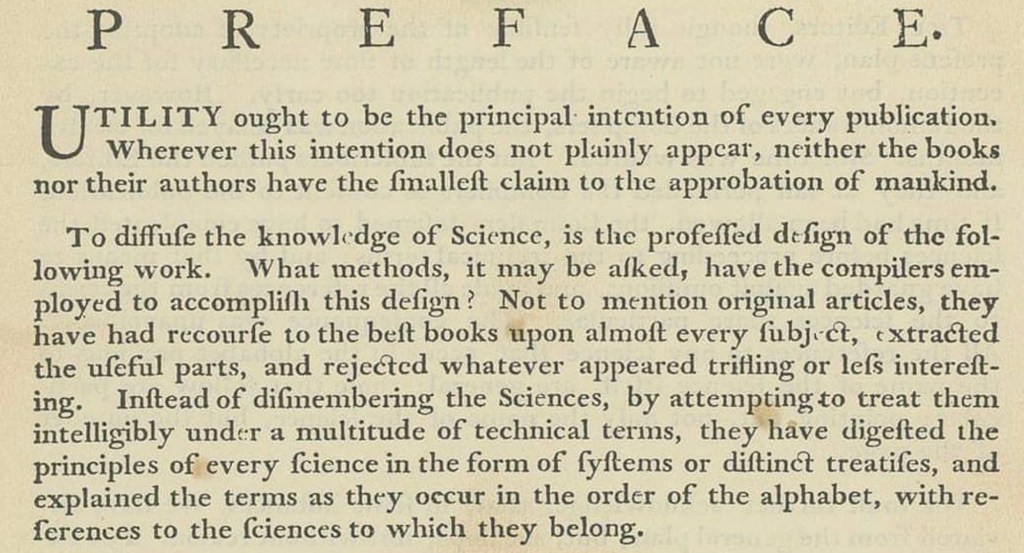
Utility ought to be the principal intention of every publication.
The title of today’s post is the first sentence of the preface to the first edition of Encyclopædia Britannica.
“UTILITY ought to be the principal intention of every publication. Wherever this intention does not plainly appear, neither the books nor their authors have the smallest claim to the approbation of mankind” . So begins the preface to Britannica’s 1st edition, which began publication 250 years ago this month (on December 10, 1768). Encyclopædia Britannica via Instagram
In 1962, David Lean’s Lawrence of Arabia, which went on to became one of the most celebrated epics in the history of cinema, had its world premiere. Who starred as _ _ Lawrence, and what two initials are missing before his surname?
Two
Which government officially surrendered on this day in 1932 after a month-long battle against thousands of large flightless birds, and what were the birds?
Three
Ada Lovelace, often regarded as the first computer programmer, was born in Marylebone, London. In which decade was she born, and who was her famous father?
Four
In 1948, the General Assembly of the United Nations adopted the Universal Declaration of Human Rights. Which former First Lady of the United States chaired the United Nations Commission on Human Rights that was responsible for the drafting of the document?
Five
The first part of the first edition of the Encyclopædia Britannica, the English-language general encyclopaedia, was published and advertised for sale on this day. In what century and in what city did this occur?
Here are the answers to the questions in my earlier post.
The first question directly relates to today’s date, December 9th. The others follow the road traffic theme introduced in the first question.
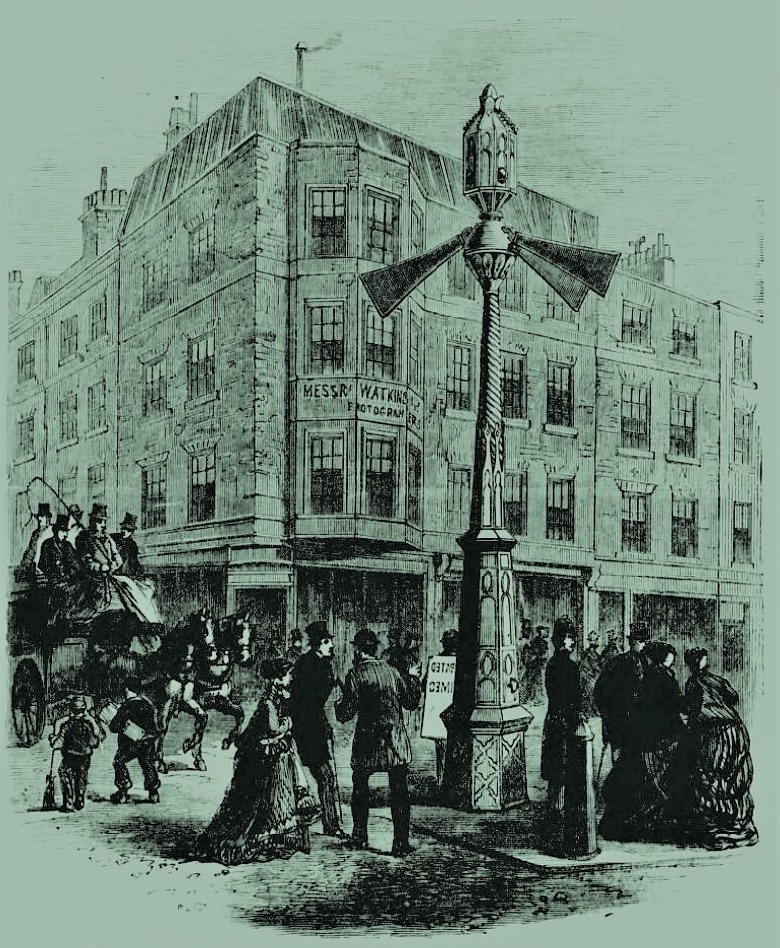
The Westminster street semaphore, from the Illustrated Times, 16 January 1869. Copyright the British Library Board via the British Newspaper Archive. Image Londonist.com
One
In 1868, the world’s first traffic light began operation in which city?
Answer: London, United Kingdom
Designed by railway engineer JP Knight and installed at Parliament Square, Westminster, this gas-powered semaphore signal was manually operated by a police officer. However, a gas leak and subsequent explosion led to its removal just a month later. This delay significantly hindered the adoption of traffic lights in Britain.
Two
According to Guinness World Records, which road—stretching over 24,140 km (15,000 miles)—is recognised as the world’s longest motorable road?
Answer: Pan-American Highway
See three below
Three
Continuing from question two, despite being the world’s longest motorable road, driving its entire length isn’t possible. This is because there’s a section at approximately 7.9° north latitude where there’s no road. What’s the common name for this interrupted stretch?
Answer: Darién Gap
Guinness World Records describe the Pan-American Highway as going from Fairbanks, Alaska, United States, to Panama and then—after shipping their vehicles to Colombia or Venezuela—to Santiago, Chile, and then east to Buenos Aires, Argentina, and Rio de Janeiro and Brazilia in Brazil. Wikipedia starts/ends the route at Prudhoe Bay, Alaska, United States, to Puerto Montt, Quellón, Chile, or Ushuaia, Argentina. Encyclopædia Britannica says …from Alaska and Canada to Chile, Brazil, and the southern tip of Argentina. The Darién Gap is a remote and dangerous rainforest area on the Colombia-Panama border, acting as a natural barrier between North and South America. Its inhospitable terrain, lack of roads or other infrastructure, and presence of criminal enterprises make it a perilous route for travel and migration. Despite these challenges, it has become a major migration route for individuals from Haiti and Venezuela seeking to reach the Mexico-United States border.
Four
Introduced in the UK in 1951 and named after its distinctive striped pattern, which type of pedestrian crossing quickly became a road-safety icon?
Answer: Zebra Crossing
The first official zebra crossing was unveiled in Slough. Its black-and-white design and Belisha beacons dramatically improved pedestrian visibility and contributed to a significant drop in road accidents.
In 1888, the wife of a German inventor made the first long-distance car journey. This German inventor had received a patent in 1886 for what is widely considered the first practical automobile powered by an internal combustion engine. Who was the lady who made the long-distance car journey?
Answer: Bertha Benz (wife of Karl Benz)
In 1888, Bertha Benz embarked on the first long-distance car journey without informing Benz himself. This demonstrated the vehicle’s practicality and effectively staged the world’s first car publicity stunt. Encyclopædia Britannica describes it as…
Benz’s journey with her sons marked the first long-distance journey in an automobile. The trio travelled from Mannheim to Pforzheim in about 13 hours, driving on about 60 miles (96.6 km) of unpaved roads. Karl was notified of the Motorwagen’s success by telegram. During the journey, Bertha made several repairs with simple on-hand items. She used her garter to fix the ignition and her hat pin to unclog a blocked fuel pipe. They even stopped at a pharmacy in Wiesloch to purchase a few litres of Ligroin from a chemist. Ligroin was a cleaning agent that served as petroleum fuel for the single-cylinder engine motor. (To this day, many consider this pharmacy the world’s first fueling station.)
On the journey back, the Motorwagen’s brake blocks wore out. Benz had a cobbler fit the brakes with leather strips, thus inventing brake pads. Through her trip, she proved to naysayers that the Motorwagen had potential and helped make improvements on its design. Along the way, she and her sons had to push the Motorwagen uphill, so she suggested that Karl add a third, lower gear and brake pads to his next model. These suggestions were implemented in all of the following models. — Encyclopædia Britannica
The first question directly relates to today’s date, December 9th. The others follow the road traffic theme introduced in the first question.
Image attribution will be shown in the answer post.
One
In 1868, the world’s first traffic light began operation in which city?
Two
According to Guinness World Records, which road—stretching over 24,140 km (15,000 miles)—is recognised as the world’s longest motorable road?
Three
Continuing from question two, despite being the world’s longest motorable road, driving its entire length isn’t possible. This is because there’s a section at approximately 7.9° north latitude where there’s no road. What’s the common name for this interrupted stretch?
Four
Introduced in the UK in 1951 and named after its distinctive striped pattern, which type of pedestrian crossing quickly became a road-safety icon?
Image attribution will be shown in the answer post.
Five
In 1888, the wife of a German inventor made the first long-distance car journey. This German inventor had received a patent in 1886 for what is widely considered the first practical automobile powered by an internal combustion engine. Who was the lady who made the long-distance car journey?
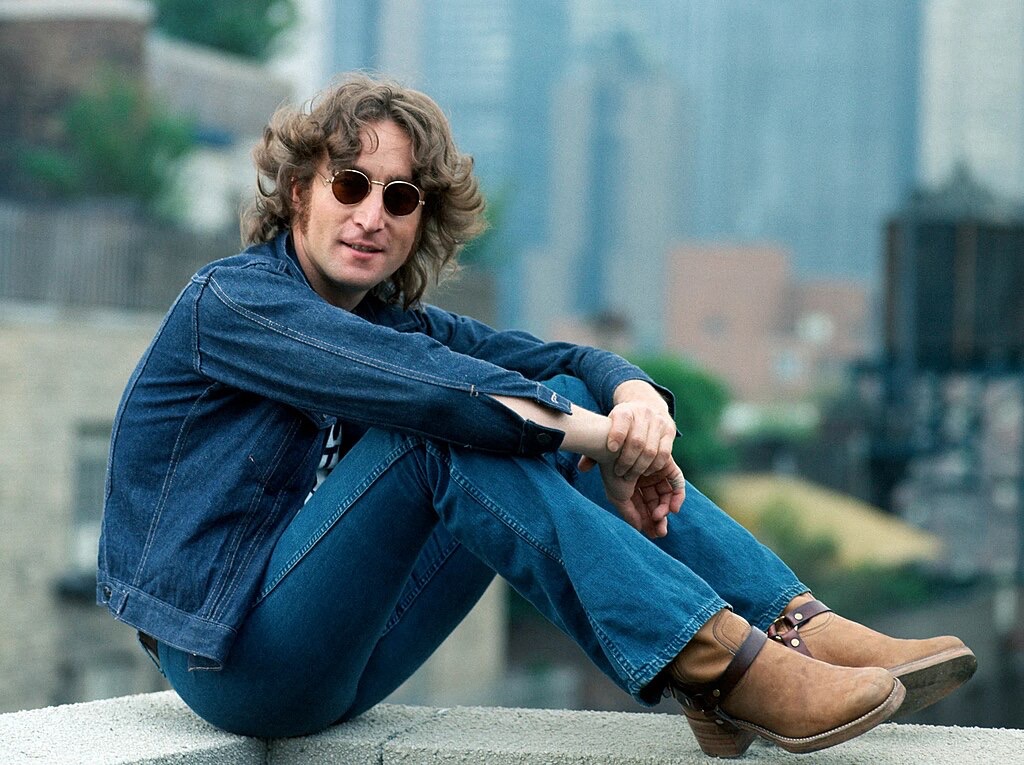
John Lennon was murdered in 1980. What song did Paul McCartney write as a tribute to John Lennon after his death. The song was released on his album, Tug of War (1982).
Answer: Here Today
Composed as a heartfelt tribute to John Lennon, this song expresses the emotions Paul felt he couldn’t fully convey to him during their time together. It’s structured as an imagined conversation exploring their affection, regret and complex friendship. McCartney performs it frequently at concerts as a dedicated moment for Lennon. McCartney featured on George Harrison’s tribute song All Those Years Ago (1981) alongside Ringo Starr on drums. McCartney, Linda and Denny Laine provided backing vocals. The post title In My Life is a Beatles song from their 1965 album Rubber Soul.
Two
The first woman to appear on a public stage in England did so on this date, in what decade did this occur?
Answer: 1660s (1660)
Margaret Hughes, also known as Peg Hughes, is widely regarded as the first professional actress to appear on the English stage. She made theatre history on 8 December 1660 when she played Desdemona in Othello, a landmark moment that signalled a major shift in Restoration-era drama, as women began performing publicly for the first time. Anne Marshall, another pioneer, is also sometimes credited with being the actress to appear on this date.
Three
Mary, Queen of Scots, was born on this day, and six days later she became queen of Scotland. In what decade did this occur?
Answer: 1540s (1542)
Mary, Queen of Scots, ascended to the throne at six days old. After marrying Francis, Dauphin of France, she became queen consort of France until his death. Returning to Scotland, her reign was marked by religious and political turmoil, culminating in her forced abdication and imprisonment. Seeking refuge in England, she was perceived as a threat to Elizabeth I and executed after being found guilty of plotting against her.
Four
In 1991, after the Soviet Union’s breakup, which three former Soviet republics formed the Commonwealth of Independent States?
Answer: Russia, Ukraine and Belarus
The Commonwealth of Independent States (CIS) was formed in 1991 by Russia, Ukraine and Belarus, replacing the USSR. There were eventually twelve former Soviet republics as members, including the Central Asian republics: Kazakhstan, Kyrgyzstan, Tajikistan, Turkmenistan and Uzbekistan; and the Transcaucasian republics of Armenia, Azerbaijan, and Georgia; and Moldova. Notably, the former Soviet republics in the Baltic area—Estonia, Latvia and Lithuania—declined to join the CIS.
Five
…an emotionally shattering look at the effects of the Vietnam War on the young American men sent to fight in it, the movie later won an Oscar for best picture
Which 1978 Oscar-winning film directed by Michael Cimino is described in the above Encyclopædia Britannica quote?
Answer: The Deer Hunter
The Deer Hunter is a 1978 American war drama film about three Slavic-American steelworkers whose lives are changed by the Vietnam War. The film, directed by Michael Cimino, received critical acclaim and won five Academy Awards, including Best Picture and Best Director.
John Lennon was murdered in 1980. What song did Paul McCartney write as a tribute to John Lennon after his death. The song was released on his album, Tug of War (1982).
Two
The first woman to appear on a public stage in England did so on this date, in what decade did this occur?
Three
Mary, Queen of Scots, was born on this day, and six days later she became queen of Scotland. In what decade did this occur?
Four
In 1991, after the Soviet Union’s breakup, which three former Soviet republics formed the Commonwealth of Independent States?
Five
…an emotionally shattering look at the effects of the Vietnam War on the young American men sent to fight in it, the movie later won an Oscar for best picture
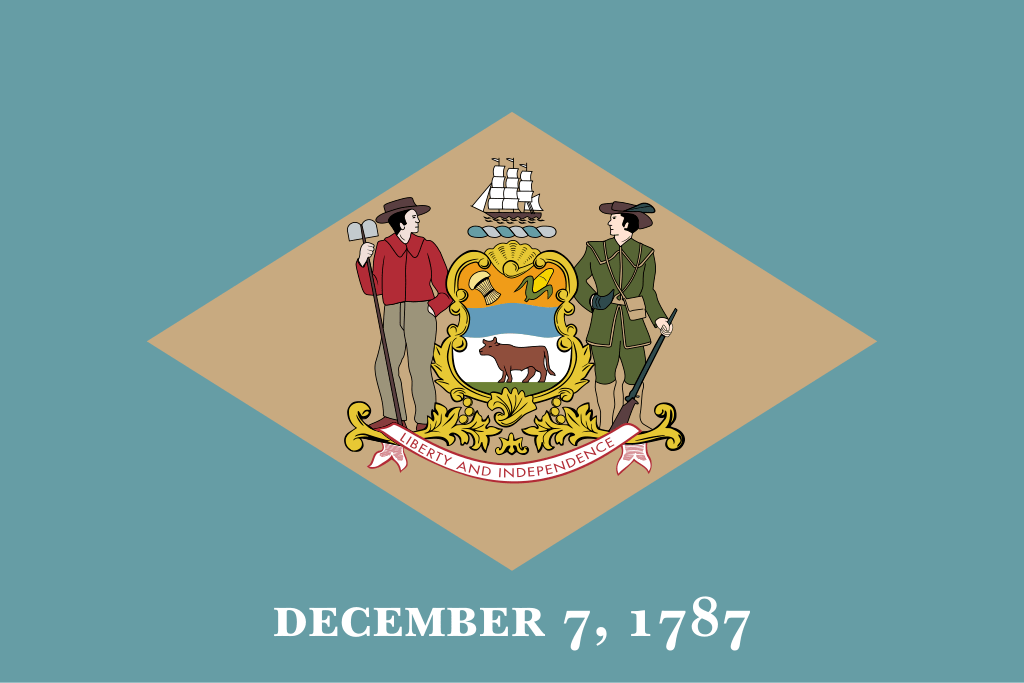
This image depicts the flag of the first state to ratify the US Constitution on 7 December 1787. Can you identify the state and its capital?
Answer: Delaware and Dover
Delaware, the second-smallest US state, is located in the Mid-Atlantic and South Atlantic regions. It is bordered by Maryland, Pennsylvania, New Jersey, and the Atlantic Ocean. Delaware was the first state to ratify the US Constitution, earning it the nickname ‘The First State’.
What is the official three-word English name of this country, and what countries does it border?
Answer: Bhutan, and (bordered by) China and India
Bhutan, a landlocked country in South Asia, is a democratic constitutional monarchy with a population of over 727,145. It is known for its diverse wildlife, including the Himalayan takin and golden langur, and its highest peak, Gangkhar Puensum. Bhutan has a rich history, having never been colonised, and is a founding member of several international organisations.
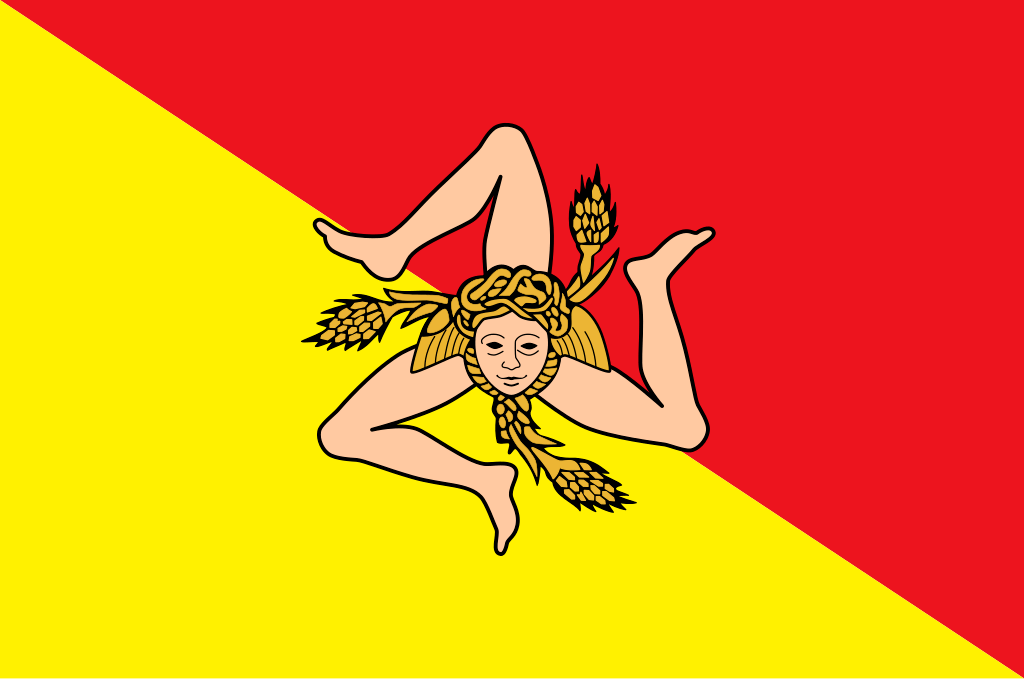
Which two islands are represented by these three-legged flags and in which seas are they found respectively?
Answer: Isle of Man and Sicily; Irish Sea and Mediterranean Sea
The triskelion, an ancient motif of three spirals or triplicate patterns, has roots in European Neolithic and Bronze Age artefacts. It became associated with Sicily in the Hellenistic period and later appeared in heraldry, notably on the flags of Sicily and the Isle of Man.
Four
Flag of Northern Territory, Australia. Image Wikipedia
What sub-national state or territory does this flag represent, and what is that state or territory’s capital city?
Answer: Northern Territory (Australia), and Darwin
The Northern Territory (NT) is an Australian internal territory located in the central and central-northern regions. It’s sparsely populated with a population of 260,400. Its economy is primarily driven by mining and petroleum. Darwin, the largest population centre, accounts for approximately 52.6% of the Territory’s population.
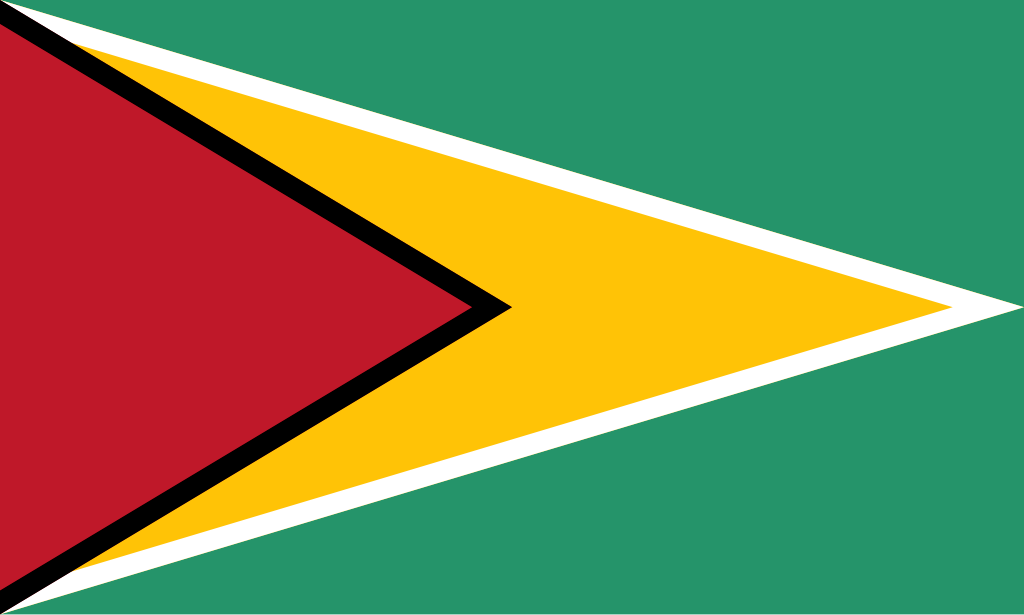
What is the official four-word English name of the country represented by this flag, and what is its capital city?
Answer: Co-operative Republic of Guyana, and Georgetown
Guyana, officially the Co-operative Republic of Guyana, is a country on the northern coast of South America. It is the only country in mainland South America with English as its official language and is part of the Commonwealth Caribbean. Guyana’s economy has been transforming since the discovery of crude oil in 2015, with its economy growing by 49% in 2020.






 Quizology Online