An Apple a Day—Answers

Here are the answers to the questions posed earlier today.
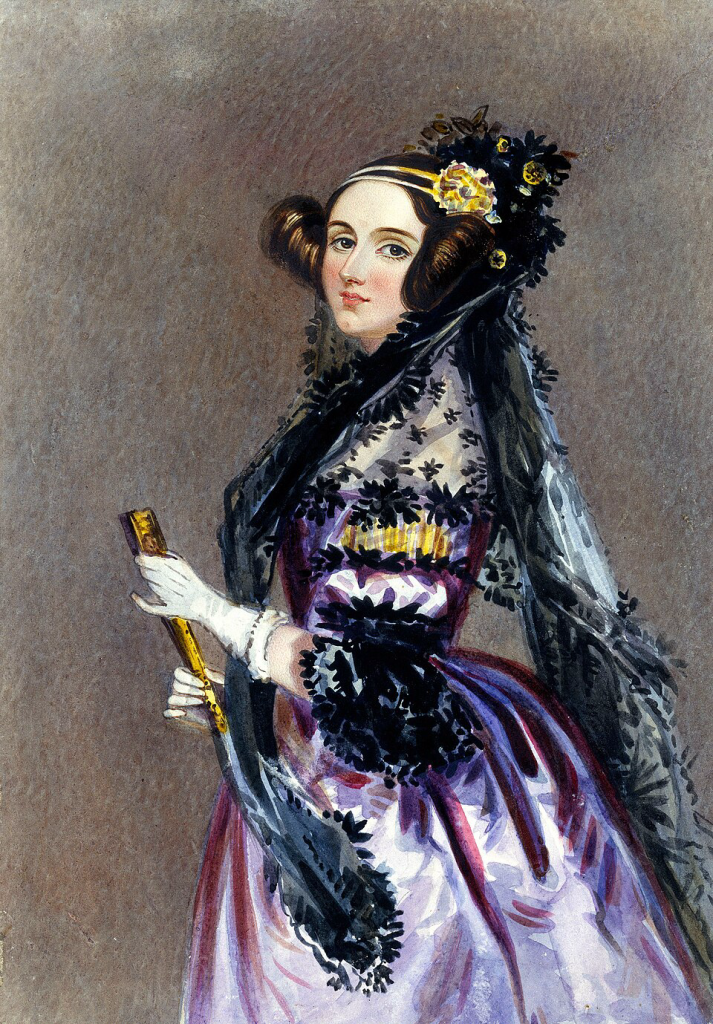
See question 4. Watercolour portrait of Ada King, Countess of Lovelace, c. 1840, possibly by Alfred Edward Chalon.
Image Wikipedia

One

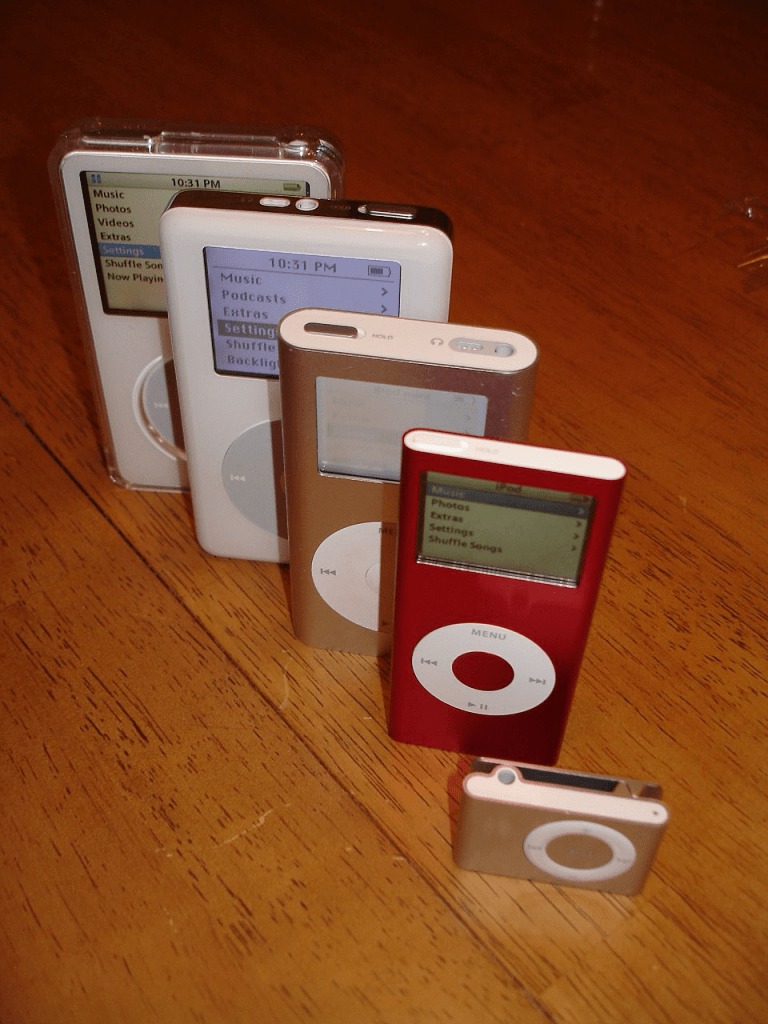
Is it true or false that Apple launched the iPod in 2006?

Answer: False

The 23 October 2001, was the date the iPod was first launched. Apple’s iPod, a series of portable media players, was sold from 2001 to 2022, with an estimated 450 million units sold. The iPod branding was used for the media player on iPhones and iPads until iOS 5, when it was separated into Music and Videos apps.


Two

Who is considered the ‘father of the computer’?

Answer: Charles Babbage

Charles Babbage is widely recognised as the “father of the computer” for his pioneering work in designing the first mechanical computer, the Difference Engine (1820s).  He also conceptualised the Analytical Engine (1830s) incorporating many features of modern computers.  His ideas laid the foundation for the development of digital programmable computers.


Three

What does ‘HTTP’ stand for in a web address?

Answer: Hypertext Transfer Protocol

HTTP, proposed by Tim Berners-Lee in 1989, is a foundational protocol for data exchange on the World Wide Web. It evolved from HTTP/1.0 (1996) to HTTP/1.1 (1997), introducing persistent connections and HTML decompression. HTTP/2 (2015) improved speed with binary data, while HTTP/3 (2022) uses QUIC for lower latency. HTTPS, adding encryption, is used by over 85% of websites. HTTP/3 supports 30.9% of websites as of February 2024.


Four

Who is often regarded as the world’s first computer programmer?

Answer: Ada Lovelace

Ada Lovelace, daughter of the poet Lord Byron, wrote the first algorithm intended for a machine — Babbage’s Analytical Engine — in 1843. She foresaw computers as more than calculating devices, imagining their creative potential over a century before the digital age began.


Mazda Eunos Cosmo, Mazda Museum.
Image Wikipedia

Five

Which manufacturer first offered a production car with a built-in satellite navigation system for public sale, and in what year was it available for purchase?

Answer: Mazda

Released in 1990, the Mazda Eunos Cosmo was the first production car equipped with a GPS-based navigation system. It featured a touchscreen display and digital maps stored on CD-ROMs — revolutionary technology at the time. The Cosmo was a showcase of luxury and innovation, years ahead of its rivals in in-car electronics.
An Apple a Day

The first question is relevant to today’s date, October 23rd. The others follow a theme related to the first. 

Various iPod models. From left to right: iPod 5th generation in a case, iPod 4th generation, iPod Mini, iPod Nano, iPod Shuffle.
Image Wikipedia

One

Is it true or false that Apple launched the iPod in 2006?

Two

Who is considered the ‘father of the computer’?

Three

What does ‘HTTP’ stand for in a web address?

Four

Who is often regarded as the world’s first computer programmer?

Five

Which manufacturer first offered a production car with a built-in satellite navigation system for public sale, and in what year was it available for purchase?

Good luck! I’ll post the answers later.

Nuclear Standoff—Answers

Here are the answers to the wrapping in my earlier post.

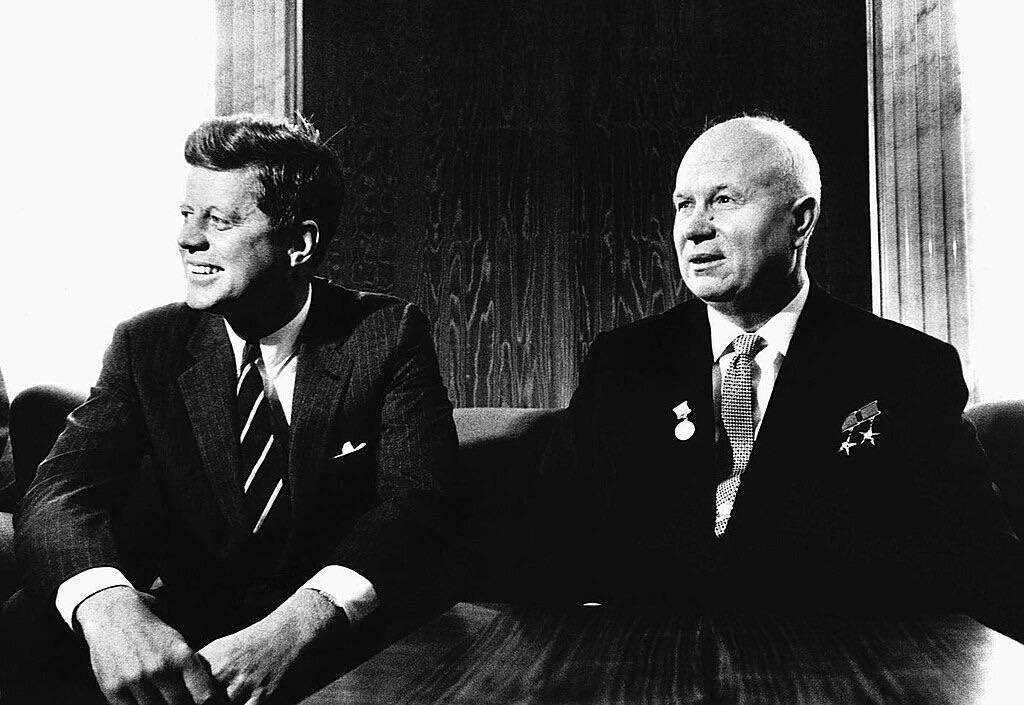
John F. Kennedy (1917–1963) and Nikita Khrushchev (1894–1971) in Vienna, Austria in May 1961.
Image Wikipedia

One

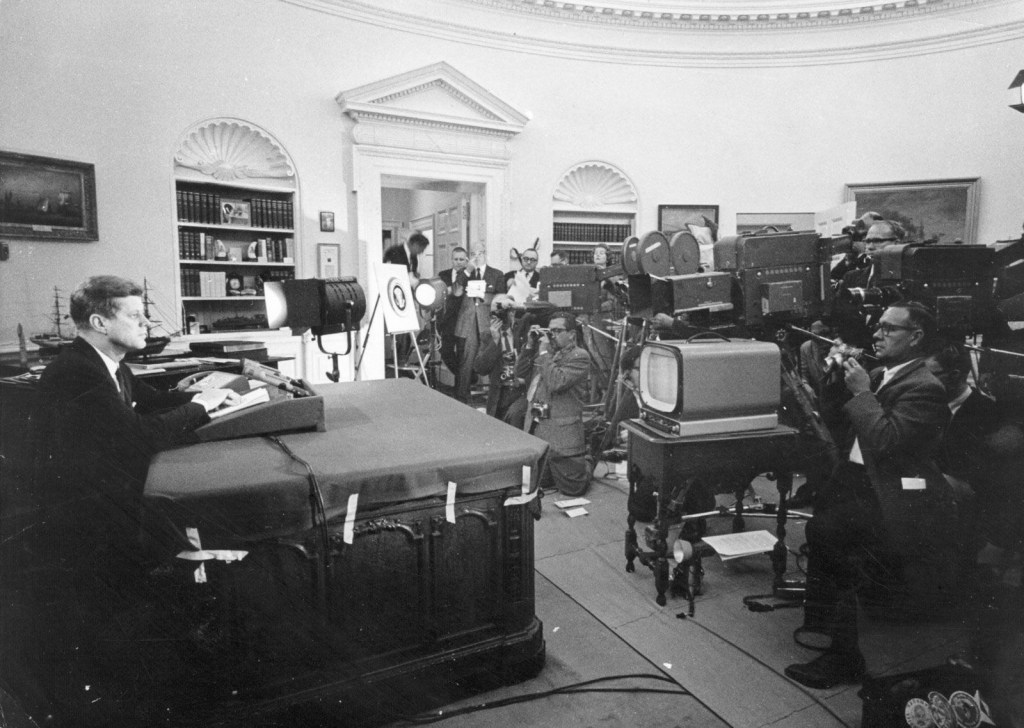
President John F. Kennedy’s televised announcement on 22 October 1962 brought the world to the brink of nuclear war. What confrontation was it about?

Answer: Cuban Missile Crisis

President Kennedy, following advice from Dwight D. Eisenhower, announces that American reconnaissance aircraft have identified Soviet nuclear weapons in Cuba and that he has ordered a naval ‘quarantine’ of the Communist country.


Two

Tsar Peter I proclaimed the Russian Empire. In which century was this?

Answer: 18th (1721)

> The title was transformed from the previous title of tsar and grand prince of all Russia. The old title tsar (or tsaritsa) continued to be popularly used to refer to the emperor (or empress) until the monarchy was abolished in 1917. — Wikipedia


Three

On 22 October 1964, a French writer was awarded the Nobel Prize in Literature, though it was subsequently declined. Who was the author?

Answer: Jean-Paul Sartre

Jean-Paul Sartre declined the 1964 Nobel Prize in Literature, citing his refusal to accept official honours and his belief that the prize favoured Westerners and Eastern rebels. The Swedish Academy acknowledged his decision but maintained the validity of the award.


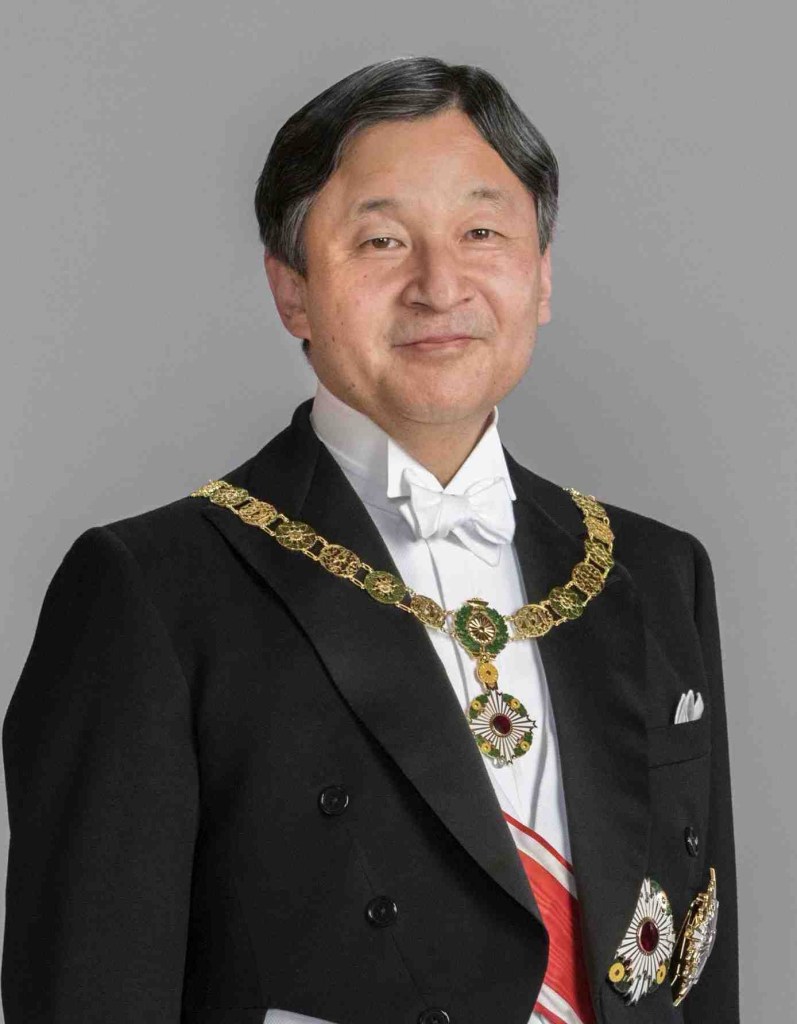
Emperor Naruhito, official portrait 2019.
Image Wikipedia

Four

Naruhito was officially enthroned as Japan’s 126th emperor on 22 October 2019. Earlier that year, he had ascended the Imperial Throne following the abdication of whom?

Answer: Emperor Akihito


Five

Who became the first President of the Republic of Texas on 22 October 1836?

Answer: Sam Houston

Good luck! I’ll post the answers later.

Nuclear Standoff

Here are five questions about historical events some connected to today, October 22nd.

U.S. Pres. John F. Kennedy announcing on television the U.S. naval blockade of Cuba, October 22, 1962.
Image Encyclopædia Britannica

One

President John F. Kennedy’s televised announcement on 22 October 1962 brought the world to the brink of nuclear war. What confrontation was it about?

Two

Tsar Peter I proclaimed the Russian Empire. In which century was this?

Three

On 22 October 1964, a French writer was awarded the Nobel Prize in Literature, though it was subsequently declined. Who was the author?

Four

Naruhito was officially enthroned as Japan’s 126th emperor on 22 October 2019. Earlier that year, he had ascended the Imperial Throne following the abdication of whom?

Five

Who became the first President of the Republic of Texas on 22 October 1836?

Good luck! I’ll post the answers later.

Let There Be Light—Answers

Here are the answers to the questions I posted earlier.

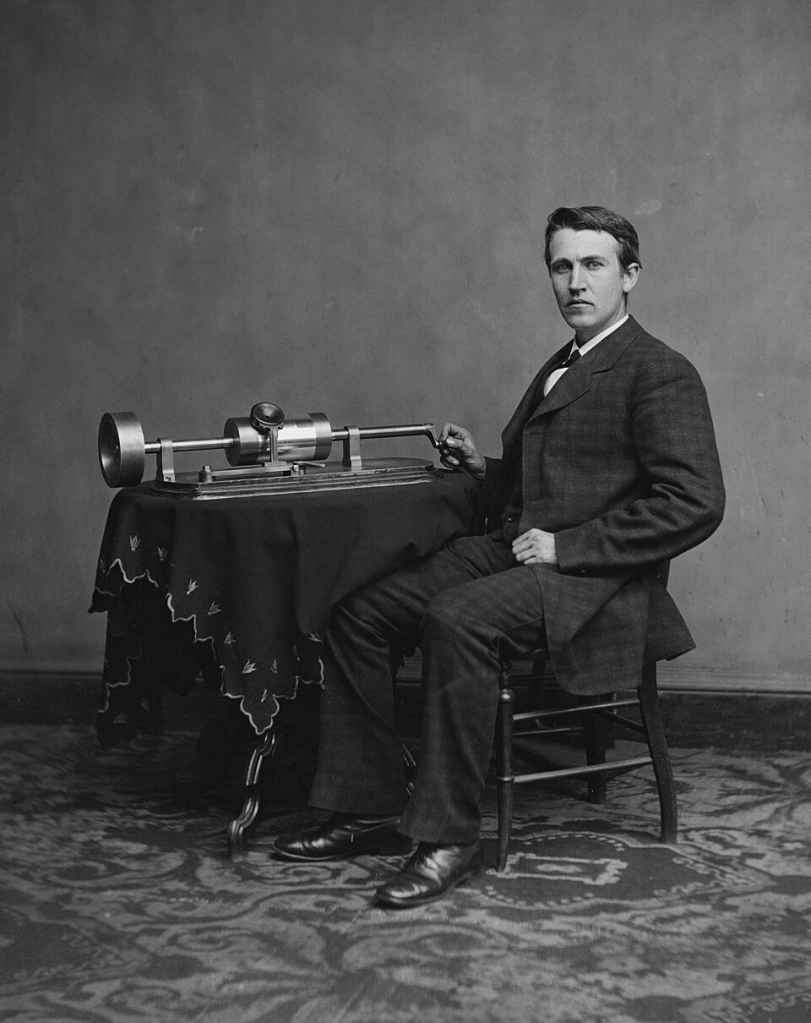
Edison incandescent light bulb enclosed in cage.
Image Wikipedia

One

On October 21, Thomas Edison applied for a patent for his design for an incandescent light bulb. In which decade did he make this application?

Answer: 1870s

Thomas Edison, an American inventor and businessman, developed influential devices like the phonograph and electric light bulb. He pioneered organised scientific invention and established the first industrial research laboratory.


Two

In 1984, Niki Lauda clinched Formula One’s World Drivers’ Championship for the final time. How many times had he won the title in total?

Answer: Three

Austrian racing driver Niki Lauda competed in Formula One from 1971 to 1979 and 1982 to 1985, winning three World Drivers’ Championships—1975, 1977 and 1984—with Ferrari and McLaren. He survived a horrific crash in 1976 and made a remarkable comeback to win his second and third titles. Beyond racing, Lauda founded three airlines and held advisory and team principal roles in Formula One.


Three

In 1940, the first edition of Ernest Hemingway’s For Whom the Bell Tolls was published. In what war was the story set?

Answer: Spanish Civil War

Ernest Hemingway’s 1940 novel, For Whom the Bell Tolls, follows Robert Jordan, an American volunteer in the Spanish Civil War, tasked with destroying a bridge. The book assumes knowledge of the war between the Republican government and the Nationalist faction, supported by Nazi Germany and Fascist Italy.


Four

The Guggenheim Museum opened in New York on this date in 1959. Which architect designed its iconic spiral building?

Answer: Frank Lloyd Wright

Wright’s radical design broke from traditional gallery layouts, using a continuous ramp to display art in a flowing, organic space. The museum is now a UNESCO World Heritage Site, recognized for its innovation.


Five

The Battle of Trafalgar, fought on 21 October 1805, took place in the …. It was named after a prominent geographic feature: …. Firstly, what body of water and secondly, what geographic feature fill the two gaps in the previous sentence?

Answer: Atlantic Ocean; Cape Trafalgar

The Battle of Trafalgar was a decisive victory for the British Royal Navy against the combined French and Spanish fleets during the Napoleonic Wars. Admiral Lord Nelson’s tactics ensured Britain’s naval supremacy but cost him his life. Trafalgar Square in London was named to commemorate this victory.

Let There Be Light

Five questions which are all related to today, October 21st.

Thomas Edison, c. 1878.
Image Wikipedia

One

On 21 October Thomas Edison applied for a patent for his design for an incandescent light bulb. In which decade did he make this application?

Two

In 1984, Niki Lauda clinched Formula One’s World Drivers’ Championship for the final time. How many times had he won the title in total?

Three

In 1940, the first edition of Ernest Hemingway’s For Whom the Bell Tolls was published. In what war was the story set?

Four

The Guggenheim Museum opened in New York on this date in 1959. Which architect designed its iconic spiral building?

Five

The Battle of Trafalgar, fought on 21 October 1805, took place in the …. It was named after a prominent geographic feature: the …. Firstly, what body of water and secondly, what geographic feature fill the two gaps in the previous sentence?

Good luck! I’ll post the answers later?

On This Day: October 20th—Answers

Here are the answers to the questions in my earlier post.

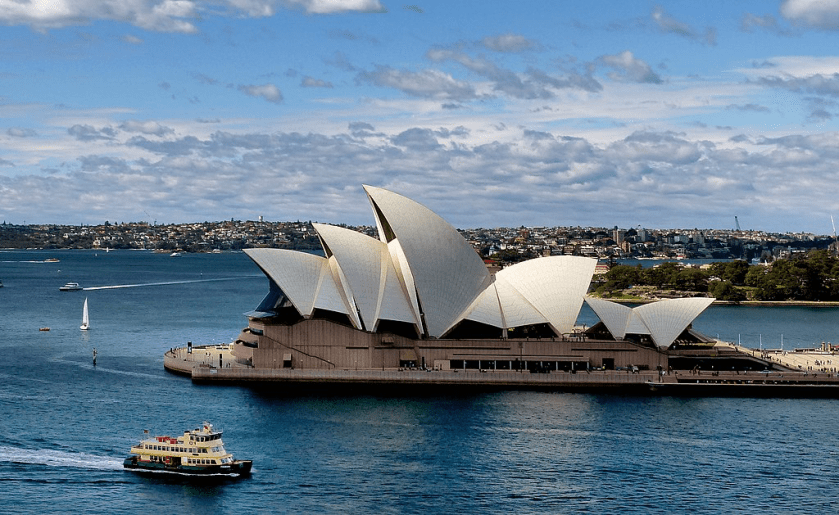
Sydney Opera House.
Image Wikipedia

One

On 20 October 1973, which Australian landmark officially opened to the public?  
Sydney Opera House
The Sydney Opera House, which was opened by Queen Elizabeth II, was named a UNESCO World Heritage Site, whose citation is

Inaugurated in 1973, the Sydney Opera House is a great architectural work of the 20th century that brings together multiple strands of creativity and innovation in both architectural form and structural design. A great urban sculpture set in a remarkable waterscape, at the tip of a peninsula projecting into Sydney Harbour, the building has had an enduring influence on architecture. The Sydney Opera House comprises three groups of interlocking vaulted ‘shells’ which roof two main performance halls and a restaurant. These shell-structures are set upon a vast platform and are surrounded by terrace areas that function as pedestrian concourses. In 1957, when the project of the Sydney Opera House was awarded by an international jury to Danish architect Jørn Utzon, it marked a radically new approach to construction.
UNESCO World Heritage Convention


Two

The Battle of Valdivia, part of the Chilean War of Independence, took place in which decade?  
1820s
This battle saw Chilean forces secure the southern stronghold from Spanish royalists, aiding in the country’s independence.


The Traveling Wilburys—top: 1. Jeff Lynne, 2. Tom Petty;
bottom: 3. Roy Orbison, 4. Bob Dylan, 5. George Harrison

Three

Which iconic rock musician gave his final live performance with his band, the Traveling Wilburys, on this day in 1990?  
Roy Orbison
Roy Orbison, part of the supergroup with George Harrison, Bob Dylan, Jeff Lynne and Tom Petty, passed away later that year.


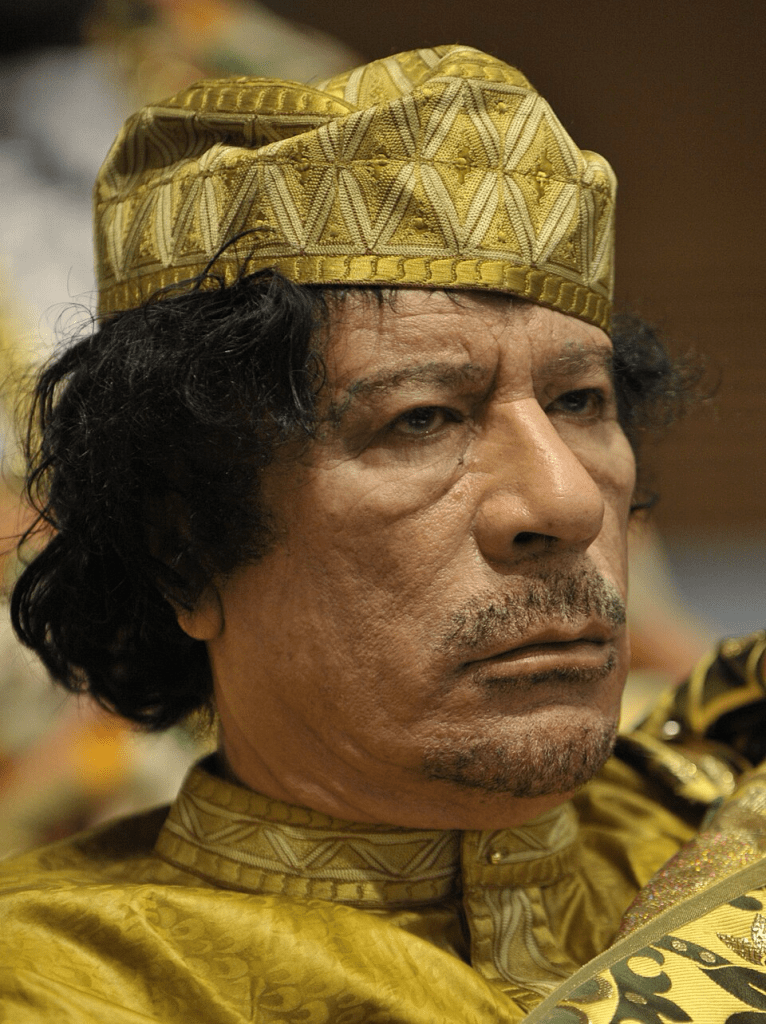
Muammar Gaddafi.
Image Wikipedia

Four

On 20 October 2011, which long-time Libyan leader was captured and killed during the civil conflict?  
Muammar Gaddafi
Muammar Gaddafi had ruled Libya for 42 years before being overthrown during the Arab Spring uprisings. His death, which ended one of Africa’s longest dictatorships, lead to years of instability in Libya.


Five

Which U.S. President signed the Louisiana Purchase Treaty on 20 October 1803?  
Thomas Jefferson
The Louisiana Purchase doubled the size of the United States, adding roughly 828,000 square miles of territory.

On This Day: October 20th

Some trivia about today, October 20th.


Flag of the United States (1795–1818).
Image Wikipedia

One

On 20 October 1973, which Australian landmark officially opened to the public?  
Sydney Opera House

Two

The Battle of Valdivia, part of the Chilean War of Independence, took place in which decade?  
1820s

Three

Which iconic rock musician gave his final live performance with his band, the Traveling Wilburys, on this day in 1990?

Four

On 20 October 2011, which long-time Libyan leader was captured and killed during the civil conflict?

Five

Which U.S. President signed the Louisiana Purchase Treaty on 20 October 1803?  
Thomas Jefferson

Good luck! I’ll Post the answers later.

The World of Imagination is Boundless—Answers

Houyhnhnms driving a herd of Yahoos.
Image Metropolitan Museum of Art/Wikipedia

One

Jonathan Swift, author and clergyman, died on this date in 1745.  The Wikipedia quote below describes a fictional race from his most famous work but what descriptive word is missing, and what’s the title of the work which has also been removed?

Houyhnhnms are a fictional race of intelligent … described in the last part of … by Jonathan Swift.
— Wikipedia

Answers: Horses and Gulliver’s Travels

Gulliver’s Travels, a 1726 prose satire by Jonathan Swift, satirises human nature and the “travellers’ tales” genre. It popularised the fictional island of Lilliput and is considered a classic of English literature. Houyhnhnms, rational equine beings, contrast with the savage Yahoos, representing the worst of humanity. Gulliver prefers the Houyhnhnms’ company despite their biological differences.


Two

The Unseen University is located in what fictional city, and as a result of a transformation, the university’s librarian became what?

Answers: Ankh-Morpork and an orang-utan

This is from Terry Pratchett’s Discworld series of novels. Ankh-Morpork, a fictional city, draws inspiration from real-world cities like Tallinn, Prague, London, Seattle and New York City. Pratchett aimed for consistency between the city’s descriptions and its map to enhance visualisation. The Unseen University, a school of wizardry in the Discworld series, is situated in Ankh-Morpork and staffed by inept wizards.


Three

Mos Eisley is a city in which science fiction franchise, and on which planet is it situated?

Answers: Star Wars and Tatooine

Tatooine, a fictional desert planet in the Star Wars universe, is where Luke and Anakin Skywalker reside. Known for its iconic binary sunset, Mos Eisley, the planet’s largest city, is a bustling spaceport with a thriving criminal underworld. Chalmun’s Cantina, a popular saloon frequented by diverse alien species, is located there.


Four

In a trilogy published in the early 1950s, a series of short stories explores the decline of a galactic empire, drawing parallels to the fall of the Western Roman Empire. The story centres on Hari Seldon, a mathematician and psychologist, who develops psychohistory, a new science. What is the title of the trilogy and its author?

Answers: The Foundation Trilogy by Isaac Asimov

Isaac Asimov’s Foundation series, inspired by Gibbon’s The Decline and Fall of the Roman Empire, explores the concept of psychohistory, a method for predicting societal behaviour. The series follows the Foundation, established by Hari Seldon on Terminus, as it navigates challenges and strives to shorten the impending age of barbarism following the Galactic Empire’s collapse. The original trilogy, comprising Foundation, Foundation and Empire, and Second Foundation, was published between 1951 and 1953.


Five

Arthur Dent, a human, embarks on a journey with Ford Prefect, an alien, after Earth’s destruction. He discovers Earth was a supercomputer designed to uncover the ‘Ultimate Question of Life the Universe and Everything’ and his mind holds the answer. What is the six-word title of this work, and in what medium was it first published?

Answers: The Hitchhiker’s Guide to the Galaxy; Radio series

The Hitchhiker’s Guide to the Galaxy, a comedy science fiction franchise created by Douglas Adams, follows Arthur Dent’s adventures after Earth’s destruction. The franchise includes radio, novels, comics, TV, film and a 40th-anniversary celebration.

The World of Imagination is Boundless

The world of reality has its limits;
the world of imagination is boundless.
— Jean-Jacques Rousseau

Today the first question is related to today’s date, October 19th, setting a theme for the remainder. There are two answers required for each question.

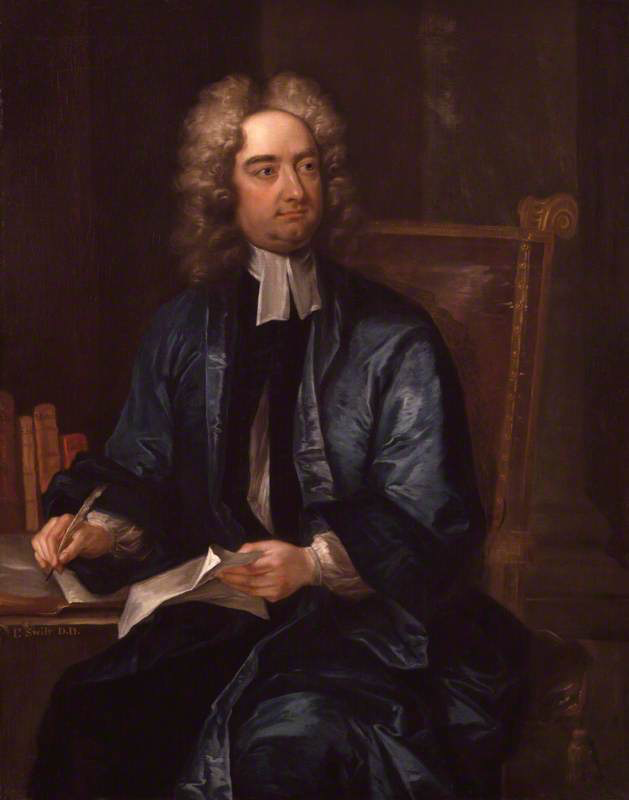
Jonathan Swift.
Image Wikipedia

One

Jonathan Swift, author and clergyman, died on this date in 1745.  The Wikipedia quote below describes a fictional race from his most famous work but what descriptive word is missing, and what’s the title of the work which has also been removed?

Houyhnhnms are a fictional race of intelligent … described in the last part of … by Jonathan Swift.
— Wikipedia

Two

The Unseen University is located in what fictional city, and as a result of a transformation, the university’s librarian became what?

Three

Mos Eisley is a city in which science fiction franchise, and on which planet is it situated?

Four

In a trilogy published in the early 1950s, a series of short stories explores the decline of a galactic empire, drawing parallels to the fall of the Western Roman Empire. The story centres on Hari Seldon, a mathematician and psychologist, who develops psychohistory, a new science. What is the title of the trilogy and its author?

Five

Arthur Dent, a human, embarks on a journey with Ford Prefect, an alien, after Earth’s destruction. He discovers Earth was a supercomputer designed to uncover the ‘Ultimate Question of Life the Universe and Everything’ and his mind holds the answer. What is the six-word title of this work, and in what medium was it first published?

Good luck! I’ll post the answers later.