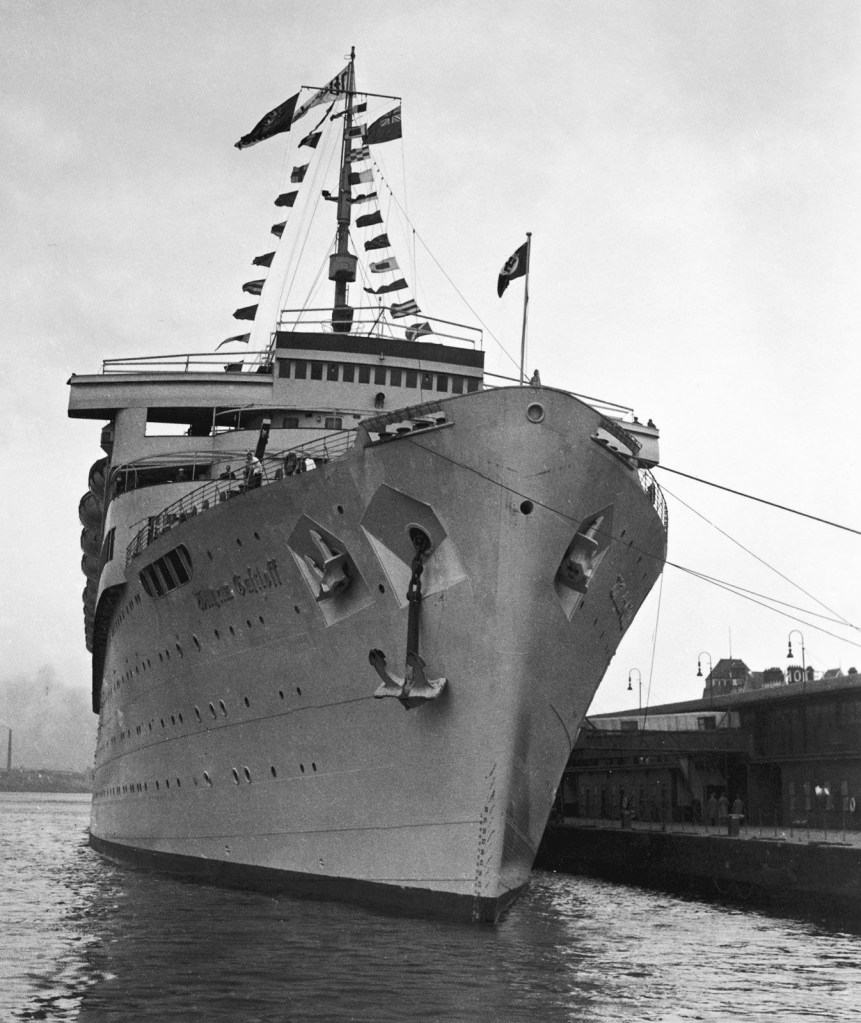
On 30 January 1945, the greatest maritime disaster in history occurred as the German ocean liner Wilhelm Gustloff was sunk. In what body of water was this sinking, and approximately how many people perished?
Two
On this day in 1847, Yerba Buena became what North American city?
Three
Charles I, king of England, Scotland, and Ireland, was executed in London. In what decade did this occur?
Four
Oliver Cromwell was one of the regicides responsible for Charles I’s execution. What happened to Cromwell two years after his own death?
Five
On this day in 1931 City Lights premiered. The film was written, produced, directed by, and starred whom?
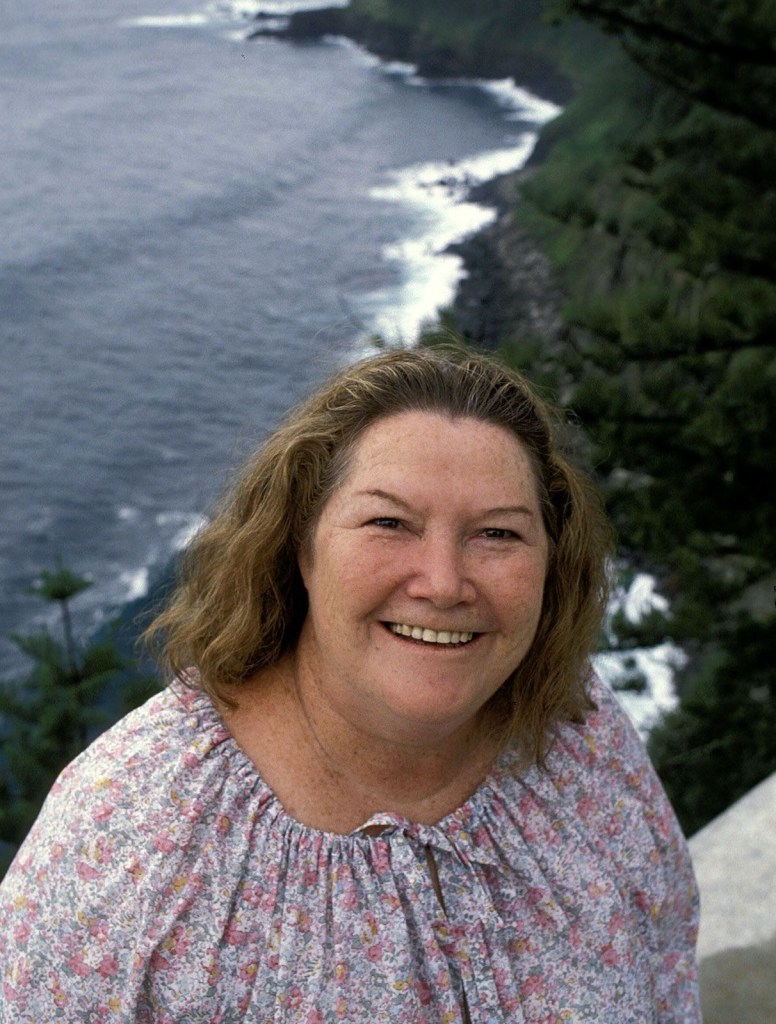
Australian novelist Colleen McCullough was best known for what romance set in a fictional Drogheda—named after Drogheda, Ireland—a sheep station in the Australian Outback?
Answer: The Thorn Birds
The Thorn Birds, a 1977 novel by Colleen McCullough, is a family saga set on an Australian sheep station. It is the best-selling book in Australian history and inspired an eponymous television series, which became one of the most-watched mini-series of all time. Colleen McCullough died today in 2015, aged 77.
Two
Who, born today in 1966, scored their somewhat controversial 1,000th career goal while playing for Vasco da Gama against Sport Recife in 2007?
Answer: Romário
Romário’s 1,000th career goal, scored from a penalty kick for Vasco da Gama, sparked debate due to his inclusion of goals from friendlies and unofficial games. While celebrated in Brazil, the milestone’s validity was questioned internationally. After his football career ended, he became a politician, advocating for people with disabilities.
Three
Oprah Winfrey was born on January 29, 1954, but in which U.S. state was she born?
Answer: Mississippi
Born in Kosciusko, Mississippi Oprah Winfrey, an American media mogul, is best known for her influential talk show, The Oprah Winfrey Show. She is the richest Black woman and was once the world’s only Black billionaire.
Four
Released in cinemas today in 1964, Dr. Strangelove… but what was the full title?
Answer: Dr. Strangelove or: How I Learned to Stop Worrying and Love the Bomb
Dr. Strangelove is a 1964 political satire black comedy film directed by Stanley Kubrick. The film, loosely based on the novel Red Alert, parodies Cold War fears of nuclear war and stars Peter Sellers in three roles. It is widely considered one of the greatest and most influential films ever made.
Five
Who, born on this day in 1939, an Australian journalist and author, has used the pseudonyms Rose Blight and Dr. G?
Answer: Germaine Greer
Germaine Greer, an Australian writer and public intellectual, is a prominent and controversial figure in feminism. She was the columnist Rose Blight in Private Eye and Dr. G in Oz.
Five questions about events related to today’s date, January 29th.
One
Australian novelist Colleen McCullough was best known for what romance set in a fictional Drogheda—named after Drogheda, Ireland—a sheep station in the Australian Outback?
Two
Who, born today in 1966, scored their somewhat controversial 1,000th career goal while playing for Vasco da Gama against Sport Recife in 2007?
Three
Oprah Winfrey was born on January 29, 1954, but in which U.S. state was she born?
Four
Released in cinemas today in 1964, Dr. Strangelove… but what was the full title?
Five
Who, born on this day in 1939, an Australian journalist and author, has used the pseudonyms Rose Blight and Dr. G?
On this day, Charlemagne, the ruler of the Holy Roman Empire, died in Aachen, Germany. In what century did this occur?
Answer: 9th Century
Charlemagne, an 8th-century Frankish king, united most of Europe, restored the Western Roman Empire, and facilitated a cultural renaissance. He was crowned ’emperor of the Romans’ by Pope Leo III in 800 CE.
Two
In 1813, Jane Austen’s Pride and Prejudice was first published in the United Kingdom. The novel features Mr and Mrs Bennet and their family. How many daughters do they have, and what are their names?
Answer: Five; Jane, Elizabeth, Mary, Catherine ‘Kitty’ and Lydia Bennet
Pride and Prejudice follows Elizabeth Bennet’s character development as she learns about hasty judgements and the difference between superficial and actual goodness. The novel examines the societal pressures on the Bennet family, particularly the expectation that their daughters must marry well to secure their future.
Three
On this day, a proclamation by the Monarch of Canada officially introduced a new Canadian flag. In which decade was this, and which monarch made the proclamation?
Answer: 1960s; Queen Elizabeth II
On this day in 1965, Queen Elizabeth II, in her role as Queen of Canada signed the Royal proclamation of the national flag of Canada. The hand written illuminated document on vellum had ben flown to the United Kingdom for the signing.
Four
In 1896, Walter Arnold of East Peckham, Kent, U.K., became the first person convicted of speeding in a horseless carriage after a police chase on 28th January. At what speed was he driving?
Answer: 8mph
Guinness World Records highlights several key points about Walter Arnold’s offence. He received this first speeding ticket on January 28, 1896, for driving at 8 mph in a 2 mph zone. Arnold was charged with multiple violations, including operating a locomotive without a horse, operating it with fewer than three people, exceeding the speed limit, and failing to display his name and address. Found guilty on all counts, he was fined £4 7s, with 10 shillings specifically for speeding. Adjusted for inflation, this total fine would amount to £507 today, as of December 2025.
Five
Pippi Långstrump, a 1945 Swedish children’s novel, was first published in English in 1950. What English title was it published under, and who was its author?
Answer: Astrid Lindgren
Pippi Longstocking, a beloved children’s book by Astrid Lindgren, follows the adventures of a strong, independent nine-year-old girl living alone with her monkey and horse. The book, originally published in Swedish in 1945, has been translated into numerous languages and adapted for film and television. On this day in 2002, Astrid Lindgren died at the age of 94.
On this day, Charlemagne, the ruler of the Holy Roman Empire, died in Aachen, Germany. In what century did this occur?
Two
In 1813, Jane Austen’s Pride and Prejudice was first published in the United Kingdom. The novel features Mr and Mrs Bennet and their family. How many daughters do they have, and what are their names?
Three
On this day, a proclamation by the Monarch of Canada officially introduced a new Canadian flag. In which decade was this, and which monarch made the proclamation?
Four
In 1896, Walter Arnold of East Peckham, Kent, U.K., became the first person convicted of speeding in a horseless carriage after a police chase on 28th January. At what speed was he driving?
Five
Pippi Långstrump, a 1945 Swedish children’s novel, was first published in English in 1950. What English title was it published under, and who was its author?
In July 1985, Live Aid was held simultaneously at two venues on either side of the Atlantic. What were the venues?
Answer: Wembley Stadium, London and JFK Stadium, Philadelphia
Live Aid, a benefit concert held simultaneously at Wembley Stadium in London and JFK Stadium in Philadelphia on July 13, 1985, was organised by Boomtown Rats frontman Bob Geldof and Ultravox vocalist Midge Ure. The event attracted an estimated 1.5 billion television viewers and raised millions of dollars for famine relief in Ethiopia.
Two
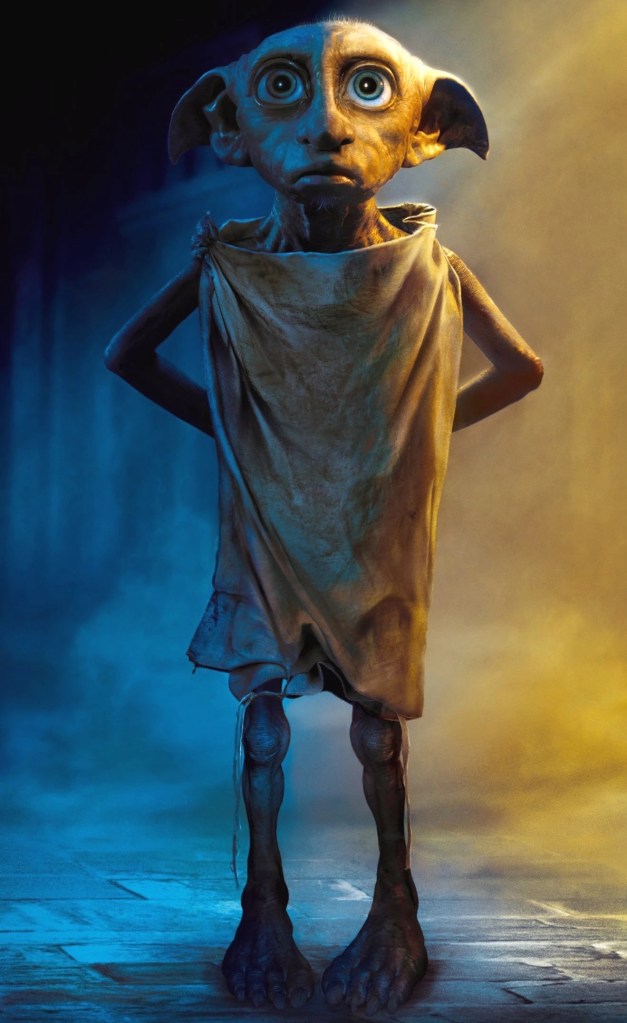
Dobby, the house-elf from Harry Potter, was in the news a couple of years ago when the National Trust asked fans not to leave memorabilia at the site of his grave at Freshwater West Beach, Pembrokeshire, Wales. What one item associated with Dobby and Harry Potter have fans been leaving?
Answer: Sock
Many fans have been leaving a sock for Dobby, referencing the fact that it was a sock Harry Potter used to trick Lucius Malfoy to set the house-elf free. Freshwater West, a ‘Site of Special Scientific Interest’, is home to large grey seals, harbour porpoises, and some of the world’s largest seabird populations. The National Trust asks visitors to leave no trace – no socks included.
Three
What creature, from Greek mythology, is being described here: ‘a creature with the head, arms, and torso of a man and the body and legs of a horse’?
Answer: Centaur
Centaurs, creatures from Greek mythology with the upper body of a human and the lower body of a horse, were known for their wild nature and inhabited various regions in Thessaly and beyond. They also appear in Roman mythology and medieval bestiaries. In modern fiction, centaurs appear in C.S. Lewis’s Chronicles of Narnia and J.K. Rowling’s Harry Potter.
Four
What song opens ‘We’re caught in a trap, I can’t walk out’?
Answer: Suspicious Minds
Mark James’s 1968 song Suspicious Minds initially failed to chart, but Elvis Presley later recorded it, transforming it into a number one hit and earning it a Grammy Hall of Fame induction.
Five
An African dictator who was in office as the President between January 1971 and April 1979 declared himself the uncrowned King of Scotland. Who was this dictator, and what country did he rule?
Answer: Idi Amin; Uganda
Idi Amin, a Ugandan military officer, ruled as a dictator from 1971 to 1979 after overthrowing President Milton Obote. His regime was marked by human rights abuses, economic collapse, and international isolation. Amin, who had become known as ‘The Butcher of Uganda’, was ousted by Tanzanian forces in 1979 and lived in exile until his death in 2003.
In July 1985, Live Aid was held simultaneously at two venues on either side of the Atlantic. What were the venues?
Two
Dobby, the house-elf from Harry Potter, was in the news a couple of years ago when the National Trust asked fans not to leave memorabilia at the site of his grave at Freshwater West Beach, Pembrokeshire, Wales. What one item associated with Dobby and Harry Potter have fans been leaving?
Three
What creature, from Greek mythology, is being described here: ‘a creature with the head, arms, and torso of a man and the body and legs of a horse’?
Four
What song opens ‘We’re caught in a trap, I can’t walk out’?
Five
An African dictator who was in office as the President between January 1971 and April 1979 declared himself the uncrowned King of Scotland. Who was this dictator, and what country did he rule?
Here are the answers to my earlier post. According to the Oxford English Dictionary ‘gallimaufry’ originated: mid-16th century: from archaic French galimafrée ‘unappetizing dish’, perhaps from Old French galer ‘have fun’ + Picard mafrer ‘eat copious quantities’.
Today we have gallimaufry, ‘a confused jumble or medley of things’.
Robert Langdon, The Da Vinci Code. Image Screenrant
One
What ’S’ is a subject in which Professor Robert Langdon specialises at Harvard in the novel and film The Da Vinci Code?
Answer: Symbology
Langdon is Professor of Religious Iconology and Symbology at Harvard University. The Oxford English Dictionary defines symbology as ‘the study or use of symbols’ or ‘symbols collectively’.
Two
What ‘S’ is the town of Freddie Mercury’s birth?
Answer: Stone Town (in Zanzibar)
Freddie Mercury, born Farrokh Bulsara in Stone Town, in the British Protectorate of Zanzibar (now Tanzania) in 1946. He spent a large part of his childhood in India, where he attended St. Peter’s School and formed a band, the Hectics.
Three
What ‘W’ does an oenophile love?
Answer: Wine
Oenophile is defined as ‘a connoisseur of wines’. Its origins are from the mid-19th century: from Greek oinos ‘wine’ + -phile. Oxford English Dictionary.
Four
What ‘A’ is the name of the submarine commanded by Gene Hackman’s character in Crimson Tide?
Answer: Alabama (USS Alabama)
The film centres on a conflict between a submarine commander and his XO over a missile launch order, mirroring a Cuban Missile Crisis incident onboard the Soviet submarine B-59.
Five
‘G’ was the first initial of the author of The Canterbury Tales. What are this writer’s first and last names?
Answer: Geoffrey Chaucer
Geoffrey Chaucer, an English poet and writer, is best known for The Canterbury Tales and is considered the ‘father of English literature.’ The Canterbury Tales, an anthology of twenty-four stories written by Chaucer between 1387 and 1400, are widely regarded as his magnum opus and a paramount work of English literature. The tales, presented as part of a fictional storytelling contest, are incomplete, with Chaucer’s intention being to write four stories from the perspective of each of the 30 pilgrims.
The post title is from the epigraph in Tam o’ Shanter.
Here are the answers to the questions I posted earlier.
Today’s questions begin with a person born on this day and continue in a theme from there.
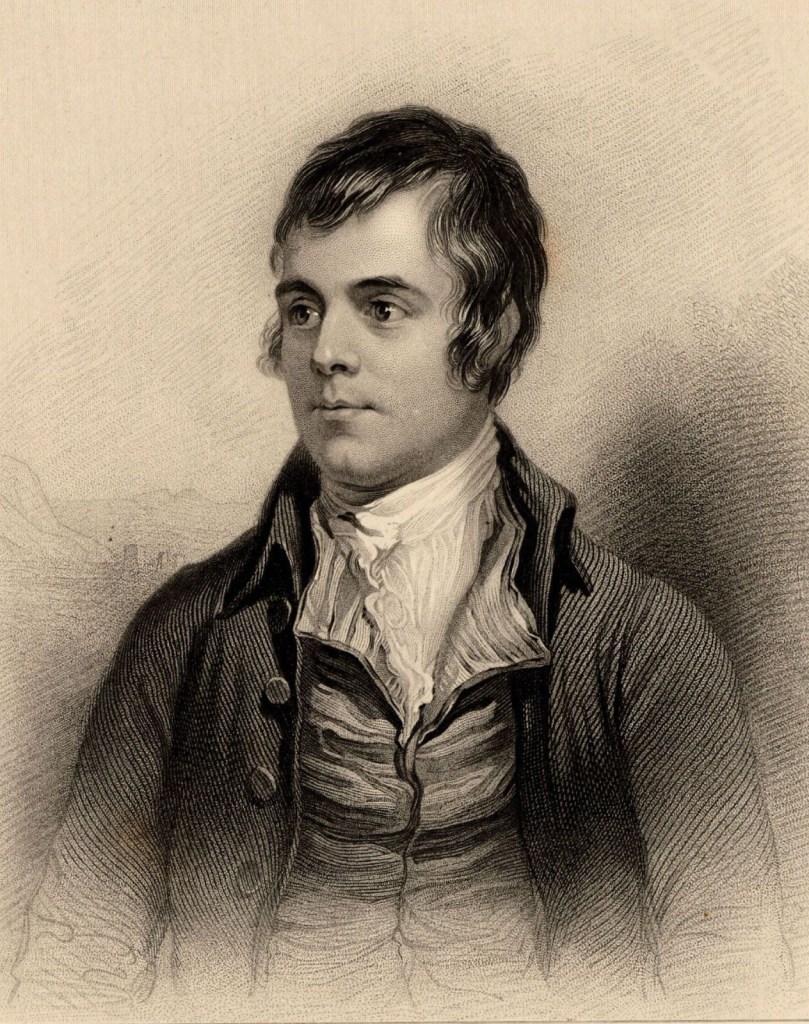
Robert Burns, engraving from A Biographical Dictionary of Eminent Scotsmen, 1870. Image Encyclopædia Britannica
One
Robert Burns, the national poet of Scotland, was born in Alloway, Ayrshire on this day. In what century did he life?
Answer: 18th century
Robert Burns, Scotland’s national poet, was born in 1759 to a struggling farmer. Witnessing his father’s hardships fuelled Burns’ rebellion against the social order and his satirical writing. He received some formal education and was influenced by 18th-century English writers, Scottish folk songs, and his own experiences. He died in 1796.
Two
The title character in a Robert Burns narrative poem had a horse, Maggie, which was left without a tail — ‘And left poor Maggie scarce a stump’ — who was this title character?
Answer: Tam o’ Shanter
Tam o’ Shanter by Robert Burns tells of Tam, who, after a long drinking session, rides home late at night and encounters witches and the Devil dancing in a haunted church. His drunken curiosity nearly kills him, and he escapes only by fleeing across a river, losing his horse’s tail.
Three
In The Catcher in the Rye, Holden Caulfield bases his fantasy of being a ‘catcher in the rye’ on a misheard line from a song. What song?
Answer: Comin’ Thro’ the Rye
Holden mishears the lyric ‘If a body meet a body coming through the rye’ as ‘If a body catch a body coming through the rye’, and the mishearing symbolises his desire to protect the innocence of children by saving them from the loss of childhood and the corruption of the adult world.
Four
Where did Robert Burns die in 1796, and where is he buried?
Answer: Dumfries
Living in Dumfries, Robert Burns died aged 37, possibly due to a rheumatic heart condition and a bacterial infection, and was initially buried in St. Michael’s Churchyard before being moved to the Burns Mausoleum in the same churchyard. His son, Maxwell, was born on the day of his funeral. In 1834, his widow, Jean Armour, was buried beside him.
Five
What item was Burns describing with these words?
Fair fa’ your honest, sonsie face, Great Chieftain o’ the Puddin-race!
The quote in the question is from Burns’s Address to a Haggis (1786) and might be translated from Scots into English as ‘Good luck to your honest, cheerful face, / Great leader of the sausage race!’. Address to a Haggis is described by Burns Country as —
A humorous and celebratory poem by Robert Burns, addressed to a haggis, a traditional Scottish dish made of sheep’s stomach. The poem praises the haggis as a symbol of Scottish identity and culture, and contrasts it with the French cuisine of the elite.
The full text of Address to a Haggis is shown below.
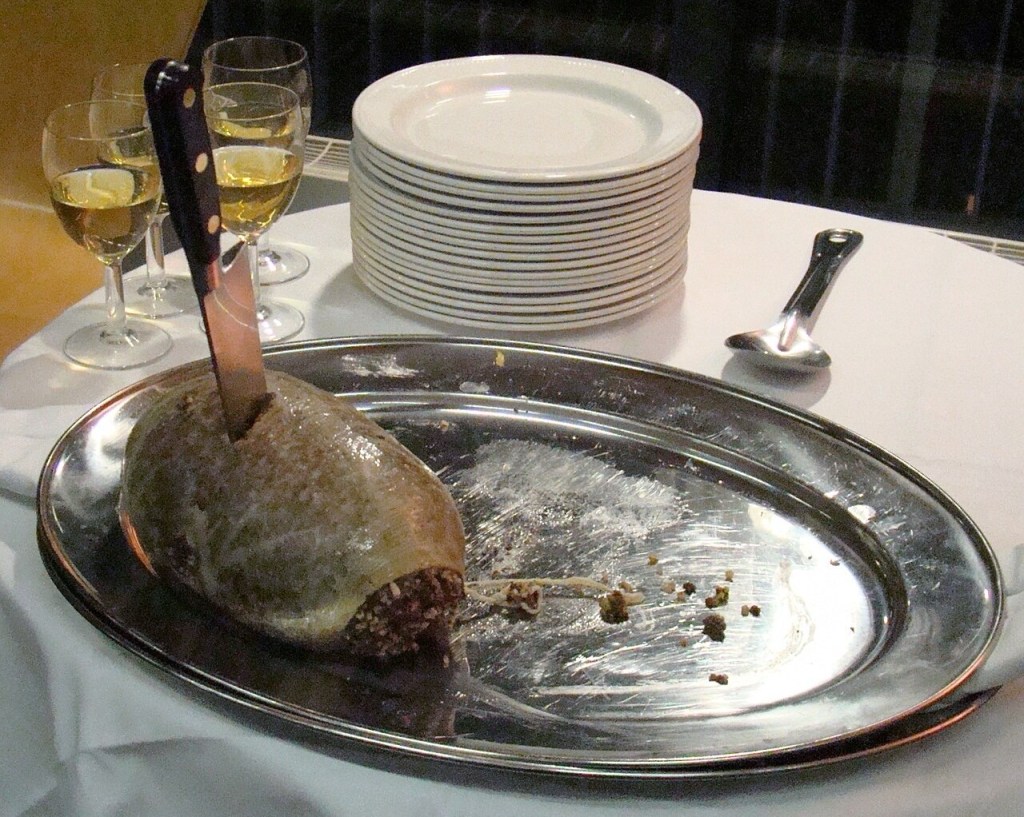
‘His knife see Rustic-labour dight, An’ cut ye up wi’ ready slight, Trenching your gushing entrails bright, Like onie ditch; And then, O what a glorious sight, Warm-reekin, rich!’ Image Wikimedia Commons Verse Scottish Poetry Library
Address to a Haggis (1786)
Fair fa’ your honest, sonsie face, Great Chieftain o’ the Puddin-race! Aboon them a’ ye tak your place, Painch, tripe, or thairm: Weel are ye wordy of a grace As lang ‘s my arm.
The groaning trencher there ye fill, Your hurdies like a distant hill, Your pin wad help to mend a mill In time o’ need, While thro’ your pores the dews distil Like amber bead.
His knife see Rustic-labour dight, An’ cut ye up wi’ ready slight, Trenching your gushing entrails bright, Like onie ditch; And then, O what a glorious sight, Warm-reekin, rich!
Then, horn for horn, they stretch an’ strive: Deil tak the hindmost, on they drive, Till a’ their weel-swall’d kytes belyve Are bent like drums; Then auld Guidman, maist like to rive, Bethankit hums.
Is there that owre his French ragout, Or olio that wad staw a sow, Or fricassee wad mak her spew Wi’ perfect sconner, Looks down wi’ sneering, scornfu’ view On sic a dinner?
Poor devil! see him owre his trash, As feckless as a wither’d rash, His spindle shank a guid whip-lash, His nieve a nit; Thro’ bluidy flood or field to dash, O how unfit!
But mark the Rustic, haggis-fed, The trembling earth resounds his tread, Clap in his walie nieve a blade, He’ll make it whissle; An’ legs, an’ arms, an’ heads will sned, Like taps o’ thrissle.
Ye Pow’rs wha mak mankind your care, And dish them out their bill o’ fare, Auld Scotland wants nae skinking ware That jaups in luggies; But, if ye wish her gratefu’ prayer, Gie her a Haggis!


 Quizology Online