Tag: art

  • Where – Who – Where – Who (& When) – Where—Answers

    Here are the answers to my earlier questions.

    All of today’s questions are connected to the date, March 20th. There are three places and two people to find in these multiple-choice questions.
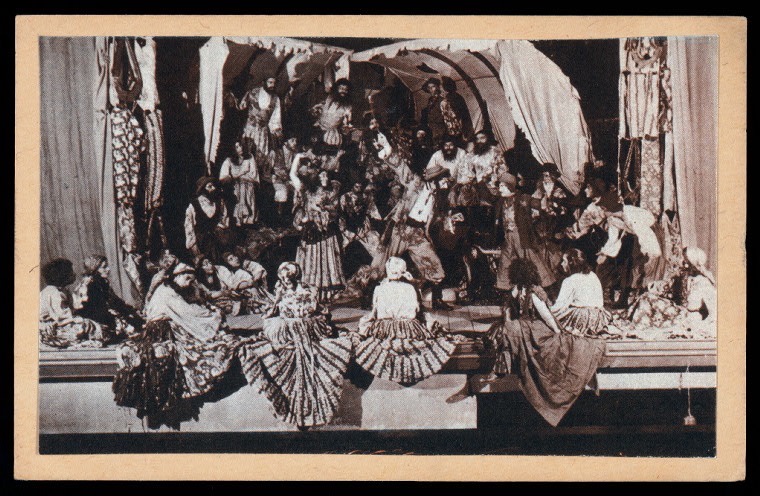
    The Gypsy Theatre, Moscow, c.1931. Image New York Public Library via Wikimedia Commons

    One

    The first Romani language operetta, Children of the Forests, premiered on 20 March 1888. Where was it staged?

    1. Bucharest, Romania
    2. Kyiv, Ukraine
    3. Moscow, Russia

    Answer: 3. Moscow, Russia.

    The premiere of the very first Romani language operetta Children of the Forests was staged in the Maly Theatre, Moscow, Russia on 20 March 1888. It was performed solely by the Romani troupe. The production ran for 18 years and was a great success. The first Romani theatre troupe, founded by Nikolai Shishkin, performed in Moscow and Saint Petersburg in the late 19th century. The troupe’s success led to the establishment of the Romen Theatre in Moscow in 1931.


    Two

    In 1923, the Arts Club of Chicago hosted the United States’ first showing of Original Drawings by… This event signalled the club’s early embrace of modern art in America. There is an artist’s name missing from the show’s title: who is the artist?

    1. Salvador Dali
    2. Pablo Picasso
    3. Jackson Pollock

    Answer: 2. Pablo Picasso

    The Arts Club of Chicago, founded in 1916, is a private club and public exhibition space dedicated to showcasing international contemporary art. The club, known for its pro-Modernist stance, has presented groundbreaking exhibitions by artists like Pablo Picasso and Jean Dubuffet. It curates its own exhibits, emphasising cutting-edge and avant-garde art.


    Three

    Harriet Beecher Stowe’s Uncle Tom’s Cabin was first published on this date in 1852. Between 1832 and 1850 she lived in a city where her personal observations and research informed the basis of her story. Where was this city?

    1. Alexandria, Virginia
    2. Baltimore, Maryland
    3. Cincinnati, Ohio

    Answers: 3. Cincinatti, Ohio.

    On this day in 1852, Harriet Beecher Stowe published Uncle Tom’s Cabin as a novel. The book, which had previously been serialised, played a crucial role in shifting public opinion towards abolitionism and contributed to the outbreak of the Civil War.


    Four

    Who became the first woman to win the Iditarod Trail Sled Dog Race, and when did she achieve this?

    1. Kelly Quinault in 1973
    2. Libby Riddles in 1985
    3. Molly Semyonova in 1997

    Answers: 2. Libby Riddles in 1985

    The Iditarod Trail Sled Dog Race is an annual long-distance sled dog race in Alaska, covering the distance from Anchorage to Nome in eight to fifteen days. The race, which began in 1973, is a symbolic link to Alaska’s history and a popular sporting event, attracting competitors from around the world. The race is known for its challenging conditions, including blizzards, gale-force winds, and sub-zero temperatures, which with wind chill can reach −100 °F (−73 °C).


    Five

    Albert Einstein submitted his paper The Foundation of the General Theory of Relativity in 1916. Where was he working at that time?

    1. Federal Institute of Technology, Zurich
    2. Prussian Academy of Sciences, Berlin
    3. Charles University, Prague

    Answer: Prussian Academy of Sciences, Berlin.

    Albert Einstein was working at the Prussian Academy of Sciences in Berlin when he published The Foundation of the General Theory of Relativity in 1916. He had accepted a position at the Prussian Academy in 1914, specifically to work on his new theory of gravity. The paper was submitted on March 20, 1916, and published later that year in the journal Annalen der Physik. This period marked a significant time in Einstein’s career, as he was developing groundbreaking theories that would change our understanding of gravity and the universe.
  • Where – Who – Where – Who (& When) – Where

    All of today’s questions are connected to the date, March 20th. There are three places, two people and a year to find in these multiple-choice questions.

    The Gypsy Theatre, c.1931. Image New York Public Library via Wikimedia Commons

    One

    The first Romani language operetta, Children of the Forests, premiered on 20 March 1888. Where was it staged?

    1. Bucharest, Romania
    2. Kyiv, Ukraine
    3. Moscow, Russia

    Two

    In 1923, the Arts Club of Chicago hosted the United States’ first showing of Original Drawings by… This event signalled the club’s early embrace of modern art in America. There is an artist’s name missing from the show’s title: who is the artist?

    1. Salvador Dali
    2. Pablo Picasso
    3. Jackson Pollock

    Three

    Harriet Beecher Stowe’s Uncle Tom’s Cabin was first published on this date in 1852. Between 1832 and 1850 she lived in a city where her personal observations and research informed the basis of her story. Where was this city?

    1. Alexandria, Virginia
    2. Baltimore, Maryland
    3. Cincinnati, Ohio

    Four

    Who became the first woman to win the Iditarod Trail Sled Dog Race, and when did she achieve this?

    1. Kelly Quinault in 1973
    2. Libby Riddles in 1985
    3. Molly Semyonova in 1997

    Five

    Albert Einstein submitted his paper The Foundation of the General Theory of Relativity in 1916. Where was he working at that time?

    1. Federal Institute of Technology, Zurich
    2. Prussian Academy of Sciences, Berlin
    3. Charles University, Prague

    Good luck! I’ll post the answers later.


  • Why a Duck?—Answers

    Here are the answers to my questions which were posted earlier.

    Five random multiple-choice questions for you today.

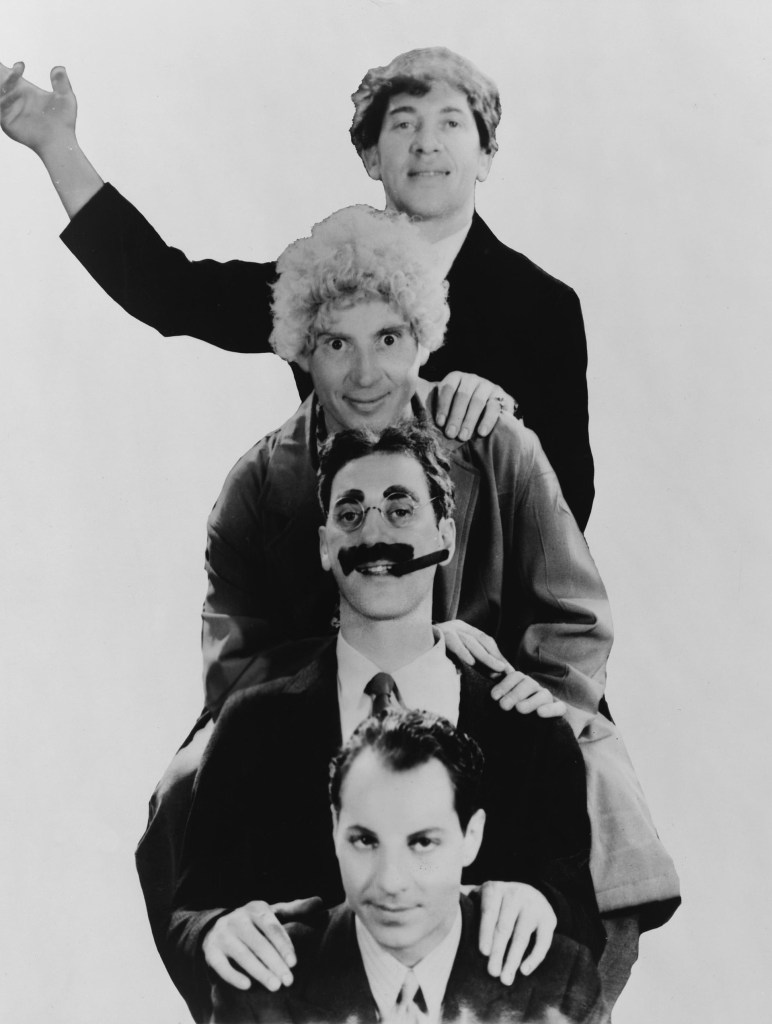
    The Marx Brothers, 1931.
    Image Wikimedia Commons

    One

    Who was the eldest of the Marx Brothers? 

    1. Chico
    2. Groucho
    3. Harpo

    Answer: 1. Chico.

    Chico, born Leonard Joseph Marx in 1887, was the eldest. Harpo, born Adolph Marx in 1888, followed. Groucho, born Julius Henry Marx in 1890, then came Gummo, born Milton Marx in 1893. Finally, Zeppo, born Herbert Manfred Marx in 1901, was the youngest and last of the five Marx brothers. The picture shows them in age order but missing Gummo. From top: Chico, Harpo, Groucho and Zeppo.


    Two

    The African polecat is also known as a …

    1. Zimbal
    2. Zorilla 
    3. Zugerro

    Answer: 3. Zorilla.

    The striped polecat, native to sub-Saharan Africa, is a nocturnal, mostly carnivorous mammal with distinctive black and white fur. It uses its long claws to dig for prey and its spray to deter predators. While mostly solitary, females tolerate males during breeding season, and the species is not considered threatened.


    Three

    What movement which flourished in the early twentieth century was also referred to as Style Moderne?

    1. Art Deco
    2. Naturalism
    3. Realism

    Answer: 1. Art Deco.

    Art Deco, a style of visual arts, architecture, and product design, emerged in Paris in the 1910s and flourished internationally during the 1920s and 1930s. Influenced by various artistic movements and cultures, it represented luxury and progress, utilising both rare and new materials. While its popularity waned after World War II, Art Deco remains a significant architectural and design style.


    Four

    At what age did Alexander the Great die?

    1. 32 years old
    2. 41 years old
    3. 49 years old

    Answer: 1. 32 years old.

    Alexander the Great, king of Macedon (20/21 July 356 BCE – 10/11 June 323 BCE), created one of the largest empires in history through a decade-long military campaign. He conquered the Persian Empire, invaded India, and founded numerous cities, spreading Greek culture and initiating the Hellenistic period. His legacy includes cultural diffusion, military tactics, and legendary status in both Greek and non-Greek cultures.


    Five

    1. Florida
    2. Louisiana
    3. Texas

    Answer: 3. Texas.

    The latitude of the three cities listed are as follows with the southernmost first…

    • Austin, Texas (30.2672° N)
    • Tallahassee, Florida (30.4383° N)
    • Baton Rouge, Louisiana (30.4571° N)

    Why a Duck? — Post Title

    Why a Duck? is a well-known comedy routine from the Marx Brothers’ movie The Cocoanuts (1929). The scene, features Groucho mentioning an ‘viaduct’ and Chico asking ‘Why a duck?’. This turns into a prolonged routine which is a favourite among fans and has been analysed in Richard Anobile’s book of the same name. The script for the scene is on the Marx Brothers website here.


  • Why a Duck?

    Five random multiple-choice questions for you today.

    The Marx Brothers, 1931.
    Image Wikimedia Commons

    One

    Who was the eldest of the Marx Brothers? 

    1. Chico
    2. Groucho
    3. Harpo

    Two

    The African polecat is also known as a …

    1. Zimbal
    2. Zorilla 
    3. Zugerro

    Three

    What movement which flourished in the early twentieth century was also referred to as Style Moderne?

    1. Art Deco
    2. Naturalism
    3. Realism

    Four

    At what age did Alexander the Great die?

    1. 32 years old
    2. 41 years old
    3. 49 years old

    Five

    1. Florida
    2. Louisiana
    3. Texas

    Good luck! I’ll post the answers later.


  • Mr Watson—come here—I want you — Answers

    Here are the answers to the questions I posted earlier.

    Today’s questions all relate to the date, March 7th.

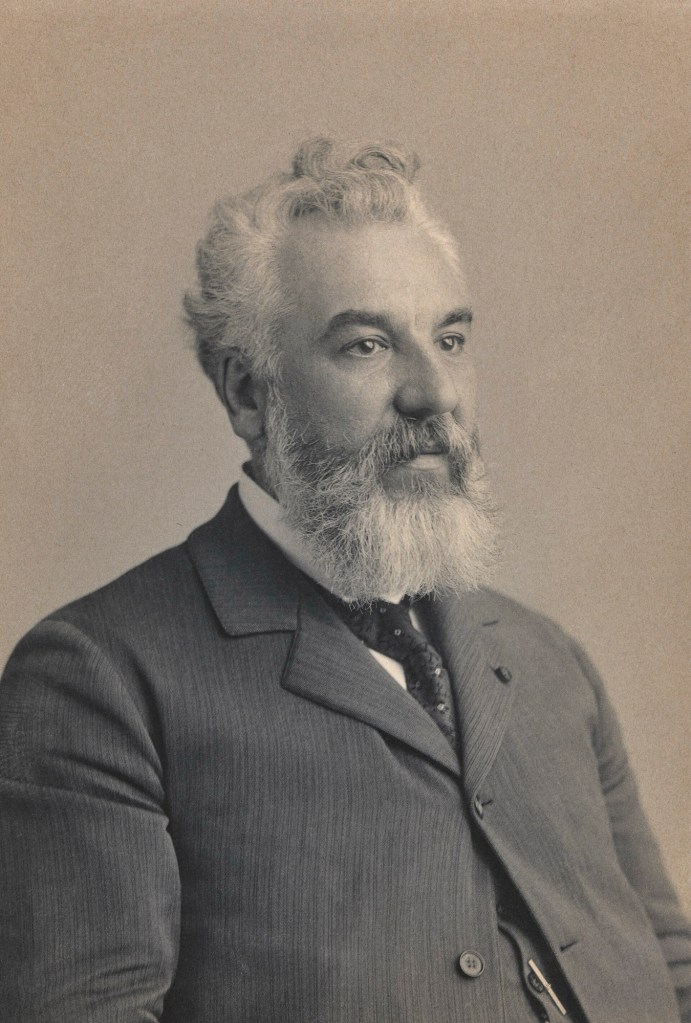
    Alexander Graham Bell.
    Image Wikimedia Commons

    One

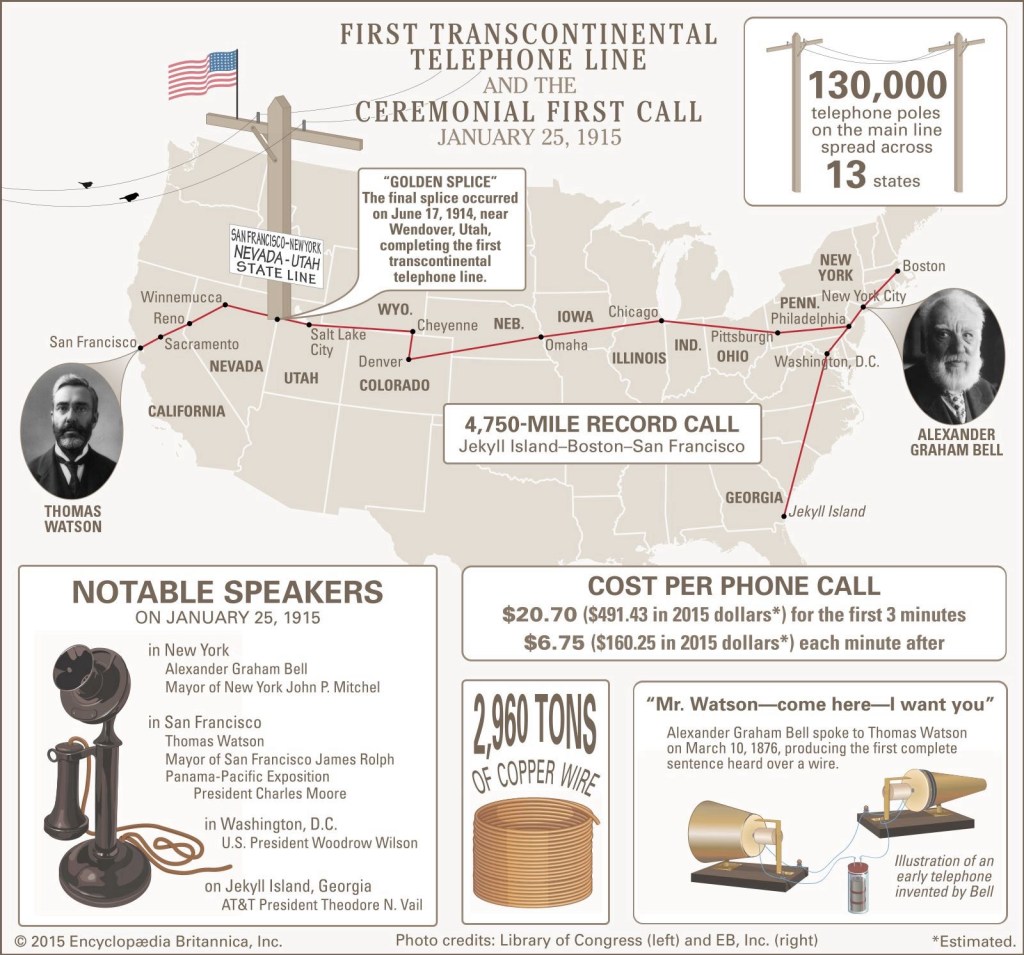
    On 7 March 1876, Alexander Graham Bell secured a patent for his invention, the telephone. Once the first transcontinental telephone line was laid across the United States, a ceremonial first transcontinental call was made. Which decade did this happen in?

    Answer: 1910s.

    On 25 January 1915, Alexander Graham Bell made the ceremonial first transcontinental call. From New York City, he called his assistant, Thomas Watson, in San Francisco using the same words he’d used when he first successfully called Watson in a neighbouring room: ‘Mr Watson—come here—I want you.’ This time, Watson replied, ‘It will take me five days to get there now!’ The call also involved Woodrow Wilson, the US president, in Washington D.C. and Theodore Vail, AT&T president, on Jekyll Island, Georgia. 

    First transcontinental telephone call.
    Image Encyclopædia Britannica

    Two

    Rob Roy MacGregor, a Scottish outlaw, was the subject of the 1817 novel Rob Roy. Who was the author of this work?

    Answer: Sir Walter Scott.

    Rob Roy, a Highland outlaw known for his red hair and exploits against the Duke of Montrose, was often compared to Robin Hood. However, his life was marked by brigandage, debt, and a complex relationship with the Jacobite cause. Born in 1671, Robert Roy MacGregor was a Scottish outlaw and Jacobite hero who initially became a cattleman and later a respected figure. His life took a turn when he defaulted on a loan and was branded an outlaw. Despite this status, he gained fame, and his story was immortalised in literature and film and his letters reveal that he was well educated, suggesting that the view of him as a mere brutish highwayman does not do him justice. 


    Three

    Born in 1875 in Cibourne, France, this composer’s work would be used by skaters Jayne Torvill and Christopher Dean in their gold medal winning performance at the 1984 Sarajevo Winter Olympics. Who was this composer and what was the piece of music?

    Answers: Maurice Ravel; Boléro.

    Performing their free dance to Boléro, British ice dancers Jayne Torvill and Christopher Dean triumphed at the Sarajevo 1984 Winter Olympics, securing gold and setting a new record for the highest score ever achieved in a single figure skating programme.


    Four

    On this date in 2024, which Northern European country joined NATO as its 32nd member?

    Answer: Sweden.

    The 2022 Russian invasion of Ukraine prompted a significant reinforcement of NATO’s eastern flank.  Consequently, Sweden, previously neutral, decided to abandon that neutrality and join the alliance.


    Tableau I, Piet Mondrian.
    Image Wikimedia Commons

    Five

    Born in 1872, this Dutch artist became famous for a style featuring black grid lines and blocks of primary colours such as red, blue, and yellow. The style became known as Neoplasticism or De Stijl. Who was the artist?

    Answer: Piet Mondrian.

    Piet Mondrian, a Dutch painter and art theoretician, was a pioneer of 20th-century abstract art. He co-founded the De Stijl art movement and developed Neoplasticism, a non-representational form using primary colours, values, and directions.


  • Mr Watson—come here—I want you

    Today’s questions all relate to the date, March 7th.

    Alexander Graham Bell.
    Image Wikimedia Commons

    One

    On 7 March 1876, Alexander Graham Bell secured a patent for his invention, the telephone. Once the first transcontinental telephone line was laid across the United States, a ceremonial first transcontinental call was made. Which decade did this happen in?


    Two

    Rob Roy MacGregor, a Scottish outlaw, was the subject of the 1817 novel Rob Roy. Who was the author of this work?


    Three

    Born in 1875 in Cibourne, France, this composer’s work would be used by skaters Jayne Torvill and Christopher Dean in their gold medal winning performance at the 1984 Sarajevo Winter Olympics. Who was this composer and what was the piece of music?


    Four

    On this date in 2024, which Northern European country joined NATO as its 32nd member?


    Tableau I.
    Image Wikimedia Commons

    Five

    Born in 1872, this Dutch artist became famous for a style featuring black grid lines and blocks of primary colours such as red, blue and yellow. The style became known as Neoplasticism or De Stijl. Who was the artist?

    Good luck! I’ll post the answers later.


  • Impressionable—Answers

    Here are the answers to my questions which were posted earlier.

    All of these questions relate to today’s date, February 25th.

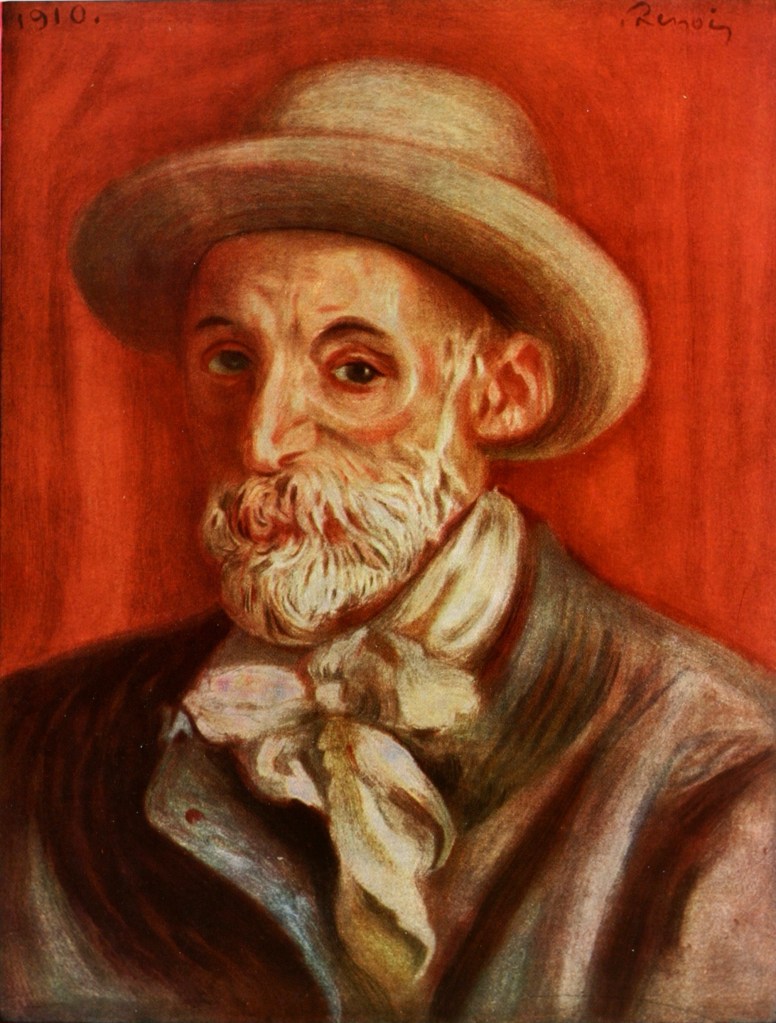
    Pierre-Auguste Renoir, self-portrait, 1910.
    Image Wikimedia Commons

    One

    The painter of the above self-portrait was born in Limoges, France, on 25 February 1841. He became an early Impressionist but later adopted a more traditional style. Who is he?

    Answer: Pierre-Auguste Renoir.

    Pierre-Auguste Renoir (1841-1919) was a French artist and leading Impressionist painter. He later developed a more disciplined technique, focusing on portraits and figure paintings, particularly of women.


    Two

    This author, best known by a pen name but also using another — Joseph Kell, was born John Burgess Wilson on this day in 1917 in an inner-city suburb of Manchester, England. After wartime service, he left the British army in 1946 with the rank of sergeant-major. His most famous work, a dystopian satire published in 1962, was adapted into a controversial film in 1971. What is his best-known pen name?

    Answer: Anthony Burgess.

    Anthony Burgess (1917-1993) was an English novelist, critic, and man of letters renowned for his fictional explorations of modern dilemmas. He wrote over 50 books, including novels, literary criticism, biographies, and musical compositions. Burgess’s works often combined linguistic ingenuity, witty erudition, and sharp social satire. He is best known for his dystopian satire A Clockwork Orange and was also a versatile linguist and literary critic, writing numerous novels, librettos and screenplays.


    Three

    In 1986, after claiming victory in a fraudulent election which led to a military coup and revolution, President Ferdinand Marcos fled his country. Of what country was Marcos president, and which opposition leader replaced him as president?

    Answers: Philippines; Corazon Aquino.

    Ferdinand Marcos fled the Philippines on 25 February 1986, seeking refuge in Hawaii with his family and a vast fortune, in part consisting of 22 crates of cash valued at $717 million, 300 crates of assorted jewellery, $4 million worth of unset precious gems, 65 Seiko and Cartier watches, a 12 by 4 ft box full of pearls, a 3 ft solid gold statue covered in diamonds and other precious stones, $200,000 in gold bullion, nearly $1 million in Philippine pesos, and deposit slips to banks in the United States, Switzerland, and the Cayman Islands worth $124 million. While enjoying a lavish lifestyle, Filipinos back home grappled with the economic consequences of his rule. Amongst other things, Imelda Marcos, the ousted First Lady, was found to have a collection of 2,700 pairs of shoes. The revolution that ousted Marcos was fuelled by widespread discontent, with protests erupting not only in Manila but also in the provinces and islands. Source: Wikipedia.


    Four

    Born in 1943, this musician was a prominent figure in the music world during the swinging sixties. He was originally part of a band where he wrote hits like Here Comes the Sun and While My Guitar Gently Weeps. His sitar teacher was singer Norah Jones’ father. He later enjoyed a successful solo career. Who was he and who taught him to play the sitar?

    Answers: George Harrison; Ravi Shankar.

    George Harrison, lead guitarist of the Beatles, was known for his significant contributions to the band’s musical direction and his successful solo career. He incorporated non-Western musical influences, particularly Indian classical music, into the Beatles’ sound and later established himself as a solo artist with hits like My Sweet Lord. Harrison was also a prolific music and film producer, co-founding HandMade Films and producing acts for Apple Records. He produced the Monty Python’s troupe’s comedy film The Life of Brian (1979).


    Five

    In 1570, Pope Pius V excommunicated the English monarch from the Roman Catholic Church. Who was this monarch?

    Answer: Elizabeth I.

    Elizabeth I, the last Tudor monarch, ruled England and Ireland from 1558 to 1603. Her reign, marked by religious tolerance and cautious foreign policy, saw the establishment of the Church of England and the defeat of the Spanish Armada. Despite numerous courtships, Elizabeth remained unmarried, earning her the moniker ‘Virgin Queen’.


  • Impressionable

    All of these questions relate to today’s date, February 25th.

    Question One. Self-portrait, 1910.
    Image Wikimedia Commons

    One

    The painter of the above self-portrait was born in Limoges, France, on 25 February 1841. He became an early Impressionist but later adopted a more traditional style. Who is he?


    Two

    This author, best known by a pen name but also using another — Joseph Kell, was born John Burgess Wilson on this day in 1917 in an inner-city suburb of Manchester, England. After wartime service, he left the British army in 1946 with the rank of sergeant-major. His most famous work, a dystopian satire published in 1962, was adapted into a controversial film in 1971. What is his best-known pen name?


    Three

    In 1986, after claiming victory in a fraudulent election which led to a military coup and revolution, President Ferdinand Marcos fled his country. Of what country was Marcos president, and which opposition leader replaced him as president?


    Four

    Born in 1943, this musician was a prominent figure in the music world during the swinging sixties. He was originally part of a band where he wrote hits like Here Comes the Sun and While My Guitar Gently Weeps. His sitar teacher was singer Norah Jones’ father. He later enjoyed a successful solo career. Who was he and who taught him to play the sitar?

    Five

    In 1570, Pope Pius V excommunicated the English monarch from the Roman Catholic Church. Who was this monarch?

    Good luck! I’ll post the answers later.


  • The Milky Way—Answers

    Here are the answers to the questions in my earlier post.

    Today’s questions all relate to the date, February 18th.

    Pluto.
    Photograph taken by NASA’s New Horizon spacecraft.
    Image Wikimedia Commons

    One

    In 1930, Clyde Tombaugh discovered what in our solar system?

    Answer: Pluto.

    In 1930, Clyde Tombaugh, an American astronomer, discovered Pluto despite lacking formal training. He attended the University of Kansas on a scholarship and completed his M.A. in astronomy in 1939. Tombaugh worked at the Lowell Observatory, cataloguing over 30,000 celestial objects before leaving in 1946. His research included star clusters, extragalactic nebulae, and planetary observations. In 1950, he predicted Mars’ cratered surface due to its proximity to the asteroid belt, a prediction confirmed by Mariner 4 in the 1960s. Tombaugh also taught at Arizona State College and the University of California, contributing significantly to astronomy.


    Two

    Born in Tokyo in 1933, she is a Japanese artist and musician. In 1968, she released, with her future husband, Unfinished Music No. 1: Two Virgins, a collaborative experimental album. They later lived in an apartment building at 1 West 72nd Street, New York City. Who is she, what is the building at 1 West 72nd Street, NYC named, and who was her collaborative husband-to-be?

    Answer: Yoko Ono; The Dakota; John Lennon.

    Yoko Ono, a Japanese artist, musician, activist, and filmmaker, rose to fame in the 1960s and married John Lennon in 1969. She achieved success in music, including a Grammy-winning album with Lennon, and continues to honour his legacy through philanthropy. The Dakota, a historic luxury apartment building in New York City, was built between 1880 and 1884 in the German Renaissance style by Henry Janeway Hardenbergh. It was one of the first major developments on the Upper West Side and remains the city’s oldest luxury apartment building. Recognised as a National Historic Landmark, The Dakota is celebrated for its unique architecture and has housed numerous artists and celebrities.


    Three

    In 1965, The Gambia gained independence from the United Kingdom. This African nation is situated on which ocean and is bordered by which country?

    Answer: Atlantic Ocean; Senegal.

    The Gambia, Africa’s smallest mainland country, lies along the Atlantic coast surrounded by Senegal and follows the Gambia River through flat, navigable terrain. Its unusual shape stems from 19th‑century territorial agreements between Britain and France. A brief Senegambia confederation existed from 1982 to 1989. The nation, with a 2026 population of around 2.55 million, is a multiparty republic led by President Adama Barrow, with Banjul as its capital. English is the official language, and the main ethnic groups include Malinke, Wolof, Fulani, Diola and Soninke. The economy relies heavily on peanut production and export. Known for its sandy Atlantic beaches and the historic village of Jufureh, The Gambia combines dense rural settlement with cultural and historical links to neighbouring Senegal.


    Four

    Born on this day, Enzo Ferrari, automobile manufacturer, designer, and racing-car driver. In what decade, and in what city, was he born?

    Answer: Modena; 1890s.

    Enzo Ferrari (1898–1988) was an Italian car designer, manufacturer, and racing driver who founded Scuderia Ferrari and later Ferrari SpA. He began as a test driver after World War I, joining Alfa Romeo in 1920 and creating Scuderia Ferrari in 1929 to prepare Alfa race cars. By 1939 he had split from Alfa and formed Auto Avio Costruzioni, which evolved into Ferrari. The first car under his name, the 125 S, appeared in 1947 and won Ferrari’s first Grand Prix. Famous for speed and engineering excellence, his teams dominated the 1950s and 1960s, though tragedy struck with multiple driver fatalities and the death of his son Dino. Ferrari sold a stake to Fiat in 1969, remained president until 1977, and became a motorsport legend.


    Five

    In 2010, WikiLeaks publishes thousands of classified documents which had been disclosed by a U.S. soldier. What is his or her name?

    Answer: Bradley Manning or Chelsea Manning.

    In 2010, WikiLeaks, which had been founded in 2006, released nearly half a million documents on the U.S. wars in Iraq and Afghanistan, and a 2007 video showing a U.S. helicopter attack killing twelve, including two Reuters employees. The Obama administration condemned the leaks as a national security threat. In November 2010, WikiLeaks published 250,000 classified U.S. diplomatic cables, revealing efforts to isolate Iran. Following the leaks, U.S. lawmakers pursued prosecution of Assange and collaborators. Bradley Manning, a U.S. Army analyst, was arrested in May 2010 for releasing the helicopter video and later accused of leaking cables. Manning pleaded guilty to 10 charges, was found guilty of espionage and theft in July 2013, and received a 35-year sentence. The day after sentencing Manning’s attorney issued a press release saying that his client was a female, and asked that she be referred to by her new name of Chelsea and feminine pronouns. WikiLeaks faced setbacks, including being taken offline and losing payment services.


  • The Milky Way

    Today’s questions all relate to the date, February 18th.

    Photograph taken by NASA’s New Horizon spacecraft.
    Image Wikimedia Commons

    One

    In 1930, Clyde Tombaugh discovered what in our solar system?


    Two

    Born in Tokyo in 1933, she is a Japanese artist and musician. In 1968, she released, with her future husband, Unfinished Music No. 1: Two Virgins, a collaborative experimental album. They later lived in an apartment building at 1 West 72nd Street, New York City. Who is she, what is the building at 1 West 72nd Street, NYC named, and who was her collaborative husband-to-be?


    Three

    In 1965, The Gambia gained independence from the United Kingdom. This African nation is situated on which ocean and is bordered by which country?


    Four

    Born on this day, Enzo Ferrari, automobile manufacturer, designer, and racing-car driver. In what decade, and in what city, was he born?


    Five

    In 2010, WikiLeaks publishes thousands of classified documents which had been disclosed by a U.S. soldier. What is his or her name?

    Good luck! I’ll post the answers later.