These questions all relate to today’s date, February 26th.
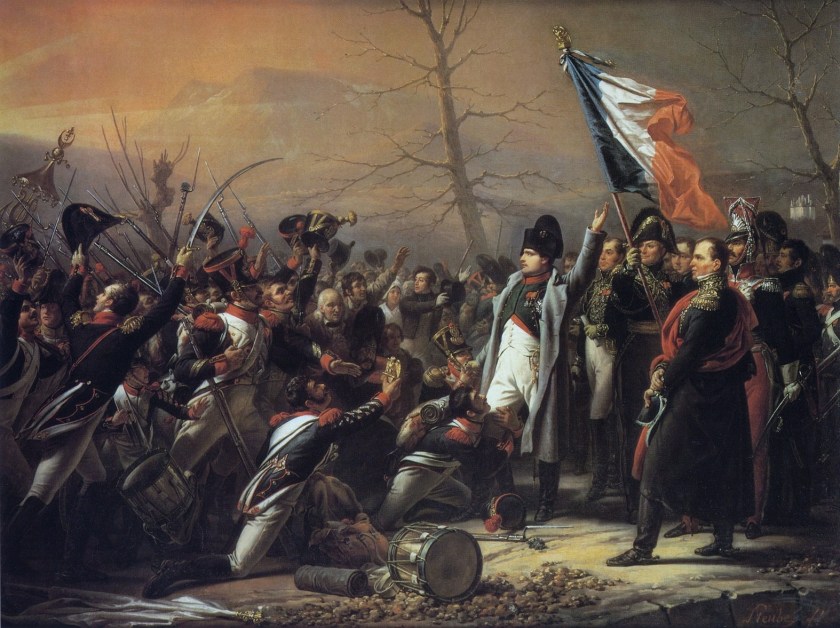
Napoleon’s Return from … 1815 by Charles de Steuben. Image Wikimedia Commons
One
On this day in 1815, Napoleon escaping from captivity ushered in the Hundred Days. From where had he escaped?
Two
Who, born in Arkansas in 1932, often sang railroad songs such as Orange Blossom Special; Hey, Porter and Rock Island Line?
Three
On this day in 1914, less than two years since Titanic sank, her sister ship was launched in Belfast. What was the name of the sister ship?
Four
Born in Besançon, eastern France, in 1802, this novelist, poet and dramatist was one of France’s foremost Romantic writers. His characters include Oliver Cromwell, Archdeacon Claude Frollo and Bishop Muriel. Who is he?
Five
The first non-stop circumnavigation of the globe began on this day in what decade?
Here are the answers to the questions I posted earlier.
Todays questions are all related to the date, February 22nd.
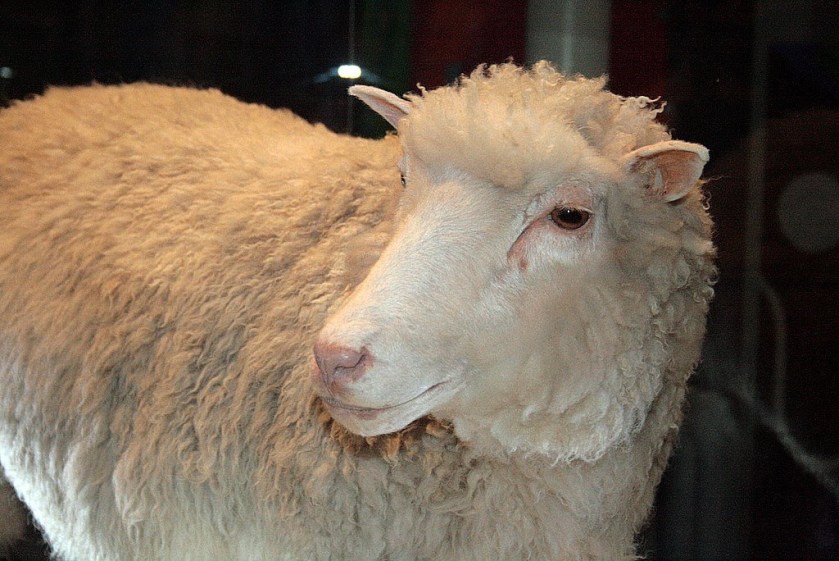
Dolly the Sheep. The taxidermy mount of Dolly on exhibit at the National Museum of Scotland, 2009. Image Wikimedia Commons
One
On this day in 1997, the world was introduced to Dolly the sheep. Cloned at a Scottish institute sharing a name with a nearby chapel featured in a Dan Brown novel and film, both the institute and chapel’s names originate from that of a village with multiple spellings. What is it?
Answer: Roslin (Institute) or Rosslyn (Chapel) or Roslyn.
Dolly the Sheep was cloned at the Roslin Institute, the first mammal to be cloned from an adult cell. The nearby Rosslyn Chapel, founded in 1446 by Sir William St. Clair, is a remarkable example of ornate Gothic architecture. The chapel, known as a ‘Bible in stone’, features intricate carvings and sculptures, including the Apprentice Pillar, which is the subject of much speculation. Despite its association with the Knights Templar and the Holy Grail, the chapel’s true significance lies in its historical and architectural value. It featured in Dan Brown’s novel and film The Da Vinci Code.
Two
George Washington, the first president of the United States, was born on 22 February 1732 in Westmoreland, Virginia. This Virginian county was named after the British County of Westmorland, but on what island was this latter county found?
Answer: Great Britain.
Westmorland, a former county in North West England, is situated on the island of Great Britain. It encompassed part of the Lake District and the southern Vale of Eden. In 1974 it was incorporated into Cumbria and now forms part of the larger Westmorland and Furness unitary authority area.
Three
Exactly 200 years after the birth of George Washington, a United States politician was born into a political dynasty on this day. Who was he?
Answer: Ted Kennedy (in full Edward Moore Kennedy).
Edward Moore Kennedy, a prominent American politician and member of the Democratic Party, served as a United States Senator from Massachusetts from 1962 until his death in 2009. Known for his oratorical skills and liberal views, Kennedy championed numerous significant pieces of legislation, including the Immigration and Nationality Act of 1965 and the Americans with Disabilities Act of 1990. Despite his political achievements, his career was marred by the Chappaquiddick incident in 1969.
Four
In 1942, three members of an anti-Nazi group were executed by beheading in Munich. Over the following months, others were also executed and many more imprisoned for alleged connections to the group. The group’s two-word name was that of a colour and a flower; what was this name?
Answer: White Rose.
The White Rose was a non-violent resistance group in Nazi Germany, led by students and a professor. They conducted a leaflet and graffiti campaign against the Nazi regime, denouncing its crimes and calling for resistance. Their activities ended with further arrests and executions in 1943.
Five
On this date, NASCAR held the first Daytona 500. In what year was this, and which driver won the race?
Answers: 1959; Lee Petty.
The 1959 Daytona 500, the second race of the NASCAR Grand National Series season, was the inaugural race at the newly built Daytona International Speedway. The track, built by NASCAR founder Bill France, Sr., is a 2.5-mile superspeedway and is considered the most prestigious race on the NASCAR calendar.
Todays questions are all related to the date, February 22nd.
Dolly the Sheep. The taxidermy mount of Dolly on exhibit at the National Museum of Scotland, 2009. Image Wikimedia Commons
One
On this day in 1997, the world was introduced to Dolly the sheep. Cloned at a Scottish institute sharing a name with a nearby chapel featured in a Dan Brown novel and film, both the institute and chapel’s names originate from that of a village with multiple spellings. What is it?
Two
George Washington, the first president of the United States, was born on 22 February 1732 in Westmoreland, Virginia. This Virginian county was named after the British County of Westmorland, but on what island was this latter county found?
Three
Exactly 200 years after the birth of George Washington, a United States politician was born into a political dynasty on this day. Who was he?
Four
In 1942, three members of an anti-Nazi group were executed by beheading in Munich. Over the following months, others were also executed and many more imprisoned for alleged connections to the group. The group’s two-word name was that of a colour and a flower; what was this name?
Five
On this date, NASCAR held the first Daytona 500. In what year was this, and which driver won the race?
Tom kha, a Thai soup originating around 1890, evolved from tom kha pet (duck and galangal) to tom kha kai (chicken) and tom kha kung (shrimp). It is distinguished from tom yam by its coconut milk base.
Two
In which country is Punta Gallinas, the northernmost part of mainland South America?
Answer: Colombia
Punta Gallinas, also known as Cape Gallinas or Cape Hens, is a northern Colombian headland in the Caribbean Sea. Situated in Uribia Municipality within La Guajira Department, it marks the northernmost point on South America’s mainland and is one of the continent’s extreme points.
Three
Caspian, Indian, and monocled are species of which snake?
Answer: Cobra
The Caspian cobra, a highly venomous snake endemic to Central Asia, and the monocled cobra, found in South and Southeast Asia, are both known for their potent venom and are responsible for numerous snakebite incidents. The Indian cobra, native to the Indian subcontinent, is one of the ‘big four’ species responsible for the most snakebite cases in Sri Lanka and India.
Four
In what game was a character renamed in 2023 as Boden ‘Boddy’ Black Jr?
Answer: Cluedo/Clue.
In the 2023 update of Cluedo/Clue, Boden “Boddy” Black Jr. finally aligns the British Dr. Black with the American Mr. Boddy.
Five
Where in Ireland is the cultural region of Connemara?
Answer: County Galway.
Connemara, a region in western County Galway, Ireland, is renowned for its traditional Irish culture. It’s Ireland’s largest Gaeltacht, a district where Irish is the predominant language, and boasts mountains, peninsulas, coves, islands and small lakes. Clifden serves as its largest settlement.
A singer born in 1991 released their debut album, +, in September 2011. Who is the singer?
Answer: Ed Sheeran.
Ed Sheeran’s debut studio album, + (Plus), was released on 9 September 2011 and marked his commercial breakthrough. The album, produced by Jake Gosling, Sheeran and No I.D., received positive reviews and sold over 4 million copies worldwide.
Two
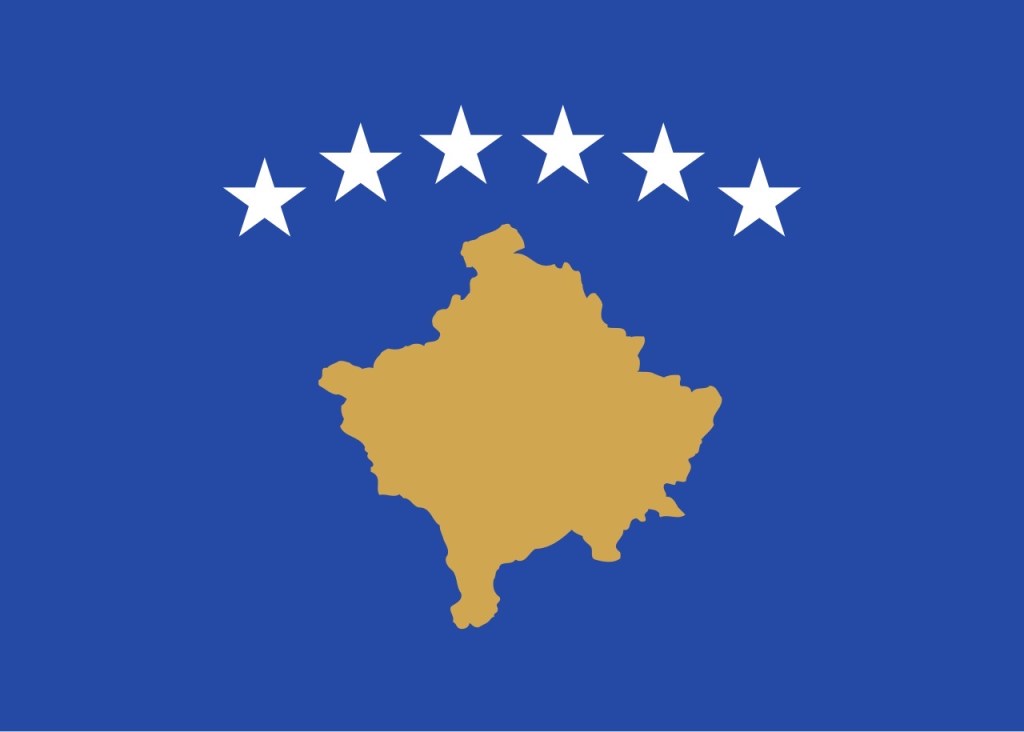
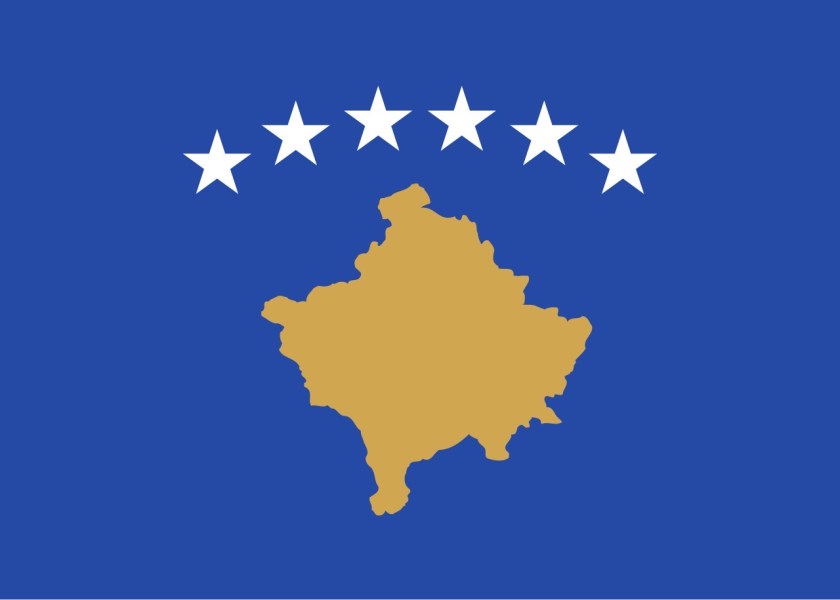
In 2008, Kosovo declared independence from which country?
Answer: Serbia.
Kosovo, a self-declared independent country in the Balkans, declared independence from Serbia in 2008. While recognised by the US and most EU members, its independence is not universally accepted. In 2010 the International Court of Justice ruled Kosovo’s declaration didn’t breach international law but Serbia rejected the decision. Despite lacking full international agreement, Kosovo has established structures akin to an independent nation under international supervision. The EU oversees police judicial and customs activities.
Three
In what decade did the opera Madama Butterfly premiere at La Scala, Milan, and who composed it?
Answer: 1900s; Giacomo Puccini.
Madama Butterfly is a three-act opera by Giacomo Puccini, based on John Luther Long’s short story and Pierre Loti’s novel. The original two-act version premiered in 1904 at La Scala but was poorly received, leading Puccini to revise it into the successful three-act version.
Four
What entertainer and actor born in Kew in 1934, links a housewife, the voice of Bruce in 2003 and, a novennium later, a Great Goblin?
Answer: Barry Humphries.
Barry Humphries, an Australian actor, was best known for his character Dame Edna Everage. He also created other characters, appeared in films, and wrote books. The housewife from the question was of course Dame Edna. Bruce was the shark from Finding Nemo (2003) and the Great Goblin, the king of the caverns, was played by Humphries in The Hobbit: An Unexpected Journey (2012).
Five
In 1965, the Ranger 8 probe was launched on a mission to photograph among other things Mare Tranquillitatis. Where is Mare Tranquillitatis?
Answer: Moon
Ranger was a series of nine unmanned probes launched by NASA between 1961 and 1965 to explore the Moon. While the first five probes failed, the last three, Ranger 7, 8 and 9, successfully transmitted over 17,000 high-resolution photographs of the lunar surface. These images included the Sea of Tranquility (Mare Tranquillitatis), which would become the 1969 landing site of Apollo 11.
Here are the answers to the questions poster earlier.
These questions all relate to today, February 14th.
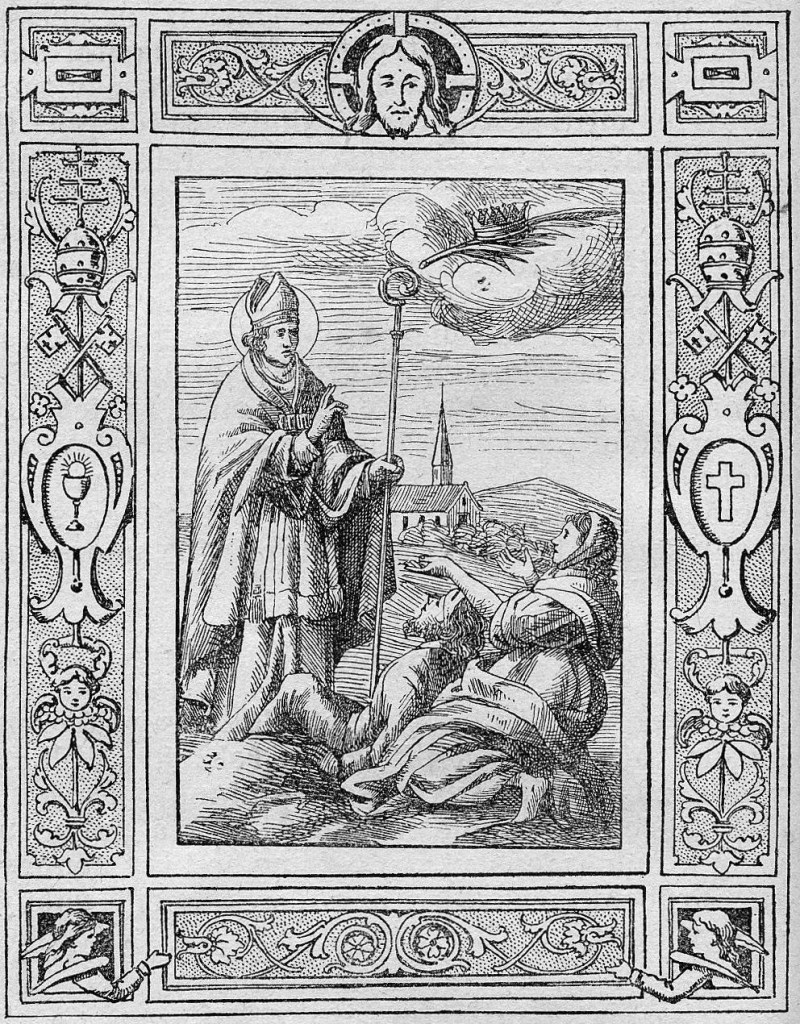
Saint Valentine healing epilepsy, illustrated by Dr. František Ehrmann, c. 1899. Image Wikimedia Commons
One
Saint Valentine was, according to legend, martyred in Rome on February 14th in c. 270 CE, during the persecution of Christians by Emperor ++Claudius II Gothicus++. In what century was Saint Valentine’s death?
Answer: 3rd century.
Saint Valentine, a legendary Christian martyr, is the patron saint of lovers, people with epilepsy and beekeepers. His life is shrouded in legend, with accounts of him being a Roman priest or bishop martyred in Rome. His body was buried in Rome on February 14, a date observed as the Feast of Saint Valentine since at least the eighth century. He is associated with courtly love, and numerous churches claim to possess his relics, which are housed in various locations, including Rome and Dublin. Valentine’s Day as a lovers’ festival dates back to the 14th century.
Two
In 1613, the wedding of Princess Elizabeth and Frederick V of the Palatinate took place at Whitehall Palace, London. Who was the father of the bride?
Answer: James VI and I.
The bride’s father was James VI of Scotland and I of England. The wedding of Frederick V and Princess Elizabeth in 1613 was a grand affair, featuring fireworks, masques, a mock sea battle, and a procession. Celebrations continued with masques and a lavish farewell for Elizabeth’s journey to Heidelberg.
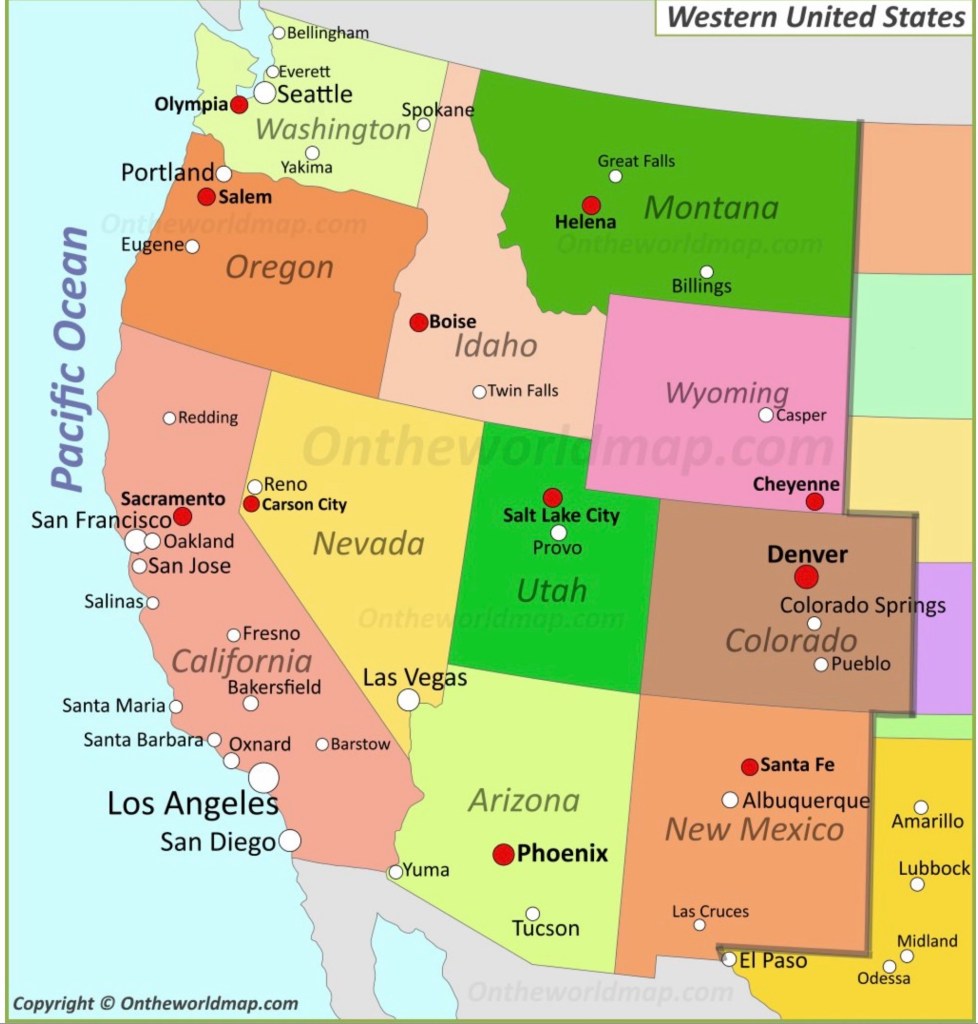
Identify two US states, A and B, both admitted to the Union on February 14th. State A joined in 1859, and state B in 1912. Together, they border seven states: four for A and five for B. Additionally, A has a maritime boundary, whilst B has an international border.
Answer: A. Oregon and B. Arizona.
Oregon was admitted as the 33rd US state on 14 February 1859 and Arizona became the 48th, and last contiguous state, in 1912. Oregon is bordered by four states: California, Nevada, Idaho, and Washington. Arizona is bordered by five states: California, Nevada, Utah, Colorado, and New Mexico.
Four
Born in 1992, this actor played Charlie Bucket in Tim Burton’s musical fantasy film Charlie and the Chocolate Factory. Who is he?
Answer: Freddie Highmore.
Alfred Thomas Highmore, born in 1992 in Camden Town, London, is an English actor known for his roles in Finding Neverland, Charlie and the Chocolate Factory and The Good Doctor. He attended Highgate School and Emmanuel College, Cambridge, earning a double first in Spanish and Arabic.
Five
Which actor, born on this day in 1970, has appeared in both the Star Trek and Mission: Impossible series and also voiced a character in the Ice Age series?
Answer: Simon Pegg.
Simon John Beckingham, born in Gloucestershire, UK, on 14 February 1970, co-wrote the Three Flavours Cornetto trilogy films: Shaun of the Dead (2004), Hot Fuzz (2007) and The World’s End (2013). He also reprised several roles, including Montgomery ‘Scotty’ Scott in Star Trek (2009), Benji Dunn in Mission: Impossible III(2006) and Buck in Ice Age: Dawn of the Dinosaurs (2009).
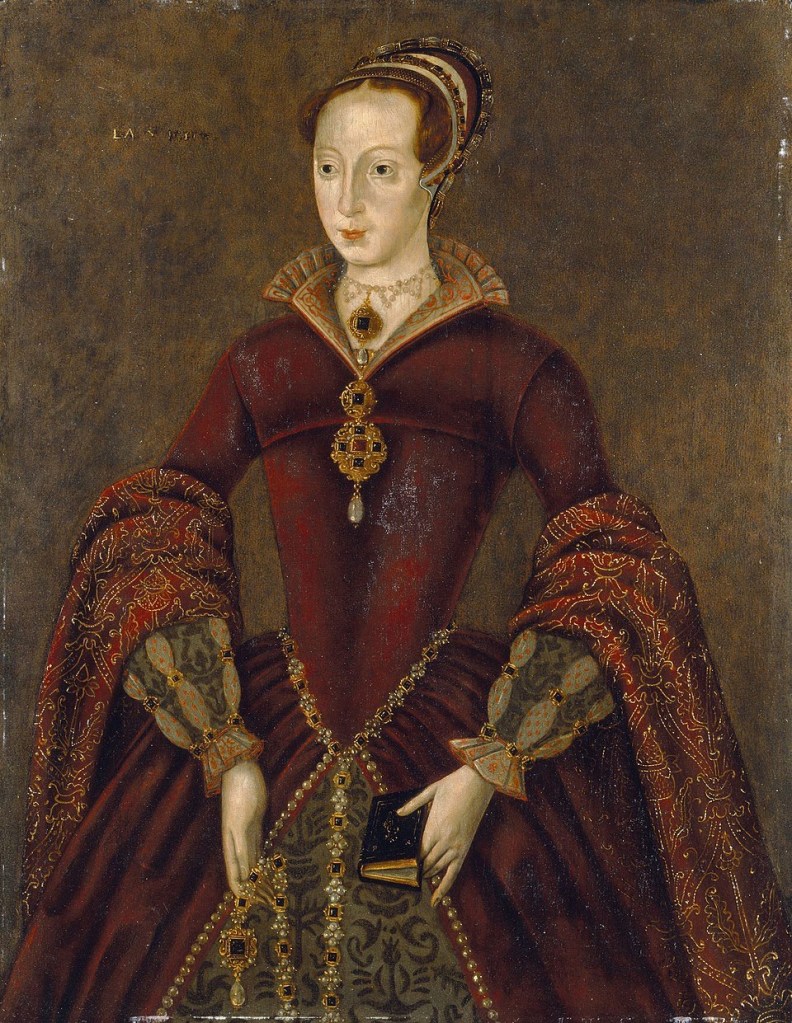
Lady Jane Grey, Queen of England for just nine days in 1553, was executed on 12 February 1554. Who was her predecessor, and who succeeded her as monarch?
Answer: Edward VI; Mary I.
Lady Jane Grey, a cousin of Edward VI, king of England from 1547 to 1553, was persuaded by John Dudley, Duke of Northumberland, to become his heir before Edward’s death, despite Edward having two half-sisters. Jane’s Protestantism made her the preferred candidate of those like Northumberland who supported the Reformation. She reigned as queen for nine days in 1553, but the English people largely supported Edward VI’s half-sister Mary Tudor, the rightful heir by Henry VIII’s will. Jane was persuaded to relinquish the crown she never wanted, and at the beginning of Mary’s reign, she was arraigned for high treason and later executed
In 2019, the country represented by this flag changed its name. What did the country’s name change from and to?
Answer: Republic of Macedonia (or the former Yugoslav Republic of Macedonia); Republic of North Macedonia.
North Macedonia is a landlocked country in Southeast Europe. It declared independence from the Socialist Federal Republic of Yugoslavia in 1991. Due to a long-standing name dispute with Greece, it was admitted to the United Nations in 1993 under the provisional reference ‘the former Yugoslav Republic of Macedonia’ (FYROM). Following the Prespa Agreement signed with Greece in June 2018 and implemented in February 2019, the country officially changed its name from the Republic of Macedonia to the Republic of North Macedonia.
Three
Emperor Puyi abdicated in 1912 becoming the last emperor of which country?
Answer: China.
Puyi, the last emperor of the Qing dynasty, was forced to abdicate in 1912. He later became the puppet emperor of Manchukuo under Japanese control. After World War II, he was imprisoned and later pardoned, living out his days in Beijing.
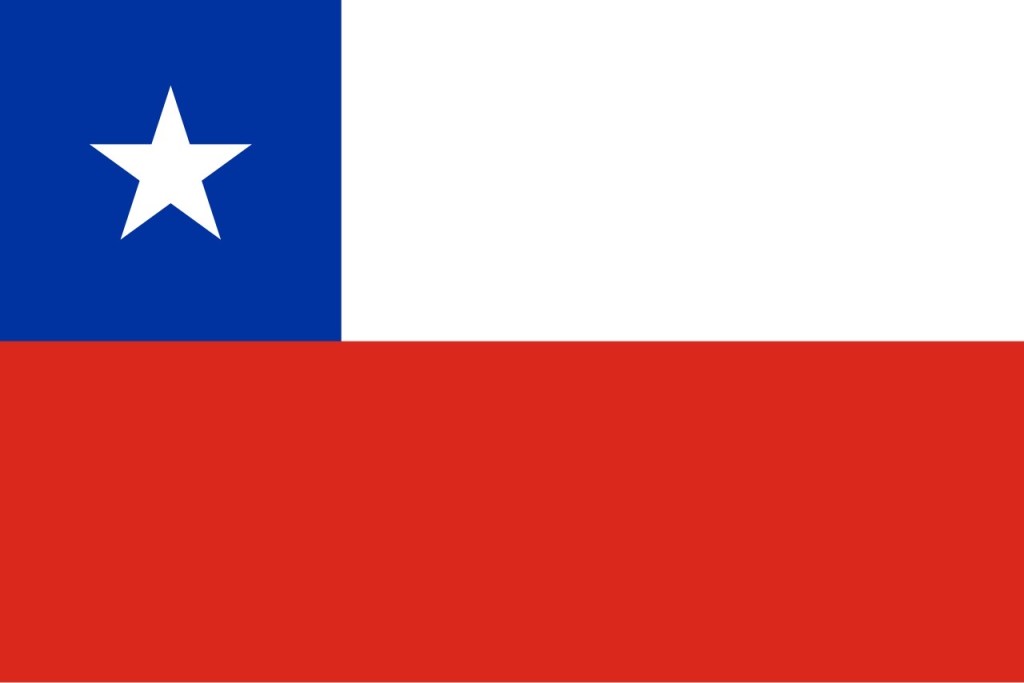
On this date in 1818, the country whose flag this is declared independence. Which country achieved independence and from whom?
Answer: Chile; Spain.
The Chilean Declaration of Independence, drafted in January 1818 and approved by Bernardo O’Higgins on 12 February 1818, declared Chile’s independence from the Spanish Empire. The original document was damaged, and a new copy signed by O’Higgins and his ministers was destroyed during the 1973 Chilean coup d’état.
Five
Future US president Abraham Lincoln was born on this day. In what US state, and in what decade, was he born?
Answer: Kentucky; 1800s.
Abraham Lincoln, from humble beginnings, became the 16th President of the United States, led the nation through the Civil War, and played a pivotal role in abolishing slavery. He navigated political challenges, issued the Emancipation Proclamation, and delivered the Gettysburg Address. Tragically, Lincoln was assassinated in 1865, shortly after the Confederate surrender
Lady Jane Grey, Queen of England for just nine days in 1553, was executed on 12 February 1554. Who was her predecessor, and who succeeded her as monarch?
Question two. Image Wikimedia Commons
Two
In 2019, the country represented by this flag changed its name. What did the country’s name change from and to?
Three
Emperor Puyi abdicated in 1912 becoming the last emperor of which country?
Question four. Image Wikimedia Commons
Four
On this date in 1818, the country whose flag this is declared independence. Which country achieved independence and from whom?
Five
Future US president Abraham Lincoln was born on this day. In what US state, and in what decade, was he born?


 Quizology.Online