Born in 1924, Robert Mugabe served as the first prime minister of which African country from 1980 to 1987 and then as president from 1987 to 2017?
Two
Born on this day, Barbara Jordan became the first African American woman to serve in the US House of Representatives from the South. In what year did she join the House?
Three
Which poem by W. H. Auden, written in 1939 at the outbreak of World War II, famously opens with the line ‘I sit in one of the dives / On Fifty-second Street’?
Four
Born in Linares, Spain in 1893, the Marquis of Salobreña was a celebrated musician and composer. What was his name and on which instrument was he renowned for his performances?
and finally…
Five
In 2018, a prominent American Christian evangelist, born in North Carolina 99 years earlier, passed away in the same state. He organised annual crusades drawing huge crowds eager to hear his preaching. His website boasts live audiences of at least 210 million people across over 185 countries and territories. He was also known for rebuking a US president for profanity. Who was this evangelist and which US president did he rebuke?
Here are the answers to my Walter posted questions.
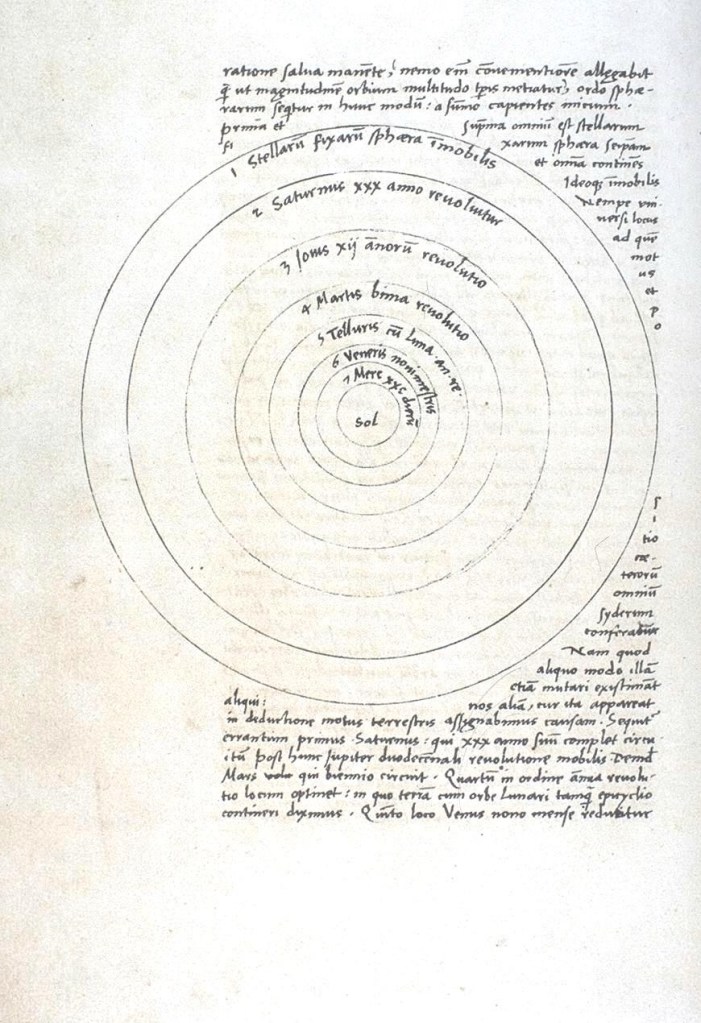
Diagram of the Solar System from Copernicus’ manuscript of De revolutionibus orbium coelestium. Image Wikimedia Commons
All of today’s questions relate to the date, February 19th.
One
In what century was Polish astronomer Nicolaus Copernicus born?
Answer: 15th century.
Born in 1473, Nicolaus Copernicus, a Renaissance polymath, formulated a heliocentric model of the universe, placing the Sun at its centre. His work, published in De revolutionibus orbium coelestium (On the Revolutions of the Heavenly Spheres) triggered the Copernican Revolution and significantly contributed to the Scientific Revolution.
Two
In 1945, the Battle of Iwo Jima began when US Marines invaded the Japanese volcanic island of Iwo Jima. What does the name Iwo Jima mean in English?
Answer: Sulfur Island.
Iwo Jima, a volcanic island in the Ogasawara Archipelago, is administered by Tokyo. It was the site of a major WWII battle between Japan and the US, resulting in over 20,000 casualties on each side. Today, the island has no permanent inhabitants except for a Self-Defence Force base and is owned by a combination of individuals, the village, and the Japanese government.
Three
Andrew Mountbatten-Windsor was born in 1960 and was known as Prince Andrew. He would later also be known as the Duke of York. For the first 22 years of his life, he was second in the line of succession to the British throne, who, born in 1982, replaced him as second in the line of succession?
Answer: Prince William (The eldest son of Charles, Prince of Wales (now King Charles III) and Diana, Princess of Wales).
Andrew Mountbatten-Windsor faced controversy due to his friendship with Jeffrey Epstein. He denied allegations of sexual abuse but settled a civil lawsuit with Virginia Giuffre in 2022. In 2025, Charles III removed Andrew’s royal styles and honours, restricted his titles, and relocated him to private accommodation.
Four
Born in 1924, this actor was a decorated World War II veteran, where he served in the U.S. Marines. He won an Oscar for Best Actor for Cat Ballou (1965) where he played both Kid Shelleen and Tim Strawn. He appeared in The Dirty Dozen (1967) and Gorky Park (1983). He died in 1987. Who is this actor?
Answer: Lee Marvin.
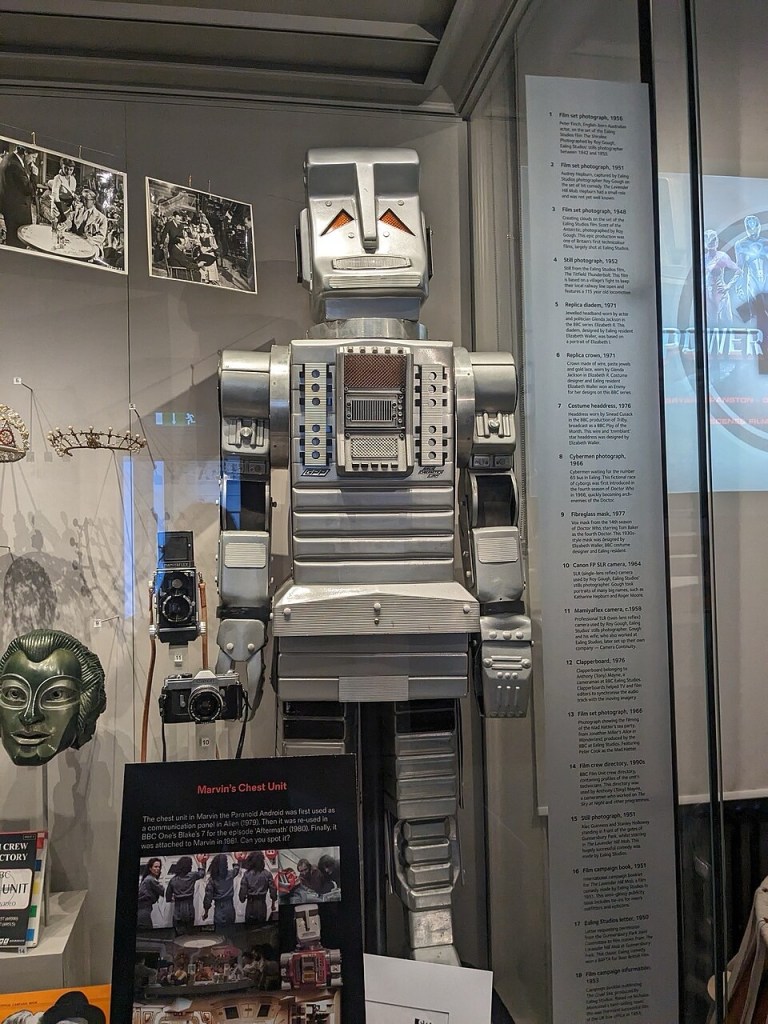
Marvin, an American actor known for his tough-guy roles, received an Academy Award for his performance in Cat Ballou. He was also a decorated World War II veteran and a descendant of the Lee family of Virginia.
Five
In 1913, Pedro Lascuráin assumed the role of President of Mexico. What connects the number 45 to his presidency? Was it
45 marriages (he was married 45 times during his presidency)
45 minutes (he was in office for only 45 minutes)
45 murders (he was connected to 45 murders during his presidency)
Answer: 45 minutes (he was in office for only 45 minutes)
During the Ten Tragic Days coup, Victoriano Huerta captured President Madero and convinced him to resign. Lascuráin, next in line, briefly assumed the presidency before appointing Huerta as his successor, making Lascuráin’s presidency the shortest in history of not only Mexico but the world.
Diagram of the Solar System from Copernicus’ manuscript of De revolutionibus orbium coelestium. Image Wikimedia Commons
All of today’s questions relate to the date, February 19th.
One
In what century was Polish astronomer Nicolaus Copernicus born?
Two
In 1945, the Battle of Iwo Jima began when US Marines invaded the Japanese volcanic island of Iwo Jima. What does the name Iwo Jima mean in English?
Three
Andrew Mountbatten-Windsor was born in 1960 and was known as Prince Andrew. He would later also be known as the Duke of York. For the first 22 years of his life, he was second in the line of succession to the British throne, who, born in 1982, replaced him as second in the line of succession?
Four
Born in 1924, this actor was a decorated World War II veteran, where he served in the U.S. Marines. He won an Oscar for Best Actor for Cat Ballou (1965) where he played both Kid Shelleen and Tim Strawn. He appeared in The Dirty Dozen (1967) and Gorky Park (1983). He died in 1987. Who is this actor?
Five
In 1913, Pedro Lascuráin assumed the role of President of Mexico. What connects the number 45 to his presidency? Was it
45 marriages (he was married 45 times during his presidency)
45 minutes (he was in office for only 45 minutes)
45 murders (he was connected to 45 murders during his presidency)
Today, a sixth dose of gallimaufry, that is ‘a confused jumble or medley of things’.
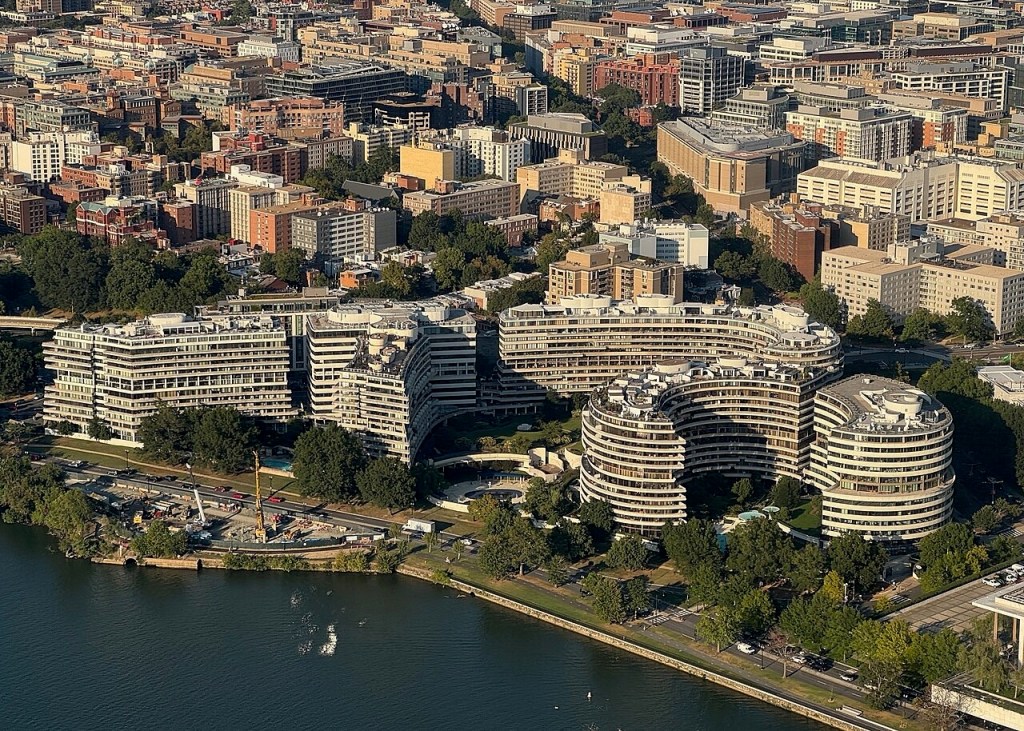
Question five. Watergate Complex, Washington D.C. Image Wikimedia Commons
One
What American golfer founded the US Masters golf tournament?
Answer: Bobby Jones.
Jones retired from golf in 1930 and, with Clifford Roberts, bought a nursery in Augusta to create a golf club. The club opened in 1933 with a members’ tournament, which was expanded the following year, and the Masters tournament began.
Two
What two countries have shores on Lake Titicaca?
Answer: Bolivia and Peru.
Lake Titicaca, located in the Andes on the Bolivia–Peru border, has a single outlet, the Río Desaguadero. It faces challenges from receding water levels due to climate change and pollution from growing urban centres, threatening its biodiversity.
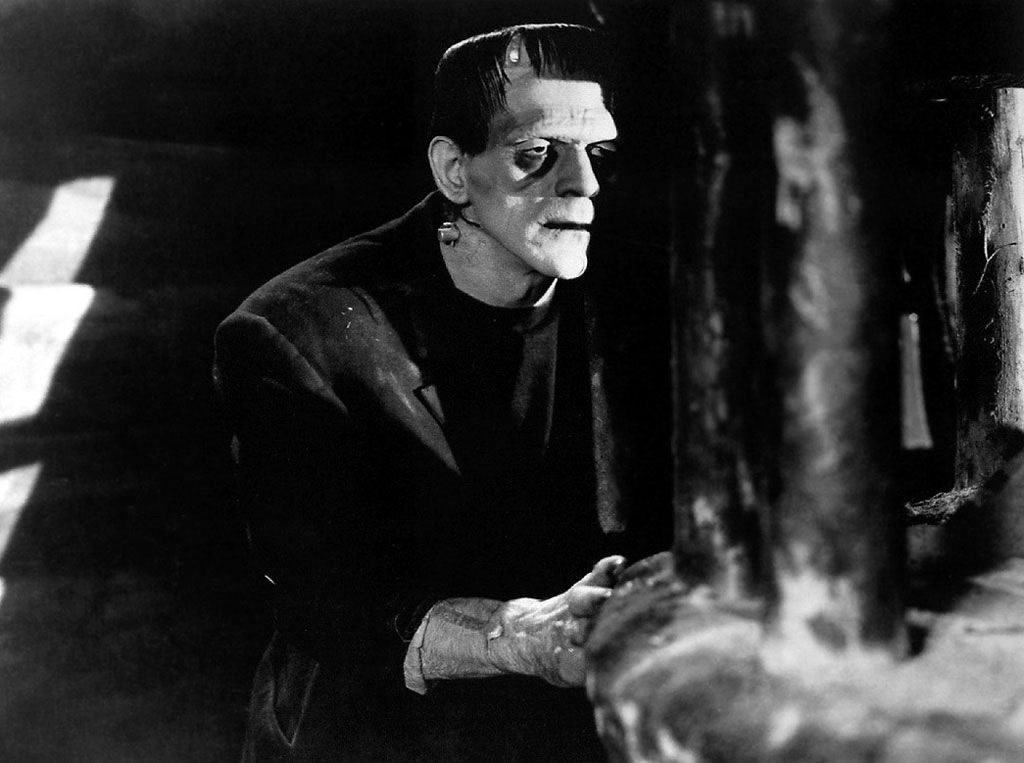
Boris Karloff as the monster in the film Frankenstein, directed by James Whale and released in 1931. Universal Studios Image Encyclopædia Britannica
Three
Born in London, United Kingdom, in 1887, William Henry Pratt rose to fame as a renowned actor. His career spanned from 1911 to 1968, beginning with a significant role in the film serial The Hope Diamond Mystery in 1920. In 1932, he took on the title role in The Mask of Fu Manchu. Beyond his acting career, Pratt was also known for his charitable work. From 1940 onwards, he donned the Father Christmas costume every Christmas to deliver presents to physically disabled children at a Baltimore hospital. What is his stage name?
Answer: Boris Karloff
Boris Karloff, an English actor, was a horror icon known for his roles in Frankenstein, The Mummy and How the Grinch Stole Christmas! He also appeared in numerous films, stage plays, radio and television programmes.
Four
What two names fill the blanks and complete this list: Javier Pérez de Cuéllar ____ Kofi Annan____ António Guterres?
Answer: Boutros Boutros-Ghali; Ban Ki-moon
It is a list of those who have held the office of Secretary-General of the United Nations from 1982 until present (February 2026). The UN Secretary-General oversees the UN Secretariat, one of the six principal UN organs. The role, qualifications, selection process, and tenure are established by custom.
Five
All the President’s Men is a non-fiction book detailing the Watergate break-ins, the ensuing political scandal, and the eventual downfall of President Richard M. Nixon. It was penned by the two Washington Post journalists who uncovered the story. Who are these journalists?
Answer: Carl Bernstein and Bob Woodward.
The Watergate scandal involved a 1972 break-in at the Democratic National Committee headquarters by operatives linked to President Nixon’s re-election campaign. Nixon’s attempts to cover up his administration’s involvement led to his resignation in 1974. The scandal, considered the greatest presidential scandal, resulted in numerous convictions and had lasting electoral consequences for the Republican Party.
Today, a sixth dose of gallimaufry, that is ‘a confused jumble or medley of things’.
Question five. Watergate Complex, Washington D.C. Image Wikimedia Commons
One
What American golfer founded the US Masters golf tournament?
Two
What two countries have shores on Lake Titicaca?
Three
Born in London, United Kingdom, in 1887, William Henry Pratt rose to fame as a renowned actor. His career spanned from 1911 to 1968, beginning with a significant role in the film serial The Hope Diamond Mystery in 1920. In 1932, he took on the title role in The Mask of Fu Manchu. Beyond his acting career, Pratt was also known for his charitable work. From 1940 onwards, he donned the Father Christmas costume every Christmas to deliver presents to physically disabled children at a Baltimore hospital. What is his stage name?
Four
What two names fill the blanks and complete this list: Javier Pérez de Cuéllar ____ Kofi Annan____ António Guterres?
Five
All the President’s Men is a non-fiction book detailing the Watergate break-ins, the ensuing political scandal, and the eventual downfall of President Richard M. Nixon. It was penned by the two Washington Post journalists who uncovered the story. Who are these journalists?
In what decade was the first science fiction television programme broadcast?
Answer: 1930s.
The first known science fiction television programme was produced by the BBC’s pre-war television service in Great Britain. On 11 February 1938, a 35-minute adapted extract of the play R.U.R., written by the Czech playwright Karel Čapek, was broadcast live from the BBC’s Alexandra Palace studios. Concerning a future world in which robots rise up against their human masters, it was the only piece of science fiction to be produced before the television service was suspended for the duration of the war. Today’s post title is a hint towards this play, using the same initials, but the play’s ‘R.U.R.’ stands for Rossumovi Univerzální Roboti—Rossum’s Universal Robots—and not Really Useful Robots.
Two
On this day in 1929, a treaty was signed recognising papal sovereignty over Vatican City. What was the treaty’s name and who was the Italian signatory?
Answer: Lateran Treaty; Benito Mussolini.
The Lateran Treaty of 1929 established Vatican City as an independent state and settled the Roman question between Italy and the Holy See. The treaty was named after the Lateran Palace where it was signed on 11 February 1929. It was revised in 1984, ending Catholicism as Italy’s sole state religion.
Three
Today marks the traditional date for Jimmu’s founding of which country’s empire in 660 BCE?
Answer: Japan.
Emperor Jimmu, the legendary first emperor of Japan, is said to have ascended the throne in 660 BCE. His story, recounted in the Nihon Shoki and Kojiki, involves a divine lineage from the sun goddess Amaterasu and a military expedition from Kyushu to Yamato. While his existence is debated by scholars, Jimmu’s legacy endures as a symbol of Japan’s imperial lineage and is celebrated annually on February 11th as National Foundation Day.
Four
In 1858, 14-year-old Mademoiselle Soubirous had visions of the Virgin Mary. Where did this occur, and what was Mademoiselle Soubirous’s first name?
Answer: Lourdes, France; Bernadette.
In February 1858, 14-year-old Bernadette Soubirous reported seeing visions of a ‘small young lady’ at the grotto of Massabielle in Lourdes, later believed to be the Virgin Mary. The apparitions, which continued daily for two weeks despite scepticism from local authorities and clergy, including Father Peyramale, instructed Bernadette to perform acts of penance. On 25 March, Bernadette claimed the Virgin revealed herself as the ‘Immaculate Conception’, prompting further investigation and increasing pilgrimages. The growing number of witnesses to Bernadette’s visions led to widespread attention and speculation.
Five
On this date, and in what year did the World Health Organisation officially name the coronavirus outbreak COVID-19? And up to February 2026, to the nearest million, how many people have died from COVID-19?
Answer: 2020; 7 million.
The COVID-19 pandemic has resulted in an estimated 7.1 million confirmed deaths worldwide. Estimates indicate that the total number of deaths could range from 19.1 to 36 million.
In what decade was the first science fiction television programme broadcast?
Two
On this day in 1929, a treaty was signed recognising papal sovereignty over Vatican City. What was the treaty’s name and who was the Italian signatory?
Three
Today marks the traditional date for Jimmu’s founding of which country’s empire in 660 BCE?
Four
In 1858, 14-year-old Mademoiselle Soubirous had visions of the Virgin Mary. Where did this occur, and what was Mademoiselle Soubirous’s first name?
Five
On this date, and in what year did the World Health Organisation officially name the coronavirus outbreak COVID-19? And up to February 2026, to the nearest million, how many people have died from COVID-19?
An American actor and politician born in Tampico, Illinois, in 1911. After Eureka College, he became a radio sports broadcaster in Iowa. He was actively involved with labour unions before getting into politics. He died in 2004. Who is he?
Answer: Ronald Reagan
Ronald Reagan, the 40th President of the United States, served from 1981 to 1989. His presidency was marked by significant economic policies, including tax cuts and increased defence spending, known as ‘Reaganomics’. While proponents highlight his accomplishments in economic growth and ending the Cold War, opponents criticise his policies for increasing the national debt and cutting social services.
Two
In 1694, Dandara, the warrior queen and leader of the runaway slaves Quilombo dos Palmares in Brazil, was captured and chose suicide over a return to slavery. What English seven-letter word, derived from Spanish cimarrón meaning ‘wild’, did European slavers use to describe these escaped slaves?
Answer: Maroons
In Brazil the Africans set up settlements known as Quilombos. The most famous of such settlements was Quilombo dos Palmares, in the northeastern part of Brazil. It functioned successfully as an independent republic of the maroons in the 17th century, following an African pattern of social organization. At its apex, it was the home and refuge of some 20,000 African men, women, and children who had managed to escape the dreadful experience of plantation life. — Encyclopædia Britannica
Three
In the mid-20th century, this person became ruler on the death of their father, who himself had not expected to hold the post. They remained in this role for an astonishing 25,782 days?
Answer: Elizabeth II of the United Kingdom.
Her father, George VI, came to the throne on the abdication of his brother Edward VIII. Elizabeth II, Queen of the United Kingdom and other Commonwealth realms, reigned for 70 years and 214 days, the longest of any British monarch. Born in 1926, she became queen in 1952 and witnessed significant political changes, including the UK’s accession and withdrawal from the European Communities. Despite occasional republican sentiment and media criticism, her popularity remained high throughout her reign.
Four
Born in Munich, Germany, in 1912, this woman met in 1929 the man who became Chancellor of Germany a few years later. She married him in 1945. She died in Berlin, Germany, aged 33. Who was she?
Answer: Eva Braun
Eva Braun, was Adolf Hitler’s longtime companion and briefly his wife. She lived with him from 1930 until their deaths in 1945, when they died by suicide in the Führerbunker as the war ended.
Five
This monarch ruled England, Scotland and Ireland from 1702 to 1707 and then Great Britain and Ireland until their death in 1714, which marked the end of a dynasty. Who was this monarch?
Answer: Queen Anne.
The Union of the Crowns in 1707 united the Kingdoms of England and Scotland into the Kingdom of Great Britain. Anne, the last Stuart monarch, ruled Great Britain and Ireland from 1702 to 1714. She favoured moderate Tory politicians and experienced estrangement from her sister Mary and friend Sarah Churchill. Despite 17 pregnancies, Anne died childless, marking the end of the House of Stuart and leading to the succession of George I of the House of Hanover.
An American actor and politician born in Tampico, Illinois, in 1911. After Eureka College, he became a radio sports broadcaster in Iowa. He was actively involved with labour unions before getting into politics. He died in 2004. Who is he?
Two
In 1694, Dandara, the warrior queen and leader of the runaway slaves Quilombo dos Palmares in Brazil, was captured and chose suicide over a return to slavery. What English seven-letter word, derived from Spanish cimarrón meaning ‘wild’, did European slavers use to describe these escaped slaves?
Three
In the mid-20th century, this person became ruler on the death of their father, who himself had not expected to hold the post. They remained in this role for an astonishing 25,782 days?
Four
Born in Munich, Germany, in 1912, this woman met in 1929 the man who became Chancellor of Germany a few years later. She married him in 1945. She died in Berlin, Germany, aged 33. Who was she?
Five
This monarch ruled England, Scotland and Ireland from 1702 to 1707 and then Great Britain and Ireland until their death in 1714, which marked the end of a dynasty. Who was this monarch?
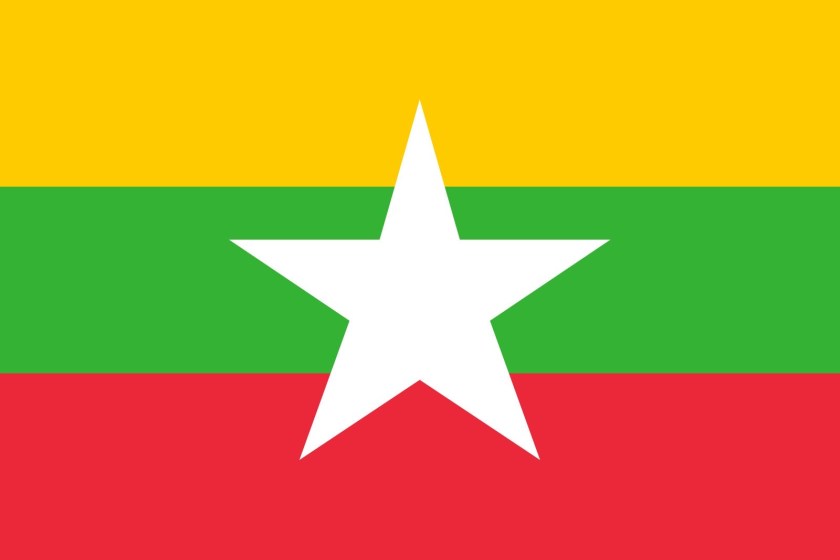
In 2021, the military of this country staged a coup d’état, ousting the country’s de facto leader. What country and who was the de facto leader?
Answer: Myanmar; Aung San Suu Kyi
Myanmar, officially the Republic of the Union of Myanmar, is a Southeast Asian country with a population of about 55 million. Aung San Suu Kyi, a prominent politician, State Counsellor, and Nobel laureate, faced criticism for her leadership and was arrested following the 2021 military coup.
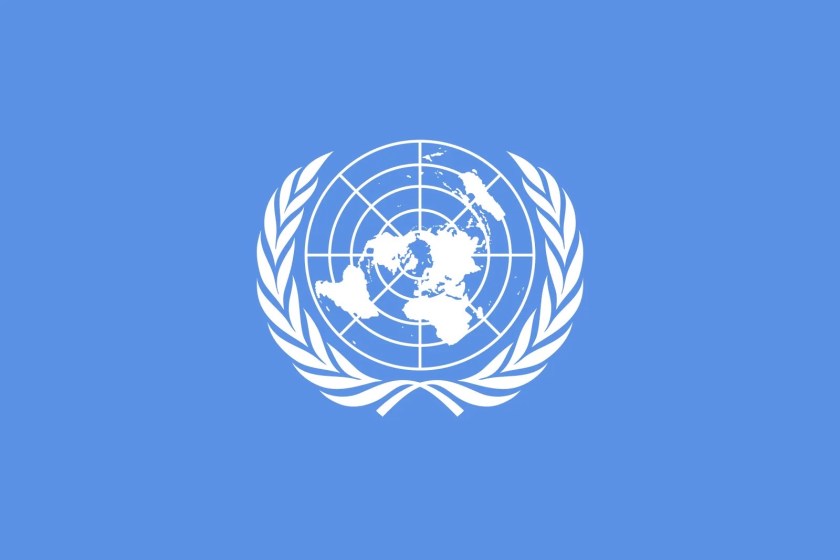
In 1946, who was elected as this organisation’s first head and what was their title?
Answer: Trygve Lie; Secretary-General of the United Nations
Trygve Lie, the first UN Secretary-General, served from 1946 to 1952. He resigned due to Soviet opposition stemming from his support for UN intervention in the Korean War. Lie also faced challenges from McCarthyism in the United States.
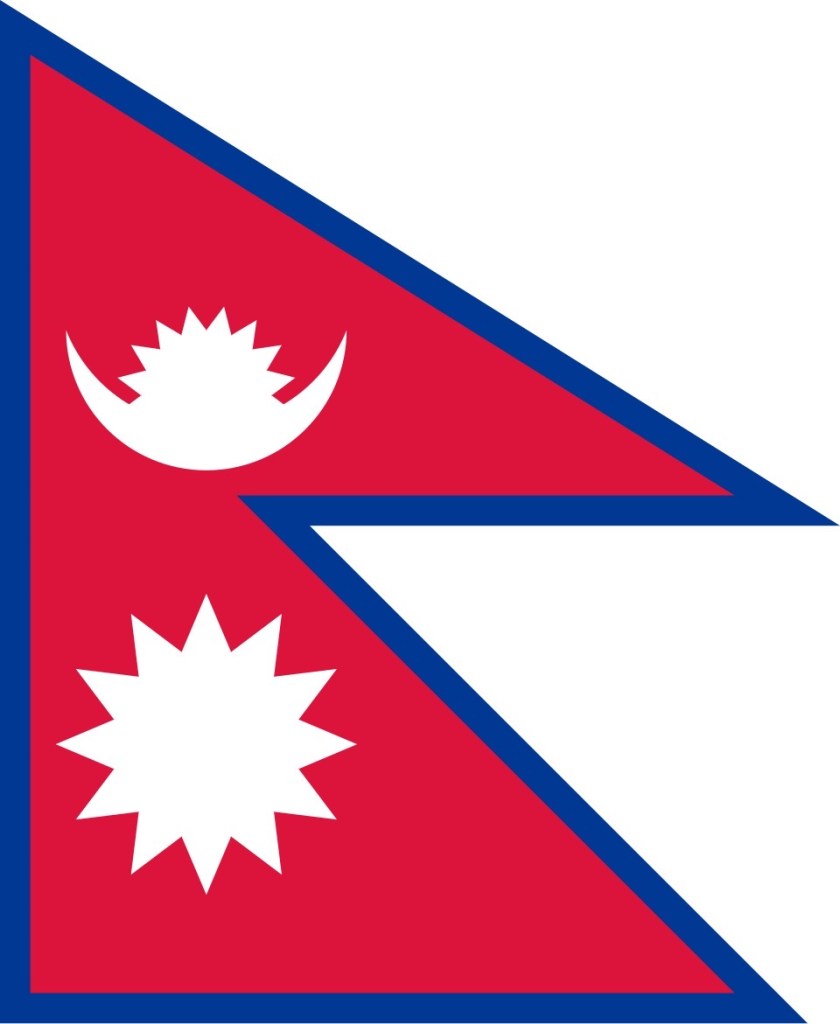
Today’s remaining questions continue the flag theme but are not related to the date.
Nepal stands alone as the only modern nation without a rectangular national flag. The flag, which was adopted in 1962, consists of two united pennant shapes, crimson with blue borders, and decorated with stylised sun and moon symbols. It uses traditional designs with symbolic elements representing bravery, peace and Nepal’s national flower.
What does it signify if a ship in harbour displays this international maritime signal flag as a single flag?
Answer: All persons should report on board as the vessel is about to proceed to sea.
In English, the flag is known as the Blue Peter. It represents the letter ‘P’ if being used with other flags to spell out a message, and when flown on its own, in a harbour, it is an indication that the ship is preparing to depart, and all crew and passengers should report onboard.
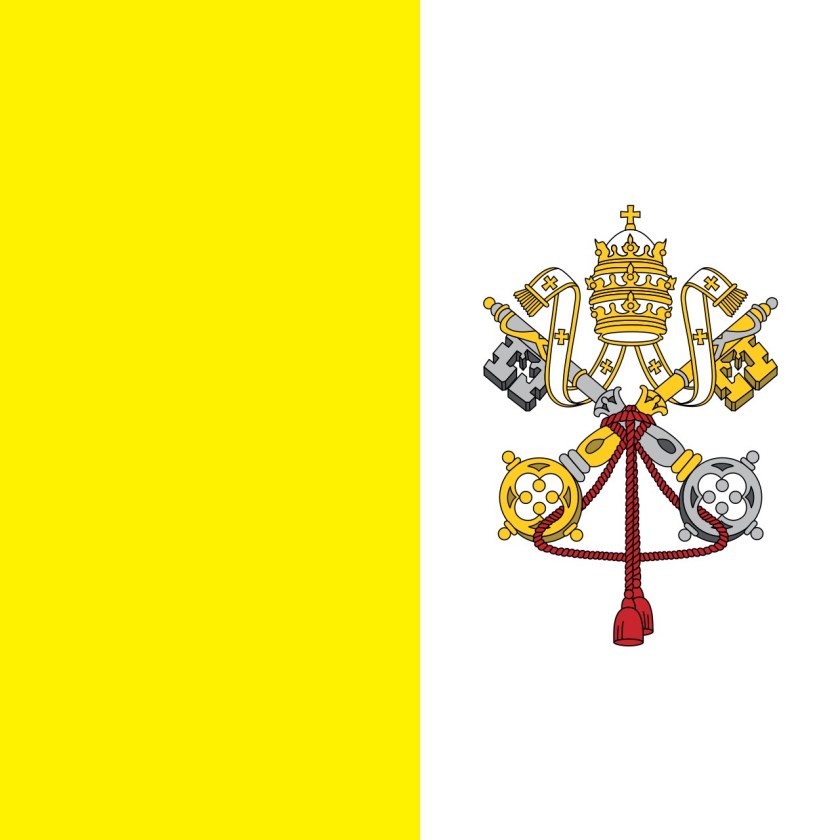
This national flag was raised for the first time at the UN headquarters in 2015. Where does it represent?
Answer: Vatican City State (or Holy See)
The flag of Vatican City, adopted in 1929, features a vertical yellow and white bicolour with the emblem of the Holy See. It symbolises the Catholic faith and can be displayed at Catholic churches.



 Quizology.Online