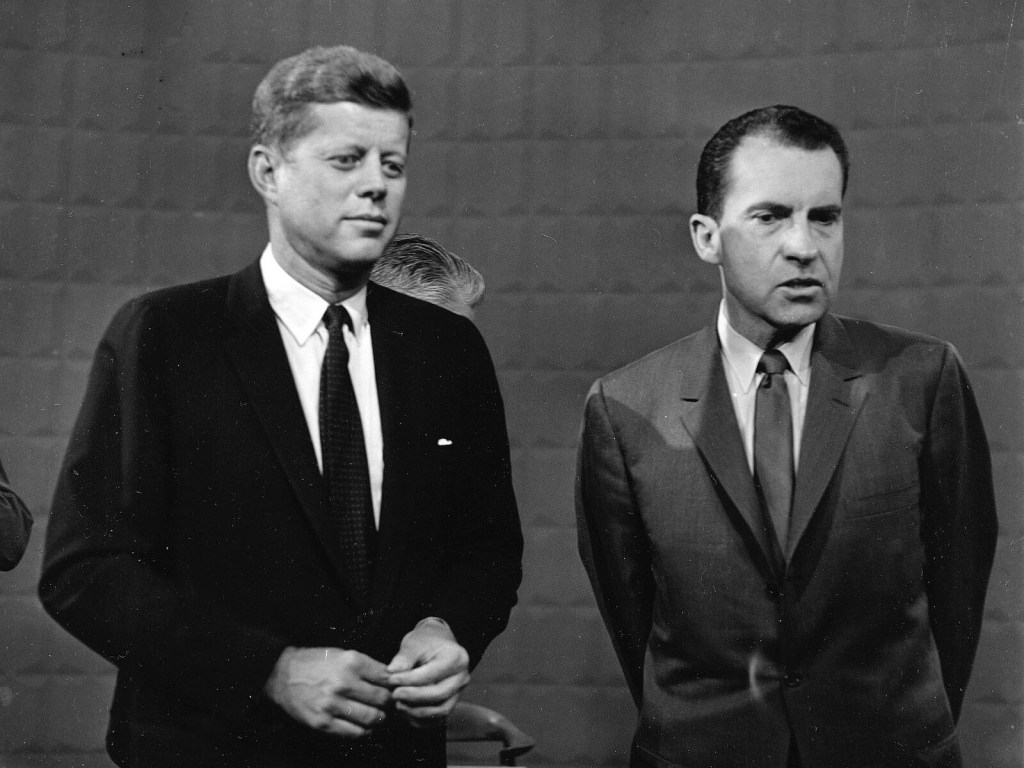
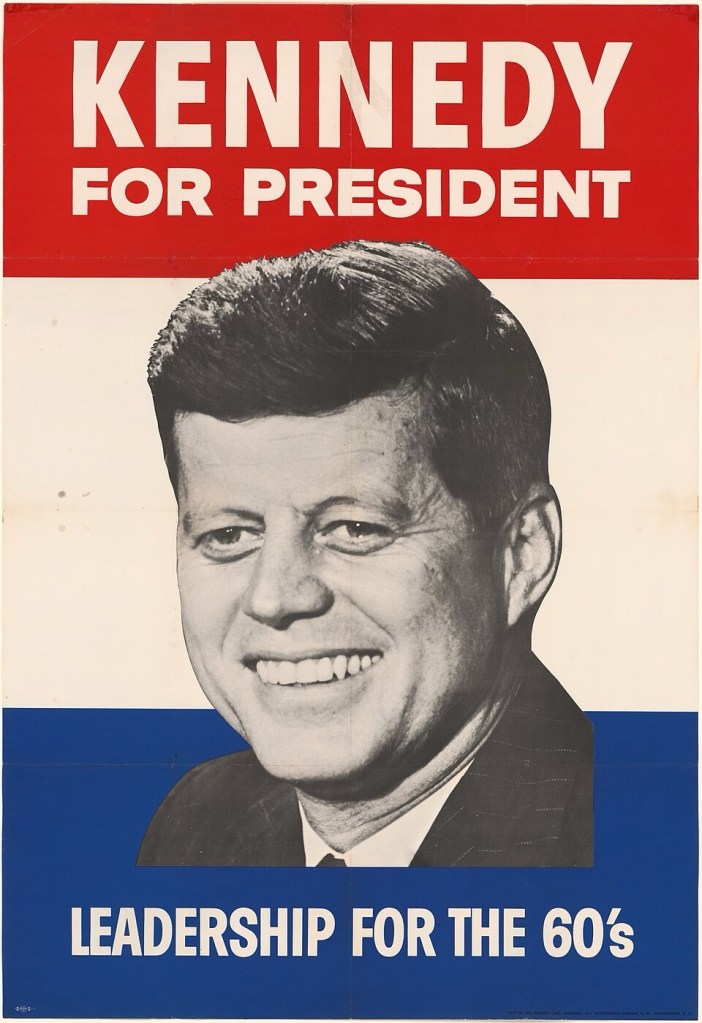
On this day in 1960, John F. Kennedy was elected President of the United States, as a result of defeating whom in the presidential election?
Two
John F. Kennedy’s term ended tragically when he was assassinated in Dallas. This makes him one of four US presidents killed while in office. Who is the only British prime minister to have been assassinated?
Three
President Kennedy’s 1,037 days in office are certainly not the shortest. Which US president served the shortest term? Secondly, how long (or short) was the shortest term: 31 days, 51 days or 71 days?
Four
Liz Truss’s 49 days in 2022 is by far the shortest term of any UK prime minister. Which prime minister from the first third of the 19th century served this shortest term? Secondly, how long was this second shortest premiership: 99 days, 119 days or 139 days?
Five
Albino Luciani served in which office for 33 days in the second half of the 20th century?
Here are the answers to the questions I posted earlier.
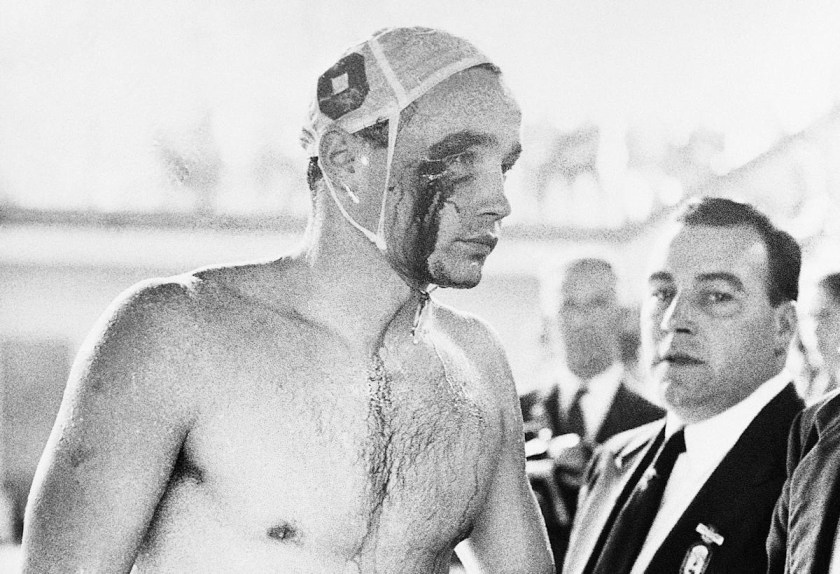
Following the violent blow delivered by [Soviet Union’s] Valentin Prokopov, Hungarian Ervin Zador bleeds profusely from above his eyebrow. Image Bettmann / Getty Images via Yahoo! Sports
One
The violent Blood in the Water Olympic water polo match between Hungary and the Soviet Union erupted in the aftermath of the Soviet Union suppressing a Hungarian uprising. During which Olympics—year and host city—did this match take place?
Answer: 1956 Melbourne Olympics
The match became a powerful symbol of Cold War tensions. Hungary went on to win the gold medal, and player Ervin Zádor’s bloodied face was widely photographed, capturing global attention.
Two
On November 6, 2012, a US president was re-elected for a second term. Who were his defeated opponents in both the 2008 and 2012 presidential elections?
Answer: John McCain (2008) and Mitt Romney (2012)
Barack Obama, the 44th President of the United States, was the first African American to hold the office. He served two terms, from 2009 to 2017, during which he implemented significant domestic and foreign policies, including healthcare reform, economic stimulus and the end of the Iraq War. Obama left office with high approval ratings and remains politically active.
Three
A composer died on November 6, 1893. One of his symphonies, Symphony No. 6 in B minor, which premiered just nine days earlier, became known as his Pathétique. Who was the composer?
Answer: Pyotr Ilyich Tchaikovsky
The Pathétique is often interpreted as an emotional farewell, blending passion and tragedy in what became Tchaikovsky’s final completed work.
Four
Switzerland officially abolished the death penalty on 6 November. Which decade was this?
Answer: 1990s (1992)
Though executions had already ceased decades earlier, the 1992 constitutional amendment made abolition permanent, aligning Switzerland with wider European human rights standards.
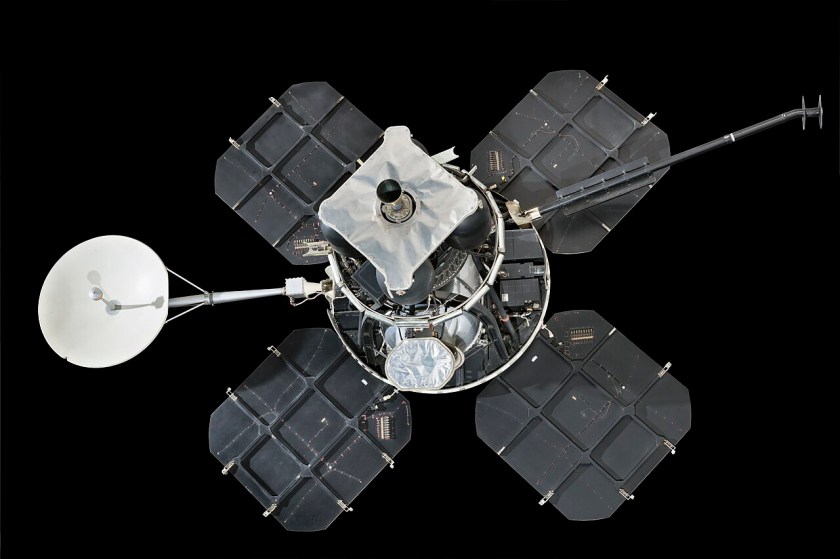
On 6 November 1966, NASA’s Lunar Orbiter 2 was launched with a primary mission objective of photographing specifically what on the Moon’s surface?
Answer: Potential landing sites on the Moon
The Lunar Orbiter 2 spacecraft was designed primarily to photograph smooth areas of the lunar surface for selection and verification of safe landing sites for the Surveyor and Apollo missions.
Lunar Orbiter 2 transmitted over 800 high-resolution images, including the first detailed close-ups of the Moon’s surface. These images were crucial in selecting the Apollo 11 landing site.
Here are five questions related to today, November 6th.
Following the violent blow delivered by [Soviet Union’s] Valentin Prokopov, Hungarian Ervin Zador bleeds profusely from above his eyebrow. Image Bettmann / Getty Images via Yahoo! Sports
One
The violent Blood in the Water Olympic water polo match between Hungary and the Soviet Union erupted in the aftermath of the Soviet Union suppressing a Hungarian uprising. During which Olympics—year and host city—did this match take place?
Two
On November 6, 2012, a US president was re-elected for a second term. Who were his defeated opponents in both the 2008 and 2012 presidential elections?
Three
A composer died on November 6, 1893. One of his symphonies, Symphony No. 6 in B minor, which premiered just nine days earlier, became known as his Pathétique. Who was the composer?
Four
Switzerland officially abolished the death penalty on 6 November. Which decade was this?
Five
On 6 November 1966, NASA’s Lunar Orbiter 2 was launched with a primary mission objective of photographing specifically what on the Moon’s surface?
Five questions which are all related to today, October 28th.
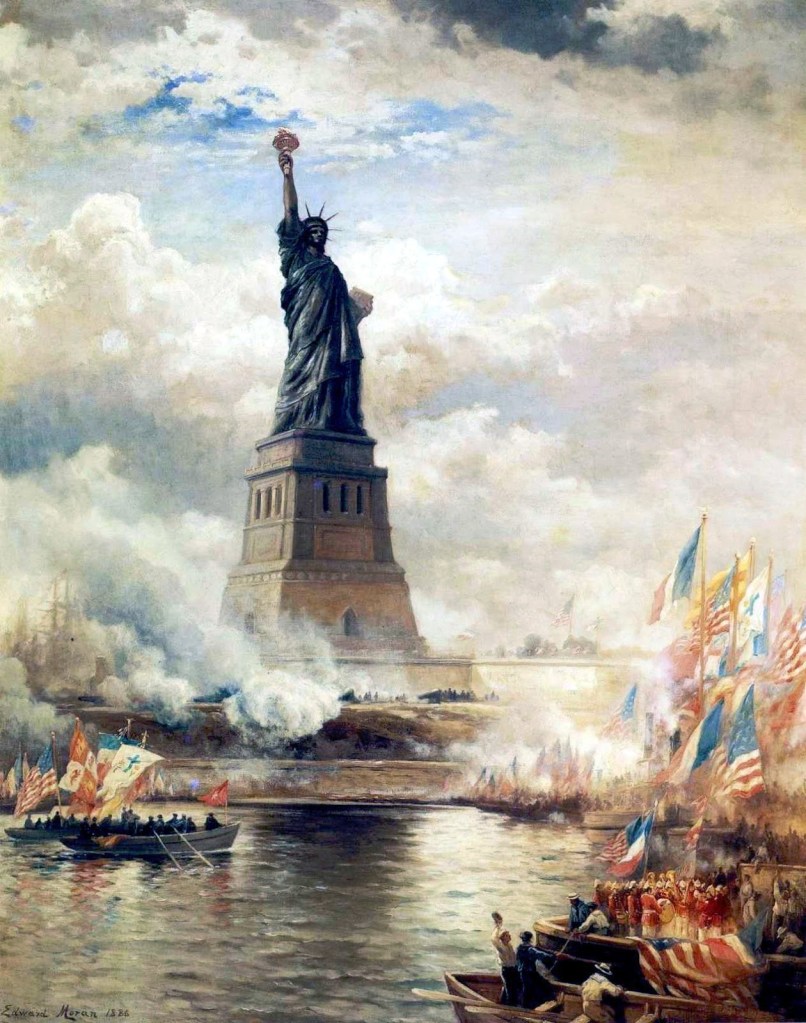
Unveiling of the Statue of Liberty Enlightening the World by Edward Moran. Oil on canvas. The J. Clarence Davies Collection, Museum of the City of New York via Wikipedia
One
On October 28, 1922, a march on Rome resulted in the rise to power of whom?
Two
On October 28, the Statue of Liberty was officially dedicated in New York Harbor. In what decade did this occur, and which US President dedicated the statue?
Three
A vote in the British House of Commons on this day in 1971 approved plans for the UK’s membership of what regional organisation had been created by the Treaty of Rome in 1957?
Four
At the 2023 Rugby World Cup final held at the Stade de France, South Africa defeated … (team), and became the first nation to win the Webb Ellis Cup … times. What team fills the first blank space, and what number is missing from the second blank?
Five
On October 28, 1919, legislation was passed in the United States that enforced the 18th Amendment and ushered in the era of Prohibition. What was the name of that act?
Here are the answers to the wrapping in my earlier post.
John F. Kennedy (1917–1963) and Nikita Khrushchev (1894–1971) in Vienna, Austria in May 1961. Image Wikipedia
One
President John F. Kennedy’s televised announcement on 22 October 1962 brought the world to the brink of nuclear war. What confrontation was it about?
Answer: Cuban Missile Crisis
President Kennedy, following advice from Dwight D. Eisenhower, announces that American reconnaissance aircraft have identified Soviet nuclear weapons in Cuba and that he has ordered a naval ‘quarantine’ of the Communist country.
Two
Tsar Peter I proclaimed the Russian Empire. In which century was this?
Answer: 18th (1721)
> The title was transformed from the previous title of tsar and grand prince of all Russia. The old title tsar (or tsaritsa) continued to be popularly used to refer to the emperor (or empress) until the monarchy was abolished in 1917. — Wikipedia
Three
On 22 October 1964, a French writer was awarded the Nobel Prize in Literature, though it was subsequently declined. Who was the author?
Answer: Jean-Paul Sartre
Jean-Paul Sartre declined the 1964 Nobel Prize in Literature, citing his refusal to accept official honours and his belief that the prize favoured Westerners and Eastern rebels. The Swedish Academy acknowledged his decision but maintained the validity of the award.
Emperor Naruhito, official portrait 2019. Image Wikipedia
Four
Naruhito was officially enthroned as Japan’s 126th emperor on 22 October 2019. Earlier that year, he had ascended the Imperial Throne following the abdication of whom?
Answer: Emperor Akihito
Five
Who became the first President of the Republic of Texas on 22 October 1836?
Here are five questions about historical events some connected to today, October 22nd.
U.S. Pres. John F. Kennedy announcing on television the U.S. naval blockade of Cuba, October 22, 1962. Image Encyclopædia Britannica
One
President John F. Kennedy’s televised announcement on 22 October 1962 brought the world to the brink of nuclear war. What confrontation was it about?
Two
Tsar Peter I proclaimed the Russian Empire. In which century was this?
Three
On 22 October 1964, a French writer was awarded the Nobel Prize in Literature, though it was subsequently declined. Who was the author?
Four
Naruhito was officially enthroned as Japan’s 126th emperor on 22 October 2019. Earlier that year, he had ascended the Imperial Throne following the abdication of whom?
Five
Who became the first President of the Republic of Texas on 22 October 1836?
On 20 October 1973, which Australian landmark officially opened to the public? Sydney Opera House The Sydney Opera House, which was opened by Queen Elizabeth II, was named a UNESCO World Heritage Site, whose citation is
Inaugurated in 1973, the Sydney Opera House is a great architectural work of the 20th century that brings together multiple strands of creativity and innovation in both architectural form and structural design. A great urban sculpture set in a remarkable waterscape, at the tip of a peninsula projecting into Sydney Harbour, the building has had an enduring influence on architecture. The Sydney Opera House comprises three groups of interlocking vaulted ‘shells’ which roof two main performance halls and a restaurant. These shell-structures are set upon a vast platform and are surrounded by terrace areas that function as pedestrian concourses. In 1957, when the project of the Sydney Opera House was awarded by an international jury to Danish architect Jørn Utzon, it marked a radically new approach to construction. — UNESCO World Heritage Convention
Two
The Battle of Valdivia, part of the Chilean War of Independence, took place in which decade? 1820s This battle saw Chilean forces secure the southern stronghold from Spanish royalists, aiding in the country’s independence.
The Traveling Wilburys—top: 1. Jeff Lynne, 2. Tom Petty; bottom: 3. Roy Orbison, 4. Bob Dylan, 5. George Harrison
Three
Which iconic rock musician gave his final live performance with his band, the Traveling Wilburys, on this day in 1990? Roy Orbison Roy Orbison, part of the supergroup with George Harrison, Bob Dylan, Jeff Lynne and Tom Petty, passed away later that year.
On 20 October 2011, which long-time Libyan leader was captured and killed during the civil conflict? Muammar Gaddafi Muammar Gaddafi had ruled Libya for 42 years before being overthrown during the Arab Spring uprisings. His death, which ended one of Africa’s longest dictatorships, lead to years of instability in Libya.
Five
Which U.S. President signed the Louisiana Purchase Treaty on 20 October 1803? Thomas Jefferson The Louisiana Purchase doubled the size of the United States, adding roughly 828,000 square miles of territory.
In 1956, Martina Navratilova, who went on to dominate women’s tennis, was born? In what city was she born and how many Grand Slam singles titles did she win?
Answer: 18 (Grand Slam singles titles)
Martina Navratilova, a Czech-American former tennis player, dominated women’s tennis in the 1980s. She holds numerous records, including nine Wimbledon singles titles and a career Grand Slam in singles, doubles, and mixed doubles. Navratilova became a US citizen in 1981 and later reacquired Czech citizenship in 2008.
Two
In 1939, the man who would later be accused of assassinating President John F. Kennedy — and who himself would be fatally shot two days afterward — was born in New …. What was his name and his place of birth?
Answer: Lee Harvey Oswald and New Orleans
Lee Harvey Oswald, a former U.S. Marine, assassinated President John F. Kennedy on 22 November 1963 and was himself killed by Jack Ruby two days later. The Warren Commission concluded Oswald, who had a troubled past and at one time defected to the Soviet Union, acted alone, a finding supported by multiple investigations, though many Americans remain sceptical.
Three
The BBC, a national broadcasting service, was founded in London on this day. Which decade saw this happen?
Answer: 1920s
The British Broadcasting Corporation—established in 1922 as the British Broadcasting Company—is headquartered in London and is the oldest and largest broadcaster in the UK. Funded primarily by a television licence fee, it provides radio, TV, and online services, including the BBC World Service.
Four
On this day in 1867, following the US’s approval of the purchase of Alaska from Russia, the American flag was unfurled over the capital for the first time. Where was that capital and how far apart are Alaska and Russia at their closest point, measured in miles?
Answer: Sitka and 2.4 miles or 3.8 km
The Alaska Purchase, negotiated by William H. Seward in 1867, was finalised on October 18th with a flag-raising ceremony at Fort Sitka, now celebrated as Alaska Day.
Anything between 2 and 3 miles or 3 and 4 km is acceptable.
The Diomede Islands, Little Diomede (Alaska, U.S.) and Big Diomede (Chukotka, Russia), are located in the Bering Strait, between Alaska and Siberia.
The distance between the islands is about 2.4 miles (3.8 kilometres).
The International Date Line runs between them, making Big Diomede almost one day ahead of Little Diomede; consequently, they are sometimes called ‘Tomorrow Island’ (Big Diomede) and ‘Yesterday Island’ (Little Diomede).
Five
The Whale, first published in London on this day in 1851, was written by whom?
Answer: Herman Melville
The British edition of The Whale was published on October 18th with only 500 copies printed, a small print run due to slow sales of previous books. The American editions—titled Moby Dick or The Whale was released on November 14th.
In 1956, Martina Navratilova, who went on to dominate women’s tennis, was born. In what city was she born, and how many Grand Slam singles titles did she win?
Two
In 1939, the man who would later be accused of assassinating President John F. Kennedy — and who himself would be fatally shot two days afterward — was born in New …. What was his name and his place of birth?
Three
The BBC, a national broadcasting service, was founded in London on this day. Which decade saw this happen?
Four
On this day in 1867, following the US’s approval of the purchase of Alaska from Russia, the American flag was unfurled over the capital for the first time. Where was that capital and how far apart are Alaska and Russia at their closest point, measured in miles?
Five
The Whale, first published in London on this day in 1851, was written by whom?