There is much pleasure to be gained from useless knowledge. (Bertrand Russell)
Author: Quizologist
As a retired trivia writer, editor and quiz compiler, I wholeheartedly agree with Bertrand Russell’s quote: “There’s much pleasure to be gained in useless knowledge.” Trivia of all sorts has always fascinated me, and for many years, I’ve written and compiled trivia for various media, including traditional TV and radio quiz shows, newspapers and magazines, apps, and other digital platforms.
On 15 April 1955, Ray Kroc launched McDonald’s Systems, Inc., later known as McDonald’s Corporation, in…
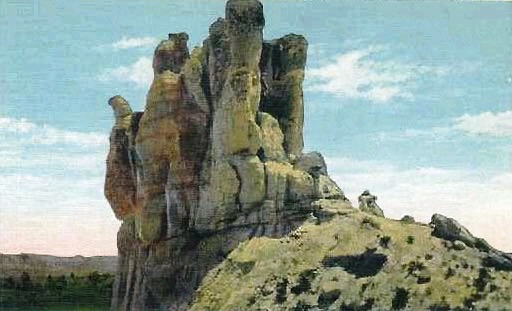
Des Plaines, Illinois—McDonald’s, founded in 1940, is an American multinational fast food chain. It serves over 69 million customers daily in more than 100 countries. “Teapot Rock-Famous Teapot Dome” “[Salt Creek] Oil District-In Wyoming,” Historical postcard, c. 1922. Wikipedia
On this day in 1922, US Senator John B. Kendrick (Wyoming) introduced a resolution calling for an investigation into a secret land deal. This led to the discovery of the…
Teapot Dome scandal—The Teapot Dome scandal involved the secret leasing of federal oil reserves by Secretary of the Interior Albert Bacon Fall to Harry F. Sinclair and Edward L. Doheny. Fall received bribes from Sinclair and Doheny, leading to his conviction for bribery and imprisonment.
George Cross granted to the Island of Malta in 1942. National War Museum, Malta. Wikipedia
On this day in 1942, King George VI awarded the George Cross to the island fortress of…
Malta—see quote from handwritten message of King George VI.
“To honour her brave people I award the George Cross to the Island Fortress of Malta to bear witness to a heroism and devotion that will long be famous in history.“
Today in 1923, ___ became generally available for use by people with diabetes. The missing word is…
Insulin—a pancreatic hormone, regulates blood sugar levels by facilitating glucose uptake into cells. Insulin deficiency leads to diabetes mellitus, requiring insulin injections
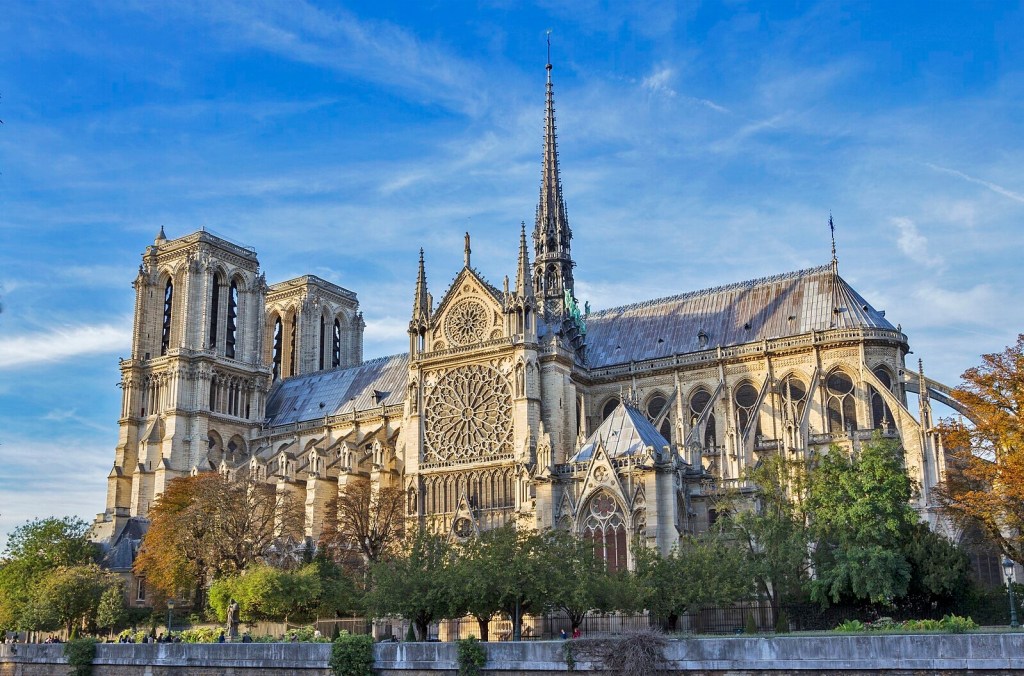
On 15 April 2019, the cathedral of Notre-Dame de Paris in France was seriously damaged by a large fire. This Paris cathedral is located on the…
Île de la Cité—a 22.5-hectare (55.5 acres) island in the Seine, is the historical heart of Paris. It features iconic landmarks like Notre-Dame Cathedral, Sainte-Chapelle and the Pont Neuf, and underwent significant transformations in the 19th century under Haussmann’s urban renewal project.
On 15 April 1955, Ray Kroc launched McDonald’s Systems, Inc., later known as McDonald’s Corporation, in…
Des Lacs, North Dakota
Des Moines, Iowa
Des Plaines, Illinois
On this day in 1922, US Senator John B. Kendrick (Wyoming) introduced a resolution calling for an investigation into a secret land deal. This led to the discovery of the…
Milk Jug scandal
Sugar Bowl scandal
Teapot Dome scandal
On this day in 1942, King George VI awarded the George Cross to the island fortress of…
Jersey
Malta
St Helena.
Today in 1923, ___ became generally available for use by people with diabetes. The missing word is…
Formalin
Insulin
Mandolin.
On 15 April 2019, the cathedral of Notre-Dame de Paris in France was seriously damaged by a large fire. This Paris cathedral is located on the…
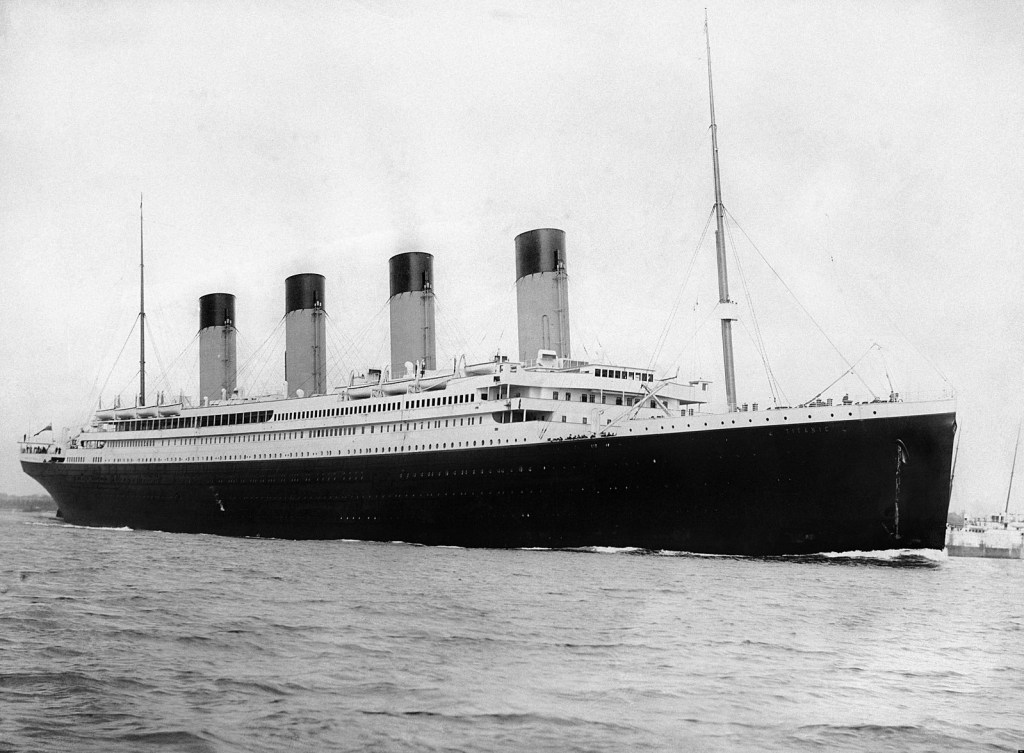
See #2 below. RMS Titanic departing Southampton on 10 April 1912. Wikipedia
Today’s post is all about today’s date, 14 April, and all the answers are numbers.
What two words are missing from this text regarding an April 14, 1881 gunfight: The ___ Dead in ___ Seconds Gunfight?
Four and five
Five and ten
Six and fifteen.
In 1912, the British passenger liner RMS Titanic struck an iceberg in the North Atlantic, causing it to begin sinking. Where was it when it struck the iceberg?
220 miles (350 km) south of Iceland
370 miles (600 km) southeast of Newfoundland
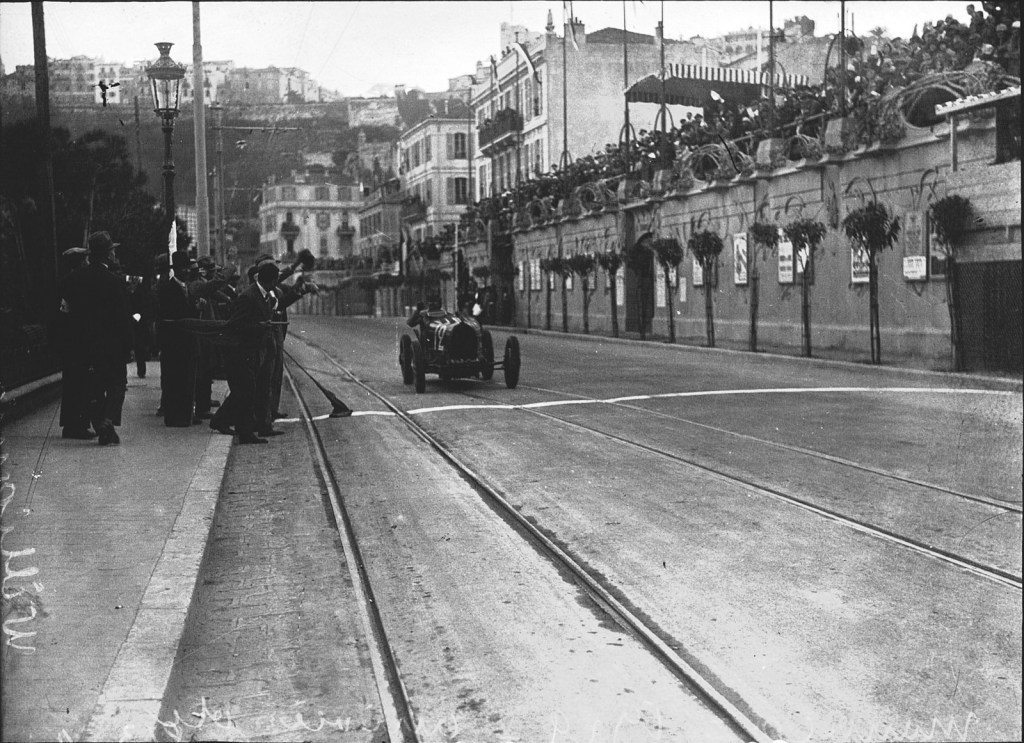
590 miles (950 km) northwest of the Azores. William Grover-Williams at the 1929 Monaco Grand Prix. Wikipedia
In motor racing, the inaugural Monaco Grand Prix took place on this date when a number of invited participants started the race. In what year did this inaugural race take place and how many drivers participated?
1923 and 10 drivers
1929 and 16 drivers
1934 and 12 drivers.
On 14 April 1865, Abraham Lincoln, the President of the United States, was shot by John Wilkes Booth at Ford’s Theatre in Washington, DC. What number President was Lincoln and how many days later was his assassin killed?
14th President and 17 days
15th President and 9 days
16th President and 12 days.
Today in 1986, the heaviest hailstones ever recorded fell on the Gopalganj district of Bangladesh, resulting in fatalities. How heavy were the individual hailstones and how many people died?
0.5 kg (1.1 lb) and 47 persons
0.75 kg (1.65 lb) and 64 persons
1 kg (2.2 lb) and 92 persons.
On this day, Mark Antony was defeated at the Battle of Forum Gallorum. This was some 13 years before his death, so when was the battle?
43 BCE
3CE
43 CE
Good luck! As usual, I will post answers later today.
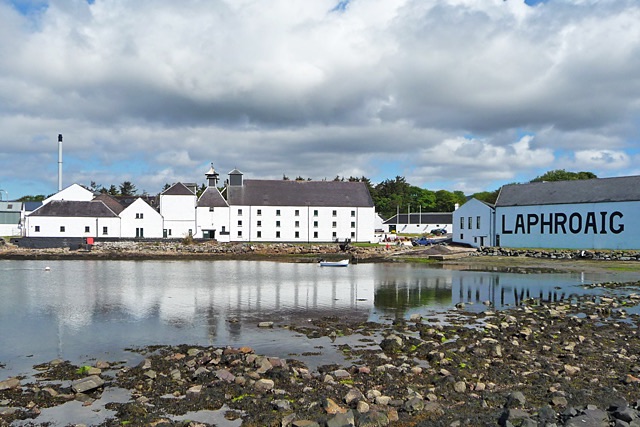
See #2 below. Laphroaig Distillery, Islay, Scotland. Geograph UK/Wikipedia
As usual, the answers to my earlier questions are in bold below. But in a change from normal, I have decided to include the questions as well but will strike out the incorrect alternative answers. I am not sure if it will be permanent or not.
(V) In which state is Naulakha, the home built for Rudyard Kipling in 1892-93?
Veracruz, Mexico
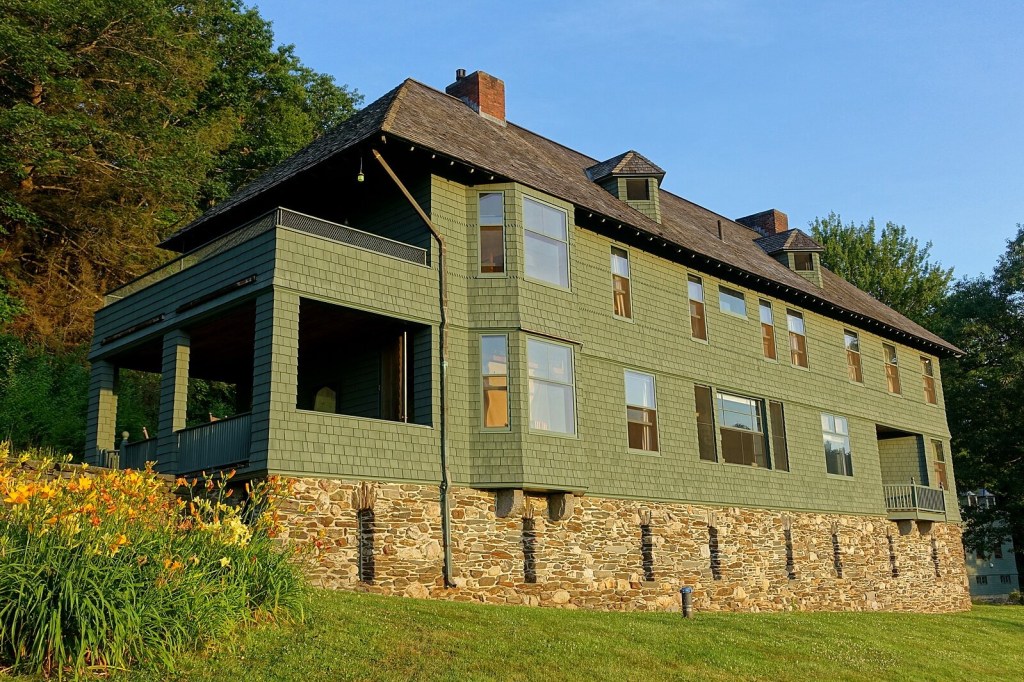
Vermont, US—Naulakha, a historic Shingle Style house in Dummerston, Vermont, was built in 1893 and served as Rudyard Kipling’s home until 1896. During this time, Kipling wrote several notable works, including Captains Courageous and The Jungle Book. The house, named after the Naulakha Pavilion in Lahore, is now owned by the Landmark Trust and available for rent.
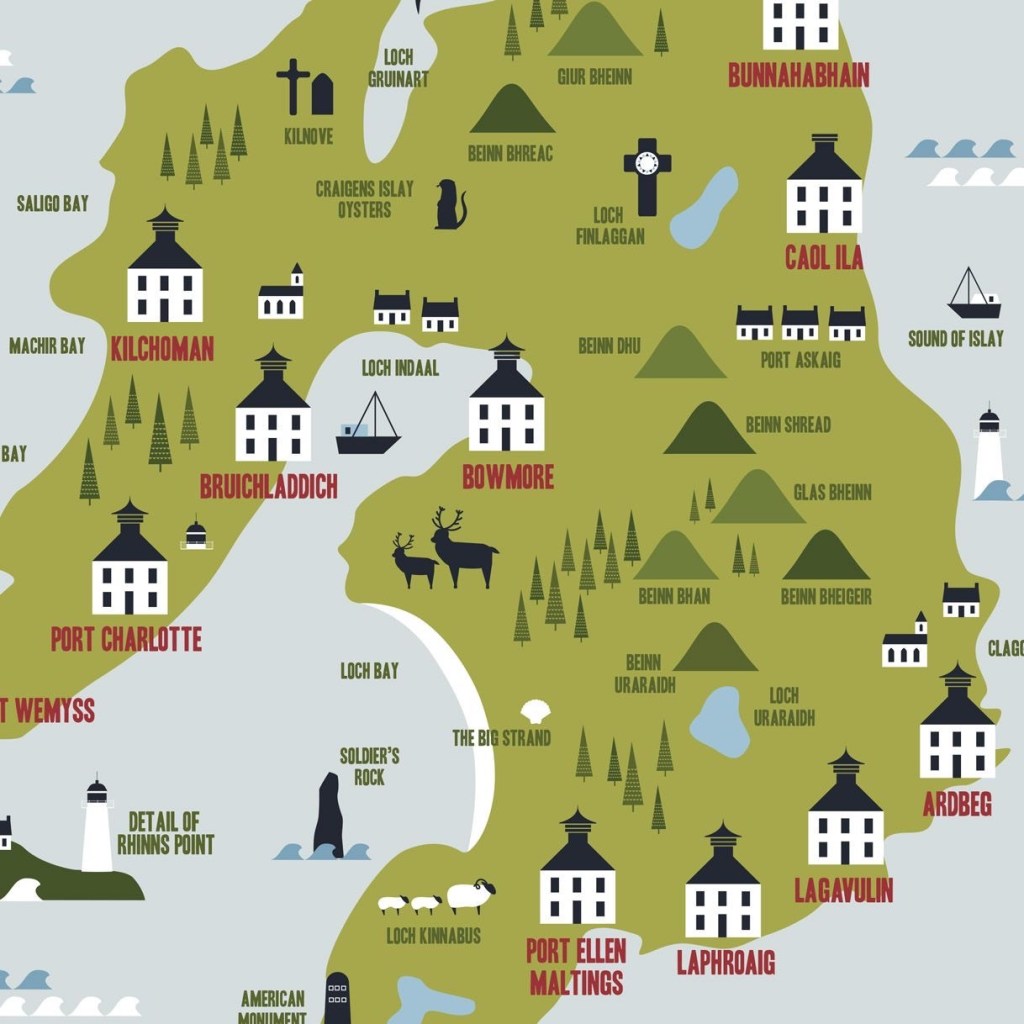
Whisky—Malt whisky is made from malted barley and can be single malt if produced at a single distillery. Other malted grains can be used, but the whisky is then specified by the grain. Caol Ila and Laphroaig are both from the Isle of Islay, Scotland; Rosebank is a malt from the Scottish lowlands.
(X) Which of these words is omitted from this poem’s opening lines?
Xagacía
Xai-xai
Xanadu—the quote is below and the complete poem is at the bottom of the post.
In Xanadu did Kubla Khan A stately pleasure-dome decree: Where Alph, the sacred river, ran Through caverns measureless to man Down to a sunless sea.
(Y) Which former Soviet republic capital is located on the Hrazdan River?
Yaounde
Yaren
Yerevan—the capital of Armenia, is one of the world’s oldest continuously inhabited cities. Founded in 782 BC as the fortress of Erebuni, it has served as Armenia’s capital since 1918. Yerevan is a cultural and industrial centre, home to numerous landmarks, museums and theatres.
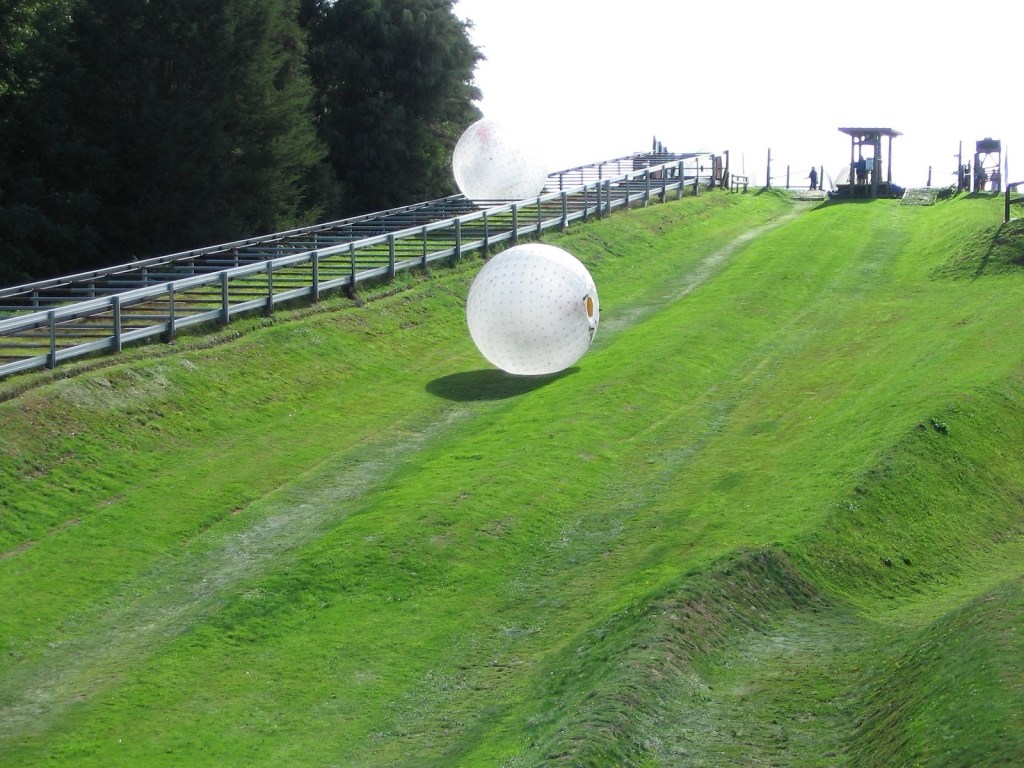
(Z) What activity consisting of rolling downhill inside an orb, typically made of transparent plastic, pictured, is taking place here?
Zooming
Zorbing—or globe-riding, involves rolling downhill inside a transparent plastic orb. There are two types of orbs: harnessed for one to two riders and non-harnessed for up to three riders.
In Xanadu did Kubla Khan A stately pleasure-dome decree: Where Alph, the sacred river, ran Through caverns measureless to man Down to a sunless sea. So twice five miles of fertile ground With walls and towers were girdled round; And there were gardens bright with sinuous rills, Where blossomed many an incense-bearing tree; And here were forests ancient as the hills, Enfolding sunny spots of greenery.
But oh! that deep romantic chasm which slanted Down the green hill athwart a cedarn cover! A savage place! as holy and enchanted As e’er beneath a waning moon was haunted By woman wailing for her demon-lover! And from this chasm, with ceaseless turmoil seething, As if this earth in fast thick pants were breathing, A mighty fountain momently was forced: Amid whose swift half-intermitted burst Huge fragments vaulted like rebounding hail, Or chaffy grain beneath the thresher’s flail: And mid these dancing rocks at once and ever It flung up momently the sacred river. Five miles meandering with a mazy motion Through wood and dale the sacred river ran, Then reached the caverns measureless to man, And sank in tumult to a lifeless ocean; And ’mid this tumult Kubla heard from far Ancestral voices prophesying war! The shadow of the dome of pleasure Floated midway on the waves; Where was heard the mingled measure From the fountain and the caves. It was a miracle of rare device, A sunny pleasure-dome with caves of ice!
A damsel with a dulcimer In a vision once I saw: It was an Abyssinian maid And on her dulcimer she played, Singing of Mount Abora. Could I revive within me Her symphony and song, To such a deep delight ’twould win me, That with music loud and long, I would build that dome in air, That sunny dome! those caves of ice! And all who heard should see them there, And all should cry, Beware! Beware! His flashing eyes, his floating hair! Weave a circle round him thrice, And close your eyes with holy dread For he on honey-dew hath fed, And drunk the milk of Paradise.
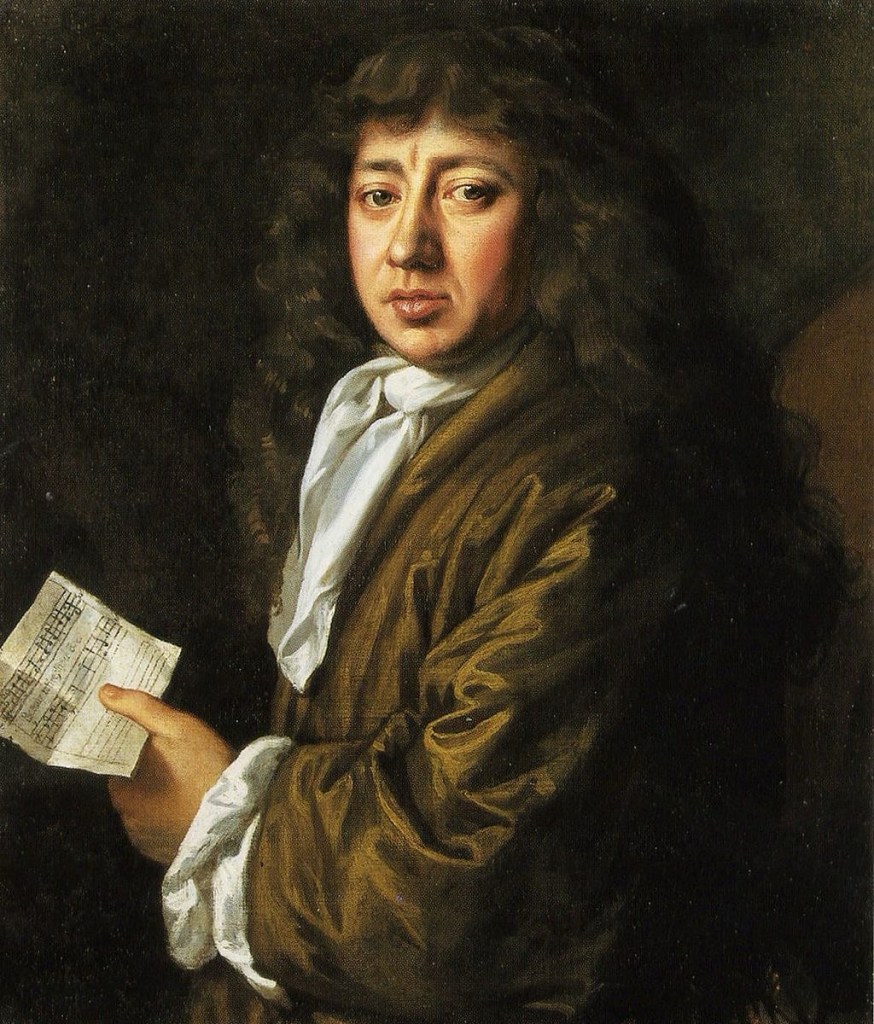
Portrait of Samuel Pepys by John Hayls. Wikipedia See #3.
Q) Question mark—The question mark, used to indicate questions in many languages, has a history dating back to the 5th century. Its modern form, a curved mark, emerged in the 13th century and was standardised in the 15th century. The term “question mark” was first used in the 1850s. Rebecca book cover. Wikipedia
(R) Rebecca—Rebecca is a 1938 Gothic novel by Daphne du Maurier about a young woman who marries a wealthy widower haunted by his late first wife. The novel, a bestseller, has been adapted for stage, screen and as a musical.
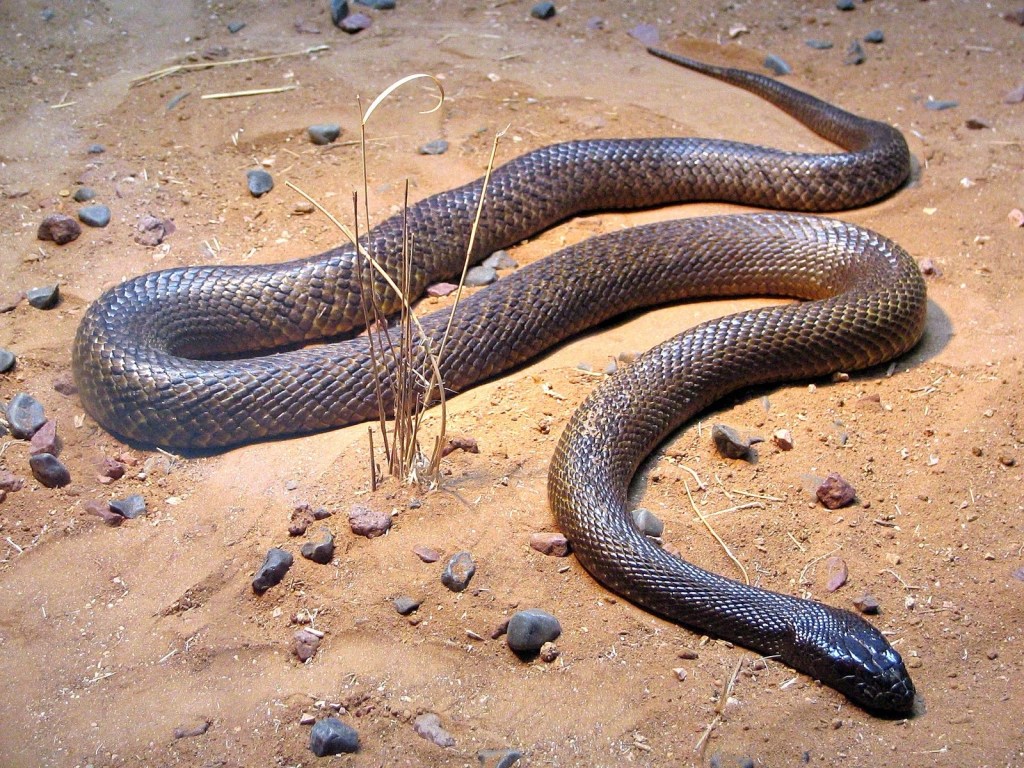
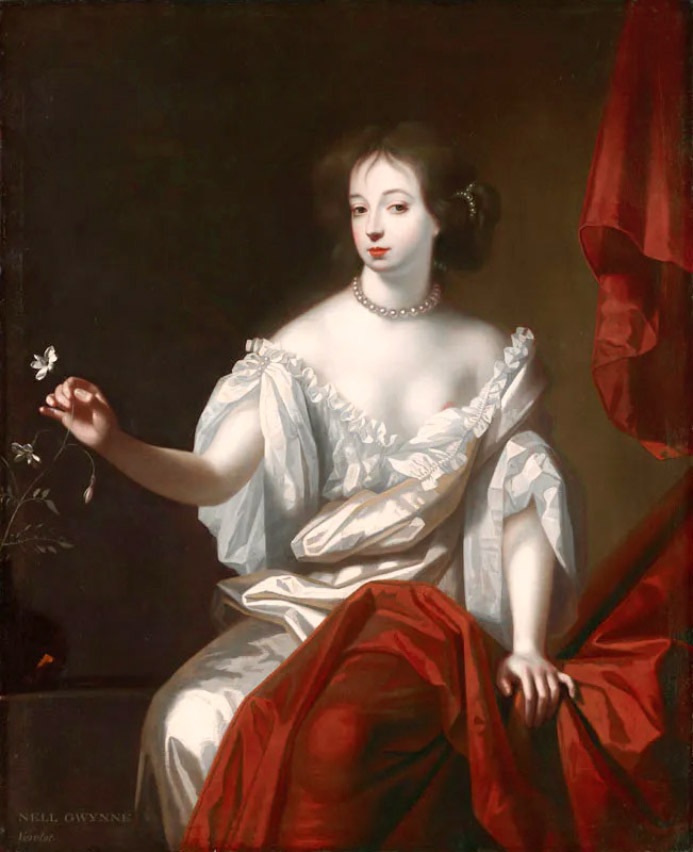
(S) Samuel Peyps—Eleanor Gwyn, also known as Nell Gwyn, was an English actress and mistress of King Charles II, celebrated for her comic performances and as a folk heroine of Restoration England. She had two sons with the King, Charles and James Beauclerk. Known for her frank recklessness, generosity and good temper, Nell rose from humble beginnings as an orange-girl to become a leading comedienne in the King’s Company, performing in plays by John Dryden and James Howard. After becoming Charles II’s mistress in 1669, she retired from the stage, lived extravagantly, entertained the king and his friends and secured titles for her sons. Inland Taipan aka Fierce snake. Wikipedia
(T) Taipan—Taipans are large, fast-moving, highly venomous snakes endemic to Australia and New Guinea. There are three recognised species, with the coastal taipan having two subspecies. Taipan refers to foreign-born senior business executives or entrepreneurs operating in China or Hong Kong. The term also refers to influential business families in the Philippines. Tai-Pan, a 1966 novel by James Clavell, is the second book in his Asian Saga and introduces the Struan family.
(U) Uranus—Gustav Holst’s The Planets is a seven-movement orchestral suite depicting the planets as astrological symbols. The suite premiered in 1918 and quickly became popular.
Uranus on 1986-01-23 formula NASA’s Voyager 2 probe. Wikipedia
(R) “Last night I dreamt I went to Manderley again”, is the opening line of what novel?
Rebecca
Rowena
Roxanne
(S) Which contemporary of Charles II’s mistress, Nell Gwyn, described her as “pretty, witty Nell”?
Samuel Johnson
Samuel Pepys
Samuel Richardson
(T) One word links snakes of the genus Oxyuranus; a foreign-born senior business executive in China or Hong Kong and a novel by James Clavell. What word?
Taipan
Titanoboa
Trinket
(U) In Gustav Holst’s suite what is “the Magician”?
(K) Kazakhstan—The flag of Kazakhstan was adopted on 4 June 1992, replacing the Soviet-era flag. The flag was designed by Shaken Niyazbekov.
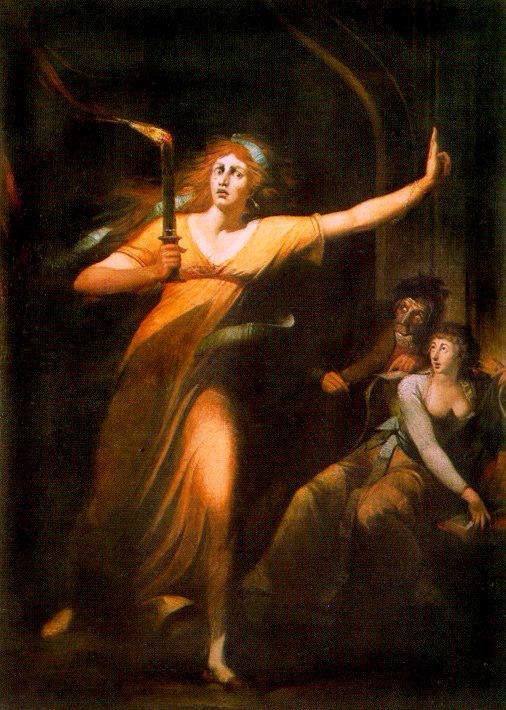
(L) Lake Huron—Manitoulin Island, the largest lake island in the world, is located in Lake Huron, Ontario. With an area of 2,766 sq km, it contains over 100 lakes, including Lake Manitou, Lake Kagawong and Lake Mindemoya. Lady Macbeth, Sleepwalking scene, Macbeth. Wikipedia
(M) Macbeth—In Shakespeare’s Macbeth, Lady Macbeth sleepwalks, rubbing her hands and recalling the deaths of King Duncan, Lady Macduff and Banquo. The Doctor, observing her guilt-ridden state, believes she needs divine help rather than medical treatment.
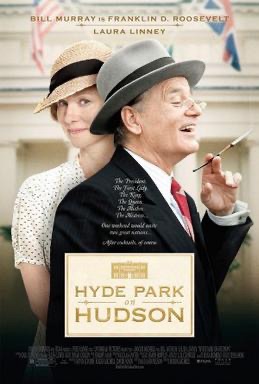
(N) Naughtiest—Enid Blyton’s Naughtiest Girl series, set at a progressive boarding school, was written in the 1940s and 1950s. Anne Digby later added to the series. Poster for Hyde Park of Hudson Wikipedia
(O) Olivia Colman—is an English actress, is known for her roles in television series like Peep Show, Broadchurch and The Crown, as well as films like The Favourite, The Father and The Lost Daughter. She has received numerous awards, including an Academy Award, four BAFTAs, two Emmys and three Golden Globes. As well as playing Elizabeth II in The Crown she played her mother, Queen Elizabeth, who was King George VI’s consort and the future Queen Elizabeth, the Queen Mother, in Hyde Park on Hudson.
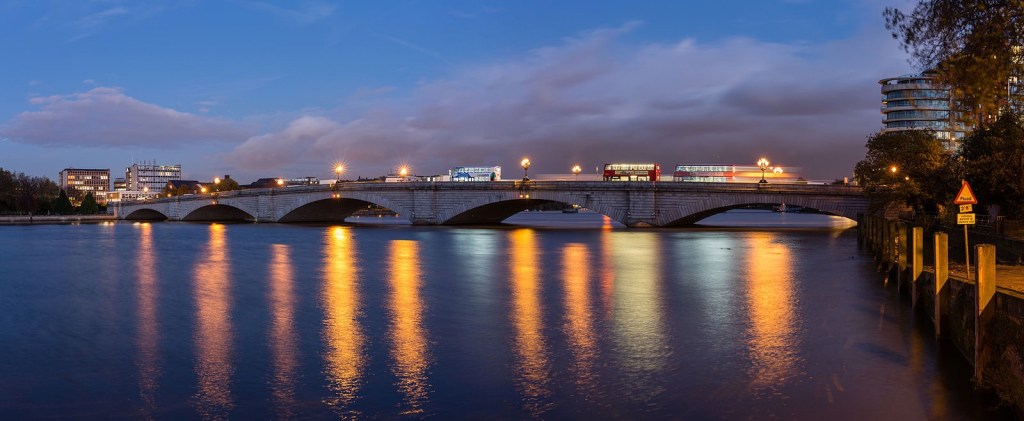
(P) Putney Bridge—The Boat Race is an annual rowing competition between Cambridge and Oxford universities, held on the River Thames in London. The men’s race began in 1829 and the women’s race in 1927. Cambridge leads in both the men’s and women’s races, with 87 and 47 wins respectively.
Putney Bridge at Dusk as viewed from the south-west at the boat sheds along the Thames. Wikipedia







 Quizology Online