Tag: royalty

  • Every Picture Tells a Story — Answers

    The answers to my earlier questions are shown below.

    Five pictures and some questions all of which are related to today’s date, March 24th.

    One

    Brandenburg Gate, Berlin.
    Image Wikimedia Commons

    In 1721, a collection of six instrumental works—the composer’s own title was Six Concerts Avec plusieurs Instruments (Six Concertos With several Instruments)—were presented by Johann Sebastian Bach to Christian Ludwig, a marquess and younger brother of King Frederick I of Prussia. Using the above picture as a clue, by what name is this collection commonly known today?

    Answer: Brandenburg Concertos

    Johann Sebastian Bach’s Brandenburg Concertos, now his most popular work, were likely never performed during his lifetime. Bach sent the original manuscript to the Margrave (Marquess) of Brandenburg in 1721, possibly as a job application, but the Margrave never acknowledged the gift. The concertos were forgotten for over a century until they were rediscovered and published in the 19th century.


    Two
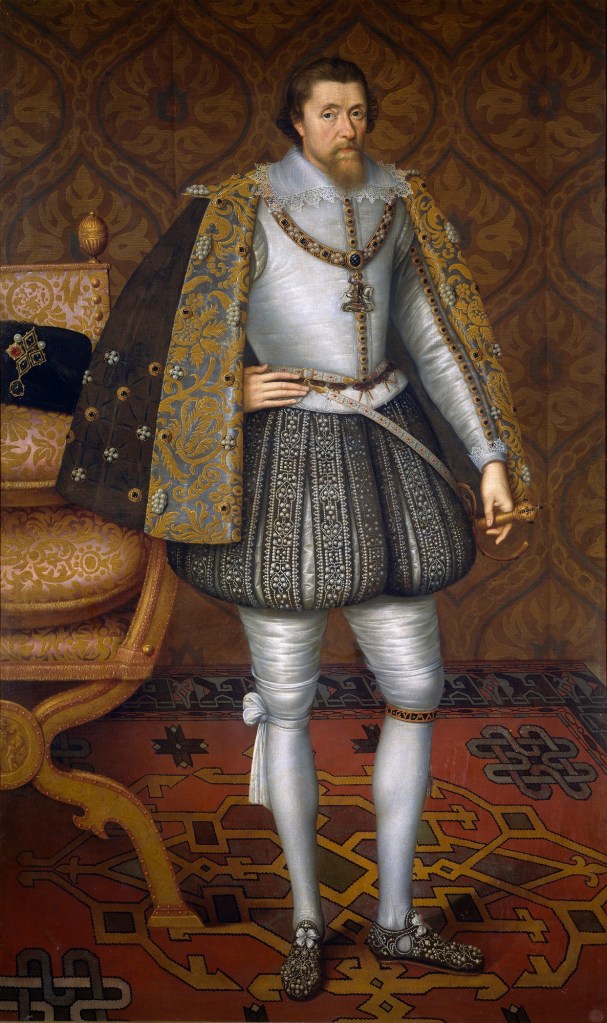
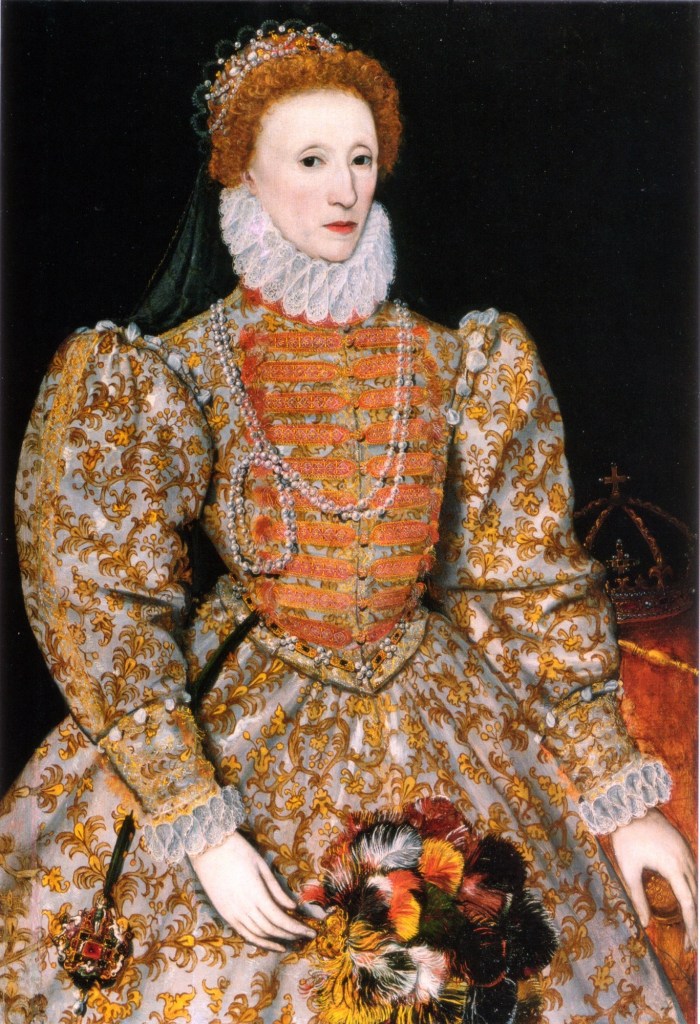
    The male monarch pictured above succeeded the female one on her death in 1603. 

    1. Who is the queen?
    2. Who was the king?
    3. What was the familial relationship between them?

    Answers

    1. Queen Elizabeth I
    2. King James VI and I
    3. Cousins.

    Queen Elizabeth I’s death in 1603 ended her reign of England and Ireland, leading to her cousin King James VI of Scotland’s succession as King of England and Ireland. Now both James VI and I, his reign saw the beginning of the Plantation of Ulster and English colonisation of the Americas.


    Three
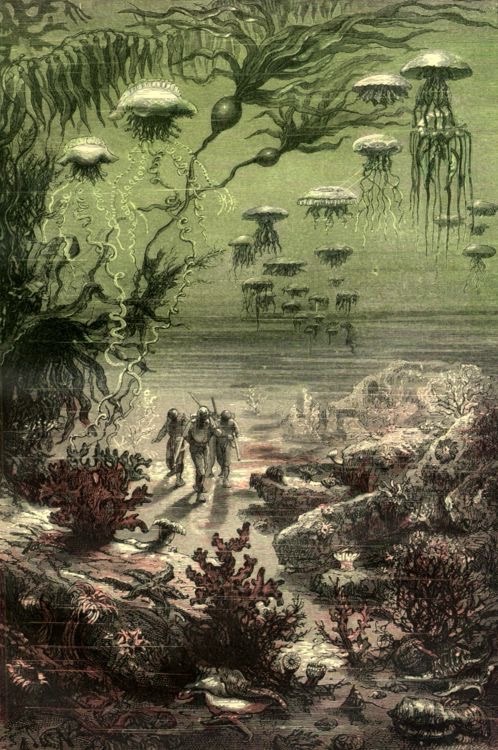
    The two illustrations above are from novels by an author, ‘the father of science fiction’, who died in 1905, aged 77. Since 1979, he has been the second most translated author.

    1. Who was the author?
    2. From what novel is the first illustration?
    3. From what novel is the second illustration?

    Answers

    1. Jules Verne 
    2. Twenty Thousand Leagues Under the Sea
    3. From the Earth to the Moon

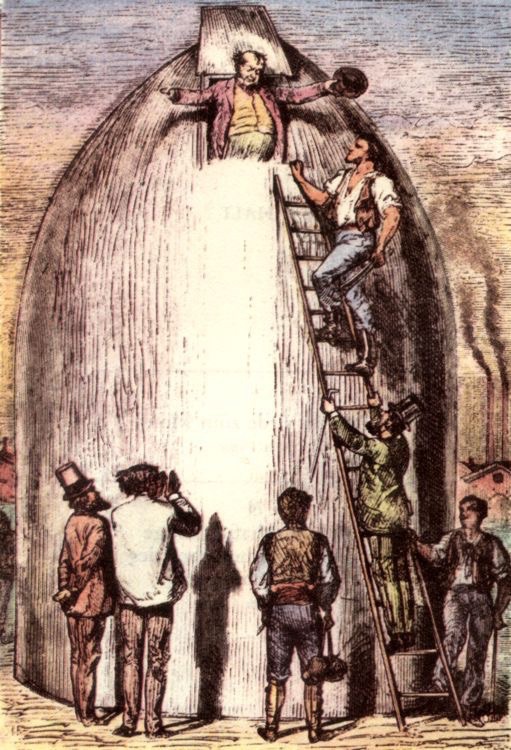
    Jules Verne was a French novelist, poet, and playwright, best known for his adventure novels like Journey to the Centre of the Earth and Around the World in Eighty Days His work, often set in the 19th century, incorporated contemporary scientific knowledge and technological advances. Verne is considered an important author in Europe and has been the second most-translated author in the world since 1979.


    Four
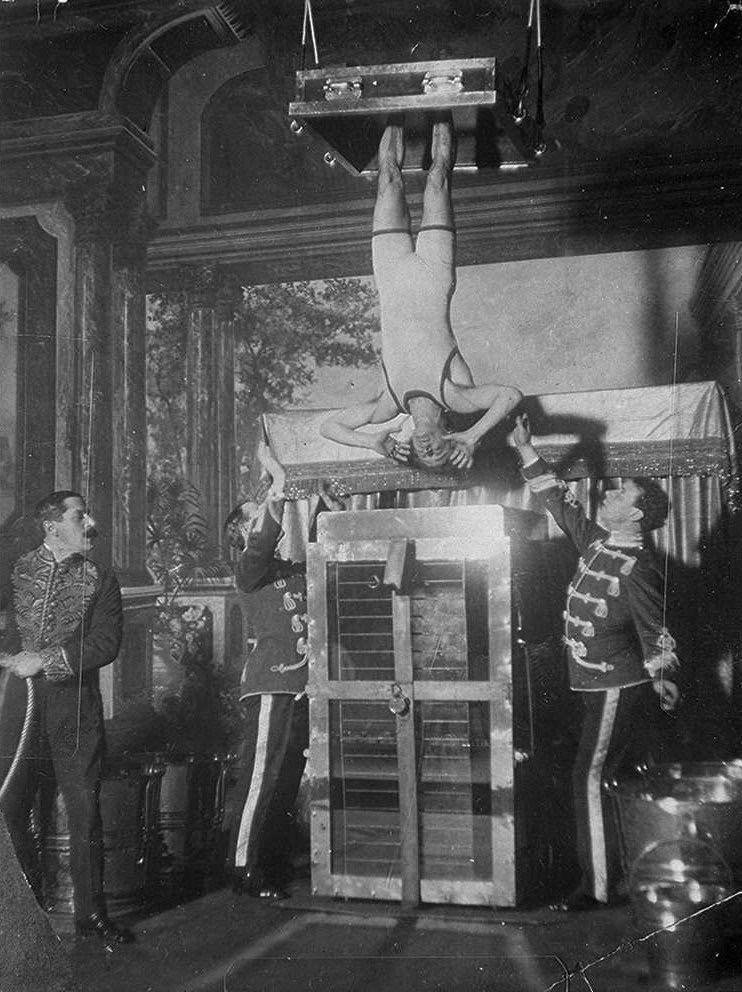
    Harry Houdini, performing The Chinese Water Torture Cell.
    Image Wikimedia Commons

    Erik Weisz, who was born in 1874, is pictured above during one of his acts, although he’s better known by his stage name.

    1. In what European city was he born?
    2. Who is he better known as?

    Answers

    1. Budapest
    2. Harry Houdini.

    Harry Houdini, a Hungarian-American escapologist, gained fame for his daring escape acts, including freeing himself from handcuffs, chains, and straitjackets. He also pursued a crusade against fraudulent spiritualists and was a pioneer aviator.


    Five
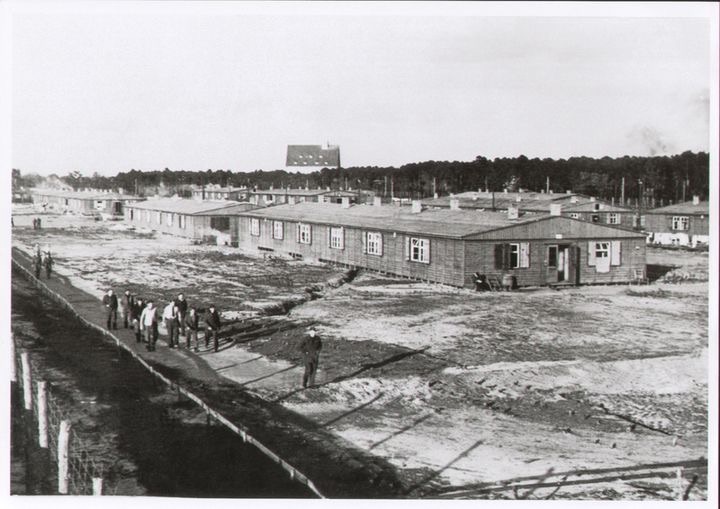
    Stalag Luft III.
    Image Wikimedia Commons

    The prisoner of war camp above was made famous by a 1963 film which features the inmates attempts to leave it on the night of 24 March 1944.

    1. By what name is this POW camp commonly known?
    2. What was the 1963 film?
    3. In what modern country is the site of the camp today?

    Answers

    1. Stalag Luft III
    2. The Great Escape
    3. Poland

    Stalag Luft III (in full Stammlager Luft III; literally meaning Main Camp, Air, III) was a World War II POW camp for Allied airmen, known for escape plots including the Great Escape. Of the 76 men who escaped that night, 73 were recaptured, and fifty of those were executed. The camp, which was liberated in 1945 and is now a museum, was the subject of two feature films about the escape attempts that were made: The Wooden Horse (1950) and The Great Escape (1963).


  • Every Picture Tells a Story

    Five pictures and some questions all of which are related to today’s date, March 24th.

    One

    Image Wikimedia Commons

    In 1721, a collection of six instrumental works—the composer’s own title was Six Concerts Avec plusieurs Instruments (Six Concertos With several Instruments)—were presented by Johann Sebastian Bach to Christian Ludwig, a marquess and younger brother of King Frederick I of Prussia. Using the above picture as a clue, by what name is this collection commonly known today?


    Two

    The male monarch pictured above succeeded the female one on her death in 1603. 

    1. Who is the queen?
    2. Who was the king?
    3. What was the familial relationship between them?

    Three

    The two illustrations above are from novels by an author, ‘the father of science fiction’, who died in 1905, aged 77. Since 1979, he has been the second most translated author.

    1. Who was the author?
    2. From what novel is the first illustration?
    3. From what novel is the second illustration?

    Four

    Eric Weisz.
    Image Wikimedia Commons

    Erik Weisz, who was born in 1874, is pictured above during one of his acts, although he’s better known by his stage name.

    1. In what European city was he born?
    2. Who is he better known as?

    Five

    Image Wikimedia Commons

    The prisoner of war camp above was made famous by a 1963 film which features the inmates attempts to leave it on the night of 24 March 1944. 

    1. By what name is this POW camp commonly known?
    2. What was the 1963 film?
    3. In what modern country is the site of the camp today?

    Good luck! I’ll post the answers later.


  • From the land of the Pima Indian—Answers

    Here are the answers to my earlier questions.

    Today’s first question concerns this date, February 23rd, while the others follow on and share a common theme.

    Ira Hayes Memorial.
    Image Wikimedia Commons

    One

    Which famous photograph featuring US Marine Ira Hayes shows him and fellow servicemen raising the American flag during a pivotal World War II battle?

    Answer: Raising the Flag on Iwo Jima

    The photograph, taken by Joe Rosenthal during the Battle of Iwo Jima atop Mount Suribachi on 23 February 1945, became one of the most reproduced images in history and later inspired the U.S. Marine Corps War Memorial in Arlington, Virginia. Among the six men in the iconic Raising the Flag on Iwo Jima photograph was Ira Hamilton Hayes, a US Marine and Gila River Indian Community member who fought in WWII’s Bougainville and Iwo Jima campaigns. Hayes later struggled with PTSD and alcoholism and died in 1955, being commemorated in art, film, and song, The Ballad of Ira Hayes. The lyrics are copied at the end of the post.


    Two

    Goodbye, Norma Jeane
    Though I never knew you at all
    You had the grace to hold yourself
    While those around you crawled
    They crawled out of the woodwork
    And they whispered into your brain
    They set you on the treadmill
    And they made you change your name

    AZ Lyrics

    Goodbye England’s rose
    May you ever grow in our hearts
    You were the grace that placed itself
    Where lives were torn apart
    You called out to our country
    And you whispered to those in pain
    Now you belong to heaven
    And the stars spell out your name

    AZ Lyrics

    This song has two versions, and the first verse of each is shown above. The first was written in 1973, and it was adapted 24 years later; both were written about different people. There are several questions…

    1. What’s the song title in each case?
    2. Who were the songwriters?
    3. Who is the subject of each respective version?

    Answers

    1. Candle in the Wind and Candle in the Wind 1997
    2. Elton John and Bernie Taupin
    3. Marilyn Monroe and Diana, princess of Wales

    Candle in the Wind is a song written by Elton John and Bernie Taupin, originally in honour of Marilyn Monroe. A rewritten version, Candle in the Wind 1997, was performed as a tribute to Diana, Princess of Wales at her funeral. Adapted from Elton John’s 1973 song, Candle in the Wind 1997 became the best-selling single in UK and US chart history and won a Grammy Award.


    Three

    This 20th-century singer-songwriter wrote about the 1959 plane crash referred to as ‘The Day the Music Died’. He also wrote a song about a 19th-century artist whose opening line references a painting often mistaken for the song’s title. There are four questions…

    1. Who is the singer-songwriter?
    2. What are the titles of the two songs?
    3. Who were the three rock and roll musicians who died in the crash?
    4. Finally, who was the artist?

    Answers

    1. Don McLean
    2. American Pie and Vincent
    3. Buddy Holly, Ritchie Valens and The Big Bopper
    4. Vincent van Gogh

    American Pie by Don McLean, released in 1971, was a number-one hit in the US and several other countries. Known for its length and cryptic lyrics, the song reflects on the musicians deaths, the cultural changes and loss of innocence experienced by McLean’s generation. In 2017, the original recording was selected for preservation in the US National Recording Registry. McLean also wrote Vincent as a tribute to Vincent van Gogh, which topped the UK Singles Chart in 1972 and was ranked No. 94 by Billboard for that year.


    Four

    Lori Lieberman co-wrote this song with lyrics about Don McLean after watching him in performance. Arguably the best known version is Roberta Flack’s 1973 cover which became a number-one hit in the US, Australia and Canada, and a top ten hit in the UK. What is the song?

    Answer: Killing Me Softly with His Song.

    Killing Me Softly with His Song, composed by Charles Fox with lyrics by Norman Gimbel, was inspired by a Don McLean performance. Roberta Flack’s 1973 version topped charts worldwide, winning Grammy Awards. The Fugees’ 1996 cover also achieved global success, winning a Grammy and topping the Billboard Hot 100.


    Five

    Je t’aime… moi non plus was written in 1967 by Serge Gainsbourg. The best known version of it was Gainsbourg’s 1969 duet with Jane Birkin which topped the UK charts. Who, often referred to as ‘B.B.’, had Gainsbourg originally written the song for?

    Answer: Brigitte Bardot.

    Je t’aime… moi non plus (meaning ‘I love you… me neither’) is a 1967 song written by Serge Gainsbourg for Brigitte Bardot.  In 1969, Gainsbourg recorded a popular duet version with British actress Jane Birkin. While this version topped the charts in Birkin’s native United Kingdom, becoming the first foreign-language song to achieve this feat and reaching number two in Ireland, it faced censorship in several countries due to its explicit sexual content.  In 1976, Gainsbourg directed Birkin in an erotic film of the same name.


    The Ballad Of Ira Hayes
    By Peter La Farge

    Ira Hayes, 
    Ira Hayes

    [CHORUS:]
    Call him drunken Ira Hayes
    He won’t answer anymore
    Not the whiskey drinkin’ Indian 
    Nor the Marine that went to war

    Gather round me people there’s a story I would tell
    About a brave young Indian you should remember well
    From the land of the Pima Indian 
    A proud and noble band
    Who farmed the Phoenix valley in Arizona land

    Down the ditches for a thousand years 
    The water grew Ira’s peoples’ crops
    ‘Till the white man stole the water rights 
    And the sparklin’ water stopped

    Now Ira’s folks were hungry 
    And their land grew crops of weeds
    When war came, Ira volunteered 
    And forgot the white man’s greed

    [CHORUS:]
    Call him drunken Ira Hayes
    He won’t answer anymore
    Not the whiskey drinkin’ Indian 
    Nor the Marine that went to war

    There they battled up Iwo Jima’s hill, 
    Two hundred and fifty men
    But only twenty-seven lived to walk back down again

    And when the fight was over 
    And when Old Glory raised
    Among the men who held it high 
    Was the Indian, Ira Hayes

    [CHORUS:]
    Call him drunken Ira Hayes
    He won’t answer anymore
    Not the whiskey drinkin’ Indian 
    Nor the Marine that went to war

    Ira returned a hero 
    Celebrated through the land
    He was wined and speeched and honored; Everybody shook his hand

    But he was just a Pima Indian
    No water, no crops, no chance
    At home nobody cared what Ira’d done 
    And when did the Indians dance

    [CHORUS:]
    Call him drunken Ira Hayes
    He won’t answer anymore
    Not the whiskey drinkin’ Indian 
    Nor the Marine that went to war

    Then Ira started drinkin’ hard;
    Jail was often his home
    They’d let him raise the flag and lower it
    like you’d throw a dog a bone!

    He died drunk one mornin’ 
    Alone in the land he fought to save
    Two inches of water in a lonely ditch 
    Was a grave for Ira Hayes

    [CHORUS:]
    Call him drunken Ira Hayes
    He won’t answer anymore
    Not the whiskey drinkin’ Indian 
    Nor the Marine that went to war

    Yeah, call him drunken Ira Hayes 
    But his land is just as dry
    And his ghost is lyin’ thirsty 
    In the ditch where Ira died

    AZ Lyrics

  • From the land of the Pima Indian

    Today’s first question concerns this date, February 23rd, while the others follow on and share a common theme.

    Ira Hayes Memorial.
    Image Wikimedia Commons

    One

    Which famous photograph featuring US Marine Ira Hayes shows him and fellow servicemen raising the American flag during a pivotal World War II battle?


    Two

    Goodbye, Norma Jeane
    Though I never knew you at all
    You had the grace to hold yourself
    While those around you crawled
    They crawled out of the woodwork
    And they whispered into your brain
    They set you on the treadmill
    And they made you change your name

    AZ Lyrics

    Goodbye England’s rose
    May you ever grow in our hearts
    You were the grace that placed itself
    Where lives were torn apart
    You called out to our country
    And you whispered to those in pain
    Now you belong to heaven
    And the stars spell out your name

    AZ Lyrics

    This song has two versions, and the first verse of each is shown above. The first was written in 1973, and it was adapted 24 years later; both were written about different people. There are several questions…

    1. What’s the song title in each case?
    2. Who were the songwriters?
    3. Who is the subject of each respective version?

    Three

    This 20th-century singer-songwriter wrote about the 1959 plane crash referred to as ‘The Day the Music Died’. He also wrote a song about a 19th-century artist whose opening line references a painting often mistaken for the song’s title. There are four questions…

    1. Who is the singer-songwriter?
    2. What are the titles of the two songs?
    3. Who were the three rock and roll musicians who died in the crash?
    4. Finally, who was the artist?

    Four

    Lori Lieberman co-wrote this song with lyrics about Don McLean after watching him in performance. Arguably the best known version is Roberta Flack’s 1973 cover which became a number-one hit in the US, Australia and Canada, and a top ten hit in the UK. What is the song?


    Five

    Je t’aime… moi non plus was written in 1967 by Serge Gainsbourg. The best known version of it was Gainsbourg’s 1969 duet with Jane Birkin which topped the UK charts. Who, often referred to as ‘B.B.’, had Gainsbourg originally written the song for?

    Good luck! I’ll post the answers later.


  • All you Need is Love—Answers

    Here are the answers to the questions poster earlier.

    These questions all relate to today, February 14th.

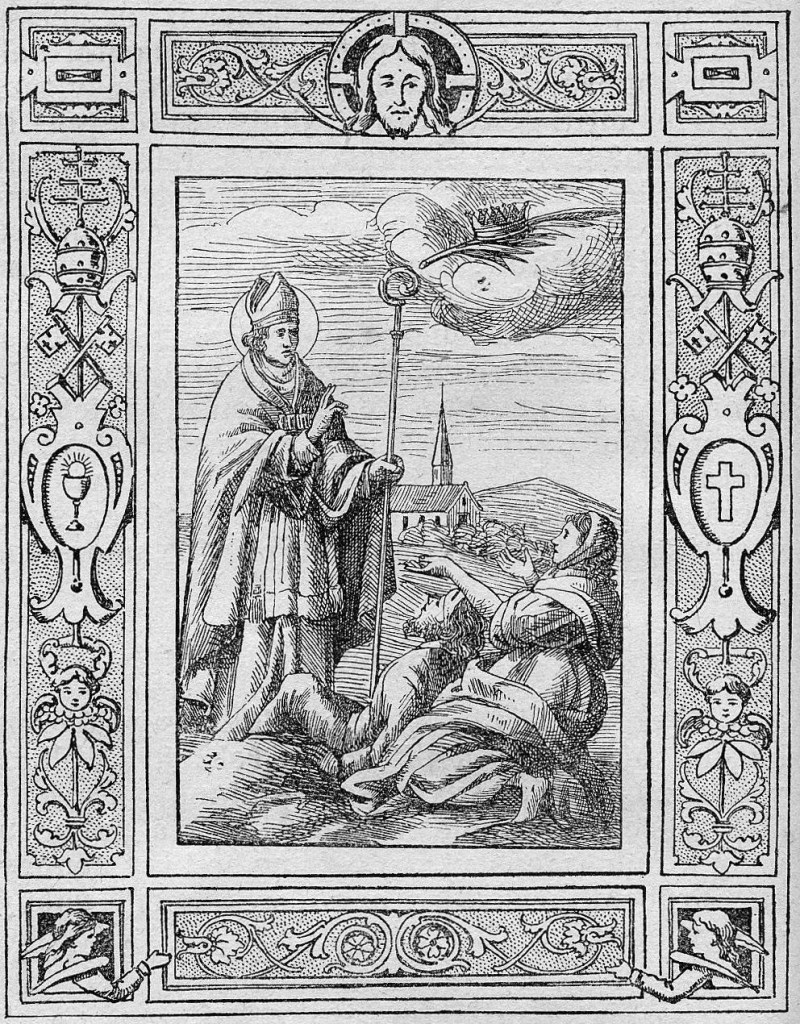
    Saint Valentine healing epilepsy, illustrated by Dr. František Ehrmann, c. 1899.
    Image Wikimedia Commons

    One

    Saint Valentine was, according to legend, martyred in Rome on February 14th in c. 270 CE, during the persecution of Christians by Emperor ++Claudius II Gothicus++. In what century was Saint Valentine’s death?

    Answer: 3rd century.

    Saint Valentine, a legendary Christian martyr, is the patron saint of lovers, people with epilepsy and beekeepers. His life is shrouded in legend, with accounts of him being a Roman priest or bishop martyred in Rome. His body was buried in Rome on February 14, a date observed as the Feast of Saint Valentine since at least the eighth century. He is associated with courtly love, and numerous churches claim to possess his relics, which are housed in various locations, including Rome and Dublin. Valentine’s Day as a lovers’ festival dates back to the 14th century.


    Two

    In 1613, the wedding of Princess Elizabeth and Frederick V of the Palatinate took place at Whitehall Palace, London. Who was the father of the bride?

    Answer: James VI and I.

    The bride’s father was James VI of Scotland and I of England. The wedding of Frederick V and Princess Elizabeth in 1613 was a grand affair, featuring fireworks, masques, a mock sea battle, and a procession. Celebrations continued with masques and a lavish farewell for Elizabeth’s journey to Heidelberg.


    Western United States.
    Image ©Ontheworldmap.com

    Three

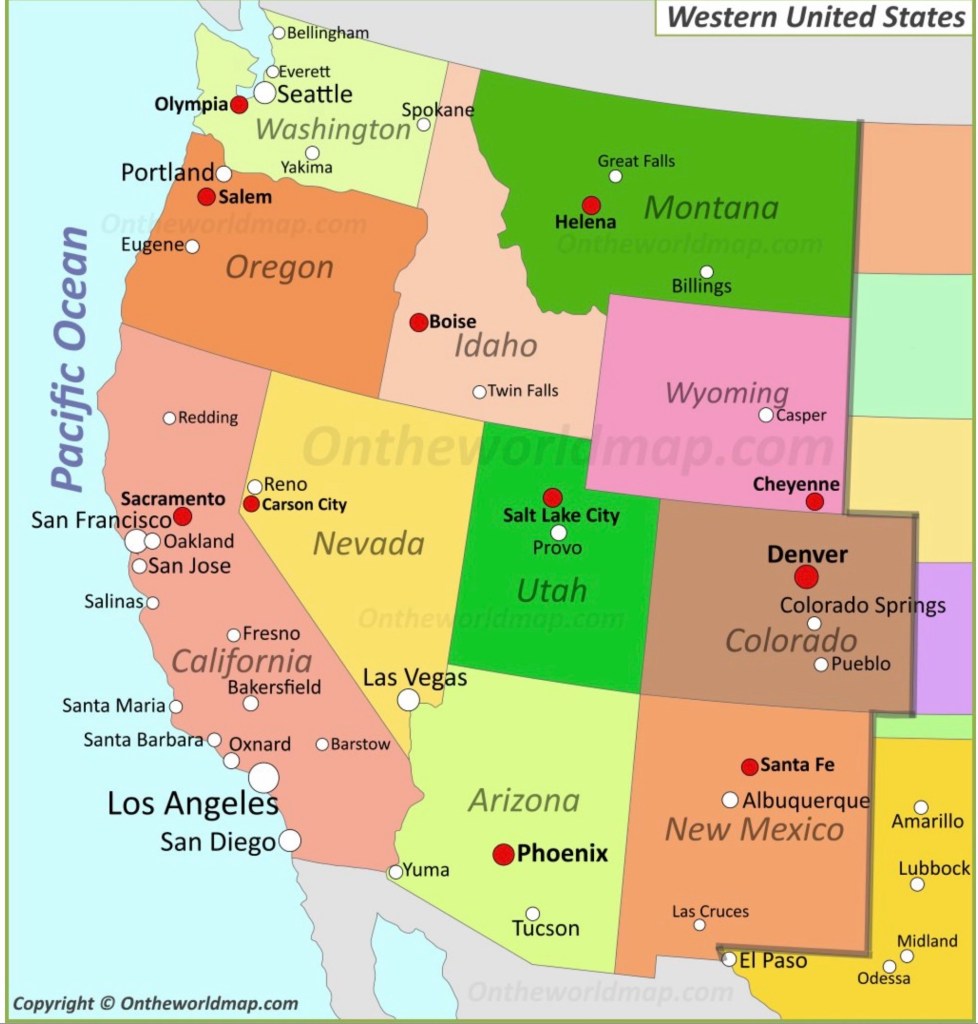
    Identify two US states, A and B, both admitted to the Union on February 14th. State A joined in 1859, and state B in 1912. Together, they border seven states: four for A and five for B. Additionally, A has a maritime boundary, whilst B has an international border.

    Answer: A. Oregon and B. Arizona.

    Oregon was admitted as the 33rd US state on 14 February 1859 and Arizona became the 48th, and last contiguous state, in 1912. Oregon is bordered by four states: California, Nevada, Idaho, and Washington. Arizona is bordered by five states: California, Nevada, Utah, Colorado, and New Mexico.


    Four

    Born in 1992, this actor played Charlie Bucket in Tim Burton’s musical fantasy film Charlie and the Chocolate Factory. Who is he?

    Answer: Freddie Highmore.

    Alfred Thomas Highmore, born in 1992 in Camden Town, London, is an English actor known for his roles in Finding Neverland, Charlie and the Chocolate Factory and The Good Doctor. He attended Highgate School and Emmanuel College, Cambridge, earning a double first in Spanish and Arabic.


    Five

    Which actor, born on this day in 1970, has appeared in both the Star Trek and Mission: Impossible series and also voiced a character in the Ice Age series?

    Answer: Simon Pegg.

    Simon John Beckingham, born in Gloucestershire, UK, on 14 February 1970, co-wrote the Three Flavours Cornetto trilogy films: Shaun of the Dead (2004), Hot Fuzz (2007) and The World’s End (2013). He also reprised several roles, including Montgomery ‘Scotty’ Scott in Star Trek (2009), Benji Dunn in Mission: Impossible III (2006) and Buck in Ice Age: Dawn of the Dinosaurs (2009).


  • Who’s Who—Answers

    Here are the answers

    All of these questions relate to people who are connected to today, February 6th.

    Main Street, Tampico, Illinois.
    Image The Digital Research Library of Illinois History Journal

    One

    An American actor and politician born in Tampico, Illinois, in 1911. After Eureka College, he became a radio sports broadcaster in Iowa. He was actively involved with labour unions before getting into politics. He died in 2004. Who is he?

    Answer: Ronald Reagan

    Ronald Reagan, the 40th President of the United States, served from 1981 to 1989. His presidency was marked by significant economic policies, including tax cuts and increased defence spending, known as ‘Reaganomics’. While proponents highlight his accomplishments in economic growth and ending the Cold War, opponents criticise his policies for increasing the national debt and cutting social services.


    Two

    In 1694, Dandara, the warrior queen and leader of the runaway slaves Quilombo dos Palmares in Brazil, was captured and chose suicide over a return to slavery. What English seven-letter word, derived from Spanish cimarrón meaning ‘wild’, did European slavers use to describe these escaped slaves?

    Answer: Maroons

    In Brazil the Africans set up settlements known as Quilombos. The most famous of such settlements was Quilombo dos Palmares, in the northeastern part of Brazil. It functioned successfully as an independent republic of the maroons in the 17th century, following an African pattern of social organization. At its apex, it was the home and refuge of some 20,000 African men, women, and children who had managed to escape the dreadful experience of plantation life. — Encyclopædia Britannica


    Three

    In the mid-20th century, this person became ruler on the death of their father, who himself had not expected to hold the post. They remained in this role for an astonishing 25,782 days?

    Answer: Elizabeth II of the United Kingdom.

    Her father, George VI, came to the throne on the abdication of his brother Edward VIII. Elizabeth II, Queen of the United Kingdom and other Commonwealth realms, reigned for 70 years and 214 days, the longest of any British monarch. Born in 1926, she became queen in 1952 and witnessed significant political changes, including the UK’s accession and withdrawal from the European Communities. Despite occasional republican sentiment and media criticism, her popularity remained high throughout her reign.


    Four

    Born in Munich, Germany, in 1912, this woman met in 1929 the man who became Chancellor of Germany a few years later. She married him in 1945. She died in Berlin, Germany, aged 33. Who was she?

    Answer: Eva Braun

    Eva Braun, was Adolf Hitler’s longtime companion and briefly his wife. She lived with him from 1930 until their deaths in 1945, when they died by suicide in the Führerbunker as the war ended.


    Five

    This monarch ruled England, Scotland and Ireland from 1702 to 1707 and then Great Britain and Ireland until their death in 1714, which marked the end of a dynasty. Who was this monarch?

    Answer: Queen Anne.

    The Union of the Crowns in 1707 united the Kingdoms of England and Scotland into the Kingdom of Great Britain. Anne, the last Stuart monarch, ruled Great Britain and Ireland from 1702 to 1714. She favoured moderate Tory politicians and experienced estrangement from her sister Mary and friend Sarah Churchill. Despite 17 pregnancies, Anne died childless, marking the end of the House of Stuart and leading to the succession of George I of the House of Hanover.


  • Who’s Who

    All of these questions relate to people who are connected to today, February 6th.

    Main Street, Tampico, Illinois.
    Image The Digital Research Library of Illinois History Journal

    One

    An American actor and politician born in Tampico, Illinois, in 1911. After Eureka College, he became a radio sports broadcaster in Iowa. He was actively involved with labour unions before getting into politics. He died in 2004. Who is he?


    Two

    In 1694, Dandara, the warrior queen and leader of the runaway slaves Quilombo dos Palmares in Brazil, was captured and chose suicide over a return to slavery. What English seven-letter word, derived from Spanish cimarrón meaning ‘wild’, did European slavers use to describe these escaped slaves?


    Three

    In the mid-20th century, this person became ruler on the death of their father, who himself had not expected to hold the post. They remained in this role for an astonishing 25,782 days?


    Four

    Born in Munich, Germany, in 1912, this woman met in 1929 the man who became Chancellor of Germany a few years later. She married him in 1945. She died in Berlin, Germany, aged 33. Who was she?


    Five

    This monarch ruled England, Scotland and Ireland from 1702 to 1707 and then Great Britain and Ireland until their death in 1714, which marked the end of a dynasty. Who was this monarch?

    Good luck! I’ll post the answers later.


  • Truth is always strange, Stranger than Fiction—Answers

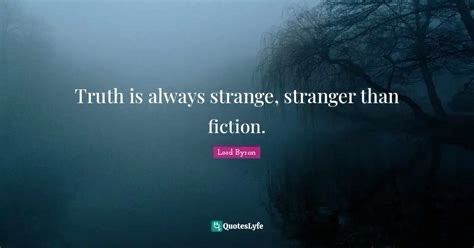
    Truth is always strange, stranger than fiction.
    Image Quoteslyfe

    Here are the answers to the questions I posted earlier.

    Today’s questions not only relate to January 22nd, they are also all about quotes. The first two questions are multiple choice, while the remainder are not.

    One

    Today’s post title is ‘Truth is always strange, stranger than fiction’. The person, born today in 1788, who originated this saying, was whom?

    • Lord Byron
    • Mark Twain
    • Rudyard Kipling

    Answer: Lord Byron (George Gordon Byron)

    ‘T is strange,—but true; for Truth is always strange—

     Stranger than fiction: if it could be told,

    How much would novels gain by the exchange!

    — Lord Byron: Don Juan (1819)

    Mark Twain is also associated with this phrase, but it was originated by Byron.


    Two

    Which science fiction author wrote ‘How does one hate a country, or love one?’?

    • Isaac Asimov
    • Philip K. Dick
    • Ursula K. Le Guin

    Answer: Ursula K. Le Guin

    How does one hate a country, or love one? Tibe talks about it; I lack the trick of it. I know people, I know towns, farms, hills and rivers and rocks, I know how the sun at sunset in autumn falls on the side of a certain plowland in the hills; but what is the sense of giving a boundary to all that, of giving it a name and ceasing to love where the name ceases to apply? What is love of one’s country; is it hate of one’s uncountry? Then it’s not a good thing. Is it simply self-love? That’s a good thing, but one mustn’t make a virtue of it, or a profession… Insofar as I love life, I love the hills of the Domain of Estre, but that sort of love does not have a boundary-line of hate. And beyond that, I am ignorant, I hope.

    — Ursula K. Le Guin, The Left Hand of Darkness


    Three

    On this day in 2004, Wikiquote had this as its Quote of the Day: ‘I love deadlines. I like the whooshing sound they make as they fly by.’ Whose words are being quoted?

    Answer: Douglas Adams

    Douglas Adams, English author and humourist, created The Hitchhiker’s Guide to the Galaxy, a radio comedy that became a successful book series and was adapted into various media. He also wrote Dirk Gently’s Holistic Detective Agency, The Long Dark Tea-Time of the Soul, and contributed to Doctor Who and Monty Python’s Flying Circus.


    Four

    What king, who had previously said, ‘I don’t mind praying to the Eternal Father, but I must be the only man in the country afflicted with an eternal mother,’ ascended the British throne on this day in 1901, and who was his mother?

    Answer: King Edward VII; Queen Victoria

    The quote was a joke referring to his mother’s famously long reign of almost 64 years. Queen Victoria died in 1901, and Edward succeeded to the throne at the age of sixty.


    Five

    A 1960 song which was written by a singer-songwriter born today in 1931 includes these lines: ‘All day long they work so hard / Till the sun is goin’ down.’ Who is the singer-songwriter and what is the song?

    Answer: Sam Cooke; Chain Gang

    All day long they work so hard
    Till the sun is goin’ down.
    Working on the highways and byways
    And wearing, wearing a frown.
    You hear them moanin’ their lives away.
    Then you hear somebody say:
    “That’s the sound of the men working on the chain gang.
    That’s the sound of the men working on the chain gang.”

    Chain Gang


  • Truth is always strange, Stranger than Fiction

    Truth is always strange, stranger than fiction.
    Image Quoteslyfe

    Today’s questions not only relate to January 22nd, they are also all about quotes. The first two questions are multiple choice, while the remainder are not.

    One

    Today’s post title is ‘Truth is always strange, stranger than fiction’. The person, born today in 1788, who originated this saying, was whom?

    • Lord Byron
    • Mark Twain
    • Rudyard Kipling

    Two

    Which science fiction author wrote ‘How does one hate a country, or love one?’?

    • Isaac Asimov
    • Philip K. Dick
    • Ursula K. Le Guin

    Three

    On this day in 2004, Wikiquote had this as its Quote of the Day: ‘I love deadlines. I like the whooshing sound they make as they fly by.’ Whose words are being quoted?


    Four

    What king, who had previously said, ‘I don’t mind praying to the Eternal Father, but I must be the only man in the country afflicted with an eternal mother,’ ascended the British throne on this day in 1901, and who was his mother?


    Five

    A 1960 song which was written by a singer-songwriter born today in 1931 includes these lines: ‘All day long they work so hard / Till the sun is goin’ down.’ Who is the singer-songwriter and what is the song?

    Good luck! I’ll post the answers later.


  • Bonnie or Clyde?—Answers

    Here are the answers to the questions posed in my earlier post.

    All of today’s questions relate to today’s date, January 14th.

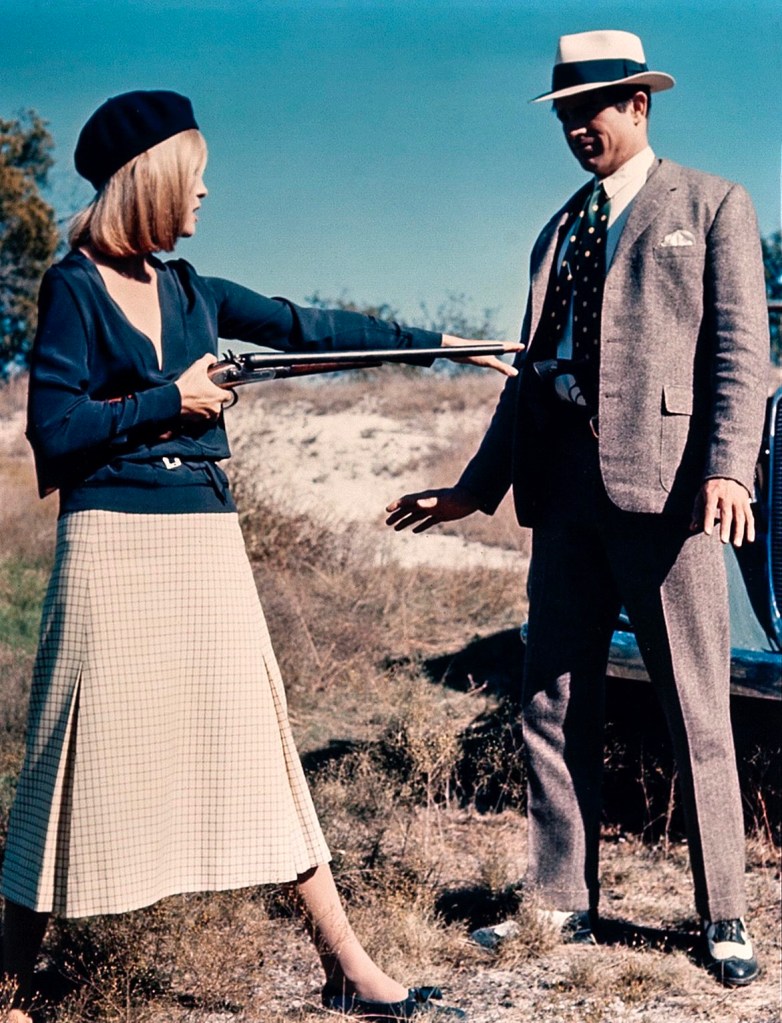
    Bonnie and Clyde, 1967.
    Image Wikimedia Commons

    One

    Born in Florida, USA, on this day in 1941, with a film debut in The Happening (1967), one of the stars of Bonnie and Clyde (also 1967), is whom?

    Answer: Faye Dunaway

    Faye Dunaway is an acclaimed American actress with a career spanning Broadway and film. She rose to fame in the 1960s and 1970s with notable films like Bonnie and Clyde and Chinatown, earning an Academy Award for Network. Dunaway later transitioned to mature character roles in independent films and stage performances.


    Two

    In 1939, Queen Maud Land was claimed and named. Which country made this claim on this 1.0-million-square-mile area of Antarctica?

    Answer: Norway

    Queen Maud Land is a 2.7 million square kilometre region of Antarctica claimed by Norway. It is a demilitarised zone within the Antarctic Treaty System, with no permanent population but 12 active research stations. The region is divided into five coasts and is bordered by the British and Australian Antarctic Territories. It is named after the Norwegian Queen Maud (1869–1938).


    Three

    In 1970, The Supremes performed their final concert with whom?

    Answer: Diana Ross

    The Supremes, an American girl group formed in Detroit in 1959, were the most commercially successful act of Motown Records during the 1960s. With Diana Ross as lead singer and Holland-Dozier-Holland as their songwriting and production team, they achieved mainstream success with twelve number-one singles on the Billboard Hot 100. The group disbanded in 1977 after numerous lineup changes.


    Four

    In 2005, which organisation developed the probe that became the first spacecraft to land on a celestial body beyond Mars, and on which moon of Saturn did it touch down?

    Answers: European Space Agency; Titan

    The Huygens probe spent over two hours descending through Titan’s thick, orange, nitrogen-rich atmosphere before landing, sending back the first-ever images and sounds from the surface of a moon in the outer Solar System.


    Five

    In 2024, Queen Margrethe II abdicated after 52 years on the throne. Her eldest son, the Crown Prince, succeeded her as king. Who was the new king, and in which country did this happen?

    Answer: King Frederick X; Denmark

    Margrethe, Queen of Denmark, is a talented scenographer and costume designer, having designed costumes for the Royal Danish Ballet and films like The Wild Swans and Ehrengard: The Art of Seduction. She has also designed sets and costumes for numerous ballets, including The Nutcracker and The Snow Queen. Additionally, Margrethe is an accomplished painter and has illustrated works like Prince Henrik’s poetry collection and Danish editions of The Lord of the Rings.