The first question relates to today’s date, April 12th, and the answer begins with the letter ‘V. The remaining questions are not date-related but follow the ‘V’ theme.
What geographic feature is the third word in the title of a 1973 work by Aleksandr Solzhenitsyn?
Answer: Archipelago.
The Gulag Archipelago: An Experiment in Literary Investigation, a three-volume non-fiction series by Aleksandr Solzhenitsyn, explores life in the Soviet labour camp system. Initially smuggled out of Russia and published in Paris, it circulated underground until the Soviet Union’s collapse after which it became more available.
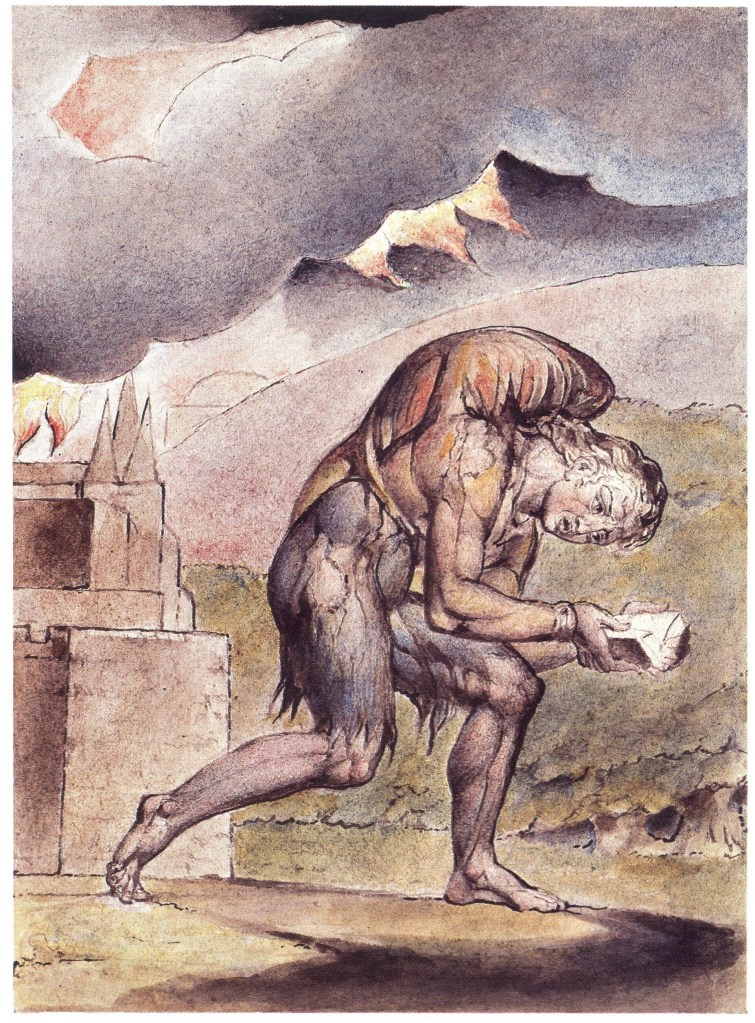
See question two. William Blake: Christian Reading in His Book, The Pilgrim’s Progress. Image Wikimedia Commons
Two
In what century was The Pilgrim’s Progress first published?
Answer: 17th century.
The Pilgrim’s Progress, a 1678 Christian allegory by John Bunyan, is a significant work of Protestant devotional literature. Written during Bunyan’s imprisonment, it has been translated into over 200 languages and remains influential, cited as the first novel written in English.
Three
Digital Fortress (1998) and Deception Point (2001) were the early novels of an author better known for a series of books, some of which have been made into films, featuring an academic protagonist. Who is this author, who is the academic protagonist, what novel published in 2000 is the first in the series, and what, published in 2025, is the most recent?
Answer: Dan Brown; Robert Langdon; Angels & Demons and The Secret of Secrets.
American writer Dan Brown is best known for his thriller novels, particularly the Robert Langdon series (Angels & Demons, The Da Vinci Code, The Lost Symbol, Inferno, Origin and The Secret of Secrets) which often centre on cryptography, art, and conspiracy theories. His books have sold over 200 million copies and have been adapted into films and a television series.
Four
What author’s work includes a Mr. and Mrs. Maggot who live at Bamfurlong?
Answer: J.R.R. Tolkien.
In The Lord of the Rings Frodo, Frodo, Sam and Pippin visited Maggot’s farm, where Farmer Maggot recognised them and shared his story about a stranger inquiring about Bilbo’s treasure. Maggot and his wife gave them refreshments and he offered them a ride to the Ferry, which they accepted.
Five
HARI SELDON … born in the 11,988th year of the Galactic Era: died 12,069. The dates are more commonly given in terms of the current Foundational Era as -79 to the year 1 F.E. The Psychohistorians, which is part I of a book published in 1951, opens its first chapter with the quote shown. What is the title of the book, and who was its author? 
Answer: Foundation by Isaac Asimov.
Foundation is the first book of Isaac Asimov’s Foundation series, originally a trilogy, which explores the fall of a Galactic Empire and the efforts of Hari Seldon to shorten the ensuing dark age through the new science of psychohistory. The series, which includes sequels and prequels, won the Hugo Award for ‘Best All-Time Series’ in 1966.
From Island to Island
The post title is from a quote by Aleksandr Solzhenitsyn in The Gulag Archipelago…
Thin strands of human lives stretch from island to island of the Archipelago.
What geographic feature is the third word in the title of a 1973 work by Aleksandr Solzhenitsyn?
See question two. William Blake: Christian Reading in His Book, The Pilgrim’s Progress. Image Wikimedia Commons
Two
In what century was The Pilgrim’s Progress first published?
Three
Digital Fortress (1998) and Deception Point (2001) were the first novels of an author better known for a series of books, some of which have been made into films, featuring an academic protagonist. Who is this author, who is the academic protagonist, what novel published in 2000 is the first in the series, and what, published in 2025, is the most recent?
Four
What author’s work includes a Mr. and Mrs. Maggot who live at Bamfurlong?
Five
HARI SELDON … born in the 11,988th year of the Galactic Era: died 12,069. The dates are more commonly given in terms of the current Foundational Era as -79 to the year 1 F.E.
The Psychohistorians, which is part I of a book published in 1951, opens its first chapter with the above quote. What is the title of the book, and who was its author?
In 1721, a collection of six instrumental works—the composer’s own title was Six Concerts Avec plusieurs Instruments (Six Concertos With several Instruments)—were presented by Johann Sebastian Bach to Christian Ludwig, a marquess and younger brother of King Frederick I of Prussia. Using the above picture as a clue, by what name is this collection commonly known today?
Answer: Brandenburg Concertos
Johann Sebastian Bach’s Brandenburg Concertos, now his most popular work, were likely never performed during his lifetime. Bach sent the original manuscript to the Margrave (Marquess) of Brandenburg in 1721, possibly as a job application, but the Margrave never acknowledged the gift. The concertos were forgotten for over a century until they were rediscovered and published in the 19th century.
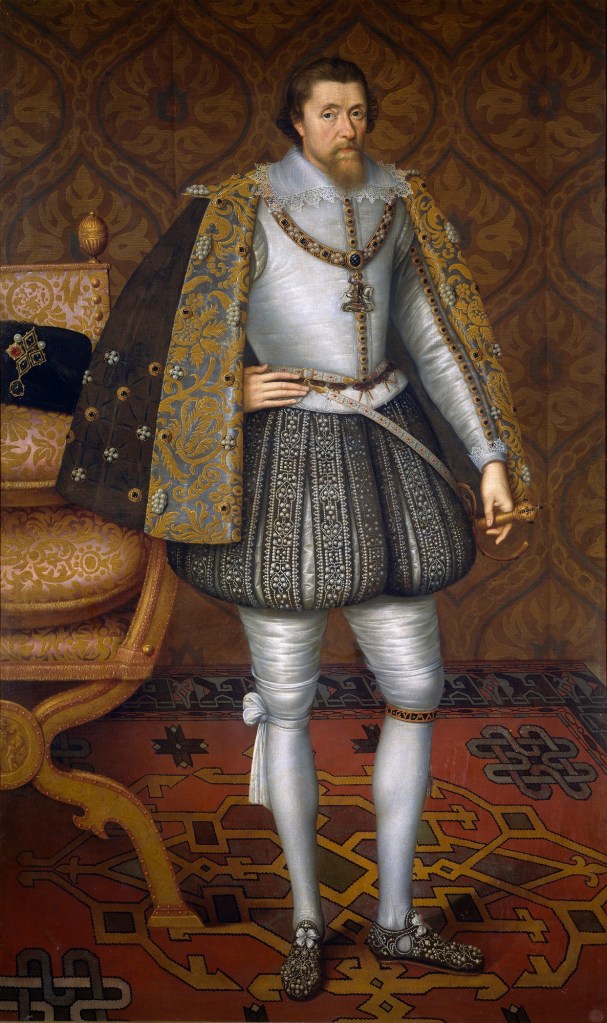
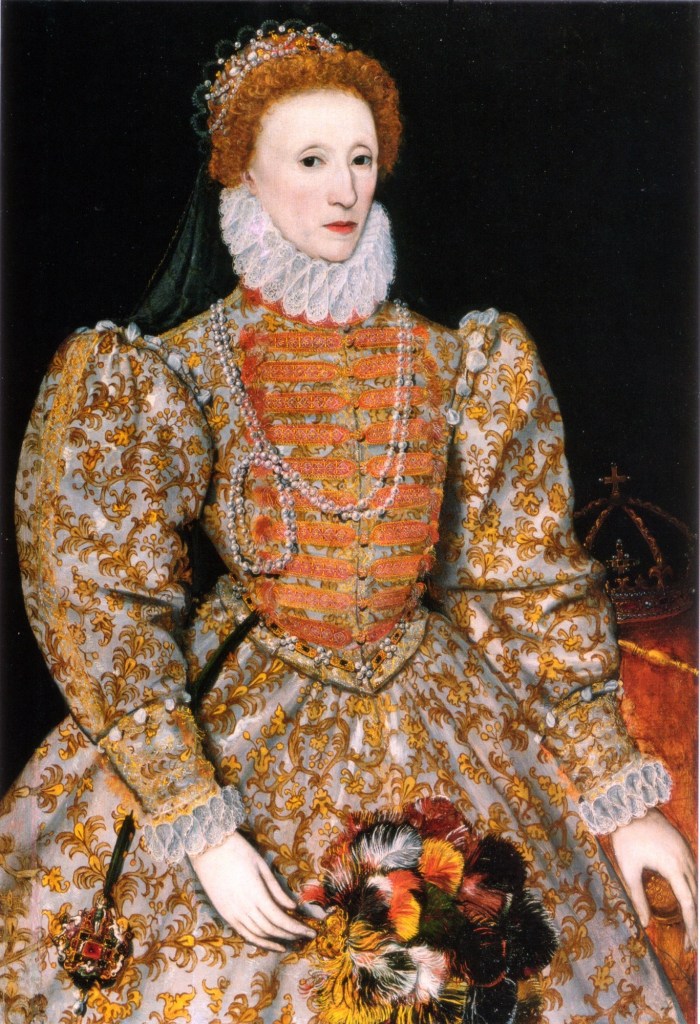
The male monarch pictured above succeeded the female one on her death in 1603.
Who is the queen?
Who was the king?
What was the familial relationship between them?
Answers
Queen Elizabeth I
King James VI and I
Cousins.
Queen Elizabeth I’s death in 1603 ended her reign of England and Ireland, leading to her cousin King James VI of Scotland’s succession as King of England and Ireland. Now both James VI and I, his reign saw the beginning of the Plantation of Ulster and English colonisation of the Americas.
Three
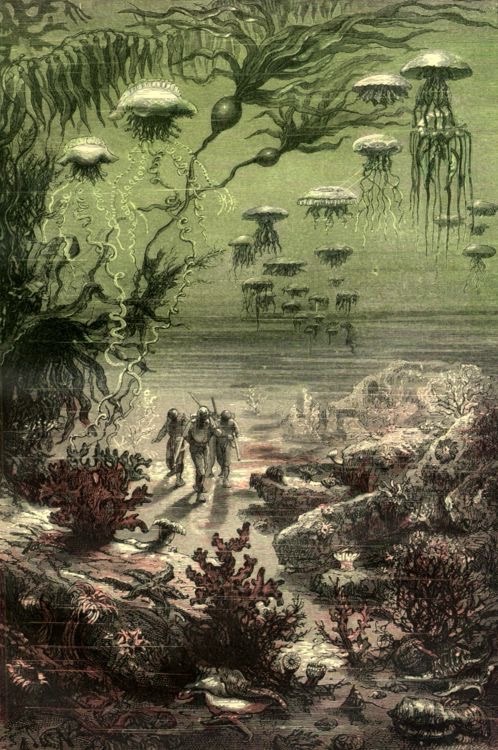
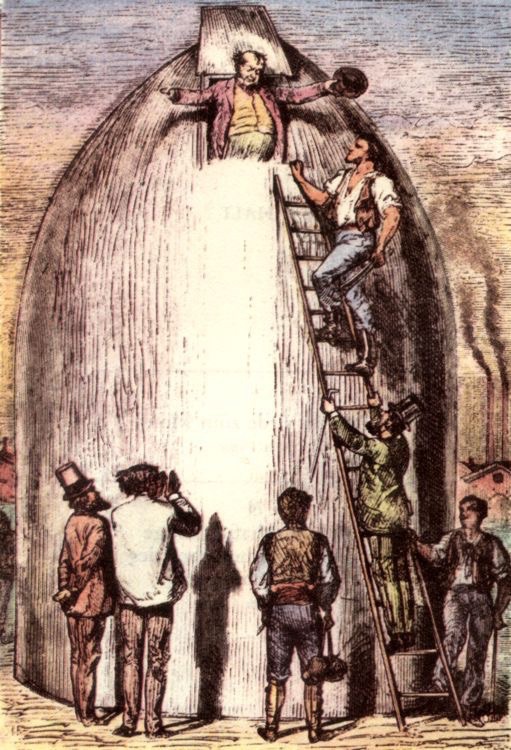
From Jules Verne’s novel Twenty Thousand Leagues Under the Sea. Image Wikimedia CommonsFrom the Earth to the Moon by Jules Verne Image Wikimedia Commons
The two illustrations above are from novels by an author, ‘the father of science fiction’, who died in 1905, aged 77. Since 1979, he has been the second most translated author.
Who was the author?
From what novel is the first illustration?
From what novel is the second illustration?
Answers
Jules Verne
Twenty Thousand Leagues Under the Sea
From the Earth to the Moon
Jules Verne was a French novelist, poet, and playwright, best known for his adventure novels like Journey to the Centre of the Earth and Around the World in Eighty Days His work, often set in the 19th century, incorporated contemporary scientific knowledge and technological advances. Verne is considered an important author in Europe and has been the second most-translated author in the world since 1979.
Four
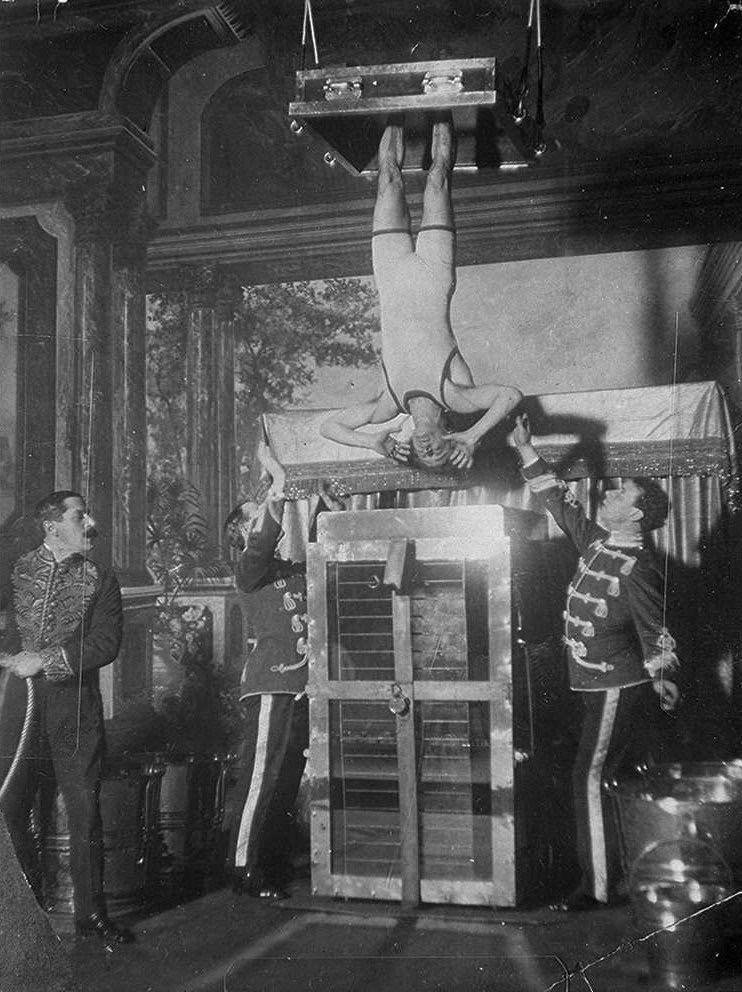
Harry Houdini, performing The Chinese Water Torture Cell. Image Wikimedia Commons
Erik Weisz, who was born in 1874, is pictured above during one of his acts, although he’s better known by his stage name.
In what European city was he born?
Who is he better known as?
Answers
Budapest
Harry Houdini.
Harry Houdini, a Hungarian-American escapologist, gained fame for his daring escape acts, including freeing himself from handcuffs, chains, and straitjackets. He also pursued a crusade against fraudulent spiritualists and was a pioneer aviator.
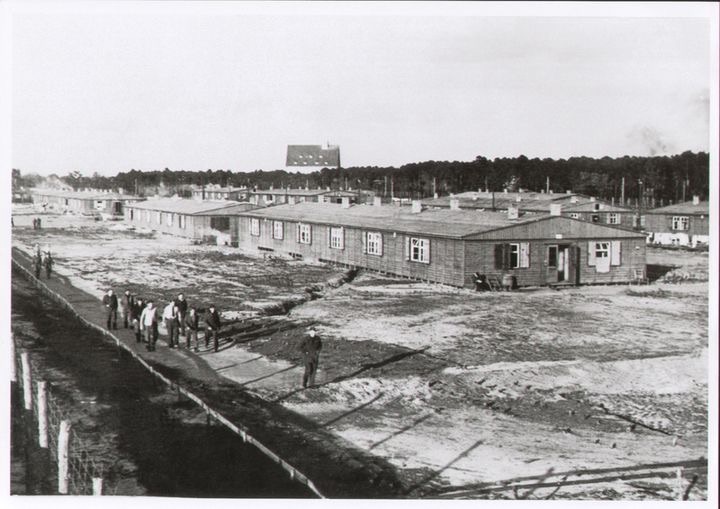
The prisoner of war camp above was made famous by a 1963 film which features the inmates attempts to leave it on the night of 24 March 1944.
By what name is this POW camp commonly known?
What was the 1963 film?
In what modern country is the site of the camp today?
Answers
Stalag Luft III
The Great Escape
Poland
Stalag Luft III (in full Stammlager Luft III; literally meaning Main Camp, Air, III) was a World War II POW camp for Allied airmen, known for escape plots including the Great Escape. Of the 76 men who escaped that night, 73 were recaptured, and fifty of those were executed. The camp, which was liberated in 1945 and is now a museum, was the subject of two feature films about the escape attempts that were made: The Wooden Horse (1950) and The Great Escape (1963).
Five pictures and some questions all of which are related to today’s date, March 24th.
One
Image Wikimedia Commons
In 1721, a collection of six instrumental works—the composer’s own title was Six Concerts Avec plusieurs Instruments (Six Concertos With several Instruments)—were presented by Johann Sebastian Bach to Christian Ludwig, a marquess and younger brother of King Frederick I of Prussia. Using the above picture as a clue, by what name is this collection commonly known today?
Two
Image Wikimedia CommonsImage Wikimedia Commons
The male monarch pictured above succeeded the female one on her death in 1603.
Who is the queen?
Who was the king?
What was the familial relationship between them?
Three
First illustration. Image Wikimedia Commons Second illustration. Image Wikimedia Commons
The two illustrations above are from novels by an author, ‘the father of science fiction’, who died in 1905, aged 77. Since 1979, he has been the second most translated author.
Who was the author?
From what novel is the first illustration?
From what novel is the second illustration?
Four
Eric Weisz. Image Wikimedia Commons
Erik Weisz, who was born in 1874, is pictured above during one of his acts, although he’s better known by his stage name.
In what European city was he born?
Who is he better known as?
Five
Image Wikimedia Commons
The prisoner of war camp above was made famous by a 1963 film which features the inmates attempts to leave it on the night of 24 March 1944.
By what name is this POW camp commonly known?
What was the 1963 film?
In what modern country is the site of the camp today?
People, places, and events from today’s date, March 19th, feature in these questions.
One
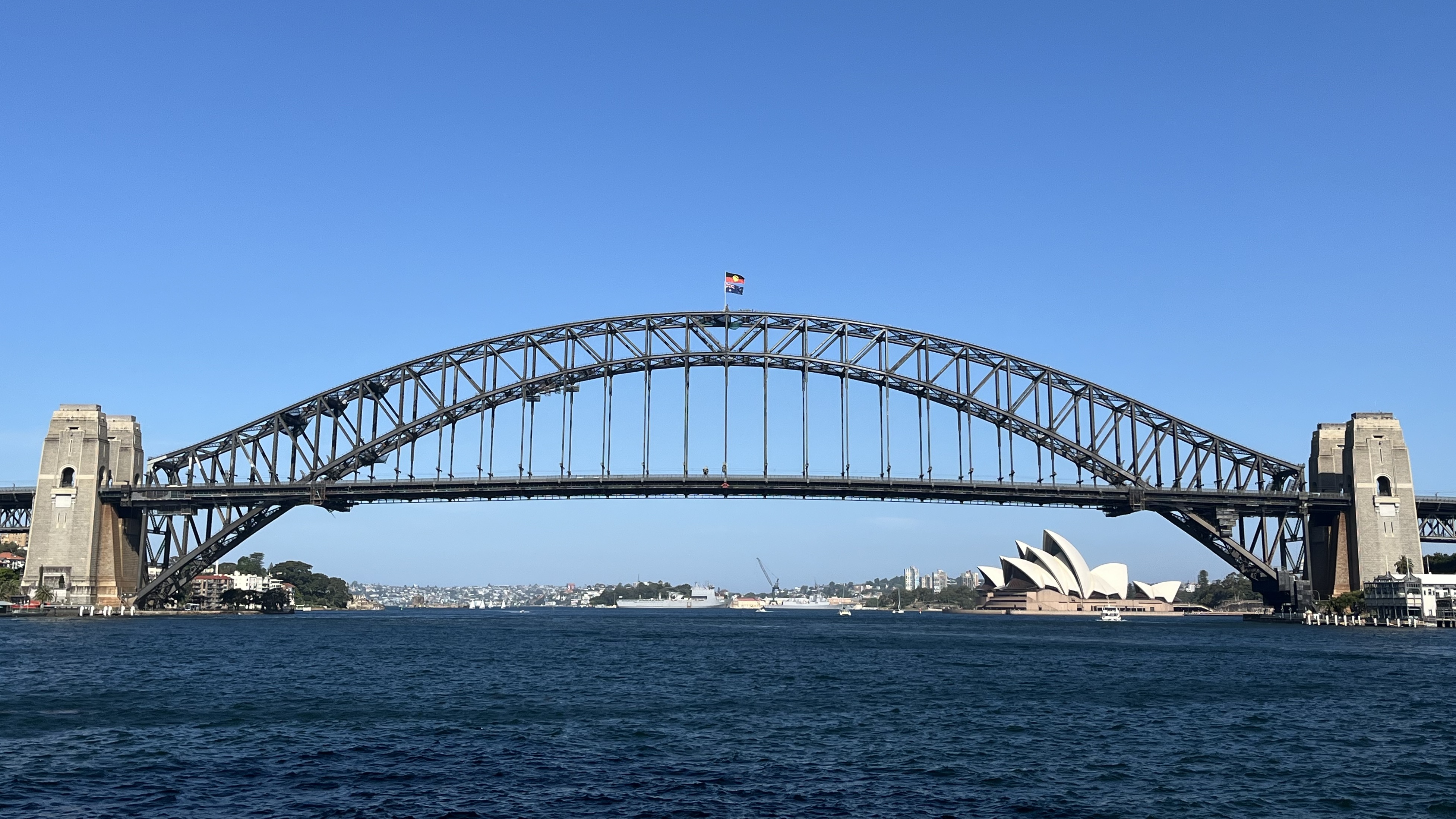
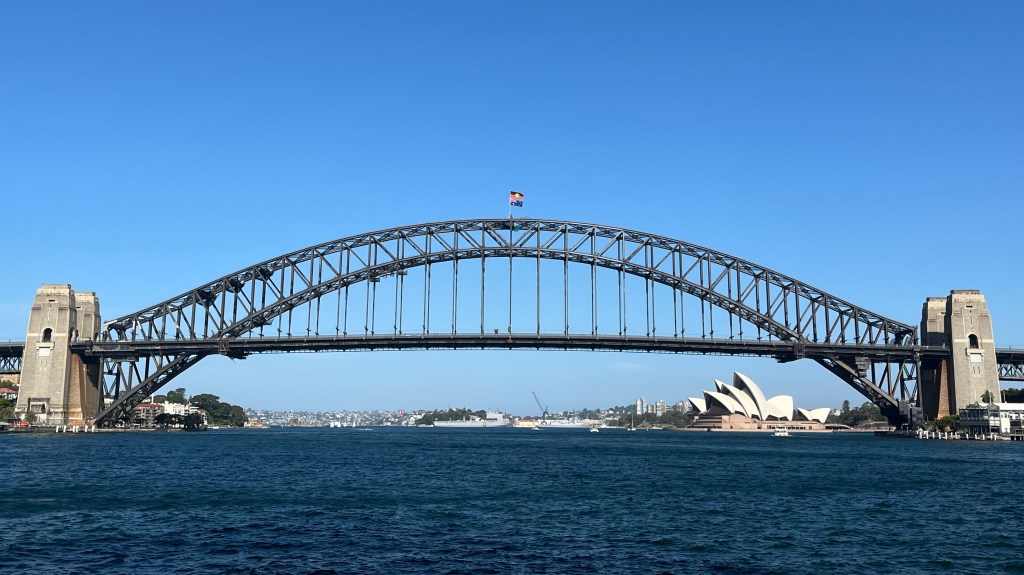
On this date, the Sydney Harbour Bridge was opened. In what decade did this occur?
Answer: 1930s
Opened in 1932, the Sydney Harbour Bridge, a steel through arch bridge, connects Sydney’s CBD to the North Shore. An iconic image of Sydney, nicknamed the ‘Coathanger’, it carries rail, vehicular, bicycle and pedestrian traffic.
Two
A writer who had been born in 1917 died in Colombo, Sri Lanka, on 19 March 2008. His best-known works include the script he wrote with director Stanley Kubrick for 2001: A Space Odyssey and his novel of that film. Who is this writer?
Answer: Arthur C. Clarke.
Arthur C. Clarke was an English writer known for his science fiction and non-fiction works. He co-wrote the script for the film 2001: A Space Odyssey and its novelisation. Clarke’s notable works include Childhood’s End, Rendezvous with Rama, and The Fountains of Paradise. He was knighted in 2000.
Three
This American actor, who was born in West Germany in 1955, earned a Best Supporting Actor Golden Globe nomination in 1990 for his role as Emmett Smith in the film In Country. Who is he?
Answer: Bruce Willis
In Country (1989) follows Samantha Hughes, a recent high school graduate, as she becomes fixated on learning about her deceased father a Vietnam veteran. Staying with her Uncle Emmett (Bruce Willis) another veteran she embarks on a journey to the Vietnam Veterans Memorial in Washington D.C. seeking closure. Bruce Willis, a retired American actor, is renowned for his action roles, particularly his portrayal of John McClane in the Die Hard franchise. He starred in over 100 films including Pulp Fiction and The Sixth Sense, earning numerous accolades throughout his career. Willis retired in 2022 due to aphasia and was diagnosed with frontotemporal dementia in 2023.
Four
This 20th-century national leader issued his ‘Nero Decree’, ordering that all of the nation’s ‘industries, military installations, shops, transportation facilities, and communications facilities be destroyed’? Who was he, and what was the country?
Answers: Adolf Hitler; Germany.
The Nero Decree, issued by Hitler in March 1945, ordered the destruction of German infrastructure to prevent its use by the Allies. It was disobeyed by Albert Speer, Minister of Armaments and War Production, before the Nazi regime’s fall.
Five
American actress Glenn Close, born on 19 March 1947 in Greenwich, Connecticut, received her first Academy Award nomination for her debut film. This was for her role as Jenny Fields in a 1982 film with a five-word title: The World ——. What film?
Answer: The World According to Garp.
Glenn Close is an American actress with a career spanning five decades. She has won numerous awards, including three Emmys, three Tonys, and three Golden Globes, as well as having been nominated for eight Academy Awards. Her debut film role earned her a Best Actress in a Supporting Role nomination for The World According to Garp. Close, who is known for her work in film, television, and theatre, is a vocal advocate for women’s rights, same-sex marriage, and mental health.
People, places, and events from today’s date, March 19th, feature in these questions.
One
On this date, the Sydney Harbour Bridge was opened. In what decade did this occur?
Two
A writer who had been born in 1917 died in Colombo, Sri Lanka, on 19 March 2008. His best-known works include the script he wrote with director Stanley Kubrick for 2001: A Space Odyssey and his novel of that film. Who is this writer?
Three
This American actor, who was born in West Germany in 1955, earned a Best Supporting Actor Golden Globe nomination in 1990 for his role as Emmett Smith in the film In Country. Who is he?
Four
This 20th-century national leader issued his ‘Nero Decree’, ordering that all of the nation’s ‘industries, military installations, shops, transportation facilities, and communications facilities be destroyed’? Who was he, and what was the country?
Five
American actress Glenn Close, born on 19 March 1947 in Greenwich, Connecticut, received her first Academy Award nomination for her debut film. This was for her role as Jenny Fields in a 1982 film with a five-word title: The World ——. What film?
This is a tale of a meeting of two lonesome, skinny, fairly old white men on a planet which was dying fast…
This quote is the opening of Breakfast of Champions, a 1973 novel by a writer born in Indianapolis in 1922. Who is the writer?
Answer: Kurt Vonnegut.
Kurt Vonnegut’s Breakfast of Champions is a satirical novel critiquing American society through the story of Kilgore Trout and Dwayne Hoover, whose meeting leads to Hoover’s insanity. The novel addresses themes of free will, suicide and race relations.
Two
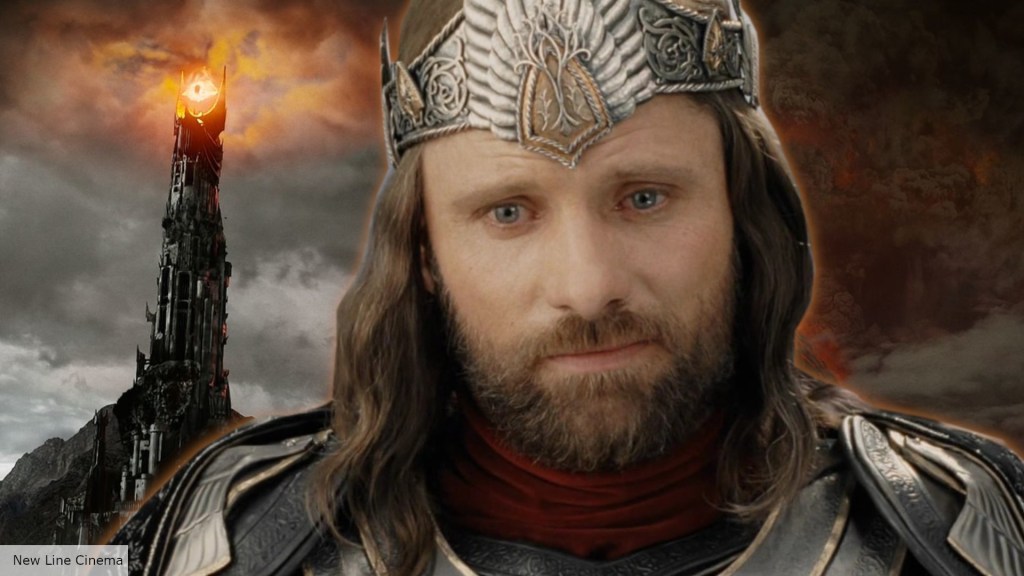
Following Sauron’s defeat in The Lord of the Rings, Aragorn is crowned king. What name does he adopt on his coronation?
Answer: Elessar (aka Elfstone).
After Sauron’s defeat, Aragorn is crowned King Elessar, meaning ‘Elfstone’. This Quenya name was given to him by his grandmother, Galadriel. He marries Arwen at midsummer and becomes the twenty-sixth King of Arnor, the thirty-fifth King of Gondor, and the first High King of the united Kingdom of Gondor and Arnor. His lineage is known as the House of Telcontar, meaning ’Strider’ in Quenya.
Three
Time it was And what a time it was, it was A time of innocence A time of confidences
These are the opening lyrics to a 1968 song that served as the title track for an album. Please name the track/album and the artist?
Bookends by Simon and Garfunkel
The post title Bookends derives from this track and album. Bookends is a concept album exploring a life journey from childhood to old age. Side one marks life stages, while side two includes singles and unused material. Today’s quiz is bookended by questions one and five being about books.
Four
T.E. Lawrence is commonly known by what name?
Answer: Lawrence of Arabia.
T.E. Lawrence, known as Lawrence of Arabia, was a British Army officer, archaeologist, and writer. He gained fame for his role in the Arab Revolt during World War I and his subsequent work with Emir Faisal. Lawrence published his autobiography, Seven Pillars of Wisdom, and later served in the Army and RAF before his death in a motorcycle accident in 1935.
Five
What fish does the fisherman have an epic struggle to catch in Ernest Hemingway’s The Old Man and the Sea?
Answer: Marlin.
Ernest Hemingway’s short, heroic novel The Old Man and the Sea, published in 1952 and winning the 1953 Pulitzer Prize for Fiction, marked his final major work of fiction. The story follows an ageing fisherman’s epic struggle to catch a giant marlin.
Bookends — Post title
See explanation in Three above.
Bookends
Simon and Garfunkel
Time it was And what a time it was, it was A time of innocence A time of confidences
Long ago it must be I have a photograph Preserve your memories They’re all that’s left you — AZ Lyrics
Born in 1952, Douglas Adams is known for writing a ’trilogy in five parts’. One of these parts mentions creatures in its title. What creatures?
Answer: Fish
So Long and Thanks for All the Fish (1984) is the fourth part in that well-known trilogy, The Hitchhiker’s Guide to the Galaxy. This instalment’s title refers to a message left by the dolphins when they departed planet Earth just before it was demolished in the building of a hyperspace bypass.
Two
In what city was media mogul Rupert Murdoch born in 1931?
Answer: Melbourne.
Born in Melbourne, Australia, Rupert Murdoch, an Australian-American media mogul, built a global media empire through News Corp, owning newspapers, book publishers, and television channels like Fox News and Sky News. His influence and wealth have been significant, leading to accusations of right-wing bias and political influence. In 2023, Murdoch announced his retirement as chairman of Fox Corp and News Corp.
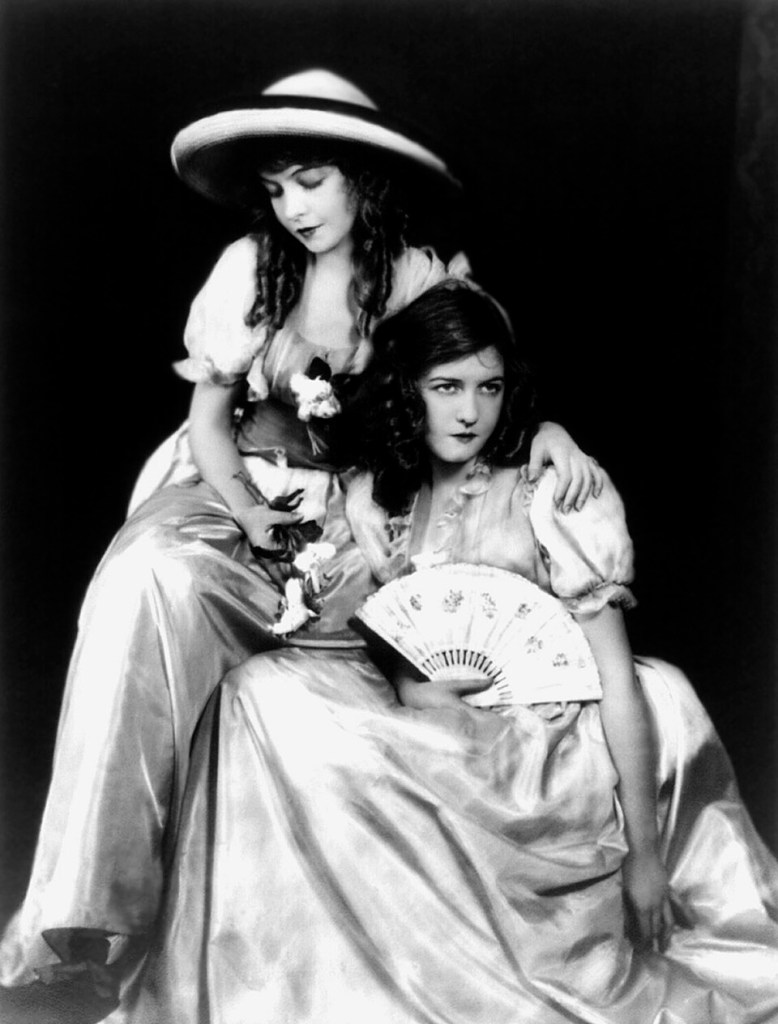
Born in 1898, Miss Gish, pictured on the right with her sister, who both became major movie stars during the silent era. What were the sisters’ names?
Answers: Dorothy and Lillian Gish
Dorothy Gish, an American stage and screen actress, was a major movie star of the silent era alongside her sister Lillian. Born in Dayton, Ohio, Dorothy made her stage debut at age four and later, with Lillian, was introduced to director D.W. Griffith by Mary Pickford.
Four
In 1995, Russian athlete Yolanda Chen, appearing at the World Indoor Championships in Barcelona, Spain, set a new world indoor record of 15.03 metres and won the gold medal. In what event was Ms Chen competing?
Answer: Triple jump.
Yolanda Chen, a retired Russian athlete, specialised in long jump and later triple jump—hop, skip and jump—achieving a personal best of 14.97 metres in 1993. She won gold at the World Indoor Championships in 1995 with a world indoor record of 15.03 metres.
Five
The Daily Courant was Britain’s first national daily newspaper. In what decade was it published?
Answer: 1700s.
Elizabeth Mallet founded Britain’s first daily newspaper, The Daily Courant, on 11 March 1702, at her premises near the King’s Arms tavern at Fleet Bridge, London. Despite her pioneering efforts, Mallet received little recognition and sold the paper after just 40 days. The single-page newspaper, with advertisements on the reverse, featured only foreign news, as Mallet believed her readers could reflect for themselves. She sold The Daily Courant to Samuel Buckley, who later became the publisher of The Spectator. The Daily Courant continued until 1735, when it merged with the Daily Gazetteer.
Stage Struck
The post is named after the 1917 American silent drama film starring Dorothy Gish (see question three). A copy survives in the Library of Congress.


 Quizology.Online