On 13 September 1959, the first spacecraft successfully made contact with another celestial body. Which spacecraft and celestial body were involved?
Kal-L 1 and Mercury
Luna 2 and the Moon
Mariner 3 and Mars
Answer: Luna 2 And the Moon
…the Soviets launched their second Cosmic Rocket (later renamed Luna 2) on Sep. 12 and it successfully achieved escape velocity and placed the spacecraft, virtually identical to Luna 1, on an intercept course with the Moon. The upper stage once again released its one kilogram of sodium gas at a distance of 97,000 miles. On Sep. 13, Luna 2 became the first spacecraft to make contact with another celestial body when it impacted the Moon between Mare Imbrium and Mare Serenitatis, about 160 miles from where Apollo 15 would land 12 years later. The spacecraft’s scientific instruments detected no magnetic field or radiation belts around the Moon. Luna 2 deposited Soviet emblems on the lunar surface, carried in two metallic spheres. During his only visit to the United States a few days after the Luna 2 mission, Soviet Premier Nikita S. Khrushchev presented a replica of the spherical pennant to President Dwight D. Eisenhower. That sphere is kept at the Eisenhower Presidential Library and Museum in Abilene, Kansas, while a copy is displayed at the Kansas Cosmosphere in Hutchinson, Kansas.
The 13 September Japanese release of Super Mario Bros marked the start of the Super Mario series of platforming games.
1985
1991
1997
Answer: 1985
Super Mario Bros. is a 1985 platform game developed by Nintendo for the NES. Players control Mario or Luigi to rescue Princess Toadstool from Bowser, traversing side-scrolling stages and collecting power-ups. The game is praised for its precise controls and is credited with reviving the video game industry after the 1983 crash.
Three
On 12 September 1988, Hurricane Gilbert set a record as the strongest hurricane in the Western Hemisphere, based on barometric pressure. Which 2005 hurricane surpassed this record?
Maria
Rita
Wilma
Answer: Wilma
Hurricane Gilbert, a Category 5 hurricane in 1988, caused widespread destruction in the Caribbean and Gulf of Mexico. It was the second-most intense Atlantic landfalling hurricane (only behind 2005’s Hurricane Wilma) and the most intense to strike Mexico.
Four
Hannibal Goodwin patented celluloid photographic film on this date. In what decade did this occur?
1890s
1900s
1910s
Answer: 1890s
Five
On 13 September 1899, the first ascent of Batian was achieved. Of what mountain is Batian the highest peak?
Mount Erebus
Mount Fuji
Mount Kenya
Answer: Mount Kenya
Mount Kenya, located near the equator in Kenya, has three highest peaks: Batian, Nelion, and Point Lenana. It is the source of the country’s name.
Five multiple choice questions related to today, September 13th.
One
On 13 September 1959, the first spacecraft successfully made contact with another celestial body. Which spacecraft and celestial body were involved?
Kal-L 1 and Mercury
Luna 2 and the Moon
Mariner 3 and Mars
Two
The 13 September Japanese release of Super Mario Bros marked the start of the Super Mario series of platforming games.
1985
1991
1997
Three
On 12 September 1988, Hurricane Gilbert set a record as the strongest hurricane in the Western Hemisphere, based on barometric pressure. Which 2005 hurricane surpassed this record?
Maria
Rita
Wilma
Four
Hannibal Goodwin patented celluloid photographic film on this date. In what decade did this occur?
1890s
1900s
1910s
Five
On 13 September 1899, the first ascent of Batian was achieved. Of what mountain is Batian the highest peak?
Switzerland became a full member of the United Nations on this day. In what decade did this occur?
Answer: Noughties (2000s)
Switzerland, fearing for its neutrality status, did not join the United Nations when it was created in 1945. However, in 2002, after a referendum, it became the first country to join based on a popular vote.
Two
On 10 September, the United States defeated a British fleet at the Battle of Lake Erie. This battle took place during what war?
Answer: War of 1812
The Battle of Lake Erie, fought on 10 September 1813, saw the US Navy defeat the British Royal Navy, securing American control of the lake and enabling subsequent victories.
Who was the former major from the British Army who won £1 million on Who Wants to Be a Millionaire on 10 September 2001, only to be later convicted of cheating and fraud?
Answer: Charles Ingram
In 2001, during his appearance on the British TV game show Who Wants to be a Millionaire? contestant Charles Ingram reached the £1 million top prize. However, it was later revealed that he had cheated by listening to coughs from his wife and another contestant. All three were later found guilty of procuring the execution of a valuable security by deception by a court of law.
Four
The last full-scale military confrontation between Scotland and England took place on 10 September 1547. What was the battle? Was it the Battle of Finger, Pinkie, or Thumb?
Answer: Pinkie
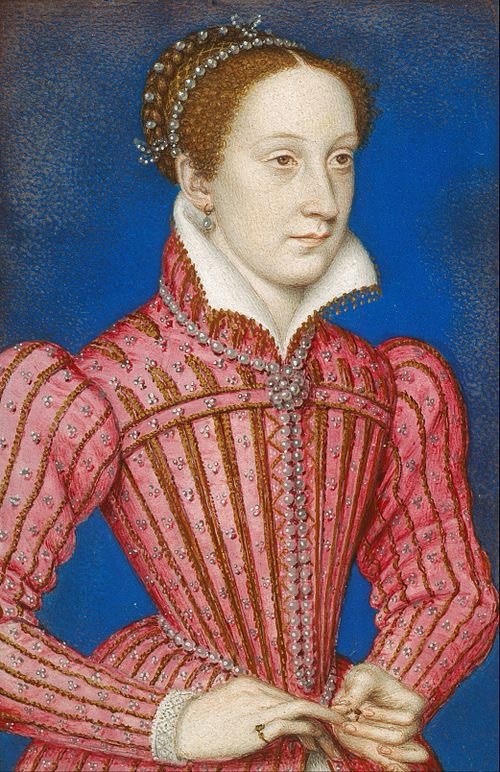
Henry VIII’s proposal for an alliance with Scotland through the marriage of his son to Queen Mary was rejected. After Henry’s death, the Duke of Somerset, ruling as Lord Protector, continued the ‘Rough Wooing’ with a military campaign, culminating in the Battle of Pinkie (or Pinkie Cleugh) on 10 September 1547. The English victory, with significant Scottish losses, led to the young Queen Mary being sent to France.
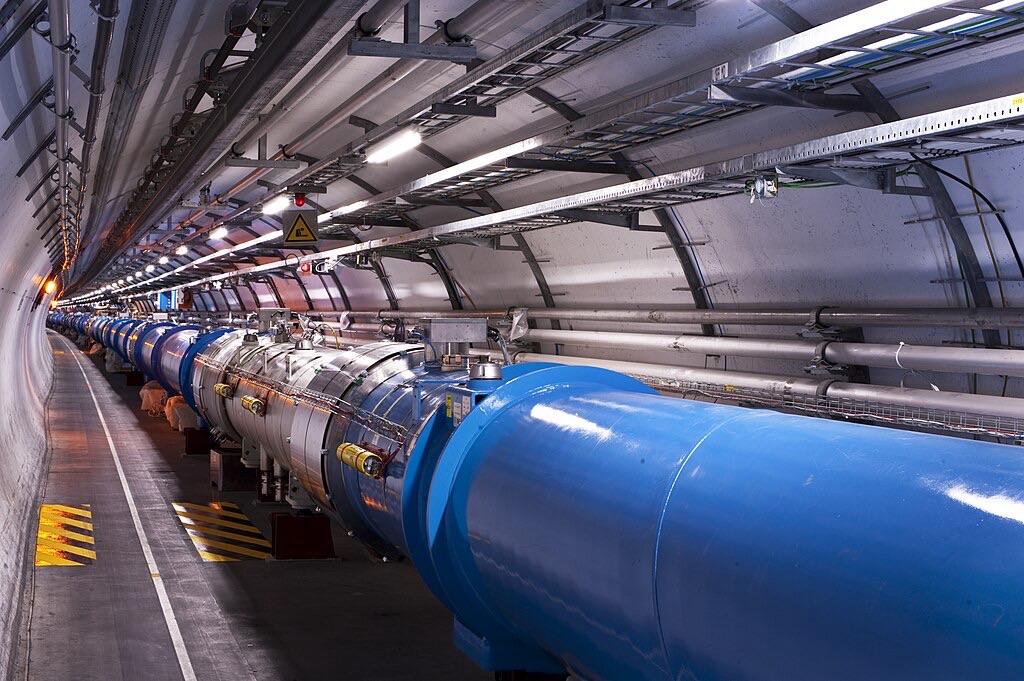
View of the LHC tunnel sector 3-4. Image Wikipedia
Five
In a novel published in 2000, the theft of antimatter created by a device described by the BBC as “the world’s biggest science experiment” was an essential part the plot of the novel and subsequent film. What is the three-word name of the device, and what is the title of the novel and film?
Answers: Large Hadron Collider and Angels & Demons
The novel Angels & Demons, by Dan Brown, involves antimatter created at the LHC to be used in a weapon against the Vatican. In response, CERN published a “Fact or Fiction?” page discussing the accuracy of the book’s portrayal of the LHC, CERN, and particle physics in general. The movie version of the book has footage filmed on-site at one of the experiments at the LHC; the director, Ron Howard, met with CERN experts in an effort to make the science in the story more accurate — Wikipedia
Switzerland became a full member of the United Nations on 10 September. In what decade did this occur?
Two
On this day, the United States defeated a British fleet at the Battle of Lake Erie. This battle took place during what war?
Three
Who was the former major from the British Army who won £1 million on Who Wants to Be a Millionaire on 10 September 2001, only to be later convicted of cheating and fraud?
Four
The last full-scale military confrontation between Scotland and England took place on 10 September 1547. What was the battle? Was it the Battle of Finger, Pinkie, or Thumb?
Five
In a novel published in 2000, the theft of antimatter created by a device described by the BBC as “the world’s biggest science experiment” was an essential part the plot of the novel and subsequent film. What is the three-word name of the device, and what is the title of the novel and film?
Here are the answers to the questions from my earlier post.
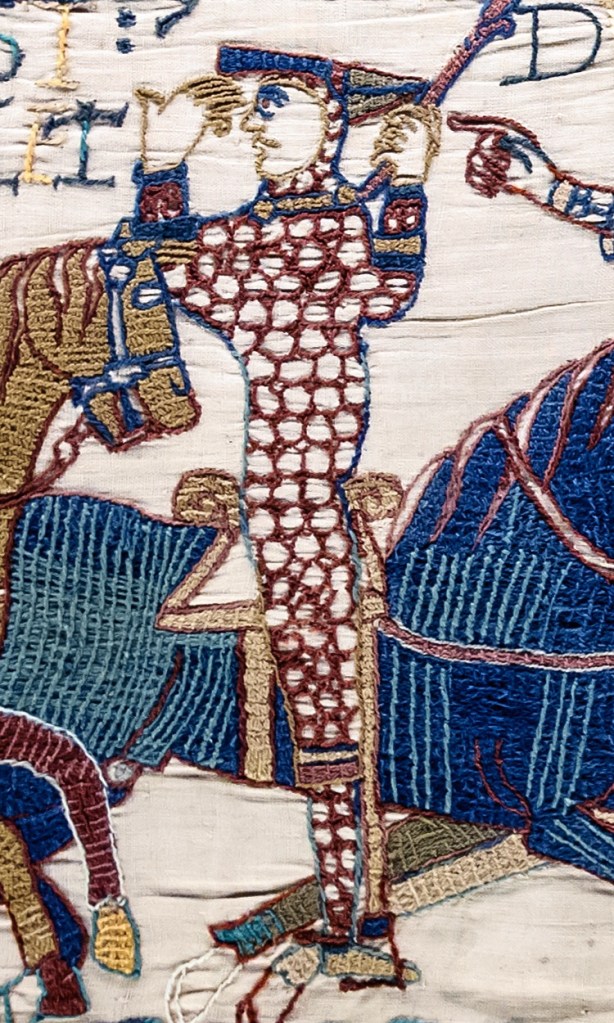
Bayeux Tapestry – Scenes 55 & 56 – Duke William lifts his helmet to be recognized on the battlefield of Hastings. Image Wikipedia
One
Is it true or false that William the Conqueror died of smallpox on 9 September 1092?
Answer: True
King William of England died on 9 September 1087 at Rouen, France, several weeks after being seriously injured at the Battle of Mantes. In July 1087, while fighting a counter-offensive against the French, the King fell against the pommel of his saddle, severely damaging his intestines.
Two
Is it true or false that Elvis Presley appeared on The Ed Sullivan Show for the first time on 9 September 1960?
Answer: False
Presley’s first appearance on The Ed Sullivan Show was on 9 September 1956. He made two further appearances over the next four months, but he didn’t appear on the show again after his third appearance.
Is it true that a Scottish monarch was crowned at the age of nine months on 9 September 1543? If so, who was the monarch?
Answer: True. Mary, Queen of Scots
Mary Stuart became queen at the tender age of six days old in December 1543 upon her father James V’s death. Crowned as Mary, Queen of Scots on 9 September 1543 in Stirling, she remained queen until her forced abdication on 24 July 1567.
Four
Is it true or false that on 9 September 1759, forty-seven nations adopted Sauchie Fraser’s proposal for a standard time and time zones?
Answer: False
On this date in 1885, twenty-five nations adopted Sanford Fleming’s proposal for standard time and time zones.
Five
Captain William Bligh FRS RN, born on 9 September 1754, is best known for being cast adrift from HMS Bounty. Is it true or false that between 1806 and 1808, he served as Governor of New South Wales?
Is it true or false that William the Conqueror died of smallpox on 9 September 1092?
Two
Is it true or false that Elvis Presley appeared on The Ed Sullivan Show for the first time on 9 September 1960?
Three
Is it true or false that a Scottish monarch was crowned at the age of nine months on 9 September 1543? If so, who was the monarch?
Four
Is it true or false that on 9 September 1759, forty-seven nations adopted Sauchie Fraser’s proposal for a standard time and time zones?
Five
Captain William Bligh FRS RN, born on 9 September 1754, is best known for being cast adrift from HMS Bounty. Is it true or false that between 1806 and 1808, he served as Governor of New South Wales?
It was a bright cold day in April, and the clocks were striking…
The above quote is from the opening sentence of a dystopian novel published in 1949. Can you identify the missing number?
Answer: Thirteen
Nineteen Eighty-Four, a dystopian novel by George Orwell, examines the effects of totalitarianism, mass surveillance, and truth manipulation. Set in a future where Airstrip One is part of Oceania, the story portrays a society under the control of Big Brother and the Party’s Thought Police. Winston Smith, a Party member, attempts to rebel against the oppressive regime but is eventually captured, tortured, and forced to betray Julia, ultimately submitting to Big Brother.
Two
If the Fibonacci sequence starts with F0 = 0 and F1 = 1, what is F13 equal to?
Answer: 233
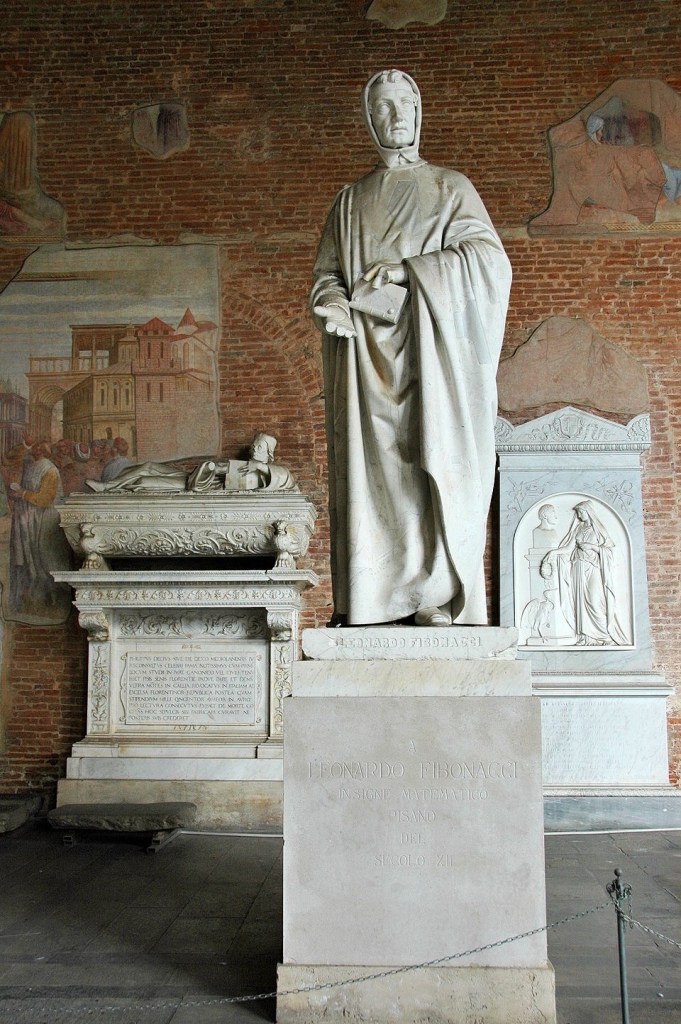
The Fibonacci sequence is a series of numbers in which each number (Fibonacci number) is the sum of the two preceding numbers. The simplest is the series 1, 1, 2, 3, 5, 8, etc. In fiction they had a role to play in Dan Brown’s The Da Vinci Code.
F0
F1
F2
F3
F4
F5
F6
F7
0
1
1
2
3
5
8
13
F8
F9
F10
F11
F12
F13
F14
F15
21
34
55
89
144
233
377
610
Three
What birthday does Bilbo celebrate near the beginning of the novel The Fellowship of the Ring (1954) and the 2001 film adaptation?
Answer: 111th
The beginning of the first chapter in the book begins quite lightly, following on from The Hobbit which is more of a children’s story than The Lord of the Rings. It begins with Bilbo Baggins celebrating his 111th (or eleventy first, as it is called) birthday, on the same day that Frodo celebrates his 33rd birthday. (His ‘coming of age’) At the birthday party, Bilbo disappears after his speech, to the surprise of all. Frodo later learns about the ring which he had used to make himself invisible, and also to some of its darker powers. — Tolkien Gateway
Four
In what year was Donald J. Trump, the President of the United States, born?
Answer: 1946
Donald Trump (born June 14, 1946, New York, New York, U.S.) is the 45th and 47th president of the United States (2017–21; 2025– ). Following his inauguration on January 20, 2025, Trump became only the second president to serve two nonconsecutive terms, the first being Grover Cleveland (1885–89; 1893–97). In January 2025, upon his sentencing without punishment for a felony conviction in 2024, Trump officially became the first convicted felon to be elected president. At age 78, Trump is the oldest person to win the office. — Encyclopædia Britannica
Five
Ray Bradbury’s 1953 dystopian novel, Fahrenheit…, is missing a number from its title. What is it?
Answer: 451
Fahrenheit 451‘s title. The title page of the book explains the title as follows: Fahrenheit 451—The temperature at which book paper catches fire and burns…. On inquiring about the temperature at which paper would catch fire, Bradbury had been told that 451 °F (233 °C) was the autoignition temperature of paper. In various studies, scientists have placed the autoignition temperature at a range of temperatures between 424 and 475 °F (218 and 246 °C), depending on the type of paper.
Regular triskaidecagon or tridecagon, see #4. Image Wikipedia
The answers to my earlier post are shown below.
One
From which Asian language does the word ’jungle‘ originate?
Answer: Sanskrit (Hindi is a close second)
jungle /ˈdʒʌŋɡl / ▸ noun 1 an area of land overgrown with dense forest and tangled vegetation, typically in the tropics: we set off into the jungle [mass noun] the lakes are hidden in dense jungle.
a wild tangled mass of vegetation or other things: the garden was a jungle of bluebells.
a situation or place of bewildering complexity or brutal competitiveness: it’s a jungle out there.
2 [mass noun] (also jungle music) a style of dance music incorporating elements of ragga, hip-hop, and hard core and consisting of very fast electronic drum tracks and slower synthesized bass lines, originating in Britain in the early 1990s.
– PHRASES the law of the jungle the principle that those who are strong and apply ruthless self-interest will be most successful: power politics reflected the law of the jungle. – DERIVATIVES jungled adjective – ORIGIN late 18th century: via Hindi from Sanskrit jāṅgala ‘rough and arid (terrain)’. — Oxford English Dictionary
Two
A Scrabble board has how many squares to place tiles in?
Answer: 225
Scrabble, invented in 1931 by Alfred Mosher Butts, is a word game played on a 15×15 grid. Hasbro produces it in the US and Canada, while Mattel holds the rights for international production.
Three
In four English-speaking countries, a specific word is used to describe a particular capacity, ranging from as low as 237 millilitres to as much as 250 millilitres. What is this term?
Answer: Cup
A measure of capacity used in cooking. In the US and Canada it is equal to half a US pint, therefore 8 fluid ounces or 237 millilitres. In the UK it is 10 fluid ounces or 284 millilitres and Australia it is 250 millilitres.
Four
A triskaidecagon, or tridecagon, has how many sides?
Answer: Thirteen
In geometry, a tridecagon, also known as a triskaidecagon or 13-gon, is a thirteen-sided polygon, see image above.
Five
What ‘H’ is an alphabet containing the word ‘qoph’?



 Quizology.Online