Tag: space

  • How’s the Weather—Answers

    Here are the answers to the questions I posed in my earlier post.

    These questions concerning various ’firsts’ also all relate to today’s date, January 7th.
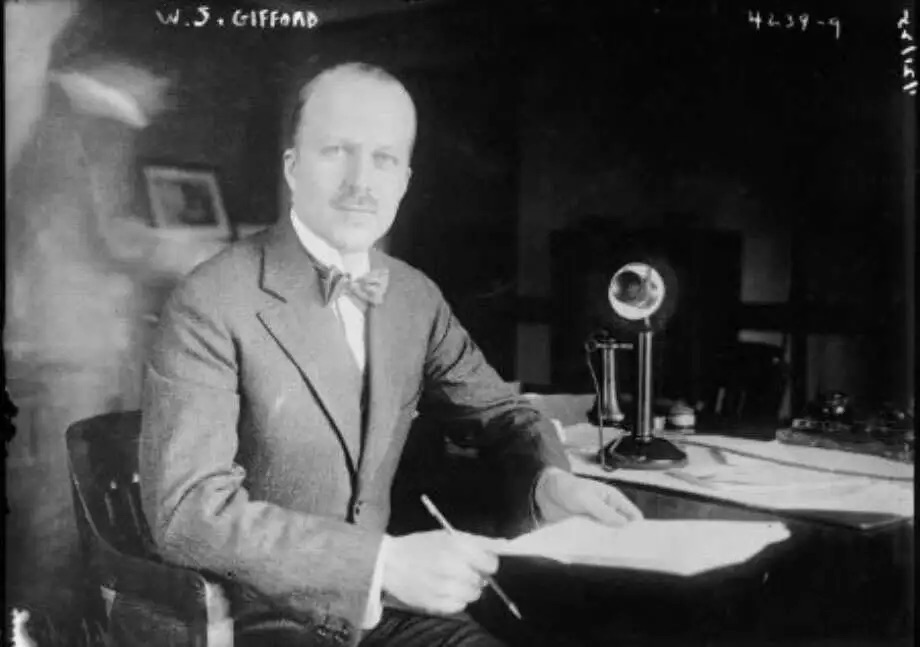
    W.S. Gifford.
    Library of Congress

    One

    The first ‘official’ commercial transatlantic telephone service was established on this date. In what decade, and between what two cities, was the connection made?

    Answer: 1920s; New York City, United States and London, United Kingdom

    On January 6 and 7, 1927, the first transatlantic telephone conversations took place between the United States and London. The initial test call, a casual conversation about the weather and travel distances, was followed by a formal ‘official’ inauguration call between AT&T President W.S. Gifford and Sir Evelyn P. Murray, head of the British General Post Office. This historic achievement marked the beginning of a new era of global communication. The previous day, the across-the-ocean ‘test’ conversation was also recorded for the purposes of history — ‘How’s the weather over in London?’. These calls travelled over 3,000 miles, via wire from New York City to a radio transmitter at Rocky Point, Long Island, New York, and then via radio waves—to a radio receiving station at Rugby, England, and finally via wire from there to London. The return conversation went from London via wire to Cupar, Scotland, from there via radio waves to a receiving station at Houlton, Maine, and finally via wire back to New York City. — Sourced from Library of Congress


    Two

    The first observation of the Galilean moons was made with two being visible. Who made this first observation and in what century was it made?

    Answer: Galileo Galilei; 17th century

    The Galilean moons, discovered by Galileo in 1610, are the four largest moons of Jupiter: Ganymede, Callisto, Io and Europa. They are planetary-mass moons, larger than any dwarf planet, and Ganymede is the largest moon in the Solar System. Their discovery challenged the geocentric Ptolemaic world system and demonstrated the importance of the telescope.


    Three

    In 1985, which country’s space agency launched the Sakigake spacecraft, the first deep space probe launched by a nation other than the United States or the Soviet Union?

    Answer: Japan

    Sakigake, a practice mission for Japan’s Suisei, flew by Comet Halley, providing data on the comet and Earth’s magnetic tail.


    Four

    What first three-letter distress signal was established in 1904, only to be replaced two years later by SOS?

    Answer: CQD

    CQD, one of the first radio distress signals, was adopted by the Marconi International Marine Communication Company on 7 January 1904. SOS, agreed upon by the International Radio Telegraphic Convention in 1906, was merely a distinctive Morse code sequence of three dots, three dashes and three dots with no spaces between the letters. Although not an abbreviation, SOS is often associated with phrases like ‘save our souls’ or ‘save our ship’.


    Five

    In 1954, the Georgetown-IBM experiment at the head office of IBM in New York City was the first public demonstration of a computer doing which of these?

    1. Performing arithmetic and complex mathematical calculations
    2. Scanning text and graphics
    3. Translating from one input language to another output language

    Answer: 3. Translating from one input language to another output language

    The Georgetown–IBM experiment, a 1954 demonstration of machine translation, showcased the automatic translation of over sixty Russian sentences into English. Developed by Georgetown University and IBM, the experiment utilised a limited vocabulary and grammar rules, focusing on specific domains like politics and science. While the demonstration received widespread attention and encouraged government investment, progress in machine translation was slower than anticipated.

  • How’s the Weather

    These questions concerning various ’firsts’ also all relate to today’s date, January 7th.

    W.S. Gifford.
    Library of Congress

    One

    The first ‘official’ commercial transatlantic telephone service was established on this date. In what decade, and between what two cities, was the connection made?


    Two

    The first observation of the Galilean moons was made with two being visible. Who made this first observation and in what century was it made?


    Three

    In 1985, which country’s space agency launched the Sakigake spacecraft, the first deep space probe launched by a nation other than the United States or the Soviet Union?


    Four

    What first three-letter distress signal was established in 1904, only to be replaced two years later by SOS?


    Five

    In 1954, the Georgetown-IBM experiment at the head office of IBM in New York City was the first public demonstration of a computer doing which of these?

    1. Performing arithmetic and complex mathematical calculations
    2. Scanning text and graphics
    3. Translating from one input language to another output language

    Good luck! I’ll post the answers later today.


  • First Things First—Answers

    Today’s questions focus on ‘firsts’ that occurred on January 3rd.

    Flag of Liberia.
    Image Wikimedia Commons

    One

    In 1848, Joseph Jenkins Roberts was sworn in as the first president of a country which began as a project of the American Colonization Society. What country?

    Answer: Liberia

    Liberia, Africa’s oldest republic, was established for formerly enslaved people from the United States. It gained independence in 1847 and experienced relative stability until a civil war in the 1990s.


    Two

    Who, in 1987, was the first woman to be voted into the Rock and Roll Hall of Fame?

    Answer: Aretha Franklin

    Aretha Franklin, the Queen of Soul, was a highly acclaimed American singer known for her powerful voice and hits like Respect and (You Make Me Feel Like) A Natural Woman.


    Three

    A spacecraft named for a goddess who, according to legend, flew from Earth to the Moon was the first to land on the far side of the Moon. What name do the goddess and spacecraft share, and in what decade did this first landing take place?

    Answer: Chang’e; 2010s

    Chang’e, the Chinese moon goddess, is celebrated annually on the 15th day of the eighth lunar month during the Mid-Autumn Festival. She is often depicted floating towards the moon, holding a moon disk, or with the Hare preparing the elixir of immortality. The spacecraft Chang’e 4, carrying the Yutu-2 rover, landed on the Moon’s far side on 3 January 2019, becoming the first spacecraft to do so. It communicated with Earth via the Queqiao relay satellite.


    Four

    In 1749, the first issue of Berlingske was published. It is now the oldest continually operating newspaper in what country?

    Answer: Denmark

    Berlingske, Denmark’s oldest continually operating newspaper, was founded in 1749 and is considered a newspaper of record. Originally titled Kjøbenhavnske Danske Post-Tidender, it has a conservative stance and is known for its traditionalism. The newspaper, now published in tabloid format, has won numerous awards, including the World Press Photo Award three times.


    Five

    In what decade was the first electric watch introduced to the retail market?

    Answer: 1950s

    The Hamilton Watch Company produced the first electric watch to be retailed in 1957, using a balance wheel or tuning fork driven by a battery. Quartz watches later surpassed them in accuracy and durability.


  • First Things First

    Today’s questions focus on ‘firsts’ that occurred on January 3rd.

    Image Wikimedia Commons

    One

    In 1848, Joseph Jenkins Roberts was sworn in as the first president of a country which began as a project of the American Colonization Society. What country?


    Two

    Who, in 1987, was the first woman to be voted into the Rock and Roll Hall of Fame?


    Three

    A spacecraft named for a goddess who, according to legend, flew from Earth to the Moon was the first to land on the far side of the Moon. What name do the goddess and spacecraft share, and in what decade did this first landing take place?


    Four

    In 1749, the first issue of Berlingske was published. It is now the oldest continually operating newspaper in what country?


    Five

    In what decade was the first electric watch introduced to the retail market?

    Good luck! I’ll post the answers later today.


  • Hot Shot—Answers

    Here are the answers to the questions from my earlier post.

    A few true or false posers for you today.

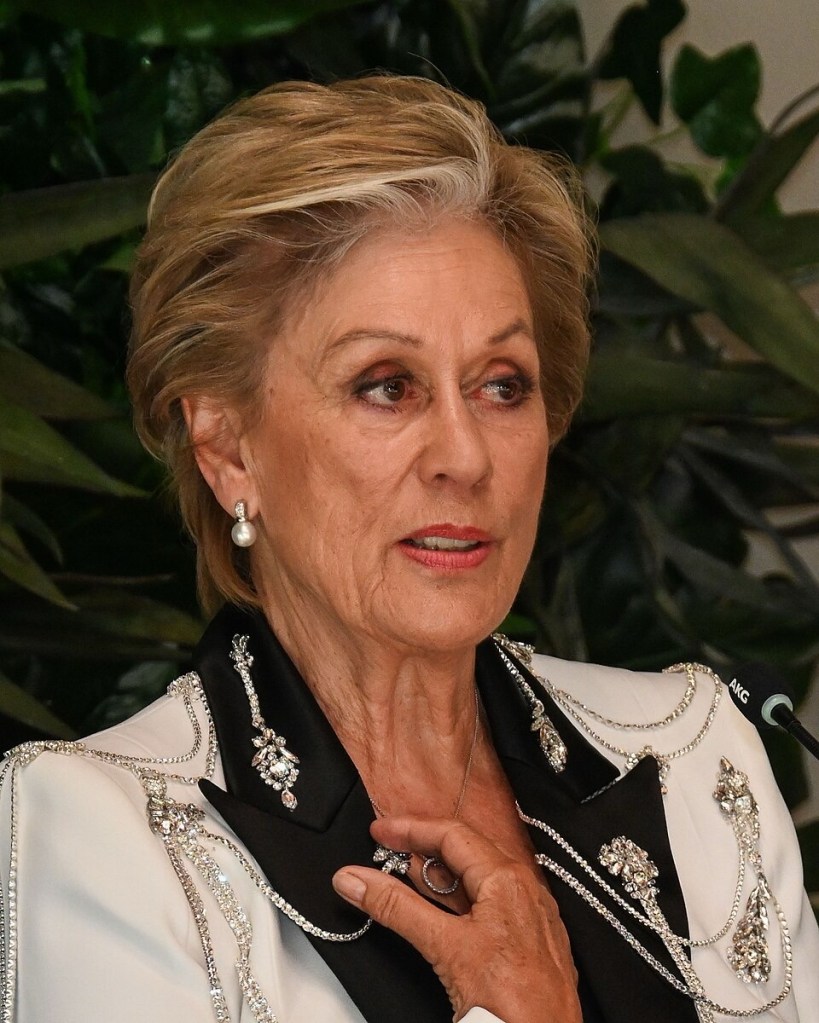
    Dame Kiri Te Kanawa.
    Image Wikimedia Commons

    One

    Gun-toting … … triggers police alert at hotel

    True or false: The above 2003 headline from The Herald in Glasgow, Scotland, referenced opera singer Kiri Te Kanawa’s arrival in the city with several shotguns.

    Answer: True

    Dame Kiri Te Kanawa, the renowned soprano, caused a stir at a Glasgow hotel when she requested a gun store, leading to a police presence. The hotel, lacking a gunroom, followed protocol and contacted the police, who stored the firearms overnight. The incident occurred shortly after Glasgow was labelled the murder capital of Britain and was reported in The Herald newspaper on 5 December 2003.


    Two

    True or false: On 18 June 1983, US astronaut Sally Ride became the first woman to travel in space.

    Answer: False

    On 16 June 1963, Cosmonaut Valentina Vladimirovna Tereshkova became the first woman to travel in space when she flew a solo mission in Vostok 6. Svetlana Savitskaya, aboard Soyuz T-7, became the second woman to travel in space in 1982, and Sally Ride became the third woman, and first American woman, to travel in space.


    Three

    True or false: According to the United States Geological Survey, about 90% of the world’s earthquakes, including most of its largest, occur within the Pacific Ring of Fire.

    Answer: True

    The Ring of Fire is a 25,000-mile (40,000 km) long tectonic belt surrounding the Pacific Ocean, characterised by frequent earthquakes and volcanic activity. It is formed by the subduction of various tectonic plates, creating oceanic trenches, volcanic arcs, and back-arc basins. The Ring of Fire contains the majority of the world’s active volcanoes and earthquakes.


    Four

    Those kids were fast as lightning
    In fact, it was a little bit frightening

    True or false: The above lyric from a 1974 song was a number one hit in multiple nations.

    Answer: True

    Kung Fu Fighting is a disco song by Carl Douglas, released in 1974. It topped charts worldwide, sold eleven million copies, and popularised disco music. The song was covered (using different lyrics) by CeeLo Green and Jack Black in the first film of the Kung Fu Panda franchise, and later by The Vamps for the third film.


    Five

    True or false: Alexander Fleming discovered penicillin in 1878.

    Answer: False

    Fleming did discover penicillin, but not in 1878, and, in fact, he was not born until 1881. On 3 September 1928, Fleming noticed a fungus contaminating a staphylococci culture, destroying the bacteria around it. He identified the fungus as Penicillium, later confirmed as P. rubens.


  • Hot Shot

    A few true or false posers for you today.

    Dame Kiri Te Kanawa.
    Image Wikimedia Commons

    One

    Gun-toting … … triggers police alert at hotel

    True or false: The above 2003 headline from The Herald in Glasgow, Scotland, referenced opera singer Kiri Te Kanawa’s arrival in the city with several shotguns.


    Two

    True or false: On 18 June 1983, US astronaut Sally Ride became the first woman to travel in space.


    Three

    True or false: According to the United States Geological Survey, about 90% of the world’s earthquakes, including most of its largest, occur within the Pacific Ring of Fire.


    Four

    Those kids were fast as lightning
    In fact, it was a little bit frightening

    True or false: The above lyric from a 1974 song was a number one hit in multiple nations.


    Five

    True or false: Alexander Fleming discovered penicillin in 1878.

    Good luck! I’ll post the answers later.

  • Little Sparrow—Answers

    Here are the answers to my earlier post.

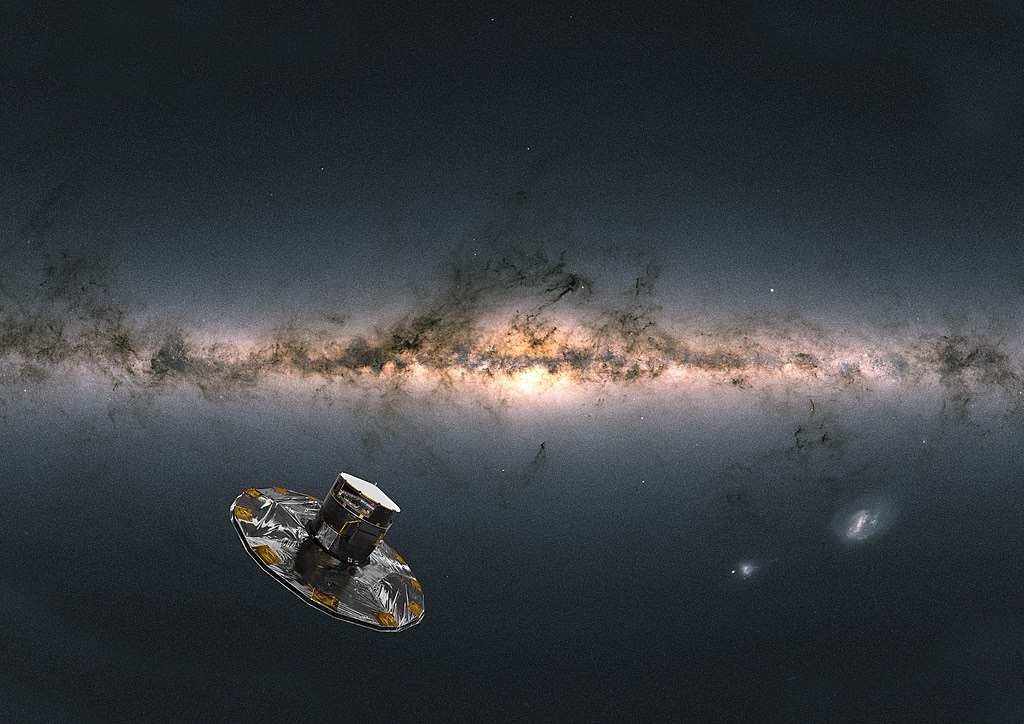
    See question 5. Artist pression of ESA’s Gaia satellite observing the Milky Way, with a background image of the sky compiled from data from more than 1.8 billion stars.
    Image ESA via Wikipedia

    One

    … was dead: to begin with. There is no doubt whatever about that.

    Published for the first time on this date in 1843, what begins with the quote above and whose surname is missing from the start?

    Answer: A Christmas Carol; Marley

    A Christmas Carol, a novella by Charles Dickens, recounts the story of Ebenezer Scrooge’s transformation after visits from the ghosts of Christmas Past, Present, and Yet to Come. The novella, published in 1843, was inspired by Dickens’s experiences and the Victorian revival of Christmas traditions. It has never been out of print and has been widely adapted.


    Two

    Born on this day in 1906, what Soviet leader, along with US President Jimmy Carter, signed the unsuccessful SALT II treaty in Vienna in 1979?

    Answer: Leonid Brezhnev

    Leonid Brezhnev, a Soviet statesman, led the Soviet Union for 18 years. He prioritised foreign and military affairs, implementing the Brezhnev Doctrine to justify Soviet intervention in Czechoslovakia and expanding the Soviet military-industrial complex. While achieving parity with the US in nuclear weapons and space programmes, Brezhnev’s focus on defence led to economic decline, impacting agriculture, consumer goods and healthcare.


    Three

    A singer born in Paris, France, on 19 December 1915, came to be known as ‘little sparrow’. Who was she?

    Answer: Edith Piaf

    Edith Piaf, a French singer and actress, gained international fame for her interpretation of the chanson. Her life, marked by tragedy and hardship, deeply influenced her music, which often reflected themes of loss and love. Despite her struggles with health and addiction, Piaf’s powerful voice and dramatic style captivated audiences, leaving a lasting legacy.


    Four

    On this day in 1606, Christopher Newport, in command of the Discovery, the Godspeed, and the Susan Constant, sailed from London, England. The following April, they entered a bay—the largest estuary in the United States—and went on to set up the first permanent English settlement in North America. What was the name of the bay and the colony?

    Answer: Chesapeake Bay; Jamestown

    Newport, a member of the colony’s governing body, led a total five voyages between Virginia and England, bringing supplies and settlers to the Jamestown colony between 1606 and 1611.


    Five

    In 2013, the European Space Agency launched a spacecraft that could be described as a space telescope or astronomical observatory. Named after the personification of Earth in Greek mythology, what was its name?

    Answer: Gaia

    Gaia, the Greek personification of Earth, is the mother of Uranus, Pontus, the Titans, Cyclopes and Giants.

    From 27 July 2014 to 15 January 2025, Gaia has made more than three trillion observations of two billion stars and other objects throughout our Milky Way galaxy and beyond, mapping their motions, luminosity, temperature and composition. Gaia’s extraordinarily precise three-dimensional map will provide the data needed to tackle an enormous range of important questions related to the origin, structure and evolutionary history of our galaxy.

    European Space Agency

  • 100 Not Out—Answers

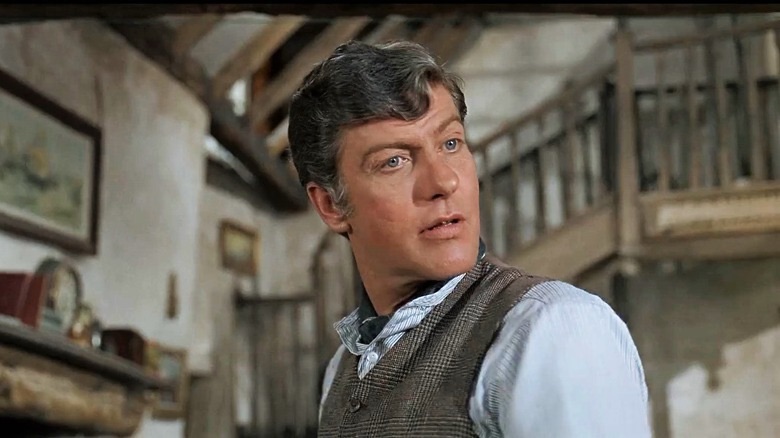
    Caractacus Potts (Dick Van Dyke) Chitty Chitty Bang Bang (1968).

    One

    Born on this day in 1925, an actor portrayed Caractacus Potts in a 1968 film adaptation of an Ian Fleming story. Who is he and what was the film?

    Answer: Dick Van Dyke; Chitty Chitty Bang Bang

    Happy Birthday! The post title refers to Dick Van Dyke being 100 today.

    Dick Van Dyke, born in 1925, is an American actor and comedian renowned for his charm and physical comedy. He began his show business career after a failed advertising venture, performing in nightclubs and on television before making his Broadway debut in 1959. Van Dyke starred in the hit musical Bye Bye Birdie, winning a Tony Award, which led to his iconic role in The Dick Van Dyke Show, earning him three Emmys. He also starred in films like Mary Poppins and Chitty Chitty Bang Bang and returned to television with various shows and TV movies. His career highlights include roles in Dick Tracy, Diagnosis Murder, and Night at the Museum. Van Dyke received a Television Academy Hall of Fame induction in 1995 and a Kennedy Centre Honour in 2021.


    Two

    The first European to sight the South Island of New Zealand did so on this day. Who was he, and in what century did this sighting occur?

    Answer: Abel Tasman; 17th century (1642)

    Abel Janszoon Tasman, a Dutch explorer, was the first European to reach New Zealand and Tasmania. His 1642 expedition, commissioned by the Dutch East India Company, aimed to discover new trade routes and establish trade relations with native inhabitants. Despite a violent encounter with the Māori people, Tasman’s voyage paved the way for future colonisation.


    Three

    In 1956, the film Anastasia was released in America. This drama marked the Hollywood comeback of an actress following a scandal involving an extramarital affair. Her performance earned her the Best Actress Oscar. Who was she?

    Answer: Ingrid Bergman

    After years working exclusively in Europe following her highly publicised affair with Roberto Rossellini, this film marked a Hollywood comeback for Ingrid Bergman. Her performance earned her, among others, the Academy Award for Best Actress, the Golden Globe for Best Actress in a Motion Picture.


    Four

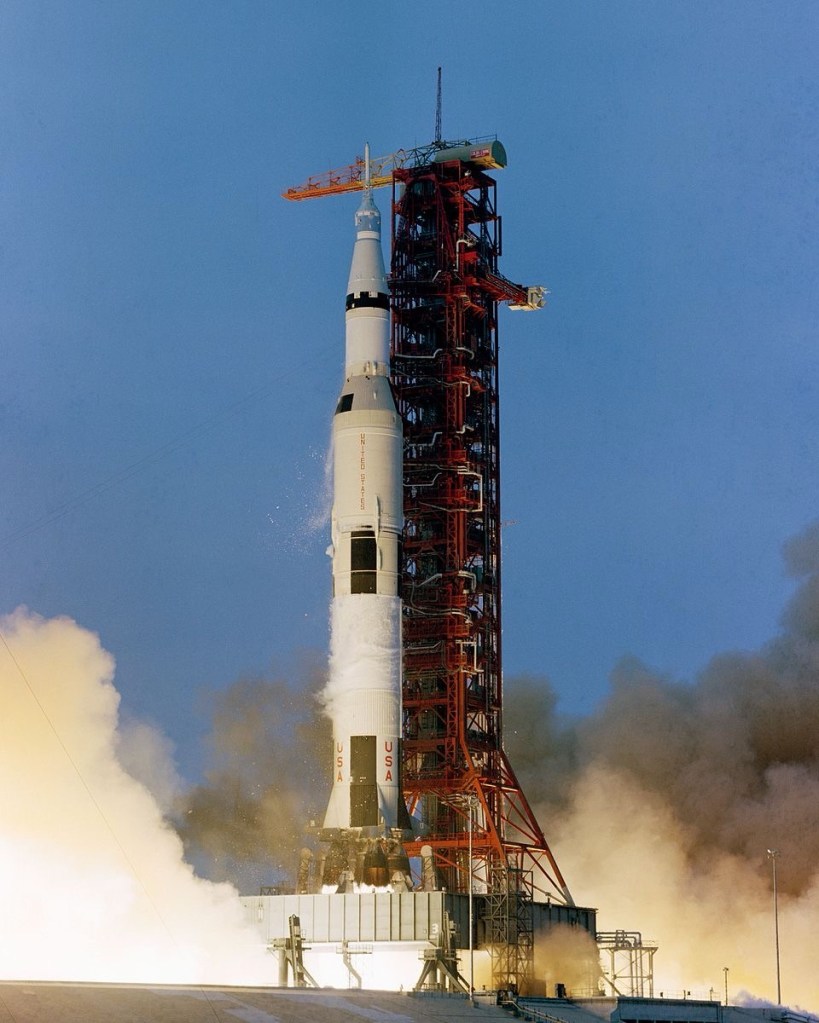
    The final moonwalk or EVA of the Apollo programme occurred on this day in 1972. Which Apollo mission was this and who were the two astronauts on the Moon?

    Answer: Apollo 17; Eugene Cernan and Harrison Schmitt

    Apollo 17, the final Apollo mission, launched on 7 December 1972 and concluded on 19 December 1972. Commander Eugene Cernan and Lunar Module Pilot Harrison Schmitt were the last humans to walk on the Moon, landing in the Taurus-Littrow Valley. They conducted experiments, collected samples, and travelled 19 miles in their lunar rover before returning to Earth. Cernan, the last person to date to stand on the Moon, said before returning to the lunar module, ‘We shall return, with peace and hope for all mankind. Godspeed the crew of Apollo 17’.


    Taylor Swift at the 2023 MTV Video Music Awards.
    Image iHeartRadioCA via Wikipedia

    Five

    What singer-songwriter was born in West Reading, Pennsylvania on this day in 1989?

    Answer: Taylor Swift

    Taylor Swift, a renowned American singer-songwriter known for her autobiographical songwriting and artistic reinventions, made history in 2024 by becoming the first artist to win the Grammy Award for Album of the Year four times and breaking the record for the highest-grossing concert tour. She is the highest-grossing live music artist and one of the best-selling music artists of all time, having won numerous awards, including 14 Grammys, and is the first individual from the arts to be named Time Person of the Year.

  • 100 Not Out

    See question one.

    One

    Born on this day in 1925, an actor portrayed Caractacus Potts in a 1968 film adaptation of an Ian Fleming story. Who is he and what was the film?


    Two

    The first European to sight the South Island of New Zealand did so on this day. Who was he, and in what century did this sighting occur?


    Three

    In 1956, the film Anastasia was released in America. This drama marked the Hollywood comeback of an actress following a scandal involving an extramarital affair. Her performance earned her the Best Actress Oscar. Who was she?


    Four

    The final moonwalk or EVA of the Apollo programme occurred on this day in 1972. Which Apollo mission was this and who were the two astronauts on the Moon?


    Five

    What singer-songwriter was born in West Reading, Pennsylvania on this day in 1989?

    Good luck! I’ll post the answers later.

  • Who, What, When, Where or Why—Answers

    Here are the answers to the questions posted earlier.

    Today’s questions are simply either Who, What, When, Where or Why.

    Apollo 13 launches from Kennedy Space Center, April 11, 1970.
    Image Wikipedia

    One

    Who was the only astronaut on the Apollo program to be the only person to fly to the Moon twice without landing?

    Answer: Jim Lovell

    James Lovell was an American astronaut, naval aviator, and engineer. He flew on four space missions, including Apollo 8 and Apollo 13, and was the first person to fly into space four times. Lovell received numerous awards and honours for his contributions to space exploration.


    Two

    What uninvited stony visitor injured Elizabeth Hodges while she napped on her couch in Alabama in 1954?

    Answer: Meteorite

    Ann Elizabeth Fowler Hodges, the first documented person struck by a meteorite and survive, was injured when a meteorite fragment crashed through her roof and hit her while she napped on 30 November 1954.


    Three

    When was the Mongol Empire founded by Genghis Khan, was it (i) 11th Century; (ii) 12th Century; (iii) 13th Century

    Answer: (iii) 13th Century

    The Mongol Empire, founded by Genghis Khan in 1206, eventually covering some 9 million square miles (23 million square km) from the Pacific Ocean to the Danube River and the Persian Gulf by the late 13th century.


    Four

    Where on the planet is the farthest point from the Earth’s centre. Is it the summit of (i) Chimborazo, Ecuador; (ii) Eyjafjallajökull, Iceland or (iii) Mount Erebus, Ross Island, Antarctica?

    Answer: (i) Chimborazo, Ecuador

    Chimborazo, a stratovolcano in Ecuador, is the highest mountain in the country and the 39th-highest peak in the Andes. Despite not being the tallest mountain on Earth, its summit is the farthest point from the Earth’s centre due to its equatorial location on the planet’s equatorial bulge.


    Five

    Why was 1936 a year of three kings in the United Kingdom, and who were they?

    Answer: Abdication crisis; George V, Edward VIII and George VI

    On the death of George V his eldest son became Edward VIII but he abdicated only 326 days later and his younger brother Albert became king as George VI.
    Edward VIII, later the Duke of Windsor, proposed marriage to Wallis Simpson, an American divorcée, led to a constitutional crisis and his abdication in favour of his brother, George VI. After his abdication, Edward, who was made Duke of Windsor by the new king, married Simpson and they lived in France until his death in 1972.