If I’d a knowed what a trouble it was to make a book I wouldn’t a tackled it and aint’t agoing to no more—Answer

  1. Mark Twain
  2. Adventures of Huckleberry Finn
Yours Truly
[Image from Wikimedia]

Adventures of Huckleberry Finn, a novel by Mark Twain, was published in the UK in 1884 and the US in 1885. The book’s narrator, Huckleberry Finn, uses simple language to describe scenes, characters, and narrate the story with humour and irony.

Huck runs away from his abusive father and travels down the Mississippi River with Jim, a runaway slave. Along the way, he meets various characters and learns to overcome racial prejudices and respect Jim. The book describes the river and surrounding forests, showcasing Huck’s good nature and humour. However, it also highlights human cruelty, both individual acts and societal institutions like slavery.

Twain’s novel, along with The Adventures of Tom Sawyer, revolutionised children’s and American literature by presenting a realistic portrayal of boyhood. It’s a classic of American realism, especially for its depiction of the pre-Civil War South through dialect. This realism sparked controversy in the late 20th century, with some finding the language offensive. Despite Huck’s friendship with Jim, the book was considered racist. The publication of a bowdlerised version in 2011 generated further debate and was deemed equally unacceptable.

If I’d a knowed what a trouble it was to make a book I wouldn’t a tackled it and aint’t agoing to no more

Tom’s most well, now, and got his bullet around his neck on a watch-guard for a watch, and is always seeing what time it is, and so there ain’t nothing more to write about, and I am rotten glad of it, because if I’d a knowed what a trouble it was to make a book I wouldn’t a tackled it and aint’t agoing to no more. But I reckon I got to light out for the Territory ahead of the rest, because Aunt Sally she’s going to adopt me and sivilize me and I can’t stand it. I been there before.

The above quote by the title character is the last paragraph of a book published in the US on 18 February 1885 (it had been published in the UK two months previously). 

  1. Who is the author of this work?
    • Charles Dickens
    • Rudyard Kipling
    • Mark Twain
  2. What is the title of the novel? (There is no multiple-choice this time)

The answers will be posted later today.

Twenty-four Hours from …—Answer

Q1. Tulsa

Q2. Gene Pitney

“Oh, I was only twenty four hours from Tulsa 
Ah, only one day away from your arms 
I saw a welcoming light 
And stopped to rest for the night” 

The song, titled Twenty Four Hours from Tulsa, achieved international stardom for Pitney due to its chart success peaking at number five in the UK and seventeen in the US. Written by Burt Bacharach and Hal David, the song is featured on Pitney’s fifth album, Blue Gene.

The lyrics narrate a man’s journey home to his beloved, where he stops at a motel for the night and falls in love with a woman who takes him to a café, ultimately abandoning his return home.

Read “24 Hours From Tulsa” by Gene Pitney on Genius

Twenty-four Hours from …

Image from Wikipedia

“Oh, I was only twenty four hours from … 
Ah, only one day away from your arms 
I saw a welcoming light 
And stopped to rest for the night”

The above lines are taken from a Burt Bacharach and Hal David song that achieved chart success in 1963—a top five hit in the UK and a top twenty hit in the US.

Q1. What US city was the singer only twenty-four hours away from?

Q2. Who is the singer, born on 17 February, who achieved the chart success mentioned above?

The answers will be posted later today.

Ten Thousand Leagues Under the Seas—Answer

Q1. A.60 days and 21 hours
Q2. B. USS Triton
Q3. A. Captain Edward L. Beach Jr.
Q4. B. Jules Verne

Map of the 1960 circumnavigation of the world by the U.S. nuclear-powered submarine USS Triton (SSRN-586).
[Image from Wikipedia]

Operation Sandblast, as this first-ever submerged circumnavigation of the globe was named, was accomplished by the United States Navy’s nuclear-powered submarine, USS Triton (SSRN-586), in 1960.

Captain Edward L Beach announcing Operation Sandblast to crew onboard USS Triton, 17 February 1960. [Image from Wikipedia]

First Submerged Circumnavigation

Led by Captain Edward L. Beach Jr., the Triton departed New London, Connecticut on 16 February 1960 to head to the start /finish line for the journey—the St. Peter and Paul Rocks in the middle of the Atlantic Ocean, near the Equator.

Details of the Voyage

  • Dates: February 24 to April 25, 1960
  • Duration: 60 days and 21 hours
  • Distance travelled: 26,723 nautical miles* (49,491 km; 30,752 miles)
  • Average speed: 18 knots (33 km/h; 21 mph)

The Triton crossed the equator four times and notably, Triton’s overall navigational track during Operation Sandblast was similar to that of the historic Spanish expedition that successfully completed the first circumnavigation of the world.

Historic First Circumnavigation

In 1519, Portuguese explorer Ferdinand Magellan started an epic journey that took his expedition all the way around the world; Spanish explorer Juan Sebastián Elcano finished it in 1522. Of the 270 men and five ships that set sail, only about 40 men and one ship made it back. Magellan died in battle in the Philippines in April 1521.

Nao Victoria, the only ship in the fleet to complete the circumnavigation. Detail from a map by Abraham Ortelius, 1590.
[Image from Wikipedia]

*Ten Thousand Leagues Under the Sea

The title is a poetic licence as the actual distance travelled converts to 10,251 leagues. This conversion from 26,723 nautical miles to leagues was carried out at metric-conversions.org.

Ten Thousand Leagues Under the Seas

USS ___ (SSRN-586) heading out for the beginning of the circumnavigation
16 February 1960.
[Image from Wikipedia]

On 16 February 1960 a United States nuclear-powered submarine departed New London, Connecticut to circumnavigate the world whilst submerged. The submarine would follow the route of the first circumnavigation of the world, started under the command of Ferdinand Magellan and completed by Juan Sebastián Elcanofrom between 1519 and 1522.


Q1. How long did this submerged circumnavigation take?
A. 60 days and 21 hours
B. 87 days and 9 hours
C. 115 days and 17 hours

Q2. What submarine carried out this voyage?
A. USS Thresher
B. USS Triton
C. USS Tullibee

Q3. The commanding officer of this submarine also wrote several books, both fiction and non-fiction, including Run Silent, Run Deep: who was he?
A. Captain Edward L. Beach Jr.
B. Captain William D. Sand
C. Captain Thomas J. Shore II

Q4. The title of this piece is a take on the title of the 19th century novel Twenty Thousand Leagues Under the Seas. Who wrote that novel?
A. Victor Hugo
B. Jules Verne
C. H.G. Wells

The answers will be posted later today.

Capital Cathedral—Answer

Helsinki

The cathedral is the Finnish Evangelical Lutheran cathedral of the Diocese of Helsinki, located in the centre of Helsinki, Finland and was also known as St Nicholas’s Church until Finnish independence in 1917.

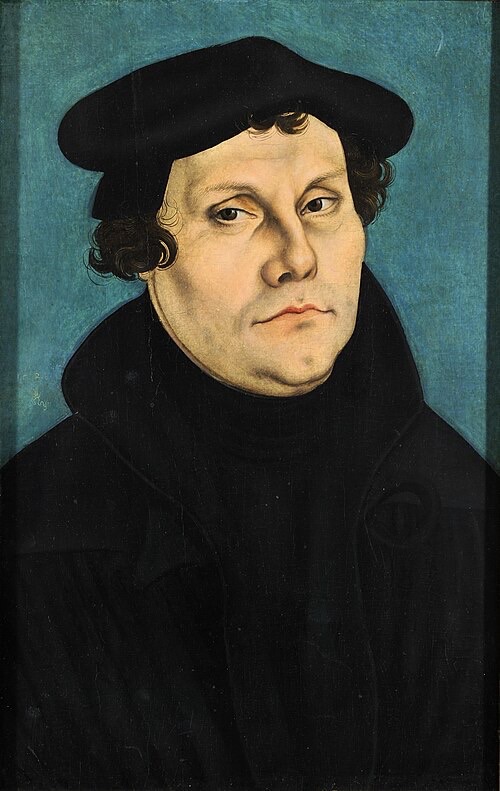
Martin Luther
[Image from Wikipedia]

A notable neoclassical landmark in Helsinki, the building features a tall, green dome encircled by four smaller ones. Designed by Carl Ludvig Engel as the centrepiece of his Senate Square layout, it is surrounded by other smaller structures he created. The church’s design is a Greek cross, symmetrical in all directions, with each arm adorned with a colonnade and pediment. Engel’s plan included an additional row of columns at the western end for the main entrance, but this was never realised.

Altar, with Carl Timoleon von Neff’s painting The Descent of Jesus from the Cross donated by Nicholas I
[Image from Wikipedia]

Peter Pan Helping Children Grow Up—Answer

JM Barrie

…is the writer who created Peter Pan

JM Barrie
[Image from Wikipedia]

Background

In April 1929, J. M. Barrie granted the copyright of his Peter Pan works to the hospital, requesting that the income remain undisclosed. This decision allowed the hospital to control the rights and receive royalties from performances, publications, and adaptations of the play and novel. Over the years, numerous performances and adaptations have been produced under the hospital’s license. Additionally, the hospital’s trustees commissioned a sequel, Peter Pan in Scarlet, by Geraldine McCaughrean, which was published in 2006.

After the copyright expired the hospital was granted a perpetual right to collect royalties by the UK government.

Further information can be found at Great Ormond Street Hospital’s website.