Space Debris

Today’s questions all relate to February 8th.

Skylab.
Image Wikimedia Commons

One

The US space station launched in 1973 and operational until 1974 ceased operations on this date. What was its name and how many weeks was it occupied?


Two

Who was executed on this date in 1587, as a suspect in the Babington Plot to murder England’s Queen Elizabeth I?


Three

What film, which premiered in 1915, was hailed for its technical and dramatic innovations but condemned for its overt racism and positive portrayal of the Ku Klux Klan?


Four

In what decade did Sandford Fleming propose at the Royal Canadian Institute the adoption of Universal Standard Time?


Five

In the biographical film Iris, both Kate Winslet and Judith Dench portrayed the title character. Who was the real Iris?

Good luck! I’ll post the answers later.


When—Answers

Here are the answers to the questions i posted earlier.

These questions all relate to today’s date, February 5th. Each question has a year or decade as the first part of the answer, followed by a supplementary question.


Cartoon depicting Leopold II and other imperial powers at the Berlin Conference of 1884.
Image Wikimedia Commons

One

In what decade did a European monarch establish the Congo Free State in West Africa? Who was the monarch, and what was the European country?

Answer: 1880s; Leopold II and Belgium

Belgian King Leopold II established the Congo Free State in 1885, seizing the land as his personal possession. His brutal reign, characterised by forced labour and widespread atrocities, led to international condemnation and the eventual transfer of control to Belgium in 1908.


Two

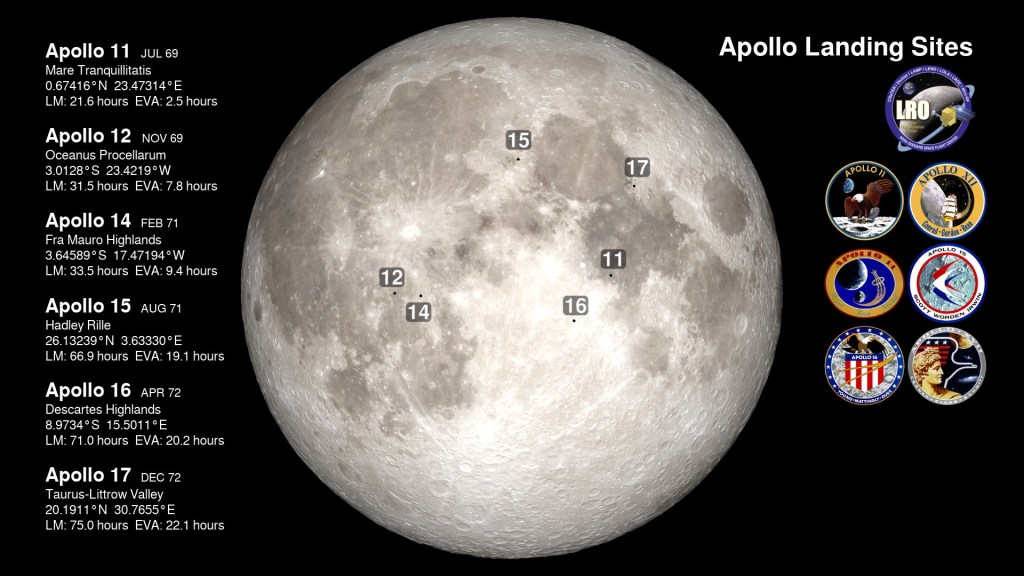
On this day in what year did Apollo 14 land on the Moon, and name any one of the three astronauts who flew on that mission or all three if you can?

Answer: 1971; Alan B. Shepard Jr., Stuart A. Roosa or Edgar D. Mitchell

Apollo 14, the third lunar landing, successfully landed in the Fra Mauro formation after overcoming malfunctions. Shepard and Mitchell collected Moon rocks and deployed experiments, while Roosa orbited the Moon.


Three

On this day, the New Hermitage Museum opened in Russia. In what decade did it open, and what—at that time—was the name of the city it is located in?

Answer: 1850s; Saint Petersburg

The New Hermitage Museum, part of the larger Hermitage Museum complex in St. Petersburg, was reconstructed between 1840 and 1852 and opened to the public in 1852. The museum is housed within five interconnected buildings, including the Winter Palace and the Small, Old and New Hermitages. The city was founded by Peter the Great in 1703 and named St. Petersburg, which it stayed until 1914 when it became Petrograd to reflect Russian patriotism during World War I by avoiding the German-sounding ‘Petersburg’. In 1924, the name changed to Leningrad in honour of Vladimir Lenin after his death, which it was until 1991 when the city’s population voted to return to the original name.


Four

United Artists, the American film production company, was founded on this day in what decade? Secondly, name any two of the four founders?

Answer: 1910s; Charlie Chaplin, Mary Pickford, Douglas Fairbanks and D. W. Griffith.

United Artists, founded in 1919, was established to allow actors more control over their own affairs. It was acquired by MGM in 1981 and later revived as United Artists Releasing in 2019. However, Amazon, MGM’s parent company, folded UAR into MGM in 2023. On 26 July 2024, Amazon MGM Studios announced the company’s revival.


Five

The creation of the first synthetic plastic was announced on this date. In what decade was this announcement made, and what was the name of this synthetic plastic?

Answer: 1900s; Bakelite

Leo Hendrik Baekeland, a Belgian chemist, invented Velox photographic paper and Bakelite, a versatile plastic, earning him the title ‘The Father of the Plastics Industry’. Bakelite, developed in 1907, became a commercial success due to its mouldability, heat resistance, and electrical nonconductivity. Its creation revolutionised the chemical industry and inspired the development of other synthetic plastics.


When

These questions all relate to today’s date, February 5th. Each question has a year or decade as the first part of the answer, followed by a supplementary question.

Contemporary cartoon.
Image Wikimedia Commons

One

In what decade did a European monarch establish the Congo Free State in West Africa? Who was the monarch, and what was the European country?


Two

On this day in what year did Apollo 14 land on the Moon, and name any one of the three astronauts who flew on that mission or all three if you can?


Three

On this day, the New Hermitage Museum opened in Russia. In what decade did it open, and what—at that time—was the name of the city it is located in?


Four

United Artists, the American film production company, was founded on this day in what decade? Secondly, name any two of the four founders?


Five

The creation of the first synthetic plastic was announced on this date. In what decade was this announcement made, and what was the name of this synthetic plastic?

Good luck! I’ll post the answers later.


Fingal’s Cave—Answers

Here are the answers to the questions posed in my earlier post.

Today’s first question, relates to a birth on February 3rd, has a musical theme and the subsequent questions follow on from it.

Fingal’s Cave.
Image Wikimedia Commons

One

A German composer who was born this day in 1809 wrote an 1830 overture which has been credited with popularising Fingal’s Cave as a tourist destination. Who was the composer, and in what country is the cave located?

Answer: Felix Mendelssohn; Scotland.

Fingal’s Cave, popularised by Mendelssohn’s overture, inspired many 19th-century artists and writers, including Verne, Wordsworth, Keats, and Turner, and more recently Pink Floyd. Its unique basalt columns and echoing chambers captivated visitors like Sir Walter Scott and Queen Victoria. The cave continues to inspire modern artists, featuring in films and exhibitions.


Two

In a Beatles’ song, the lyrics in verses I and III respectively mention a barber showing photographs and a fireman with an hourglass. Where are these characters located?

Answer: Penny Lane.

Penny Lane, a Beatles song written by Paul McCartney and John Lennon, was inspired by a Liverpool street familiar to both. The song, evoking nostalgic childhood memories, was released in 1967 and topped the US Billboard Hot 100.


Three

An unexpected pairing led to this 1987 song, which has been described as ‘a spectacular blend of rock and opera, celebrating both the city of __ and the Olympic spirit with its grandiose composition’. What is both the name of the city and the song; and what are the names of the rock legend and world-famous soprano who formed the pairing?

Answer: Barcelona; Freddie Mercury and Montserrat Caballé

Freddie Mercury and Montserrat Caballé’s iconic song Barcelona was performed at the 1992 Olympics opening ceremony a year after Mercury’s death. The song, a collaboration between the rock legend and the operatic soprano, was recorded in 1987 and became a hit single. Mercury’s love for opera and his admiration for Caballé led to this memorable musical pairing.


Four

What place is in the title of a 1938 novel by Graham Greene and a 1974 song by Queen?

Answer: Brighton.

Both are set in Brighton, England. Brighton Rock is the title of both Greene’s novel and Queen’s song. Queen’s song, written by Brian May in 1973, features a famous guitar solo and was on the 1974 album Sheer Heart Attack. It gained renewed popularity after being featured in the 2017 film Baby Driver. Graham Greene’s 1938 novel is a murder thriller set in Brighton. It explores moral issues, class privilege, and evil.


Five

Sinfonia Antartica, which premiered in 1953 incorporated music from the 1948 film Scott of the Antarctic. Who composed Sinfonia Antartica?

Answer: Ralph Vaughan Williams.

Vaughan Williams composed his Seventh Symphony, Sinfonia Antartica, inspired by the musical score he had written for the film Scott of the Antarctic depicting Robert Falcon Scott’s ill-fated 1912 Terra Nova Expedition to the South Pole. The film, shot in Technicolour, follows Scott’s fundraising efforts, the expedition’s journey, and the tragic deaths of Scott and his team on their return journey from the pole.


Fingal’s Cave

Today’s first question, relates to a birth on February 3rd, has a musical theme and the subsequent questions follow on from it.

Fingal’s Cave.
Image Wikimedia Commons

One

A German composer who was born this day in 1809 wrote an 1830 overture which has been credited with popularising Fingal’s Cave as a tourist destination. Who was the composer, and in what country is the cave located?


Two

In a Beatles’ song, the lyrics in verses I and III respectively mention a barber showing photographs and a fireman with an hourglass. Where are these characters located?


Three

An unexpected pairing led to this 1987 song, which has been described as ‘a spectacular blend of rock and opera, celebrating both the city of __ and the Olympic spirit with its grandiose composition’. What is both the name of the city and the song; and what are the names of the rock legend and world-famous soprano who formed the pairing?


Four

What place is in the title of a 1938 novel by Graham Greene and a 1974 song by Queen?


Five

Sinfonia Antartica, which premiered in 1953 incorporated music from the 1948 film Scott of the Antarctic. Who composed Sinfonia Antartica?

Good luck! The answers will be posted later.


The Truth Will Out—Answers

Here are the answers to the questions in my earlier post.

Simply choose today, are the statements below either true or false?

Stena Line’s Jutlandica in Gothenburg.
Image Wikimedia Commons

One

True or false: ferries operating between Gothenburg, Sweden, and Frederikshavn in Denmark cross the Kattegat.

Answer: True

The Swedish company Stena Line operates between Gothenburg/Frederikshavn in Denmark. The Kattegat is a 140-mile (225 km) long strait which is linked to the North Sea by the Skagerrak and to the Baltic Sea by the Øresund.


Two

True or false: Humphrey Bogart’s character name in The African Queen (1951) was Charlie Allnut.

Answer: True

The African Queen was a John Huston film based on C.S. Forester’s 1935 novel of the same name. Bogart starred as Charlie Allnut alongside Katharine Hepburn as Rose Sayer.


Three

True or false: Harald Hardrada was the king of England who died at the Battle of Hastings on 14 October 1066.

Answer: False

Hardrada was an epithet of Harald Sigurdsson, king of Norway, who did die in England that year, but on 25 September 1066 when he was defeated by the forces of Harold Godwinson at the Battle of Stamford Bridge. Godwinson, aka Harold II, king of England, died at the Battle of Hastings on 14 October 1066 to be succeeded by William I (William the Conqueror).


Four

True or false: the film The Exorcist was based on the novel of the same name written by Stephen King.

Answer: False

The Exorcist (1973) is a horror film about a young girl’s demonic possession and the priests’ exorcism attempt. It was based on a screenplay by William Peter Blatty, which itself was based on his 1971 novel of the same name.


Five

True or false: pangolins are only native to Africa.

Answer: False

Pangolins are armoured placental mammals found in tropical Asia and Africa. They are nocturnal, feed mainly on termites, and defend themselves by rolling into a ball. Pangolins are the only mammals covered in scales and are threatened by poaching not only for meat but for their scales, which are used in traditional medicine. They are also believed to be a potential intermediate host for the coronavirus SARS-CoV-2.


The Truth Will Out

Simply choose today, are the statements below either true or false?

Stena Line’s Jutlandica in Gothenburg.
Image Wikimedia Commons

One

True or false: ferries operating between Gothenburg, Sweden, and Frederikshavn in Denmark cross the Kattegat.


Two

True or false: Humphrey Bogart’s character name in The African Queen (1951) was Charlie Allnut.


Three

True or false: Harald Hardrada was the king of England who died at the Battle of Hastings on 14 October 1066.


Four

True or false: the film The Exorcist was based on the novel of the same name written by Stephen King.


Five

True or false: pangolins are only native to Africa.

Good luck! I’ll post the answers later.


Good Herb—Answers

Here are the answers to the questions I posted earlier.

These five questions are all related to today’s date, January 30th.

MV Wilhelm Gustloff.
Image Encyclopædia Britannica

One

On 30 January 1945, the greatest maritime disaster in history occurred as the German ocean liner Wilhelm Gustloff was sunk. In what body of water was this sinking, and approximately how many people perished?

Answer: Baltic Sea; ≈ 9,000 lives were lost

The MV Wilhelm Gustloff, a German ocean liner originally built as a cruise ship for the Nazi Strength Through Joy organisation, was sunk by a Soviet submarine S-13 in the Baltic Sea on 30 January 1945, during Operation Hannibal. The ship, carrying an estimated 10,000 people, including refugees and military personnel, sank in one hour after being hit by three torpedoes. This disaster resulted in the greatest maritime disaster in history, with an estimated 8,761 to 9,343 casualties. Despite the high civilian death toll, the sinking is not considered a war crime due to the presence of military personnel and weapons on board.


Two

On this day in 1847, Yerba Buena became what North American city?

Answer: San Francisco

Yerba Buena (good herb), now San Francisco, was claimed by the US in 1846 during the Mexican-American War. The city became a US military territory in 1848 and was admitted to the Union as a state in 1850.


Three

Charles I, king of England, Scotland, and Ireland, was executed in London. In what decade did this occur?

Answer: 1640s

Charles I, King of England, Scotland, and Ireland from 1625 to 1649, believed in the divine right of kings and clashed with Parliament over his policies, including taxation without consent and religious reforms. His actions led to the English Civil War, his defeat, and his execution for high treason in 1649. The monarchy was abolished but restored in 1660 with his son, Charles II.


Four

Oliver Cromwell was one of the regicides responsible for Charles I’s execution. What happened to Cromwell two years after his own death?

Answer: He was disinterred and ritually executed.

Oliver Cromwell, who had died in 1658, was subjected to a posthumous execution. His body was disinterred, hanged at Tyburn, and beheaded. Then it was thrown into a pit and his head placed on a spike at the end of Westminster Hall facing the spot where Charles I had been executed.


Five

On this day in 1931 City Lights premiered. The film was written, produced, directed by, and starred whom?

Answer: Charlie Chaplin

City Lights is a 1931 American romantic comedy-drama film written, produced, directed by, and starring Charlie Chaplin. The film, which follows the Tramp’s misadventures, was released with a synchronised musical score and sound effects despite the rise of talking pictures. City Lights was a critical and commercial success, and is considered one of Chaplin’s greatest films.


Good Herb

The post title is the translation of Yerba Buena, which is now the city of San Francisco. See question two.

Good Herb

These five questions are all related to today’s date, January 30th.

MV Wilhelm Gustloff.
Image Encyclopædia Britannica

One

On 30 January 1945, the greatest maritime disaster in history occurred as the German ocean liner Wilhelm Gustloff was sunk. In what body of water was this sinking, and approximately how many people perished?


Two

On this day in 1847, Yerba Buena became what North American city?


Three

Charles I, king of England, Scotland, and Ireland, was executed in London. In what decade did this occur?


Four

Oliver Cromwell was one of the regicides responsible for Charles I’s execution. What happened to Cromwell two years after his own death?


Five

On this day in 1931 City Lights premiered. The film was written, produced, directed by, and starred whom?

Good luck! I’ll post the answers later.


Strangelove—Answers

Here are the answers to the questions I posted earlier.

Five questions about events related to today’s date, January 29th.

Colleen McCullough.
Image Encyclopædia Britannica

One

Australian novelist Colleen McCullough was best known for what romance set in a fictional Drogheda—named after Drogheda, Ireland—a sheep station in the Australian Outback?

Answer: The Thorn Birds

The Thorn Birds, a 1977 novel by Colleen McCullough, is a family saga set on an Australian sheep station. It is the best-selling book in Australian history and inspired an eponymous television series, which became one of the most-watched mini-series of all time. Colleen McCullough died today in 2015, aged 77.


Two

Who, born today in 1966, scored their somewhat controversial 1,000th career goal while playing for Vasco da Gama against Sport Recife in 2007?

Answer: Romário

Romário’s 1,000th career goal, scored from a penalty kick for Vasco da Gama, sparked debate due to his inclusion of goals from friendlies and unofficial games. While celebrated in Brazil, the milestone’s validity was questioned internationally. After his football career ended, he became a politician, advocating for people with disabilities.


Three

Oprah Winfrey was born on January 29, 1954, but in which U.S. state was she born?

Answer: Mississippi

Born in Kosciusko, Mississippi
Oprah Winfrey, an American media mogul, is best known for her influential talk show, The Oprah Winfrey Show. She is the richest Black woman and was once the world’s only Black billionaire.


Four

Released in cinemas today in 1964, Dr. Strangelove… but what was the full title?

Answer: Dr. Strangelove or: How I Learned to Stop Worrying and Love the Bomb

Dr. Strangelove is a 1964 political satire black comedy film directed by Stanley Kubrick. The film, loosely based on the novel Red Alert, parodies Cold War fears of nuclear war and stars Peter Sellers in three roles. It is widely considered one of the greatest and most influential films ever made.


Five

Who, born on this day in 1939, an Australian journalist and author, has used the pseudonyms Rose Blight and Dr. G?

Answer: Germaine Greer

Germaine Greer, an Australian writer and public intellectual, is a prominent and controversial figure in feminism. She was the columnist Rose Blight in Private Eye and Dr. G in Oz.