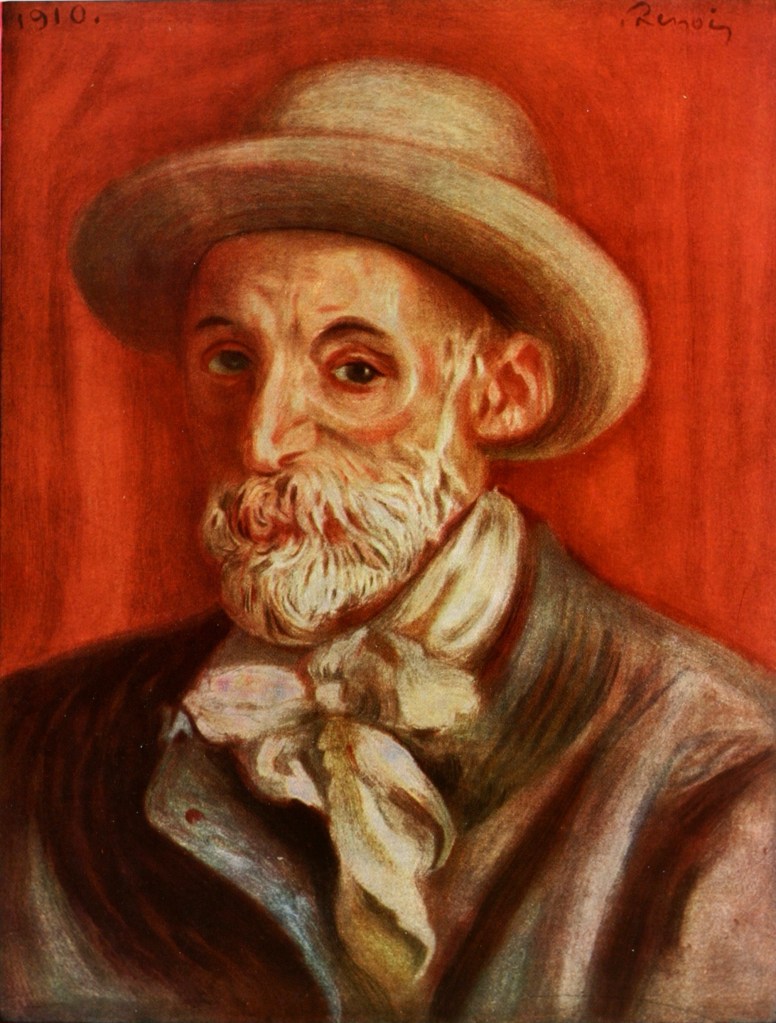
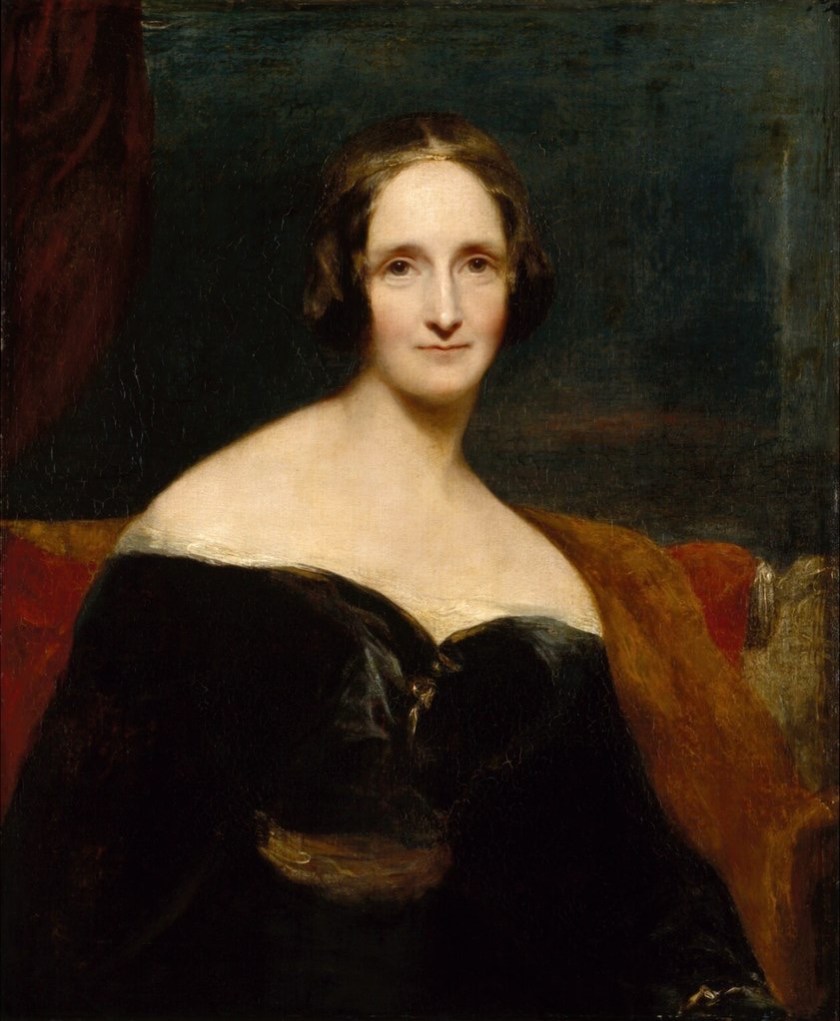
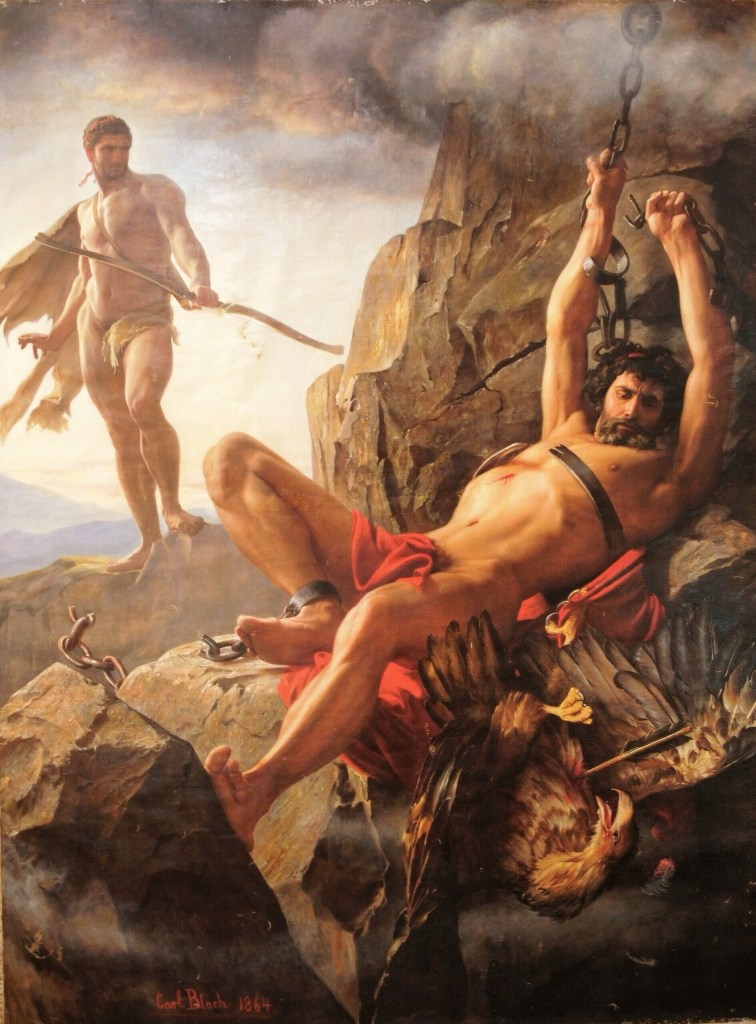
The trial of Martin Luther over his teachings and efforts to reform the theology and practices of the Catholic Church began on 17 April 1521 during the…
Diet of Weeds
Diet of Woods
Diet of Worms
On this day in 1972, Muttiah Muralitharan, cricketer, was born in…
Bonbon
Kandy
Toffey
Henry Ian Cusick, born today in 1967, who is best known for his role as Desmond Hume in Lost, is described in Wikipedia as…
Argentinian-Welsh
Chilean-Irish
Peruvian-Scottish
The damaged Apollo 13 spacecraft returned to Earth safely today in 1970; the commander was…
Fred W. Haise Jr.
John “Jack” L. Swigert Jr.
James A. Lovell Jr.
Anneli Jäätteenmäki took office on 17 April 2003 as the first female prime minister of…
The answers to my earlier post are shown in bold below and an explanation of the title and a song are at the end.
Portrait of Prince Charles Edward Stuart by Allan Ramsey. National Galleries of Scotland. Wikipedia
This battle, the last fought on British soil, took place on 16 April 1746; it was the Battle of…
The Battle of Culloden—fought on 16 April 1746—was the last Jacobite rising and the last full-scale battle on British soil. Led by Bonnie Prince Charlie (Charles Edward Stuart), the Jacobites, outnumbered and exhausted, were defeated by the Hanoverian forces under the Duke of Cumberland. The battle marked the end of the Highland clan culture and the Stuart dynasty’s last attempt to reclaim the British throne. Jim Clark, 1967 US Grand Prix Watkins Glen, NY. Wikipedia
The Scot who won the Formula 1 World Drivers’ Championship for the second time in 1965 was…
Jim Clark—a Scottish racing driver, competed in Formula One from 1960 to 1968, winning two World Drivers’ Championship titles with Lotus in 1963 and 1965. He set records for most wins, pole positions and fastest laps. Clark also achieved success in American open-wheel racing, winning the Indianapolis 500 in 1965. He began racing in 1956 and tragically died in a racing accident in 1968. Portrait of John Witherspoon, Presbyterian minister and President of Princeton University. Wikipedia
The only clergyman to sign the US Declaration of Independence was a Scottish minister; he was…
John Witherspoon—was a Scottish-American Presbyterian minister and president of the College of New Jersey, now Princeton University. He was a Founding Father of the United States and the only clergyman to sign the Declaration of Independence. After studying theology at the University of Edinburgh, he served as a pastor in Beith, Ayrshire and Paisley; he was known for his involvement in ecclesiastical debates. In 1768, he crossed the Atlantic to become president of the College of New Jersey, revitalising the institution by expanding its curriculum and increasing enrolment. A staunch supporter of American independence, Witherspoon was active in political affairs, serving in the Continental Congress and advocating for independence. He authored numerous works on religious and political subjects, including Ecclesiastical Characteristics and Considerations on the Nature and Extent of the Legislative Authority of the British Parliament. The Citie of Edinburgh from the South (detail) by Wenceslas Hollar (1670). Wikipedia
The New Zealand city of Dunedin’s Scottish connection, is that it is named after…
Edinburgh—Dunedin’s name comes from the Scottish Gaelic name for Edinburgh, Dùn Èideann, which means “fort of Edin”. The name “Edin” derives from the Cumbric word Eidyn, referring to the region and its hillfort, Din Eidyn, located at Castle Rock.
This Scottish-born actor received an Academy Award for Best Supporting Actor for his role as Jimmy Malone in a 1987 film; he was…
Sean Connery—Sir Sean Connery, a Scottish actor, gained international fame for his role as James Bond. He also starred in films by Hitchcock, Lumet and Huston, winning an Academy Award—Best Supporting Actor as Jimmy Malone in The Untouchables)—and a knighthood.
Sean Connery as James Bond, Goldfinger, 1964. Wikipedia
Skye Boat Song
The post title is a line taken from the beginning of The Skye Boat Song which was composed in the late 19th century and recalled the journey of Bonnie Prince Charlie from Benbecula, an Atlantic island of the Outer Hebrides, to the Isle of Skye.
Skye Boat Song
Speed bonnie boat like a bird on the wing Onward the sailors cry Carry the lad that's born to be king Over the sea to Skye
Loud the winds howl loud the waves roar Thunderclaps rend the air Baffled our foes stand by the shore Follow they will not dare
Speed bonnie boat like a bird on the wing Onward the sailors cry Carry the lad that's born to be king Over the sea to Skye
Many's the lad fought on that day Well the claymore could wield When the night came silently lay Dead in Culloden's field
Speed bonnie boat like a bird on the wing Onward the sailors cry Carry the lad that's born to be king Over the sea to Skye
Though the waves leap soft shall ye sleep Ocean's a royal bed Rock'd in the deep Flora will keep Watch o'er your weary head
Speed bonnie boat like a bird on the wing Onward the sailors cry Carry the lad that's born to be king Over the sea to Skye
Burned are our homes exile and death Scattered the loyal men Yet ere the sword cool in the sheath Charlie will come again
Speed bonnie boat like a bird on the wing Onward the sailors cry Carry the lad that's born to be king Over the sea to Skye
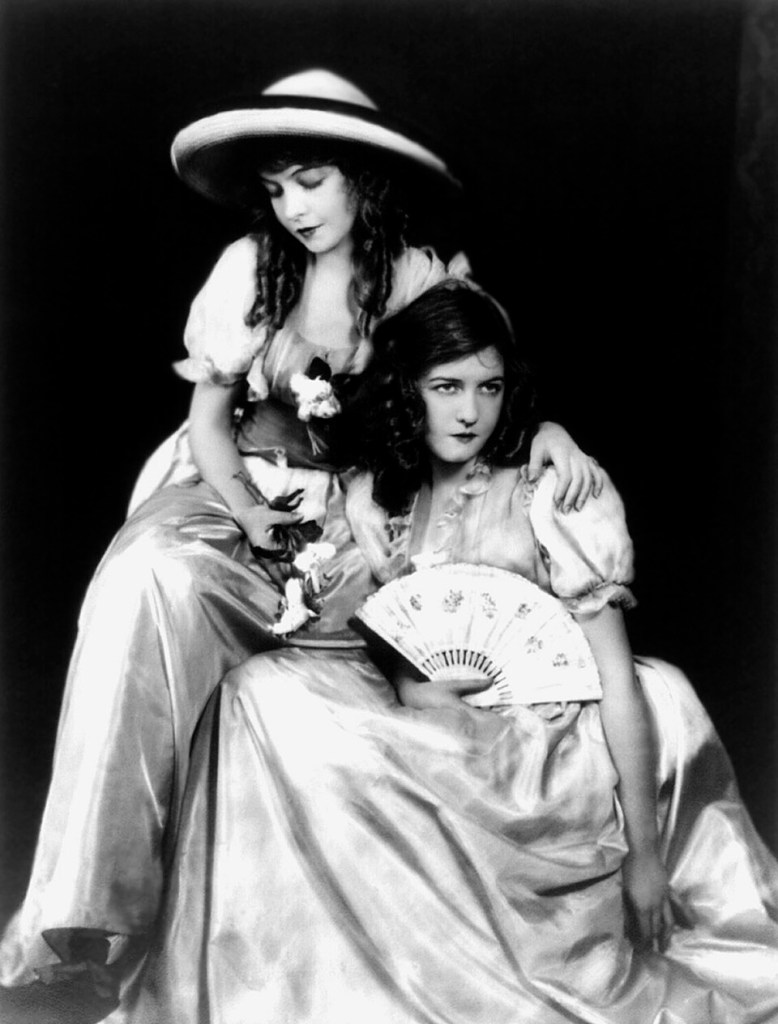
Mary Pickford—Mary Pickford, born Gladys Louise Smith, was a Canadian-American actress and producer who became a pioneer in the American film industry. Known as “America’s Sweetheart” and “The Queen of the Movies,” she gained fame through silent films such as The Poor Little Rich Girl and Rebecca of Sunnybrook Farm. Pickford co-founded United Artists alongside D.W. Griffith, Charlie Chaplin and Douglas Fairbanks. After retiring from acting in 1933, she focused on her work with United Artists and engaged in various charitable activities. Venus de Milo. Wikipedia
Aphrodite—The Venus de Milo, a larger-than-life marble statue of Aphrodite carved by Alexandros around 150 BCE, was discovered on Melos in 1820. Inspired by a 4th-century Corinthian statue, it exemplifies Hellenistic sculptural tradition. Missing both arms and with an uncertain original position, the Parian marble sculpture has been displayed at the Louvre since 1821 and has inspired many artistic works and cultural references.
Between the 6th and 4th centuries BCE— Siddhartha Gautama, known as the Buddha, established Buddhism in South Asia during the 6th or 4th century BCE. He advocated for a Middle Way between excessive indulgence and strict asceticism to achieve liberation from suffering. Buddhism developed into Theravada, Mahayana and Vajrayana traditions, expanding from India to Southeast and East Asia. Born in Lumbini, Nepal, and passing away in Kusinara, India, the Buddha’s teachings were spread by his followers, who commemorate significant events in his life, such as his birth, enlightenment and nirvana. Isambard Kingdom Brunel, who designed the SS Great Western, pictured with launching chains of the SS Great Eastern. Wikipedia
SSGreat Western—The SS Great Western, designed by Isambard Kingdom Brunel, was the first steamship built for transatlantic crossings. Wooden-hulled, it was the largest passenger ship from 1837 to 1839 and served as a model for future paddle-steamers.
P. Ruiz— Encyclopædia Britannica states that Picasso’s baptismal names are “Pablo Diego José Francisco de Paula Juan Nepomuceno Crispín Crispiniano María de los Remedios de la Santísima Trinidad Ruiz Picasso”; Ruiz and Picasso being respectively his father’s and mother’s surnames. It further states in regard to his signing his works, “As a youth, Picasso was known as Pablo Ruiz, and he signed his earliest paintings P. Ruiz. By the turn of the 20th century he was using P.R. Picasso for paintings and drawings, but in late 1901 he finally settled on simply Picasso as his signature.”
Gladys Louise Smith was born on 8 April 1892 in Toronto, Canada, and later, as an actress in the silent era, became known as “Queen of the Movies” and “America’s Sweetheart“. What name did she use professionally?
Marion Davies
Lillian Gish
Mary Pickford
Fragments of the ancient statue Venus de Milo were found in pieces on the island of Melos in the Aegean Sea on 8 April 1920. Who is the statue believed to represent?
Aphrodite
Artemis
Athena.
A majority of Japanese Buddhists celebrate the birth of Buddha on 8 April, when is he believed to have lived?
Between the 6th and 4th centuries BCE
Between the 2nd century BCE and 2nd century CE
Between the 4th and 6th centuries CE
SS Great ? (See question 4)
On 8 April 1838, the first purpose-built and regular transatlantic steamer embarked on its maiden voyage. The ship, a wooden-hulled paddle steamer, was named what?
SS Great Britain
SS Great Eastern
SS Great Western
The artist Pablo Picasso died on 8 April 1973. Which of these was how he signed his earliest works?
This note was issued on 14 July 2005, the opening day of the Open Golf Championship at St Andrews, and celebrated the remarkable career of Jack Nicklaus, who won the Open three times, including twice at St Andrews. It was the first British banknote to feature a living non-royal person. Wikipedia
Six—Nicklaus won six Masters, the last being in 1986. Nicknamed “the Golden Bear”, he won 117 professional tournaments, including a record 18 major championships, and is considered one of the greatest golfers of all time. This note was issued on 14 July 2005, the opening day of the Open Golf Championship at St Andrews, and celebrated the remarkable career of Jack Nicklaus, who won the Open three times, including twice at St Andrews. It was the first British banknote to feature a living non-royal person. Mars Odyssey Patch. Wikipedia
24 October 2001—The Mars Odyssey orbiter, launched in 2001, studies water, ice, geology, and radiation on Mars and acts as a communication relay. The mission was planned to last 32 months but has been expanded by more than 20 years and is expected to end later in 2025.
Geneva, Switzerland—The World Health Organisation (WHO) is a specialised agency of the United Nations that coordinates international public health responses. Established in 1948, the WHO promotes health and safety, provides technical assistance, sets international health standards, and advocates for universal health care coverage. The organisation is governed by the World Health Assembly and funded primarily by member states and private donors. Francis Ford Coppola. Wikipedia
Francis Ford Coppola—an American filmmaker known for his work in the New Hollywood movement. He is celebrated for directing films like The Godfather trilogy, Apocalypse Now and The Conversation, which have earned him numerous awards and accolades.
Albania—Italy invaded Albania in 1939, leading to the creation of an Italian protectorate and the exile of King Zog. During World War II, Italy’s ambitions for Greater Albania, encompassing Albanian-majority regions, were realised until Nazi Germany took control in 1943. Albanian partisans liberated it from Nazi occupation in 1944.
All of the events below happened today, 7 April, in various years.
Artist’s rendering, from NASA, of the Mars Odyssey spacecraft, in mission configuration. Wikipedia
Jack Nicklaus won his first Masters tournament on 7 April 1963 at the age of 23; how many Masters titles did he win during his career?
Four
Five
Six
The Mars Odyssey spacecraft was launched today in 2001. When did it reach Mars orbit?
15 July 2001
24 October 2001
1 February 2002
On this day in 1948, the World Health Organization, a specialised agency of the UN, was formally established. Where is it based?
Geneva, Switzerland
New York, US
Vienna, Austria
Born today in 1939, who directed the 1979 film Apocalypse Now?
Francis Ford Coppola
Wolfgang Petersen
Martin Scorsese
On 7 April 1939, Benito Mussolini made ___ a protectorate, forcing King Zog I into exile and replacing him with King Victor Emmanuel II. What missing country completes this sentence?
Moon—The Moon, Earth’s satellite, is different from planets like Mercury and Mars. While the Moon orbits the Earth, Mercury and Mars, like Earth, orbit the Sun. Lotus Cars logo. Wikipedia
Emira—it has a petrol engine and is not electric, unlike the Eletre and Emeya. Lotus Group is a British manufacturer of luxury sports cars and electric vehicles. It comprises Lotus Cars, Lotus Tech and Lotus Engineering. Currently majority-owned by Geely, Lotus has a history of Formula One racing and producing iconic cars like the Lotus Seven and Elise. Sargasso Sea. 1891 Krummel Petermanns lores/Wikipedia
Sargasso—aka Sargasso Sea is a marine ecosystem whereas the others are both land-based. The Sargasso Sea, a region of the Atlantic Ocean bounded by four currents, is distinguished by its brown Sargassum seaweed and calm blue water. The Gobi Desert, the sixth largest desert globally, is a vast cold desert and grassland area located in northern China and southern Mongolia. In contrast, the Atacama Desert in Chile is renowned as the driest nonpolar desert, characterised by its extreme aridity due to a temperature inversion, the rain shadow effect created by two mountain ranges, and the influence of the Humboldt ocean current. Poster for the 1935 film A Night at the Opera. Wikipedia
A Kind of Magic—A Day at the Races, like Queen’s previous album, A Night at the Opera, takes its name from Marx Brothers films. On the other hand, although A Kind of Magic has a film connection, it is not to a film title; it takes its name from a Connor MacLeod quote from the film Highlander: “Hey, it’s a kind of magic!” The Devil’s Alternative by Frederick Forsyth WikipediaDeception Point by Dan Brown WikipediaDigital Fortress by Dan Brown Wikipedia
The Devil’s Alternative—was written by British novelist Frederick Forsyth. Deception Point and Digital Fortress are two stand-alone novels by Dan Brown which, unlike The Da Vinci Code, Angels and Demons etc, do not feature Robert Langdon.
Botswana—Botswana is in Southern Africa while the others are in Asia—Brunei is in Southeast Asia and Bhutan in South Asia. They are all small countries and both Botswana and Bhutan are landlocked while Brunei has a coastline.
Sub-regional map of the World. The UN geoscheme/Wikipedia
Juan Ponce de León—a Spanish explorer, founded the first European settlement on Puerto Rico and is credited with being the first European to reach Florida in 1513. He named the region Florida due to its lush vegetation and discovery during Easter. A photographic portrait of Hans Christian Andersen by Thora Hallager, 1869. Wikipedia
Hans Christian Andersen—Hans Christian Andersen, a Danish author, is best known for his fairy tales, including The Emperor’s New Clothes and The Little Mermaid. His stories, translated into over 125 languages, have inspired numerous adaptations. Richard Strauss, 1894. Wikipedia
Richard Strauss—Strauss’s Thus Spoke Zarathustra is used for the dramatic opening scene of the film depicting an alignment of the Sun, the Earth and the Moon and which has been called the greatest movie opening ever. 2001: A Space Odyssey is a 1968 film by Stanley Kubrick, based on Arthur C. Clarke’s stories. It explores human evolution, technology and artificial intelligence through a journey to Jupiter involving a malfunctioning computer, HAL 9000, and a mysterious monolith. Col. Nicholson, The Bridge on the River Kwai, 1957. WikipediaPrince Faisal, 3rd from left, in Lawrence of Arabia, 1962. WikipediaObi-Wan Kenobi, Star Wars, 1977. Wikipedia
Alec Guinness—Kwai: played Colonel Nicholson in The Bridge on the River Kwai (1957); Hejaz: Prince Faisal in Lawrence of Arabia (1962); London: George Smiley in both Tinker, Tailor, Soldier, Spy (1979) and Smiley’s People (1982); Tatooine: in the original three Star Wars films, Ben Kenobi—aka Obi-Wan Kenobi. A British actor, he was known for his diverse and acclaimed stage and screen performances. He won an Academy Award, a BAFTA, a Golden Globe, and a Tony Award; he was knighted by Queen Elizabeth II in 1959.
Quaker—William Penn, seeking a haven for Quakers, secured a charter from King Charles II granting him over 45,000 square miles of land in North America. This land, named Pennsylvania, became a haven for Quakers, guaranteeing religious freedom and other liberties.